
HISTORIES OF ECOLOGY: AN INTERNATIONAL COLLECTIVE EXHIBITION AT MASP
The exhibition connects local and global issues by facilitating dialogue between Brazilian and international artists. Many of these artists are exhibiting their work in Latin America for the first time.
MASP (Museu de Arte de São Paulo Assis Chateaubriand) presents Histories of Ecology. This international collective exhibition will occupy all of the exhibition spaces in the Pietro Maria Bardi Building and features over 200 works by artists, activists, and social movements from 22 countries, including Colombia, Iceland, Japan, New Zealand, Peru, and Turkey. Investigating ecology as a network of relationships between living beings and their world, the exhibition brings together works from communities, territories, and ecosystems in different places and periods.
The curatorial approach moves away from the idea of nature as something separate from society or which sees humans as hierarchically superior. “It is common for environment and ecology to be treated as synonyms. However, we chose ecology to encompass a system of relationships between humans and more than humans—animals, plants, rivers, forests, mountains and fungi. We cannot think of nature as separate from humans,” says André Mesquita, curator at MASP.
-
Carmézia Emiliano (Maloca do Japó, Roraima, 1960). Searing Fish, 2020. Oil on canvas, 60 x 60 cm. Private collection. Photo: CABREL | Estúdio de imagem
-
Marcela Cantuária (Rio de Janeiro, RJ, 1991). Margarida Alves, 2020. Oil on canvas, 161 × 120 cm. Museu de Arte de São Paulo Assis Chateaubriand, gift Alfredo Setubal e Rose Setubal, in the context of the exhibition Brazilian Histories, 2022, MASP.11424. Photo: Eduardo Ortega
-
Aycoobo Wilson Rodríguez (La Chorrera, Colombia, 1967). Calendar, 2024. Gouache and pen ink on cotton paper, 100 x 110 cm. Museu de Arte de São Paulo Assis Chateaubriand. Gift Regina Pinho de Almeida in context of the Biennale di Venezia, 2024-25. Photo: Eduardo Ortega
-
Suzanne Treister (Londres, Reino Unido, 1958). HEXEN 5.0/Tarô, 2023-25. Digital print on paper, 8 from a series of 78 works, 42 × 29,5 cm. Courtesy of the artist, Annely Juda Fine Art, London, P.P.O.W. Gallery, New York and The Ryder Projects, Madri. Photo: Suzanne Treister
-
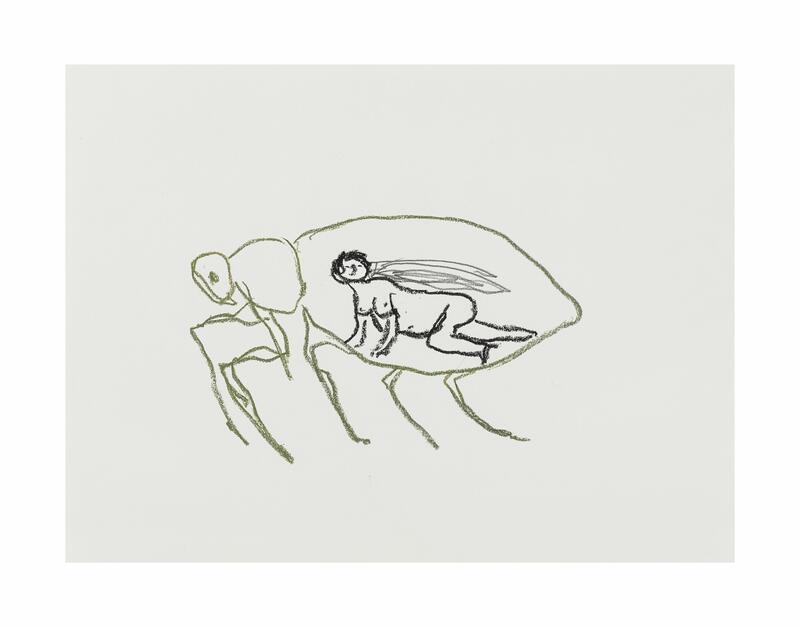
Rosana Paulino (São Paulo, SP, 1967). Attempt to Create Wings, from the Sketchbook of Flying Possibilities (Real or Imaginary) or Sketchbook of Winged Figures, 2000'. Dermatographic pencil, graphite and pastel on paper, 23,6 x 32 cm. Private collection. Photo: Filipe Berndt
Curated by André Mesquita and Isabella Rjeille, the exhibition reveals common artistic perspectives on ecology and confronting the effects of the global climate crisis, proposing a political reflection on the theme by highlighting the human factor and the implications of social markers of difference, such as gender, race, and class. The exhibition is divided into five thematic sections that follow a linear order: Web of Life; Geographies of Time; Becoming; Territories, Migrations and Borders; and Inhabiting the Climate.
Web of Life addresses different perceptions of this network of interrelationships—from Indigenous worldviews to disputes over power, influence, and territory. Geographies of Time brings together Indigenous, Afro-diasporic, rural, and urban perspectives on the earth and the cosmos, life and death, regeneration, and care. Becoming investigates the relationships between humans and more-than-humans, as well as the symbolic, spiritual, and material modes that structure these bonds. Territories, Migrations and Borders focuses on forced displacement, migratory flows, and physical and social borders. Inhabiting the Climate summarizes and, at the same time, expands on central issues present in the other sections of Histories of Ecology. It brings together works by artists, collectives, and movements that investigate tactics for radically occupying, experiencing, and imagining the city and the countryside.
-
Castiel Vitorino Brasileiro (Vitória, ES, 1996). Untitled, from the series Bodyflower, 2016-in process. Digital photography, 80 × 60 cm. Mendes Wood DM, São Paulo, Brussels, Paris, New York. Photo: Courtesy Castiel Vitorino Brasileiro and Mendes Wood DM
“Histories of Ecology moves between different fields of knowledge, including the geological, biographical, ancestral, spiritual, communal, local, and planetary. These intersections broaden our view of the current climate crisis, showing that it is not an isolated event, but rather something rooted in colonial and patriarchal structures that influence how we inhabit the planet,” says Isabella Rjeille.
The exhibition is part of a series of projects around the plural notion of “Histories,” a word that encompasses fiction and nonfiction, personal and political accounts, private and public narratives, with a speculative, plural, and polyphonic character. These stories have an open, processual quality, as opposed to the more monolithic and definitive character of traditional historical narratives. In this sense, among its annual programs and previous exhibitions, MASP has organized Histories of Sexuality (2017), Afro-Atlantic Histories (2018), Women’s Histories, Feminist Histories, (2019), Histories of Dance, (2020), Brazilian Histories (2021-22), Indigenous Histories (2023), and Queer Histories (2024).
Histories of Ecology Will be on display until February 1, 2026, at MASP — Museu de Arte de São Paulo Assis Chateaubriand, Avenida Paulista, 1578, Bela Vista, São Paulo (Brazil).
May interest you
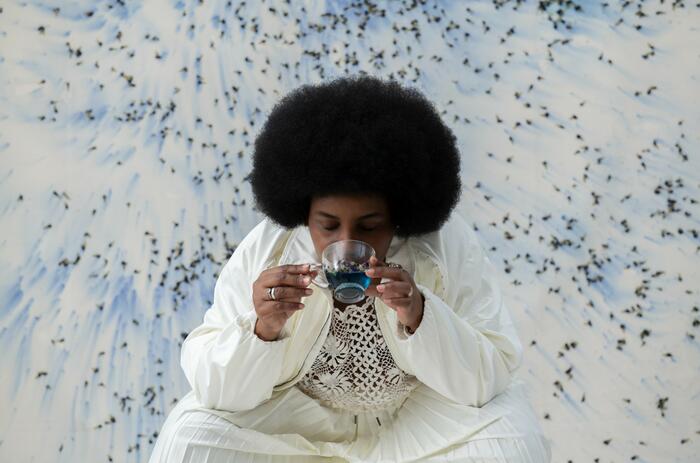
ABSTRACTION AND TIME: JULIANA DOS SANTOS DEBUTS WOMAN ARTISTS RESIDENCY IN SÃO PAULO
CHANEL and Pinacoteca de São Paulo’s annual residency invites women creators to explore new artistic languages.
SP-ARTE ROTAS 2025 IN SÃO PAULO: A FAIR OF MULTIPLE IDENTITIES
The fair brings together galleries from 12 Brazilian states and expands its reach to include exhibitors from Argentina and the Peruvian Amazon.

THE BATTLEFIELD OF ANTONIO HENRIQUE AMARAL: BANANAS, POLITICS, AND MOVEMENT

NOTES ON A PICTORICAL SURFACE — MARINA PEREZ SIMÃO: TUNING FORK
By Mario Gioia, art critic and independent curator
SÃO PAULO: A JOURNEY THROUGH GALLERIES, STUDIOS, AND RESIDENCIES
Like any big city, in São Paulo everything happens at once: galleries, residencies, studios, and exhibitions weave together in an electric network that nurtures local artists and connects them with global circuits. The city works like a node: intense, vibrant, inexhaustible.
LATIN AMERICAN HISTORIES: MASP PRESENTS ITS 2026 PROGRAM
The museum explores the construction of the region’s identity through a major group exhibition and solo presentations by Jesús Soto, Damián Ortega, Sandra Gamarra, La Chola Poblete, among other artists.