
BRAZIL ANNOUNCES ROSANA PAULINO AND ADRIANA VAREJÃO FOR ITS PAVILION AT THE 2026 VENICE BIENNALE
Curated by Diane Lima, the project Comigo ninguém pode will bring together two of the most powerful voices in contemporary Brazilian art around themes of colonial memory, resilience, and poetic imagination in Brazil’s Pavilion.
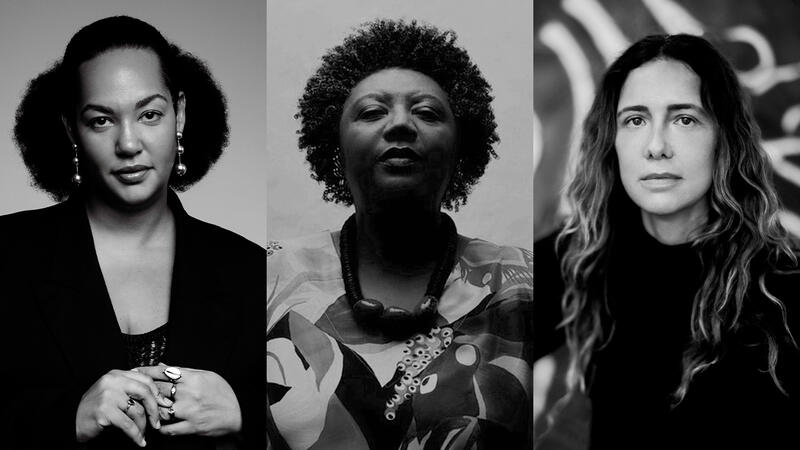
Fundação Bienal de São Paulo announced that artists Rosana Paulino and Adriana Varejão will represent Brazil at the 61st International Art Exhibition – Venice Biennale, which will take place from May 9 to November 22, 2026. Selected by curator Diane Lima, Paulino and Varejão are part of the curatorial project Comigo ninguém pode — the Portuguese name of the plant Dieffenbachia that also resonates as a popular saying, which can be understood as “nobody can handle me” or “nobody can beat me.” The title draws on these ambiguities as a metaphor for protection, toxicity, and resilience.
The proposal highlights the dialogues that run through the careers of both artists, in which reflections on colonial wounds and the rewriting of history give way to constant processes of metamorphosis, articulating new possibilities for imagination and poetic liberation.
“Being chosen to curate the Brazilian Pavilion in Venice is an honor and a great responsibility,” said Diane Lima. “Together, Paulino and Varejão historically represent the most revolutionary aspects of the presence of women in the field of national art. Their poetics, in harmony and friction, echo the struggles of social movements and democracy, without ever losing the sensitive capacity to amaze and surprise us with high-level technical quality. Along with the ideas of protection and toxicity, Comigo ninguém pode, as a popular saying, also refers to the process of transferring knowledge about nature to the realm of life, thus reflecting a process of collective manifestation that happens naturally when ‘me’ becomes ‘us,’ becomes many, and an entire nation, which uses its wisdom as a form of defense and sovereignty,” she added.
“I hope to develop a unique dialogue with Rosana that also connects with the architecture of the Pavilion, expanding the possibilities of our artistic paths,” said Adriana Varejão.
For Rosana Paulino, “being in the Brazilian Pavilion in Venice, alongside Adriana Varejão, is an opportunity to investigate colonial wounds from different female perspectives that come together in na unprecedented dialogue. This encounter proposes a revision of art history by questioning the canon and recovering silenced memories, paving the way for new possibilities for the future.”
“The curatorship of Diane Lima, with the presence of Rosana Paulino and Adriana Varejão, reaffirms the power and complexity of Brazil’s output on the international stage,” said Andrea Pinheiro, president of the Fundação Bienal de São Paulo. “This announcement coincides with the investment in the recovery of our Pavilion and renews the institutional commitment to present a project in Venice that is worthy of the global debate to which Brazil has a contribution to make,” she concluded.
The announcement is in line with the official theme of the 61st International Art Exhibition – Venice Biennale, entitled In Minor Keys. The 2026 edition comes in the wake of the unexpected loss of appointed curator Koyo Kouoh, and will be led by the collective formed by Gabe Beckhurst Feijoo, Marie Helene Pereira, Rasha Salti, Siddhartha Mitter, and Rory Tsapayi, professionals selected by Kouoh to accompany her on this curatorial journey and who now continue her legacy.
Rosana Paulino (São Paulo, Brazil, 1967) lives and works in São Paulo. She holds a PhD in visual arts and a BA in printmaking from the Escola de Comunicações e Artes at USP, and is also a printmaking specialist from the London Print Studio. She has received major awards such as the Konex Mercosur: Visual Arts (Argentina, 2022) and the MUNCH Award (Norway, 2024). Her work is part of the collections of major institutions, including MAM SP, Pinacoteca de São Paulo, MASP, and Museu Afro Brasil Emanoel Araujo (all in São Paulo), Malba (Buenos Aires), MoMA (New York), University of New Mexico Art Museum (Albuquerque), Harvard Art Museums (Cambridge), Tate Modern (London), and Centre Pompidou (Paris).
Since the 1980s, Adriana Varejão (Rio de Janeiro, Brazil, 1964) has been developing a body of work marked by critical reflections on colonialism and the plural formation of Brazilian culture. She has held panoramic exhibitions at institutions such as the Centro de Arte Moderna Gulbenkian (Lisbon); the Pinacoteca de São Paulo; the Haus der Kunst (Munich); the Museo Tamayo (Mexico City); the ICA (Boston); the Hara Museum (Tokyo); and the Fondation Cartier (Paris). She has also participated in the biennials of São Paulo, Sydney, Havana, Liverpool, and Istanbul. Throughout her career, she has been awarded important honors such as the Order of Cultural Merit from the Brazilian Ministry of Culture and the Chevalier des Arts et des Lettres from the French government.
*Cover image: From left to right, Diane Lima, Rosana Paulino, and Adriana Varejão. Credits: Wallace Domingues, Rodrigo Ladeira, and Tinko Czetwertynski.
Related Topics
May interest you
ANTIOQUIA BECOMES A GLOBAL HUB FOR CONTEMPORARY ART WITH BIAM 2025
The International Art Biennial returns after 44 years, bringing together over 120 artists from 25 countries, 300 artworks, and a free program spanning 15 municipalities.
“BATUCADA,” MARCELO EVELIN’S PERFORMANCE: A STORY
In Casa do Povo's basement, Marcelo Evelin’s performance unleashes a ritual of bodies, rhythms, and nudity that allows no anticipation. An experience that demands looking, breathing, and moving through the present without guide or return.
THE 24TH PAIZ ART BIENNIAL BRINGS TOGETHER FIVE CONTINENTS UNDER THE WORLD TREE
A historic edition brings together 46 artists and collectives across 11 venues in Guatemala, featuring newly commissioned works, dialogues between Mayan archaeology and contemporary art, and a focus on cultural diversity and the construction of inclusive futures.
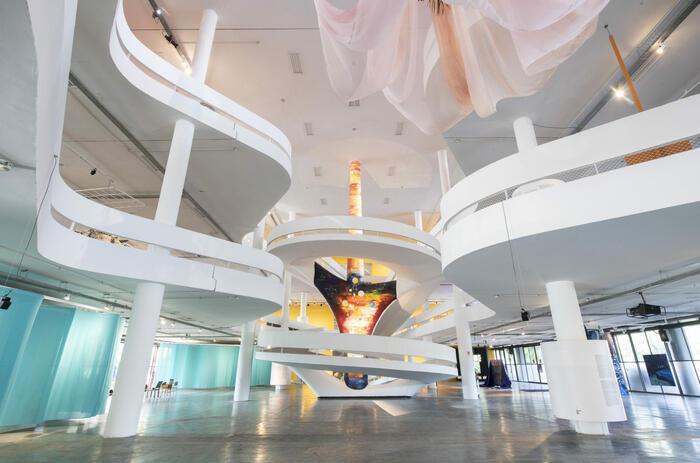
ANGLES, CROSSINGS, MOVEMENT, JUXTAPOSITION: THE 36TH SÃO PAULO BIENNIAL
The São Paulo Biennial opened its 36th edition with a mix of proposals that invite a return to the senses: textures are highlighted, sounds resonate, and at times even scents appear. With a large number of commissioned works, the curatorial approach—led by Bonaventure Soh Bejeng Ndikung—was guided by several threads, all centered on the idea of “humanity as practice”.

“HÊMBA” IN SÃO PAULO: LAYERS OF DISTANT MEMORIES
The exhibition by photographer Edgar Kanaykô Xakriabá reaffirms the strength of Indigenous art as a living, insurgent, and ancestral language.

REMEMORY 2026: SYDNEY BIENNALE UNVEILS ARTISTS AND WORKS ILLUMINATING SUPPRESSED HISTORIES
The 25th edition, curated by Hoor Al Qasimi, announced new projects which will explore memory and history through works from around the world.
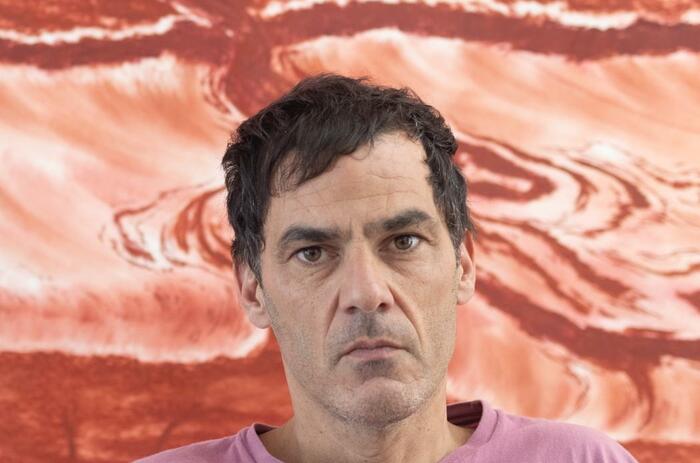
MATÍAS DUVILLE TO REPRESENT ARGENTINA AT THE 2026 VENICE BIENNALE
Curated by Josefina Barcia, the project was selected among 69 submissions and will occupy the Argentine Pavilion from May 9 to November 22, 2026.
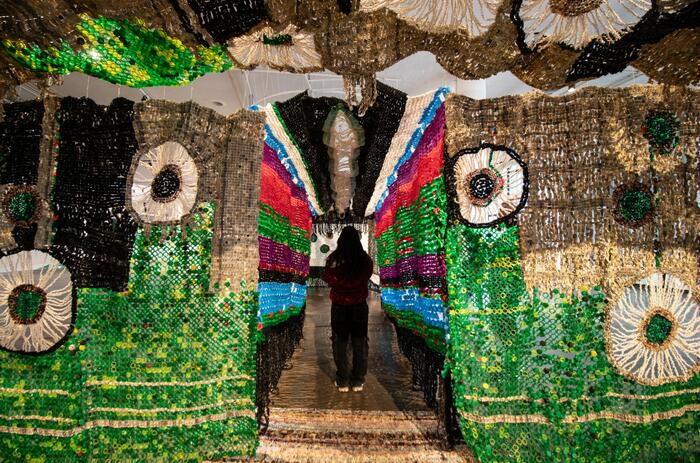
FOUR WORKS BY FOUR ARTISTS AT THE SÃO PAULO BIENNIAL
It is not easy to compose a path through monumental works inside a monumental space. At the 36th São Paulo Biennial, the artists invited by Bonaventure de Soh Bejen Ndikung and his team, present large-scale works whose textures and forms sometimes speak to each other linearly, and other times through oblique movements.
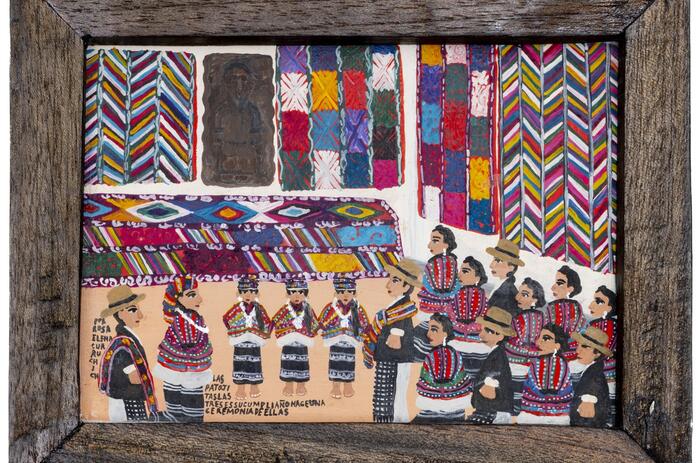
LATIN AMERICAN HISTORIES: MASP PRESENTS ITS 2026 PROGRAM
The museum explores the construction of the region’s identity through a major group exhibition and solo presentations by Jesús Soto, Damián Ortega, Sandra Gamarra, La Chola Poblete, among other artists.