
SIXTY YEARS OF LEANDRO KATZ, TOGETHER FOR THE FIRST TIME, AT THE BELLAS ARTES
La noche y las palabras brings together the artist's installations, photographs, films, and drawings, curated by Francisco Lemus and Mariana Marchesi.
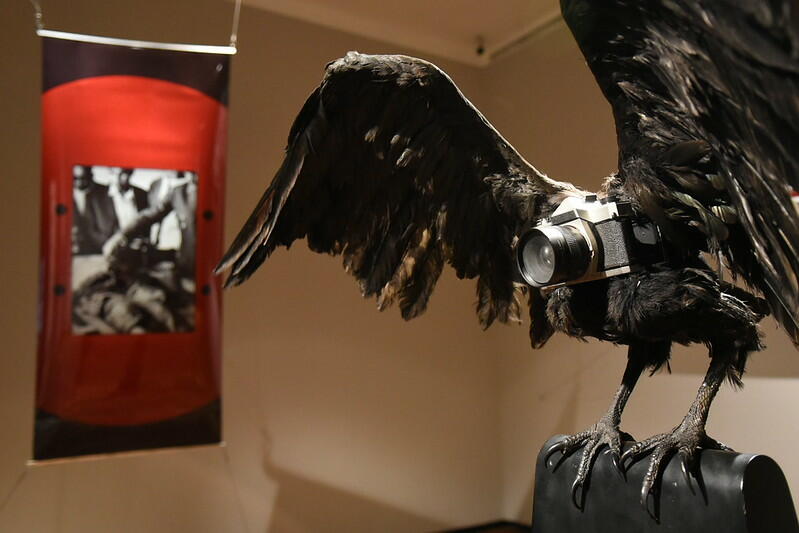
This September, the Museo Nacional de Bellas Artes opened the retrospective exhibition Leandro Katz. La noche y las palabras, dedicated to the Argentine visual artist, filmmaker, and writer, curated by Francisco Lemus and Mariana Marchesi. In the galleries on the Museum's first floor, the show traces Katz's career (Buenos Aires, 1938) through installations, photographs, films, drawings, prints, and artistic research spanning various series produced since the 1960s and exhibited together for the first time.
Andrés Duprat, director of the Bellas Artes, noted: "Throughout his career, Katz built a body of work linked both to the American countercultural and conceptual art scene and to various Latin American traditions and concerns." He added: "A decisive part of Katz's thinking took shape during the trips he made in the 1960s through Argentina and Central America. In the course of that travel, he engaged with the worldviews and systems of representation of ancient American peoples—knowledge he wove into aesthetic explorations aimed at recording visual and linguistic phenomena."
-
Leandro Katz. La noche y las palabras. Crédito: Museo Nacional de Bellas Artes | Matías Iesari
"Built on a masterful layering of eras and historical events, and on a search for poetic ways of capturing reality, Katz's work can be read as a gesture of recovering what is lost when Latin American history is conceived from the outside," Duprat concluded.
"Since the 1960s, Katz built his work as a poetic exercise at the intersection of image and writing," the curators note. "Unlike other Argentine artists of his generation, his point of departure was the continent itself—its cities and archaeological sites, especially the Maya regions of Guatemala. Through his research into the ancestral, Katz anticipated debates that would take decades to become urgent: questioning Eurocentric modernity, valuing cultural diversity, and denouncing the extractivist logics imposed by colonialism."
-
Leandro Katz. La noche y las palabras. Leandro Katz "Proyecto Catherwood" (The Catherwood Project), 1985-1995. "El Castillo [Chichén Itzá]" (The Castle [Chichén Itzá]), 1985. Copia al gelatino bromuro de plata, 40,6 x 50,8 cm.
"For the artist, nature was always a field of knowledge. The observation of lunar phases, the cycles of the sky, and the rhythms of the natural world became working material—a language that preceded any human writing," Marchesi and Lemus state.
Alongside documents and publications from different stages of his literary output, the galleries feature works from some of Katz's emblematic series, such as El Proyecto Catherwood, Alfabetos lunares, and Columnas del lenguaje. Also on view are photographic compositions from the 1970s, such as Un viaje en canoa, Veinte segundos en la vida de una palmera, and La caída, along with the films Estación Los Ángeles (1970), the artist's first feature, and Paradox (2001).
-
Leandro Katz. La noche y las palabras. Crédito: Museo Nacional de Bellas Artes | Matías Iesari
Also on display is Proyecto para 'El día que me quieras' - Versión I con cámara emplumada (1990), a photographic installation developed from images of the body of Ernesto "Che" Guevara taken by Freddy Alborta, which Katz donated to the Bellas Artes collection upon receiving the 2020/2021 National Award for Artistic Career (Premio Nacional a la Trayectoria Artística).
Leandro Katz. La noche y las palabras can be visited through January 10, 2027, at the Museo Nacional de Bellas Artes, Av. del Libertador 1473, Buenos Aires, Argentina.
Related Topics
May interest you
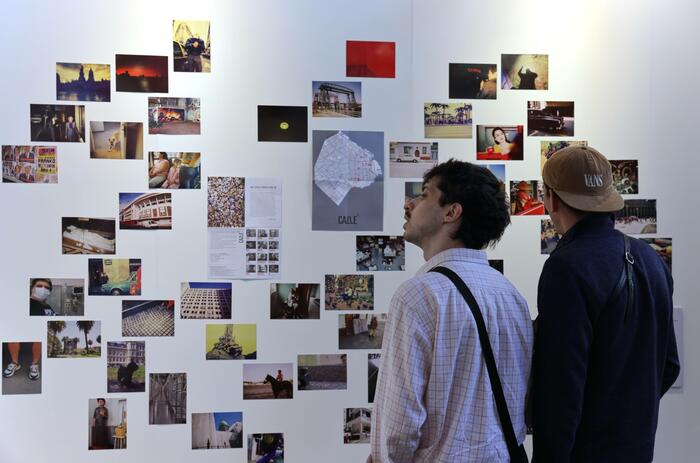
ARTISTIC ECLIPSE IN BUENOS AIRES: ARTEBA, Pinta BAphoto and AFFAIR
In late October and early November, the city of Buenos Aires will host three fairs with three distinct identities in a single period of intense artistic activity.

BETWEEN SOFTNESS AND BITTERNESS: TWO EXHIBITIONS CURATED BY IRENE GELFMAN
Suave es la noche, by Silvana Muscio, and Trago Amargo, by Claudia Coca and Claudia Casarino, propose two distinct ways of inhabiting memory from Buenos Aires: one sensory and oneiric, the other historical and colonial.

MALBA ADDS EIGHT WORKS TO ITS COLLECTION FOR ITS 25TH ANNIVERSARY
The museum welcomes Juan Del Prete and, for the first time, Líbero Badíi, along with donated pieces by Jorge Pineda, Mario Testino, and Margarita Paksa.