

By
Violeta Méndez
Suave es la noche, by Silvana Muscio, and Trago Amargo, by Claudia Coca and Claudia Casarino, propose two distinct ways of inhabiting memory from Buenos Aires: one sensory and oneiric, the other historical and colonial.

A room wrapped in blue silk in La Boca and two South American plants laden with colonial history in the city center: curator Irene Gelfman presents two simultaneous exhibitions in Buenos Aires that, from opposite registers, interrogate memory.
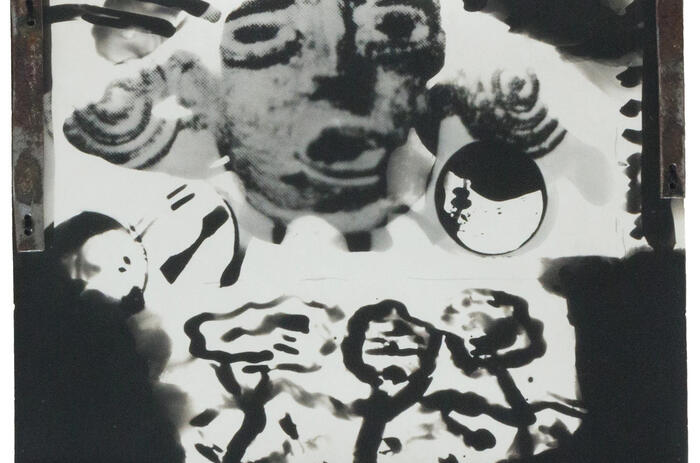
At UNGALLERY (La Boca), Silvana Muscio transforms the gallery into what Gelfman describes as "a mental chamber — an interior room — where the hard geometry of the space gives way to a sensation of suspension." Suave es la noche (Tender is the Night) brings together eight moving photographs framed in gold leaf and velvet, a video projected onto fabric, and an enveloping sound design of crickets, wind, and nocturnal birds. The title draws from a verse in John Keats's Ode to a Nightingale, and with it, the Romantic notion of "negative capability": the suspension of critical intellect in order to remain in mystery without demanding explanation. The monochrome blue that permeates the space is not decorative but conceptual — the color that, according to Yves Klein, has no dimension, a door to the limitless. The show is on view through October 17, at Ministro Brin 1335.
At Central Affair (Florida 971), Claudia Coca (Lima, 1970) and Claudia Casarino (Asunción, 1974) opened Trago Amargo (Bitter Draught) on August 27, organized by La Galería del Paseo in collaboration with Oficina de Proyectos. The show takes as its starting point two South American plants — quinine bark and yerba mate — whose histories condense centuries of colonial extraction. Coca traces the quinine tree through charcoal and pastel drawings on linen that invert the logic of the scientific botanical plate: where taxonomic records stripped specimens of their history, the artist restores context. Casarino, whose great-grandfather was one of the enslaved workers in Paraguay's yerba plantations, works with clothing and textiles as membranes of memory. In Domingo, six shirts dyed with red earth speak through what is absent — "there are six and not seven because in the yerba plantations there was no Sunday rest," writes Gelfman. The seventh shirt, the one for the day off, never existed.

The museum welcomes Juan Del Prete and, for the first time, Líbero Badíi, along with donated pieces by Jorge Pineda, Mario Testino, and Margarita Paksa.

In Minor Keys is the title Koyo Kouoh chose for the Biennale we now read in the light filtered through her branches. What was she telling us? In this piece I reflect on its meaning and on the possibilities artists sow as they resignify the structures of our modernity. It is a walk through six works understood as ecologies, in the way philosopher of science Isabelle Stengers conceptualized it.

An Interview with La Chola Poblete
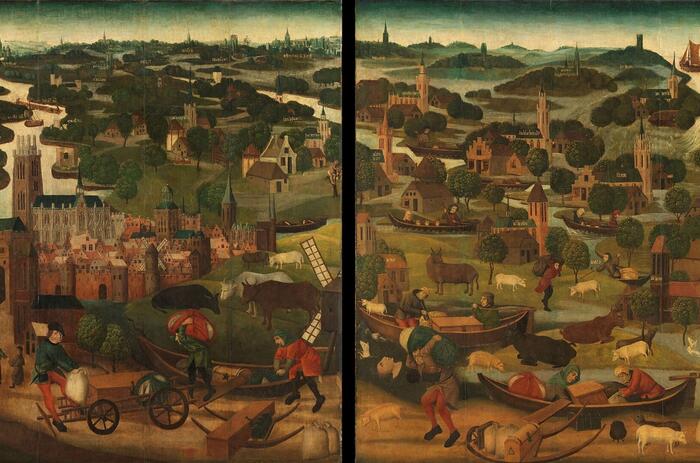
Paraná Delta and the Rhine-Meuse-Scheldt, between domination and resistance
The institution is reinforcing its commitment to Latin American art with three exhibitions that, like the thematic lines underpinning this season, will explore the body, memory, and participation.