
By
Violeta Méndez
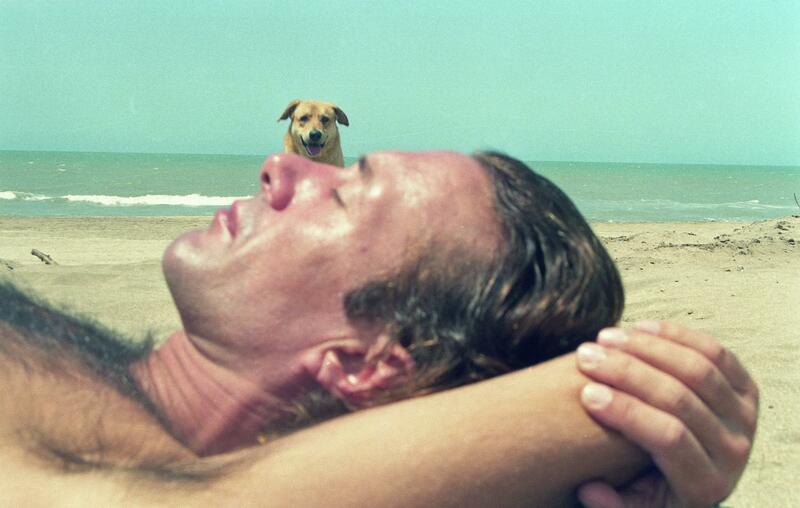
“Photography is something else. I tell myself that all the time. Photography is something else,” said Alberto Goldenstein, one of the most important figures in contemporary Argentine photography, near the end of the interview. He had explained earlier that he was uncomfortable with the lens of a digital camera and preferred analog; then he let that line fall, as a final reflection on the changes in the discipline. At first I tormented myself, thinking I was missing that “something else,” until I understood that it is written in this interview, as well as materialized in his work.
Goldenstein (Buenos Aires, 1951) is a photographer, teacher, and curator. He begins photographing after a journey of discovery at the age of twenty-five, which leads him to study at the New England School of Photography in Boston with Joel Meyerowitz and John Szarkowski, in black and white and, from 1985, in color. Back in Buenos Aires, he connects with artists such as Alfredo Londaibere, Marcelo Pombo, and Jorge Gumier Maier, and emerges on the Centro Cultural Rojas scene of the 1990s with a painterly, spontaneous gaze that revolutionized the use of color and framing in Argentine photography. He directed the Fotogalería del Rojas between 1995 and 2019 and, for 25 years, taught his workshop Photographic Image. In 2018, the Museo de Arte Moderno presented his first retrospective, La materia entre los bordes. He received the Premio Nacional a la Trayectoria Artística (2023) and the Premio Federico Jorge Klemm – Primer Premio Adquisición (2025) for his work S/T (diptych). This October he will take part in the Special Project at Pinta BAphoto 2026.
You say that in your practice, your way of being a flâneur is getting lost. Do you get lost in the same way as when you started photographing?
I became a photographer basically by being lost. Lost in the sense of doing things that had nothing to do with me and not knowing what did have to do with me. So photography, in a way, was where I found myself. At the origin, photography had to do with having found myself. There was something in that original experience that kept guiding me in the development of the work. I needed to be in that state of bewilderment, for lack of a better word, in order to find the point of view that interested me. From there, being lost almost became a kind of strategy, and I’d tell you it is the place from which I can see photographically: from bewilderment.
So there is a difference: at first I found myself, and then I got lost.
You have been photographing the city of Buenos Aires since the mid-1980s. How do you compare what it meant to document it then with what it means now?
In the 80s I came back from my years of training in Boston. I became a photographer there. That is, the one who came back is not the one who left. Those first years were about discovering the city of Buenos Aires. Discovering myself, discovering the city. In a way, keeping up a state of being a foreigner that I had already been experiencing while living in the United States. There I was an alien, and that alien state stayed with me when I came back.
Many years later, in 2004 specifically, I made another series about Buenos Aires, called Flaneur. There, more than discovering Buenos Aires, I am narrating it. And I am describing it with references in my head to Walker Evans, or other vague, inspiring references, but always in dialogue with certain figures from the history of photography.
In the 80s, discovering it; in the 2000s, describing it.
You say that photography is superficial, in the sense that it photographs appearances. How does this idea relate to art?
In my classes and workshops, people would come wanting to photograph the soul of things, of people, or to go beyond; they made those efforts, mostly in vain. So I turned to an idea I hold, which is that photography is very limited and can only describe the appearance of things at the moment of being photographed. In that sense, photography is completely superficial. The tool is the surface of things, in order to speak about them. I think there is something of the order of the magical, the esoteric, the inexplicable that can link up with the idea of art, and it is this: how can it be that, if I describe the surface of things, if I observe them, if I savor them analytically, something else can appear?
I think art is a kind of operation of invoking something invisible, something of the order of the spiritual, through the visible, through the visual.
There, I think superficiality is something common to photography and art. That’s how I experience it; I think that if I want to go deep, I have to embrace the surface.
What gestures from other disciplines do you take on to produce work?
I learned a lot from artists, and I still do. But I learned above all when I came back from Boston. What I first took from the visual artists, as they were classified before the 90s, was several things I was very interested in. One was the exercise of freedom. The idea of the stain, the mistake, the accident, the embarrassment, the botched job. Something I didn’t see in the world of photography, where there was a very heavy emphasis on technical correctness and even thematic correctness. I saw that visual artists operated with a freedom that photographers did not. And for me, photography, given how I came to it, was always an exercise in absolute freedom. I never worked as a photographer, and the times I did, I failed. So that was the first thing I took: nonsense.
Then, from performance, I took the idea of thinking about photography as a performative act. An act in which the photographer puts their body on the line in a situation. As a kid or a teenager I looked at National Geographic magazine a lot. I would see those photos taken in the middle of the jungle and was constantly thinking about the person taking them. I thought about what the photographer was going through, more than about the photo.
There is also something I take from abstract thinking. I photograph from a very abstract vision, even though it is figurative and realistic, but all the time I am seeing the abstraction.
You say you photograph with an attitude of “not-knowing,” that you are drawn to things you don’t fully understand. Does photography ultimately help you understand things?
Photography allows me to understand myself. To understand my point of view as something physical. I don’t know if I want to understand things. It seems a rather useless effort to me. I don’t know if we are here to understand. I think we are here rather to look, more than to understand. And in that looking, I can choose what seems most important to me, what seems less important (in photography). Like a game. I can give hierarchy to the banal, or I can make the important banal. I can make everything part of a weave in which nothing stands out. Where the eye is free to move around, go up, go down, linger. I think understanding is not something I care about.
What is valuable about that way of looking?
I’m free.
What is your favorite series, and why?
If you had asked me a few years ago, I couldn’t have said. Now two series come to mind. One, a body of work I called El mundo del arte, which began as portraits of artists in the 90s. A specific project, an exercise in classic portraiture mixed with elements of the snapshot. Along with the photographs I took, wildly, with a pocket camera in color, of that world I was part of and took part in. It was only in 2018 that my retrospective took place at the Museo de Arte Moderno, and for that occasion I gave shape to all that work; I gave it a video projection format. I choose it because there I was, in a way, working with an idea of rupture; I was unlearning everything I had learned. In the 90s I devoted myself to unlearning everything I had learned about photography during my years of training, and I wanted to break, break, break.
And the other series that was very important, and still is, is Mar del Plata (2001). At that moment I wanted to have a body of work that would dialogue with contemporary art. That was my aim. A somewhat crazy aim, at first, because it was very abstract, but I wanted to take part in that game. What occurred to me was to photograph Mar del Plata, which was absurd, because it seemed to me the most clichéd, banal subject, the complete opposite of what I thought a contemporary work should be about. But there was something, as always, of the idea of being lost. I told myself: “That’s it, that’s it, that’s it, that’s it.” After photographing it, with that half-ridiculous energy, I was left completely bewildered. “What is this?” At first it seemed like garbage to me. In the end, it turned out that series was the first in which I found my singularity as a photographer. A singularity I could not have planned, thought up, much less invented. A singularity that has to do with everything I learned and then everything I unlearned. In a banal, clichéd subject that has to do with everyone’s life, Argentines’ and porteños’ in particular. The series gave me the clue for everything that came after.
What are the changes between the first and the second Mar del Plata series?
I had hardly done anything with Mar del Plata since 2001. But this summer of 2026 I felt like insisting on something very specific, which was plunging into the chaos of the beach at the peak moment of the season. I went for the day. I left in the morning with a little bag with the camera and went into the beach. I went in, and in, and in, walking among the tarps, the thermoses, the umbrellas, the kids, the balls, all of it. I shot. I’ve got it, the subject, I handle it, I know it, I already know. So I can do it fast. And that’s what I did, with a camera with a different technology. A full-frame mirrorless camera with a panoramic format. I started playing with what technology gives us now. I left my house in the morning and was back home at night with 300 shots.
I think these two series, which will be seen together at Pinta BAphoto 2026, speak of two moments in Argentina, two moments of mine, and two moments in technology.
After so many years of career, what keeps drawing you to take photographs?
That’s the million-dollar question. Two possible answers. One: photography was something that came into my life. It began moderately when I was 26, at 29 it clicked, but it was something that abducted me. Photography abducted me. I never felt like its owner. And just as it came, I was always willing to let it go. And I’m still willing to let it go. I don’t tie myself to it, nor tie it down. It came one day and it can leave, goodbye. It doesn’t leave. The engine keeps running, it sweeps me away.
Second. I don’t like being only a victim of the impulse; I also like to take a bit of ownership of it. I keep learning. I’m still trying to be a photographer. I’m trying to be better, or more singular, or sharper. And I also feel challenged by the times. In the 80s I felt challenged. I always liked a challenge; I worked in function of it. I feel challenged by the times because I hear about post-photography, expanded photography, that with the end of analog, photography ended. All of that seems reasonable to me, but I still haven’t found the bottom of the barrel. I see that the discipline has an inexhaustible power of fascination. I do see that the challenge forces you to dig deeper. You have to go deeper. Everybody takes photographs; nobody cares. I always worked for those who weren’t interested in photography but were interested in art. In that sense, I have a potentially larger audience.
I think my challenge is that: having to go deeper so that photography keeps appealing to that fascination it still holds for me, and so that it makes sense what it is to be a photographer, that this category exists and has a reason to exist. There is such a thing as being a photographer, and there is such a thing as not being one. I work for that.
*
“I didn’t invent anything,” he says when we turn off the microphone. We walk around his house. He shows me his works from Boston, Buenos Aires, Mar del Plata, northern Argentina, Miami, from the 80s, the 90s, and the decades that follow up to today. My favorite, which I don’t dare take a photo of, is a photo of a duck that he titled Autorretrato (Self-portrait). A photo that is dark because of the water and because it is night. The animal seems to be alone, but after a while I find a second figure in the photo. A shadow, Goldenstein’s shadow. And then I understand the interview, I understand that photography is something else.
This conversation took place during the recording of an Open file, an initiative by Pinta in editorial collaboration with Arte al Día, a series of interviews and research content that seeks to bring the work of contemporary Latin American artists closer to the public.
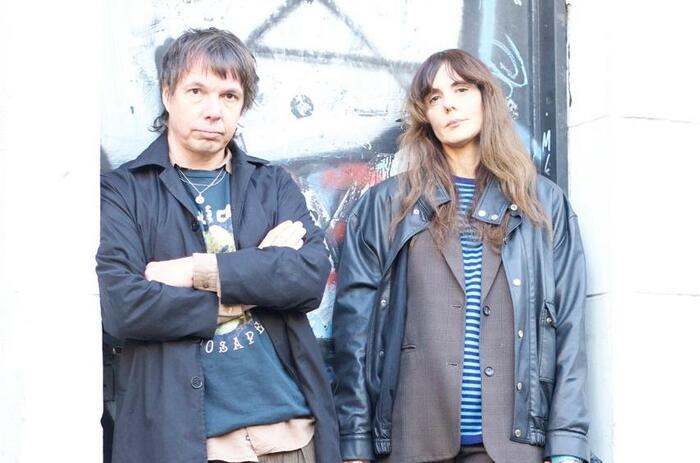
The founders of the NN gallery talk about their curatorial approach, driven by intuition and the periphery: “When it finally articulates well, it’s not that interesting.”
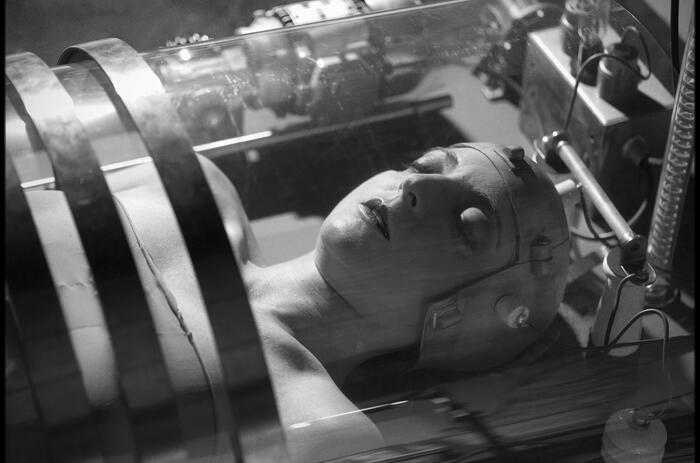
From October 22 to 25, La Rural hosts the 22nd edition of the only photography fair in Latin America: it celebrates two centuries of images with unique works, in-house curatorial projects, and an international presence.
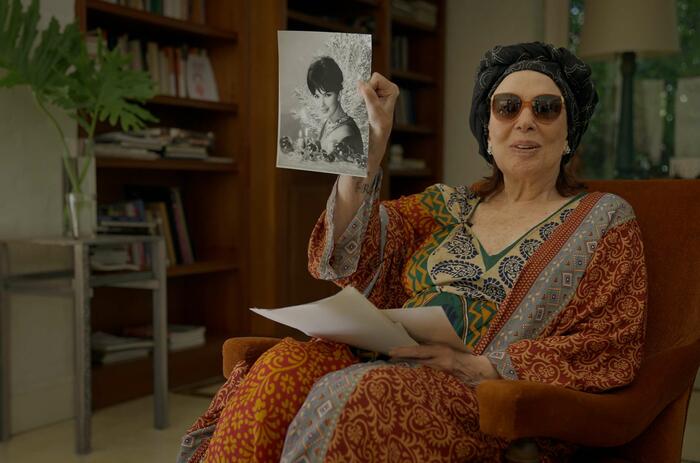
Presented at Argentine film festival BAFICI and soon to premiere at MALBA in Buenos Aires, Annemarie is the documentary about photographer Annemarie Heinrich, directed by her great-granddaughter, Mariana Sanguinetti. Heinrich's work, which has appeared in several editions of Pinta BAphoto, will also be on view this 2026 with the fair celebrating 200 years of photography.
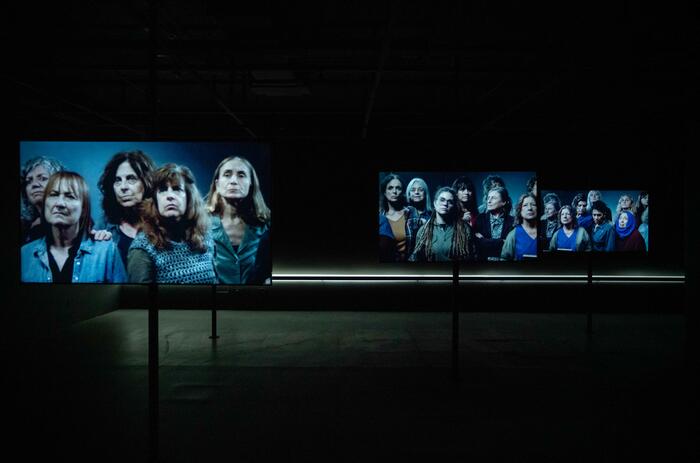
The exhibition Estado de Asamblea and a live action bring together images, voices, and texts to collectively discuss the present.
La noche y las palabras brings together the artist's installations, photographs, films, and drawings, curated by Francisco Lemus and Mariana Marchesi.