By
María Galarza
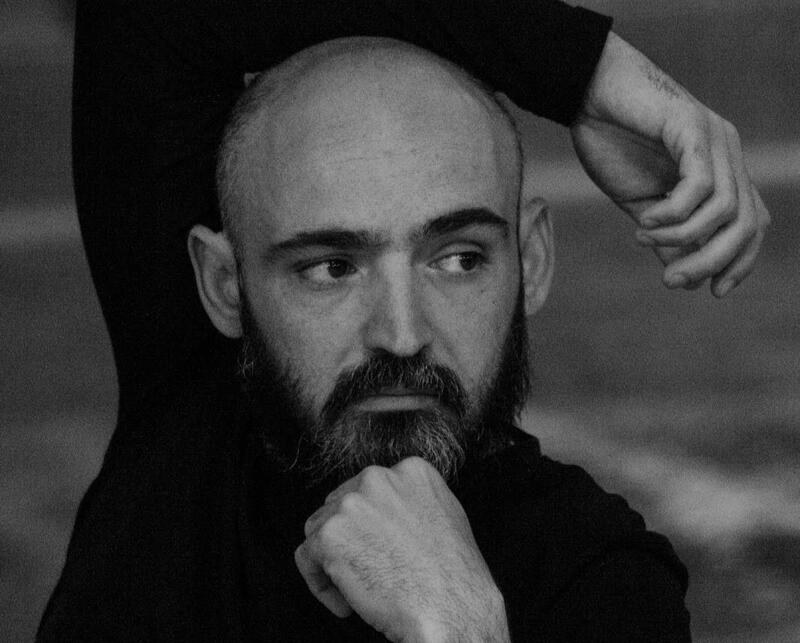
Artist, editor, workshop leader, and gallery owner. Depending on which “hat” he wears, Martín Bollati occupies different positions within the field of image-making (and thinking). He founded ATLAS, a bookstore and gallery specializing in photography, images, design, and architecture, as well as publisher SED Editorial.
Since opening more than a year ago in the La Paternal neighborhood of Buenos Aires, ATLAS has organized exhibitions that consistently orbit around books. Martín Bollati, its founder and director, explains that the book is the object from which the space’s critical thinking takes shape. From there, they approach photography and other visual forms to develop projects that bring together exhibition, publishing, and the circulation of images. The space has an exhibition program, book launches, and meetings with artists and publishers.
ATLAS will also host the publishing section at the upcoming edition of BAphoto, presenting two complementary experiences: a bookstore and a series of exhibitions featuring artworks and books. In conversation with Arte al Día, Martín Bollati previews the gems to discover at the fair and shares the ideas behind the projects he leads.
Could you tell us about the exhibitions held at ATLAS and how they connect with what you will be presenting at Pinta BAphoto?
The first exhibition with which we launched ATLAS was a retrospective of Finnish photographer Henrik Malmström, who’s been living here in Buenos Aires for about ten years. We organized an editorial retrospective of his work because he has published around 35 books. For Pinta BAphoto, we will bring a collection of special editions of his books, some featuring signed photographs and a kind of book-portfolio.
Then, we held another exhibition in collaboration with Carmen Araujo, the Venezuelan gallery, presenting an editorial retrospective of Mexican photographer Alejandro Cartagena. His work has gained considerable circulation over the past year because he had a major retrospective at MoMA. Cartagena is also an outstanding researcher and photographer whose practice focuses heavily on bookmaking. For Pinta BAphoto, we will bring several pieces from the editorial retrospective we organized, including works from Carpoolers, one of his best-known series.
There will also be a table dedicated to Ediciones Réplica, founded by Arturo Salazar and José Ruiz in Colombia. Their work focuses on recovering and reinterpreting photographic archives. We will present Ediciones Réplica’s publishing catalog, as well as artwork and a special publication they produced for their exhibition at ATLAS, titled Acción diferida (Deferred Action). Sort of an artist’s book, it works almost like a remote-controlled book and was created specifically for the exhibition at ATLAS, now continuing its journey as a publication.
How did you conceive the publishing program for the fair?
The space is divided into two sections. One consists of exhibition tables, and the other is the bookstore. At ATLAS, we are both a bookstore and a gallery, and the bookstore has a very carefully curated selection. At BAphoto, we will offer a small selection of publishers whose books will be available for purchase as part of the bookstore’s catalog. Notable names include Nobody Books (UK), Loose Joints (FR), MACK Books (UK), Outer Space Press (GE), FW Books (NE), Pseudo Editions (FI), KWY (PE), Lovely House (BR), Buen Lugar (CH), Selo Turvo (BR), Metaninfa, La Balsa, Asunción, and SED Editorial.
The exhibition tables, in turn, will feature selections from some of the shows held at ATLAS. In addition to those mentioned earlier, there will be a table dedicated to Maxi Magnano, an Argentine photographer whose work is currently on view. He has a beautiful body of work about Mar del Plata city at night, titled Mar del Plata nocturno.
There will also be a table devoted to Celeste Rojas Mugica, a Chilean artist who is a close friend. We will present a large portfolio, publishing box kind-of, centered in a project called Ejercicios de aridez (Exercises in Aridity). It is a specific body of work she produced in Chile several years ago, combining poetry, research, and aerial photography.
At the center of the space, ATLAS will present its first publication, marking a new chapter for the bookstore and gallery as a publisher. Imagen impresa is a study by Francisco Medail tracing the history of the photography book in Argentina from 1930 to 2025. It covers approximately 95 years of printed publications. It is a beautiful book and, I believe, a fairly important contribution to the local scene in terms of documenting the history of the book as an object.
The final exhibition table will be a tribute to Venezuelan photographer Ricardo Jiménez, centered on a particular series whose most significant journey took place through the book: Caracas en carro. Created in the 1980s, the series consists essentially of photographs of the city taken from a car. It is an extraordinary series. The book will be on display, along with vintage prints on the wall.
While ATLAS participates in BAphoto, what will be happening at the physical space in La Paternal?
There will be a retrospective exhibition of the work of editorial designer Ricardo Báez. I personally think he is the best editorial graphic designer in Latin America. Specializing in photography and photography books, he is also a curator and editor. We will present an extensive overview of his work, which frequently engages with Venezuelan history and the photography book.
How did you become involved in publishing photography books, and how did you begin to establish connections between your different practices?
My practice began with photography, as an artist. I am also an editor, partly because I run a publishing house called SED, which will celebrate its tenth anniversary next year. At ATLAS, my role is related to curatorship and management. I’ve always conceived my artistic projects as books, making the move toward publishing a natural step.
I believe photography, because of its reproducibility, has always been closely connected to the book. Technically, we have printed photographs on paper. If not in a magazine, then in a newspaper; if not in a newspaper, then in a book; if not in a book, then in a portfolio. In recent years, fortunately, there has been a renewed examination and recognition of the editorial role in photography.
Would you say, then, that the book’s discourse is a natural evolution of photographic discourse?
Rather than an evolution, I would say they were born together. Some of the earliest presentations of photography took the form of books, including Henry Talbot’s The Pencil of Nature, which introduced the photographic process and explored its potential uses. It was a portfolio containing several plates and booklets explaining what photography could do. And it was a book. I also think of Anna Atkins’s cyanotypes, which she also brought together in a book. From the very beginning, there have been a series of photographic practices closely connected to the book. I would say this is not an evolution, but rather two paths that began together.
Today, there is a great deal of experimentation, independent publishing, and a-sort-of revolution surrounding the book as an object and photography over the past twenty years. It is worth examining and considering this development in its historical context. The connection between photography and the book is not something that emerged in recent years, but I do believe a new intersection is taking place, and it is an interesting one.
How does your different practices feed into one another? Meaning, your work as an artist, your management of the gallery, the publishing house, and the bookstore.
I believe the element that unifies all these aspects, or all these hats, is the notion of authorship behind each practice. I have always been a staunch defender of the authorial role of editing. Editors and book designers are generally relegated to the credits, at the back, in small print. My position is quite the opposite.
I am interested in committing myself to the projects I publish, getting involved, changing things, and understanding that a photographic project is one thing, while a book is a project within that project. A series of decisions must be made when translating a set of photographs into a book as an object: its materiality, sequence, format, concept, title, and printing technique. These decisions carry an authorial dimension in the way they engage with a body of work.
It is also important to recognize that curating has an authorial dimension of its own. You work with other authors, but you reorganize, select, edit, and frame. You bring an authorial perspective to what you show. Perhaps I am interested in the possibility of developing a discourse through different disciplines, while always recognizing that there is room to commit to a particular point of view.
What makes a photography book project interest you or draw you in?
My way of working is very close to the authors. I try to work with people who interest me, not only because of what they produce, but also because of how they produce it. I always say, with pride, that most of the authors who come to work with the publishing house end up becoming friends. There is something about that close working relationship that interests me and draws me in.
I am interested in photography that operates at the very center or at the absolute margins. The most classical forms of photography or the most experimental ones. Everything in between those two extremes bores me. That is my personal position.
What is it about those margins of photography that particularly interests you?
I am interested in the uncertainty surrounding what photography is and how far it can go. Its undisciplined nature. We can think about photography through painting, literature, or cinema. But we can also reverse that approach: think about literature through photography, or cinema through photography. With each of these shifts, the definition of photography begins to wobble.
I am also interested in thinking about photography not only in terms of the act of taking a picture, but also in terms of circulation. Photography is also about how images move, not just how they are produced. Now more than ever.
What makes a photography book speak to you?
Before being an editor, I am a reader. And I believe there is a problem with the publishing structure around photography that does not exist in literature: the reader is not discussed enough in the context of the photography book.
We approach photography books through the reading habits we develop with literature. That is why I am interested in books that have a clear intention regarding how they are read. I also lead workshops, and I believe the books that interest me most are those that invite us to consider the reading conditions they establish.
But that does not mean a book has to be experimental all the time. A classical approach can also be a position in itself. What matters is that these decisions serve the discourse or propose a particular way of reading.
From October 22 to 25, La Rural hosts the 22nd edition of the only photography fair in Latin America: it celebrates two centuries of images with unique works, in-house curatorial projects, and an international presence.
The founders of the NN gallery talk about their curatorial approach, driven by intuition and the periphery: “When it finally articulates well, it’s not that interesting.”
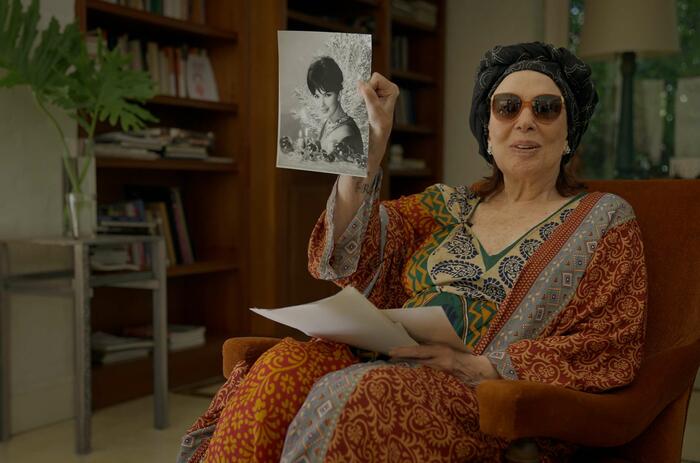
Presented at Argentine film festival BAFICI and soon to premiere at MALBA in Buenos Aires, Annemarie is the documentary about photographer Annemarie Heinrich, directed by her great-granddaughter, Mariana Sanguinetti. Heinrich's work, which has appeared in several editions of Pinta BAphoto, will also be on view this 2026 with the fair celebrating 200 years of photography.
The Fukushima control room, Snowden's refuge in Moscow, and Bill Gates's dorm room: built in cardboard, photographed, and destroyed.
La noche y las palabras brings together the artist's installations, photographs, films, and drawings, curated by Francisco Lemus and Mariana Marchesi.
In late October and early November, the city of Buenos Aires will host three fairs with three distinct identities in a single period of intense artistic activity.
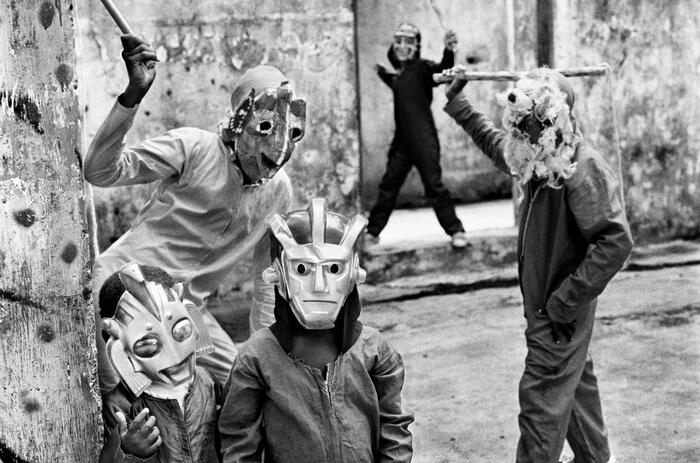
A tribute to Sandra Eleta, the work of Claudia Andujar, a solo show by Joaquín Sánchez, and a project that combines a bookstore and an exhibition chart a map that travels through Panama, Brazil, Paraguay, Mexico, Colombia, Chile, Argentina and Venezuela.