
By
Violeta Méndez
The founders of the NN gallery talk about their curatorial approach, driven by intuition and the periphery: “When it finally articulates well, it’s not that interesting.”
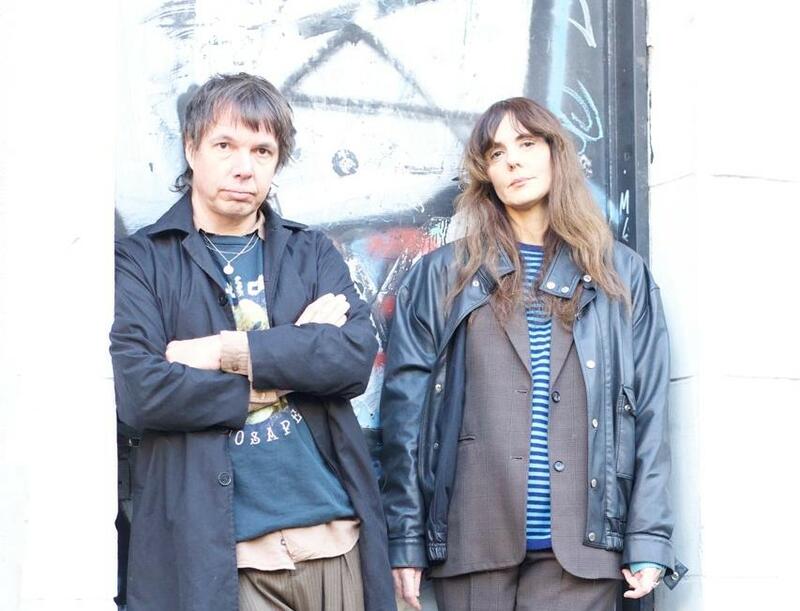
Facundo Belén and Virginia Martín—visual artists, business partners and a couple, founders of the NN gallery, directors of projects such as Feria Plateada (the first contemporary art fair in the province of Buenos Aires), and now curators of the NEXT section at Pinta BAphoto 2026—described themselves as “one N each.” They answer as one; they read each other’s minds. Every now and then they stop dead and interrupt each other to add a letter. They are quite different when they speak and don’t answer the same thing. Even so, they arrive at the same ideas. They talk about art as if there were more art in life than life in art. An art that slips in at unexpected moments, that seeps through the cracks. Corny art. Urgent art. Art as a stage on which we all experience the same present. Art that can’t be detached from the artist, and therefore not from the world. Art that doesn’t meet the public’s expectations, that leaves loose threads.
The NN gallery was founded in 2016 out of a lack of spaces to exhibit in La Plata. What meaning did this idea of necessity give the gallery? Ten years later, does that meaning still hold, or has it turned into something else?
Facundo Belén: Urgency gave us our identity, 100%; the whole path of the gallery is traced by that energy. The artists and exhibitions we like have something urgent in their discourse or in their operation. Something not so thought-out, not so reflected upon, with regard to the theory of things and academic study. I associate urgency with what is displaced from the centers. Peripheries are associated with an urgency of movement, of needs, of weaving a discourse that can change certain things.
Virginia Martín: We are artists, so it also comes from an artistic perspective. From that urgency we also set down, for example, that space and artwork should coexist: no exhibitions that show only parts of the work, so that it can be integrated with the space. That’s how an experimental urgency took shape.
Facu: I associate urgency with the emotional, and with the mental—in the sense of acquiring knowledge—and acquiring rules within that knowledge. That’s how the gallery’s artistic development went, and my own as an artist. It was more instinctive than planned. When we started, neither Vir, nor I, nor any of the artists around us understood what having a gallery was about. There was deep fieldwork, a manifesto, reflections, but still from urgency, because there are different ways of approaching needs. I think NN is a deeply emotional project and not so much thought of as an art gallery.
What does your artistic eye look for when you choose artists or works to represent?
Facu: It has changed; my vision of contemporary art is a mobile one. In 2016 the project was made up of those around us, friends with similar intentions. Something that hasn’t changed since then is the openness about what’s in and what’s out, using simply the yardstick of intuition and of building community. Those who were there were there for a reason, and we valued everyone’s work. Along the way many of those artists stayed on the roster, others kept changing, those who joined strengthened those who stayed, and that’s how a line took shape.
Exhibitions came together out of unplanned circumstances, because a friend proposed it, or we met and hit it off and said, “let’s do a show.” And by getting to know those artists and their work, they taught me a thousand things, they moved me, I understood a ton, and I became a fan.
Vir: It’s a mutation. It’s like life itself, carrying on a life in art. You grow, and your interests and tastes change. It all has to do with relationships, with how you connect with the scene, with other artists. But above all I think it’s always intuitive; there’s always something that moves me and it has to do with something very personal, something like we couldn’t put one word to it, because it’s a ton of words.
Facu: We like artists who are coherent about who they are and what they do. That’s the first trait I value and admire in an artist. The coherence between their being and their doing.
Both through your gallery and through other directorial roles such as Feria Plateada, your approach is to celebrate the emerging. What attracts you to current art?
Vir: I’m drawn to dialogue with what’s happening. Any manifestation that enters into dialogue with situations we’re living today has, for me, a very attractive quality. Building a kind of symbolic archive of this moment makes us experience a shared present.
Facu: I like art made from the heart, to get corny. From an ungovernable drive that I’d rather didn’t come from the head but from mysterious places within oneself. I like art that is also, for whoever makes it, an experience of change, but that is also open to letting other gazes in. I like art that isn’t pretentious. That is simple, true, ingenious, but also inclusive. I love that art wants to dialogue in community.
For years the idea that “everything is art” has been questioned. What do you think of that expression? And if everything is art, how do you discriminate or exercise judgment?
Facu: I think that expression is confusing. On one hand, it challenges the meaning of what art is, and that’s good. In every link of human processes there are artistic moments; they can appear in unexpected places and even at inopportune times. The expression “everything is art” comes to change, to ask questions, to break and remake in that very act. On the other hand, if we’re referring to what contemporary art is, and whether contemporary art can handle and take on the broad sense implied by “everything is art,” I think not.
Vir: Living in art isn’t only the process of materializing a work, but the process of living: how you think, how you relate to the outside and to yourself. Being an artist is about that, about establishing yourself on this planet as a person who goes about certain ways of living and expressing, who stands a little off to the side of the hegemony the world imposes on us today: they rebel against that.
Facu: But do you agree that everything is art or not, Virginia?
Vir: Everything is art if it’s made by a person who lives within this world I just named.
Facu: But outside of that, nothing is art?
Vir: It might be art, but it involves other links that, in my view, don’t make as much sense.
Facu: We need to make two bubbles to find the answer to whether everything is art or not. First: within contemporary art, whoever is an artist, everything they do is art. Second: not everything is art, but art exists in abundant drives in this world and outside the discipline of contemporary art.
What moment is contemporary art from the province of Buenos Aires going through?
Vir: In terms of the quality of the work, I think it’s very good. Now, in terms of exhibition possibilities, I think that’s where it gets more complicated. Feria Plateada comes to put the focus on projects from the province that are very far away and that may not have the means to travel to the center or to where everything is happening. It’s the only opportunity in the year these projects have to be seen. The idea would be for the Province of Buenos Aires to have more exhibition spaces and resources. These are hard times for culture in general in Argentina. We provincial spaces are spaces of resistance.
Facu: What there is is an abundance of proposals and artists. They are projects made only because they need to be made, without speculation and without any academic training. They get made, they manifest. What’s missing is a widening of the circuits. They are projects lost at sea, but transcendent. I think you can draw a parallel between the province in relation to the country’s art, and the country’s art in relation to the art of the world: a big fish eating a smaller fish.
What do you think are the challenges of speaking to today’s public? Do you think current artistic proposals satisfy today’s audience? What is that dialogue like?
Facu: Contemporary art doesn’t meet the public’s expectations. It’s an impossible task. That’s the only possibility for nourishing ourselves: art trying to meet expectations, people having expectations of art. Those two energies colliding and not communing produce something unexpected. There’s a disconnect between the exhibition space and contemporary art proposals on one side and the general public on the other, an evident disconnect, something historical in art. The most nourishing thing about contemporary art is that it never quite articulates well. When it finally articulates well, it’s not that interesting.
The value lies in what remains loose, in what doesn’t quite fit.
Facu: Yes.
Vir: Contemporary art doesn’t probe the viewer’s expectations. It tries to go deeper, to make them feel a liking, a disdain, whatever, but to generate a feeling in them. I don’t know if the viewer is so willing to understand that with contemporary art you don’t have to understand it, but rather run it through other channels of your being. So, from that place, it’s always disjointed. There’s no training available on how to dialogue with art.
You are business partners and a couple. What is it like to work as a team, as two, sharing so many projects?
Vir: I don’t know any other way. We built and nourished each other because it does us good and we like it. It’s all about the same thing: living the artistic experience from something personal as well.
Facu: We were a student couple, then a couple of artists, then we became a mom-and-dad couple. We’re many couples. As a working couple, we’re very good. Each of us is an N. We complement each other really well. Vir is super wise and knows everything beforehand, but says it calmly. I’m less wise and say a lot of things before knowing them. I’m more about intuition and action, and she’s about reflection. We’re a good creative team.
Vir: We’re passionate about art, about what we do, and that shows in our day-to-day. Beyond the gallery work or the curatorial work or the artistic work each of us may carry out, there’s something in which we empower each other that has to do with both of us being passionate.
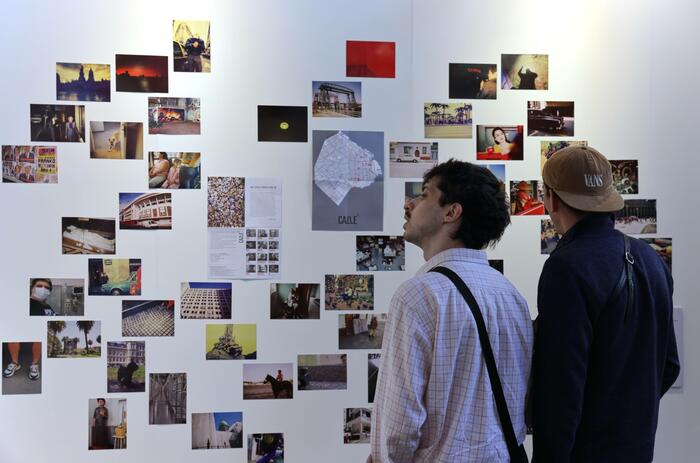
This year you are the curators of NEXT, the Pinta BAphoto section dedicated to emerging proposals and new ways of approaching contemporary photography. How did you approach it? What are the new ways of approaching photography?
Facu: The section speaks not only of new media for producing photography, but also of new ways of looking at it. That is, the focus is on those who look at it.
Vir: We wanted it to be a section that covers a broad field of image work. Different discourses. The body is very present, natural resources, politics, the economy, poetry. It has to do with being anchored in the present, with different voices, perspectives and resources for producing images. It’s not only about new media, but about diversity. The projects we present go neither very far backward nor very far forward. The section gives us a foothold to understand the present.
Pinta BAphoto 2026 can be visited from October 22 to 25 at Pavilion 8 of La Rural, Buenos Aires, Argentina.
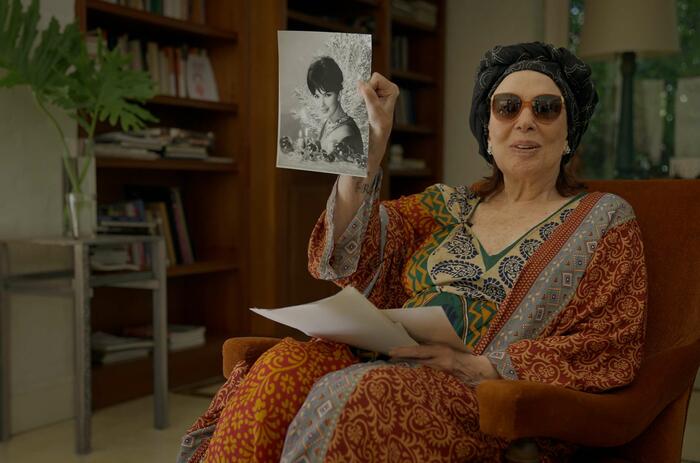
Presented at Argentine film festival BAFICI and soon to premiere at MALBA in Buenos Aires, Annemarie is the documentary about photographer Annemarie Heinrich, directed by her great-granddaughter, Mariana Sanguinetti. Heinrich's work, which has appeared in several editions of Pinta BAphoto, will also be on view this 2026 with the fair celebrating 200 years of photography.
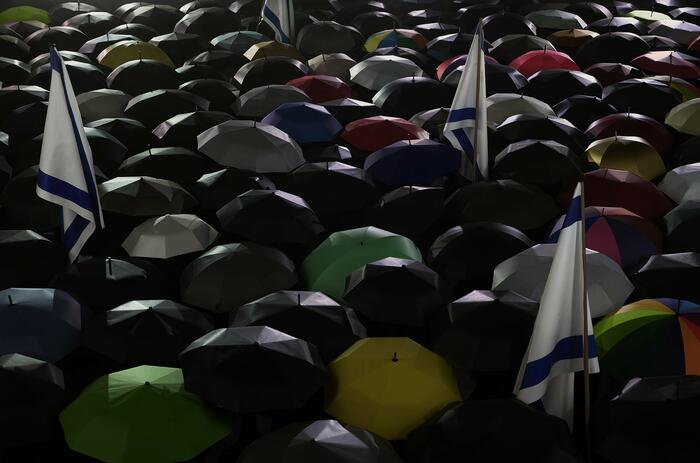
The Fukushima control room, Snowden's refuge in Moscow, and Bill Gates's dorm room: built in cardboard, photographed, and destroyed.
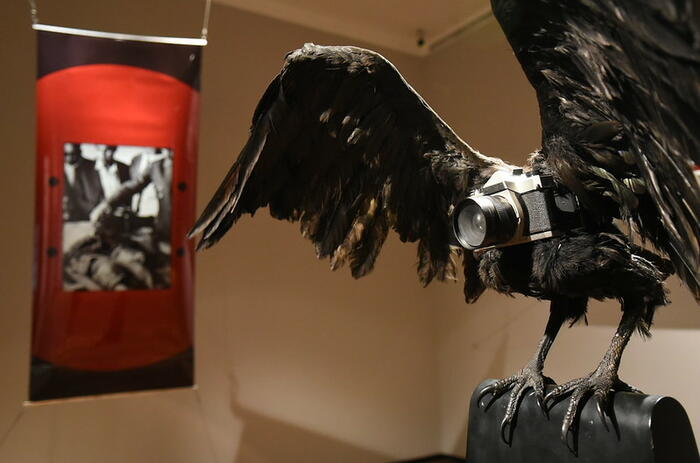
La noche y las palabras brings together the artist's installations, photographs, films, and drawings, curated by Francisco Lemus and Mariana Marchesi.
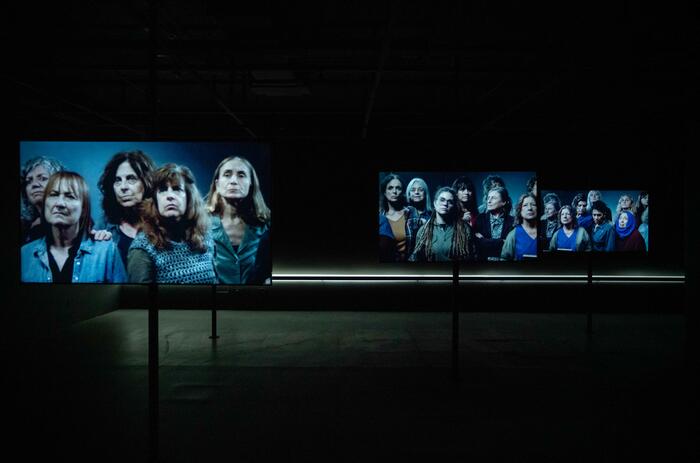
The exhibition Estado de Asamblea and a live action bring together images, voices, and texts to collectively discuss the present.
In late October and early November, the city of Buenos Aires will host three fairs with three distinct identities in a single period of intense artistic activity.