By
María Galarza
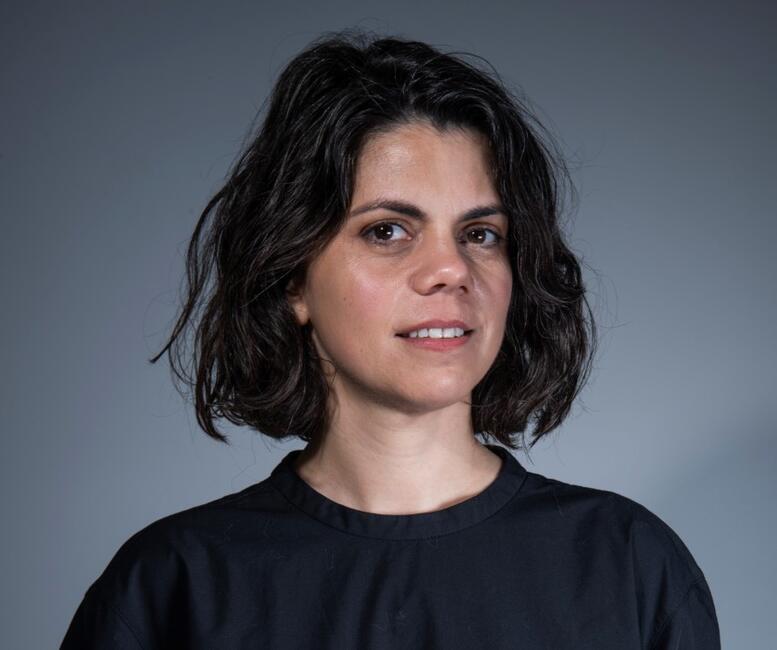
Whether it is from the archive to the gallery or spanning between research and curatorial practice, Mercedes Claus explores the different spaces that outline Argentina’s photographic scene. This is an interview about the circulation, legitimization, and interpretation of images, in light of her work as curator of RADAR at the upcoming edition of Pinta BAphoto.
You work with photography in many different, including archive, galleries, exhibitions, and teaching. What do you learn from each of these contexts?
Photography is a complex medium. From its very beginnings, its dual nature as both an artistic medium and a technical tool has given rise to a range of issues that distinguish it from other art forms, particularly in terms of production, use, circulation, and materiality. Each of the contexts you mention - the archive, the gallery, exhibitions, and teaching - offers a different approach. In the archive, the focus is on cataloging, preservation, and the management of artworks. In the gallery, the work involves strategies for promoting, exhibiting, and selling photography, which also has its own particularities because of its reproducibility. Curatorial work, in turn, involves research, interpretation, and the development of critical discourse. I think working across these different areas has allowed me to approach photography from multiple perspectives that inform and complement one another, leading to a more comprehensive understanding of the medium.
In your role at the Alejandro Kuropatowa Archive, what can an artist's archive reveal about their practice that might not be visible in their photographs once they are exhibited?
Artists' archives are repositories that preserve documents and objects related to their creators' lives and work. As records of the past, they are an essential resource for researchers and art historians because they make it possible to reconstruct artistic trajectories, support interpretive arguments, and gain insight into working methods and other aspects that often remain invisible in finished works.
The Kuropatwa Archive consists primarily of the negatives, slides, and contact sheets of photographs he made for both his artistic practice and his professional work, as well as images related to his travels, studies, and personal life. Examining these materials can reveal technical and contextual aspects of how the work was made. For example, we can identify which negative he used, how he labeled it, which other shots he discarded, and where a photograph was taken when the location is not apparent in the image itself. We can also access catalogs, press articles, interviews, and other exhibition documents that he preserved or that we have tracked down over time, allowing us to deepen our understanding of his work.
In photographers' archives, there is another dimension to consider because their work can serve as documentary records, they also preserve traces of a particular era and the social networks in which the artist participated. The archive therefore contains documentation of other people he encountered and photographed, as well as places and institutions he was involved with. These materials offer insights into other figures in the field and are often requested for exhibitions and publications.
What place does photography occupy in Argentine art? What role do galleries, museums, and archives play in shaping a photographic scene or perspective?
Photography has a long history of struggling for recognition as an artistic medium and for a place within the art system, whether in museums, canonical art-historical narratives, or the market. In Argentina, its position established firmly toward the end of the 1990s, when photographic collections were incorporated into the holdings of the Argentine National Museum of Fine Arts and the Buenos Aires Museum of Modern Art. This marked a moment of legitimization for photography within the art world, accompanied by a proliferation of exhibitions, critical writing, and growing interest among artists who did not identify primarily as photographers but wanted to experiment with the medium. This process reached its peak during the 2000s.
After that period, amid the diversity that characterizes contemporary art, photography became integrated, like other disciplines, into exhibitions, collections, and publications produced by museums, galleries, art fairs, and other institutions across the broader art world. These institutions continue to shape the field's processes of legitimization, determining how much or how little space photography occupies in their programs at any given time.
However, given the particularities of photography, more specialized circuits of circulation and education continue to exist as well. Dedicated spaces for exhibiting and exchanging ideas about the medium remain active, mostly as independent initiatives that collectively shape the photographic scene. I think we are currently seeing renewed interest in photography, reflected in exhibitions at galleries and institutions that do not necessarily specialize in the medium. The current Thomas Demand exhibition at Proa is a good example. We are also seeing the emergence of new spaces dedicated to photography, such as IEA and Atlas, among others.
What was your curatorial approach to RADAR Section at the 2026 edition of Pinta BAphoto?
My main interest was to consider how photography has historically participated in shaping spaces and bodies, and how, since its invention, it has shaped our imaginaries, functioning not only as a form of documentation but also as a means of producing them.
With this in mind, I wanted to bring together a range of proposals that would demonstrate different ways of working with photography today. These works draw on traditional genres, such as portraiture, the nude, and urban or rural landscapes, but introduce certain displacements that make images opaque and unsettle the relationships between image, reality, and perception.
In many cases, these shifts emerge from working with the material itself and from experimental approaches that move away from documentary representation. Some artists revisit older analog techniques or explore archives, creating uncertain or overlapping temporalities within a single image. Others use digital technologies to construct fictional narratives or strip photographed places of any recognizable reference. Still others work with direct photography but turn their attention to spaces that are already strange in the way they are constructed.
I wanted to present a diverse overview of the practices, processes, and approaches through which contemporary artists engage with photography today, at a time when the medium's ability to document and make recognizable what it depicts is itself becoming uncertain.
After several years of working closely with photography, what continues to interest you about the medium?
I have always been interested in photography because of the many complexities it involves, including its porous nature, its relationship with time, and its multiplicity of uses and contexts of circulation beyond the art world. These characteristics have also meant that photography has historically occupied a somewhat peripheral position within the art field. I think that position on the margins can be highly productive.
At the same time, photography is connected to broader questions about images and the ways in which reality itself takes shape as an image. In today's world, digital technologies have deepened these questions. We are going through a significant transformation in how images are produced and understood, and this will undoubtedly bring new complexities. These changes affect the study of images more broadly, a field in which photography plays an important role. I believe it remains an exceptionally fertile area of inquiry.
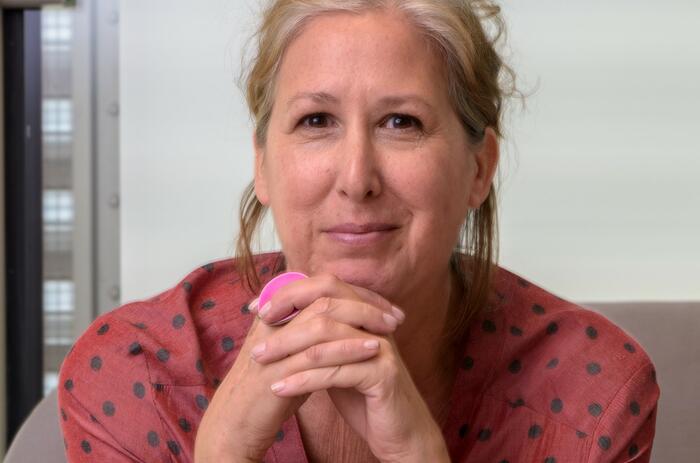
Eve Schillo is an Associate Curator in the Wallis Annenberg Department of Photography at LACMA (Los Angeles County Museum of Art). During her upcoming visit to Buenos Aires, Argentina, for Pinta BAphoto 2026, she shares an organic and systemic perspective on photography, one that does not need to remain within its own boundaries.
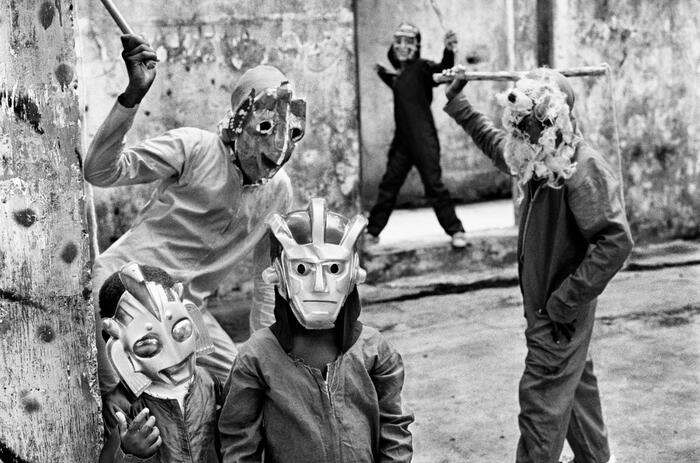
A tribute to Sandra Eleta, the work of Claudia Andujar, a solo show by Joaquín Sánchez, and a project that combines a bookstore and an exhibition chart a map that travels through Panama, Brazil, Paraguay, Mexico, Colombia, Chile, Argentina and Venezuela.
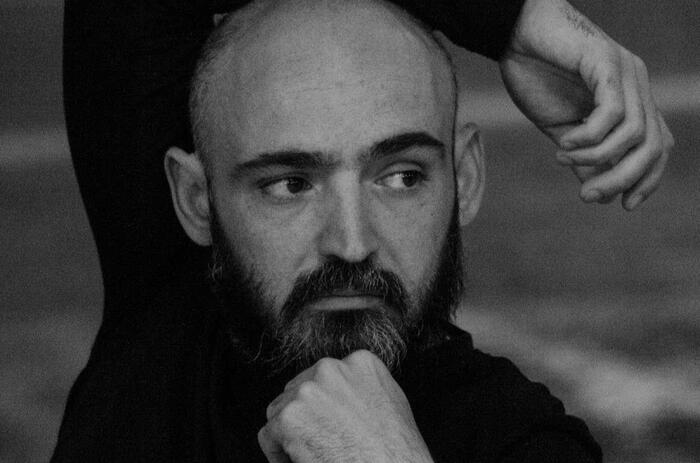
Artist, editor, workshop leader, and gallery owner. Depending on which “hat” he wears, Martín Bollati occupies different positions within the field of image-making (and thinking). He founded ATLAS, a bookstore and gallery specializing in photography, images, design, and architecture, as well as publisher SED Editorial.
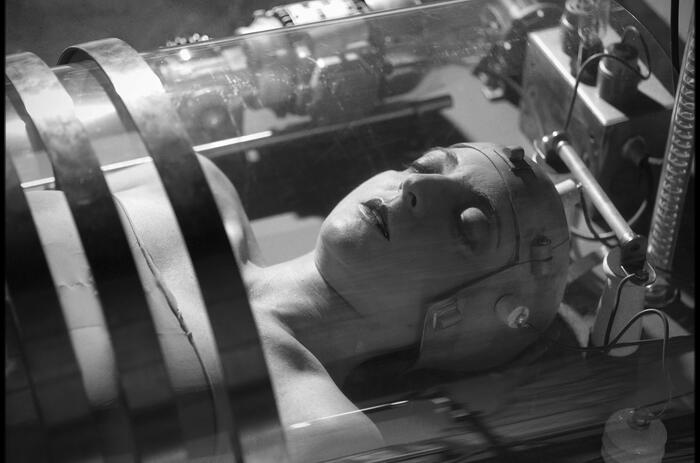
From October 22 to 25, La Rural hosts the 22nd edition of the only photography fair in Latin America: it celebrates two centuries of images with unique works, in-house curatorial projects, and an international presence.
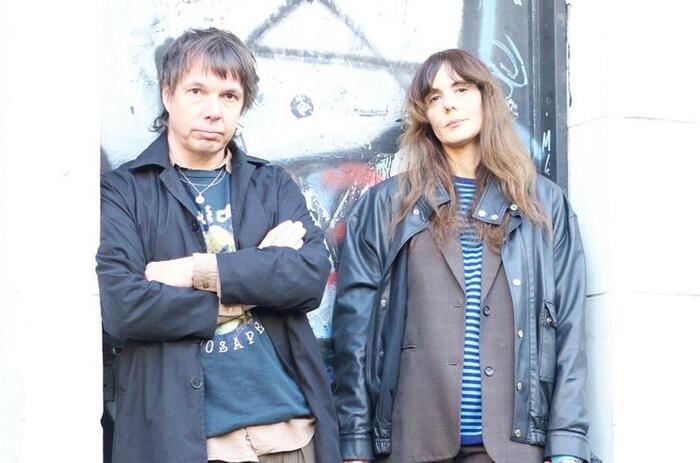
The founders of the NN gallery talk about their curatorial approach, driven by intuition and the periphery: “When it finally articulates well, it’s not that interesting.”
The cultural strategy office will open in late October with a site-specific exhibition by Olivier Mosset and Gilda Picabea.
Brazilian curator Thyago Nogueira, who heads Contemporary Art and Photography at Instituto Moreira Salles (IMS), reflects on the role of institutions, photography’s multiple dimensions, and the need to build new connections between the art scenes of Brazil and Argentina, ahead of his upcoming visit to Pinta BAphoto.