By
María Galarza
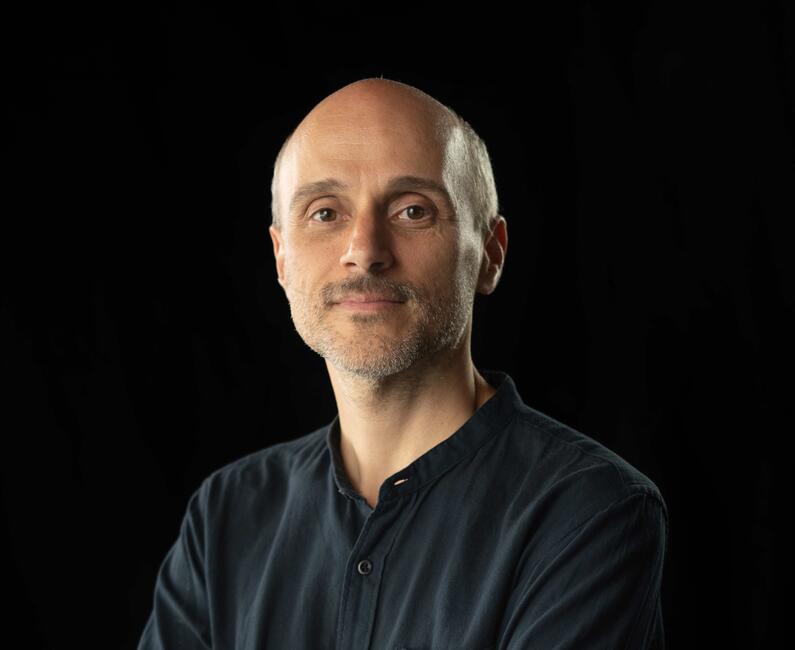
Brazilian curator Thyago Nogueira, who heads Contemporary Art and Photography at Instituto Moreira Salles (IMS), reflects on the role of institutions, photography’s multiple dimensions, and the need to build new connections between the art scenes of Brazil and Argentina, ahead of his upcoming visit to Pinta BAphoto.
What is your role at Instituto Moreira Salles (IMS), and what perspective on photography has developed over the years?
I am currently the coordinator of the Contemporary Art and Photography department. I am responsible for directing the institute’s activities from a contemporary perspective on photographic, visual, and artistic practice, not only in Brazil, but also in dialogue with other countries in Latin America, Europe, the United States, and Africa.
I joined the institute through the creation of ZUM, a photography magazine. Building on the magazine project and everything we had developed, the museum invited me to establish a contemporary photography department. Gradually, we expanded our plans and activities around photography through many conversations with artists, professors, and audiences.
Today, I oversee programs designed for artists at different stages of their careers: from those just starting out, who can gain visibility through the website, to more established artists who receive curatorial support to develop projects, present solo exhibitions, or have their work acquired for the collection.
The institute also has a department dedicated to the history of photography, focused on preserving photographic archives dating back to the beginnings of photography in Brazil in the nineteenth century, as well as archives related to music, literature, drawings, and prints.
You describe an institution built around dialogue with artists, listening to their needs. What role does that relationship play in your work?
I believe institutions exist for artists. It was very important to build a degree of stability and provide ongoing support for artistic production, allowing artists to take greater risks, experiment, and be more ambitious about what they can do with their art. They need to know that there is an institution willing to listen to them, care for them, recognize their work, and promote it.
That principle determines how I work. It is not about an institution developing a particular way of looking at the world and then imposing it on art to interpret works from its own perspective. I believe it is a collaborative process, closely tied to the trust artists place in us as a safe space that supports their work.
At IMS, how did the process of establishing a contemporary photography department and collection unfold?
I joined the museum in 2012, when the institution wanted to move toward contemporary photography, beyond its work with historical archives. When I started working on the magazine, many artists said that institutions were not paying attention to them. They were interested in established masters or the history of photography, but not so much in contemporary production. My task was to consider how we could demonstrate our interest in these artists and understand what they needed from an institution.
Over time, our conversations with artists showed us that the very definition of photography was changing. In the contemporary world, photography is evolving through its connections with many other disciplines.
That is why I tried to develop a broader vision of a photographic collection that ultimately considers an integrated history of visual culture. In contemporary practice, it is no longer always possible to distinguish whether an artist works with photography, then video, artificial intelligence, or installation.
That is one of my challenges at the museum. On the one hand, it is about offering a specialized and in-depth perspective on a discipline, connected to a well-defined history. On the other, it is about not restricting the conversation with diverse artistic communities that want to work with images in a more fluid and integrated way.
Which aspects of contemporary photography are still insufficiently represented in institutions?
There has been a formal, technical, and material shift in the history of photography, related to its connections with other technologies, such as artificial intelligence, but also with painting, installation, and other disciplines. All of this is transforming the very definition of photography.
In Brazil, over the past twenty years, there has also been a significant transformation in how we interpret the country's culture and history. This resulted from changes in academic thought and society more broadly, driven by various factors and, in particular, by university quota policies introduced during Lula da Silva's first presidency. These policies helped us recognize significant gaps and identify voices that had been silenced or rendered invisible, not only in political and cultural history, but also in art history.
Today, we are trying to develop a program that pays close attention to these voices and helps give them greater visibility. We work more with peripheral and marginalized voices, including Afro-Brazilian, Indigenous, and queer perspectives. These artistic practices are particularly powerful in Brazil today and are leading new ways of thinking about images.
Your background and experience as an editor of literature and art books seem closely connected to your curatorial work. How do these fields inform one another?
My academic background is actually in Law, after which I studied Literature and Visual Arts. I believe that experience gave me two fundamental principles. The first is the idea of establishing connections between different languages and forms of expression. I studied art and literature by reading extensively and sometimes reflecting on the work of writers who did not belong to the fields of art theory or the history of art and photography.
Photography particularly interests me because it is one of the artistic languages least confined to an artistic canon or a conventional art history. It disrupts the linear narrative used to construct the histories of painting, sculpture, and artistic movements. It always has one foot in art and another in science, anthropology, journalism, or show business. I am very interested in working with a language that can never be fully confined within a single system of thought. Since I come from another field, it is important to me to reinforce this multiplicity. That is why I also like to invite philosophers, writers, architects, and people from other disciplines to think about images in the context of the museum.
The second principle has to do with my experience as a book editor, which I see as closely related to curatorial practice. I try to work with research and translate it into something accessible, narrative-driven, and, to some extent, educational for audiences. I think of an exhibition almost as the editing of a book in three-dimensional form, adapted to an architectural space.
What did your background in Law bring to your work?
It was a career change. But beyond the practical skills I acquired through studying Law, I believe I also learned something about diplomacy.
I see curatorial work primarily as a form of diplomacy. Research alone is not enough; you also have to reconcile different worlds and find ways for perspectives that sometimes seem contradictory to coexist, listen to one another, and work together to create an original, powerful exhibition with new ideas that expands the vocabulary of the language, the scenography, and other aspects of the exhibition experience. Sometimes, curatorial work means mediating between different worlds, perspectives, budgets, and approaches to making things; between conservatism and progressivism.
What interests you about building a connection with Argentina through Pinta BAphoto? What do you hope to discover in the Argentine photography scene?
I am very interested in getting to know the Argentine scene. I think it is shameful how little our countries know about each other and our respective histories, because we share a history of colonization and have many things in common.
Unfortunately, the history of photography is usually told from the perspectives of Europe and the United States, while Latin America appears as a series of isolated episodes within that narrative. And yet both Brazil and Argentina have an enormous history of image-making.
I believe it is a professional responsibility, as well as a tremendous opportunity, to build bridges for collaboration and cultural exchange between our two countries. We need to look at this history and understand twentieth-century artistic production, the effects of dictatorships, and the legacy of colonization. I believe connecting these histories and strengthening our ties will be very important.
You have worked with Claudia Andujar's archive for fourteen years. What has that process of engaging with an archive over time been like, and how has your own perspective changed throughout it?
I believe Claudia Andujar's archive has been the most important curatorial and personal experience of my career. It has transformed the way I see art, make exhibitions, and think about institutional archives. It has also changed how I understand my own role, not only within the museum but also in society. It is an enormous, ongoing learning process that is far from over.
We organized two major exhibitions with her: one revisiting her early work and another dedicated to her work with the Yanomami. It traveled to ten countries and evolved through the pandemic, the Black Lives Matter movement, and discussions about global warming. It changed many times along the way.
We are now continuing to explore how to pass on this archive, this legacy, and this political commitment to images as tools for transforming the world to new generations of Yanomami.
We continue to expand the perspectives of this work and are entering a second phase, which involves working with the Yanomami so that they themselves can organize and inventory the archive within the museum. I believe Claudia is a great teacher who continues to teach us and open new doors for thinking about how to work with photography and what photography can do in the contemporary world.
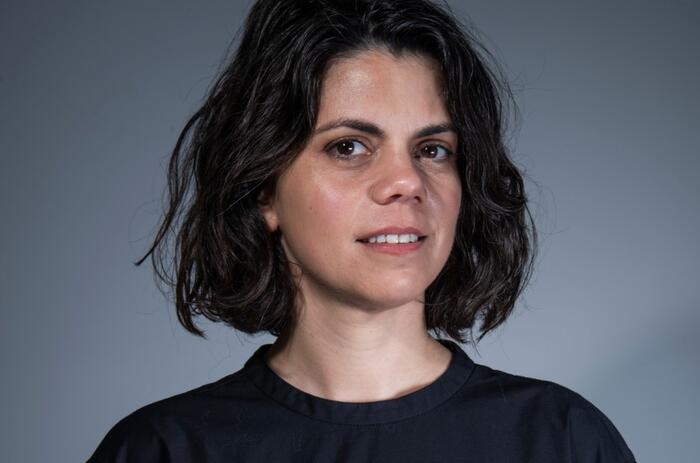
Whether it is from the archive to the gallery or spanning between research and curatorial practice, Mercedes Claus explores the different spaces that outline Argentina’s photographic scene. This is an interview about the circulation, legitimization, and interpretation of images, in light of her work as curator of RADAR at the upcoming edition of Pinta BAphoto.
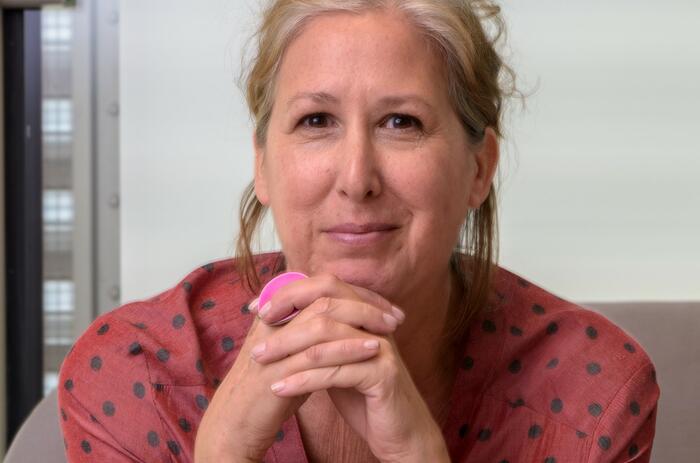
Eve Schillo is an Associate Curator in the Wallis Annenberg Department of Photography at LACMA (Los Angeles County Museum of Art). During her upcoming visit to Buenos Aires, Argentina, for Pinta BAphoto 2026, she shares an organic and systemic perspective on photography, one that does not need to remain within its own boundaries.
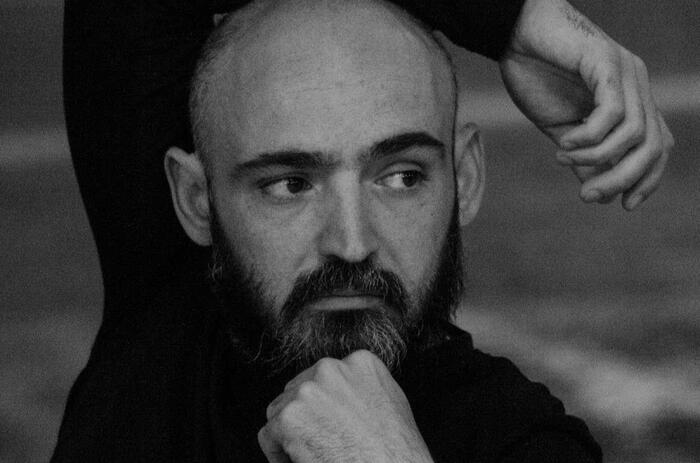
Artist, editor, workshop leader, and gallery owner. Depending on which “hat” he wears, Martín Bollati occupies different positions within the field of image-making (and thinking). He founded ATLAS, a bookstore and gallery specializing in photography, images, design, and architecture, as well as publisher SED Editorial.
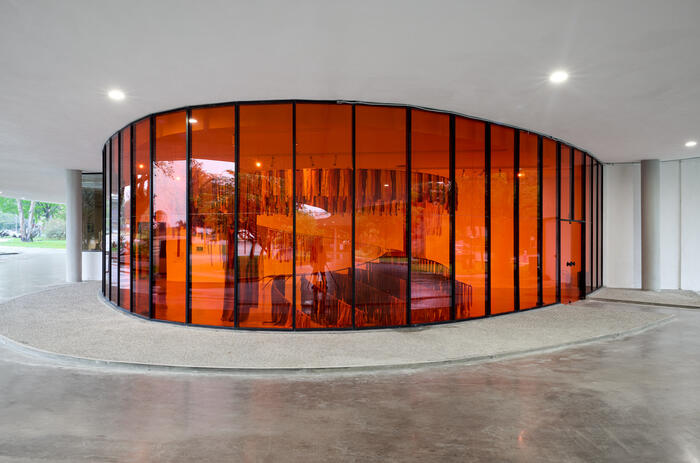
The museum returned to its headquarters after renovating the building, with 33 artists from 11 states and updates to its education, collecting, and dining offerings.