By
María Galarza
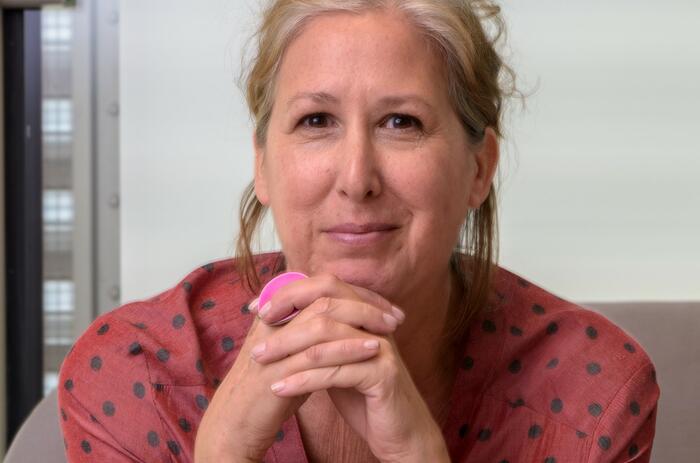
In conversation with Arte al Día, the Argentine curator and researcher discusses the process behind Instante/revelación: Moments in Mexican Photography, a new photography exhibition at Getty Museum, drawing on her role as Assistant Curator specializing in Latin American photography.
Originally conceived as a museum devoted to European art, the Getty later established a substantial photography department, opening its collection to artists from other backgrounds. Its holdings of Latin American photography were built largely through donations from collectors.
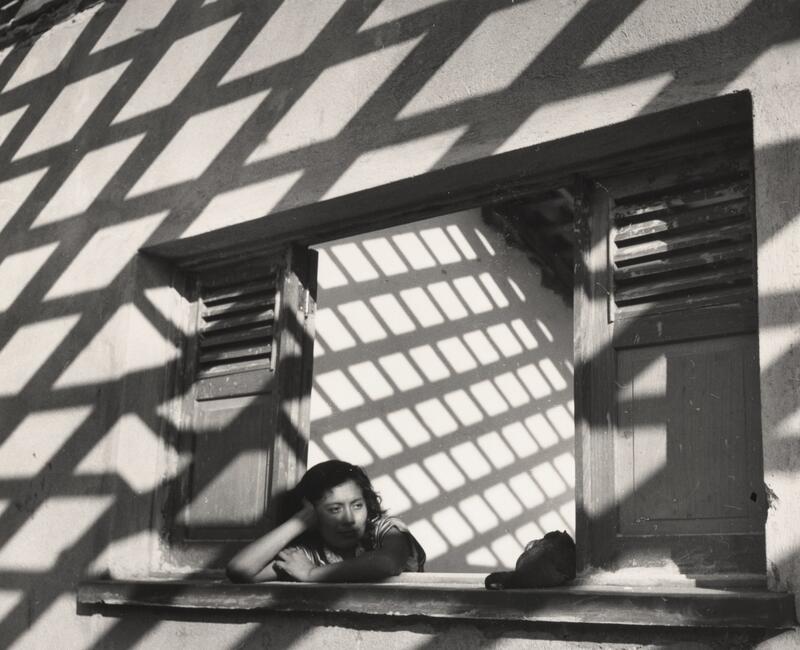
Julieta Pestarino became the Getty Museum’s first Assistant Curator specializing in Latin American photography, inaugurating a position that had not previously existed at the institution. Among her first projects, she curated the current photography exhibition, Instante/revelación: Moments in Mexican Photography, based on works donated by collectors Daniel Greenberg and Susan Steinhauser. The exhibition features works by Manuel Álvarez Bravo, Lola Álvarez Bravo, Manuel Carrillo, Antonio Reynoso, Héctor García, Mariana Yampolsky, Rodrigo Moya, Pedro Meyer, Graciela Iturbide, Yolanda Andrade, Pablo Ortiz Monasterio, Cecilia Salcedo Méndez and Flor Garduño.
“It was an interesting group of more than five hundred photographs, but it wasn't a collection put together by a researcher,” the curator explains.
What were the implications? The body of work was unevenly distributed: they included pieces by thirteen Mexican photographers, but while some were represented by a single photograph, another had nearly two hundred. There was also a substantial number of photographs from the 1920s, 1930s and 1940s, alongside works dating from as recently as 2017. There was no consistent or linear representation. It was neither a collection nor a closed body of work, but rather an accumulation with an unknown element at its core.
“I spent quite a long time trying to understand each of those images. Where they came from, what they were about, and looking into the background of all the works. We had complete series by some photographers, while from others we had just one photograph.”
The eclectic nature of the group of photographs posed a challenge when it came to shaping the curatorial narrative. The starting point eventually emerged from a book of photographs by Álvarez Bravo and poems by writer Octavio Paz. Julieta travelled to Mexico to interview the photographers who were still alive and visit their studios. She also explored museums and traced connections among the artists in the exhibition.
“Understanding how everything came together, what was happening around it, how these photographers worked, in what context, in what ways, for which media, how their photographs circulated, and how they engaged with the market are always the things that interest me most, given my background in anthropology,” Pestarino explains.
Many of the photographers in the exhibition were also involved in the same institutions. Pedro Meyer and Pablo Ortiz Monasterio founded the Centro de la Imagen and organized the Latin American Photography Colloquia. Manuel Álvarez Bravo—one of the exhibition's central figures—taught photography at multiple institutions, where Antonio Reynoso and Héctor García were among his students. His longstanding friendship and mentorship with Graciela Iturbide is also well documented.
Another common thread was their personal and professional relationships with prominent Mexican artists. Lola Álvarez Bravo was a friend of Frida Kahlo, while Manuel Álvarez Bravo was regarded as the photographer—and friend—of the muralist artists. Graciela Iturbide, in turn, developed a friendship with Francisco Toledo.
The photographers in the exhibition also worked alongside art historians, anthropologists and filmmakers. “Photography, as an applied discipline, exists alongside other fields, intersects with them and takes shape through those encounters,” says Pestarino.
In the course of this research, the curator eventually came across the book produced by Manuel Álvarez Bravo in collaboration with Octavio Paz. In its foreword, the writer recounts how, as a teenager, he experienced a revelation after seeing some of Álvarez Bravo's photographs in an avant-garde Mexican magazine in 1931, at the beginning of the photographer's career. The images depicted details of a tree, some curtains and a plant. Looking at them, Paz came to understand modern poetry as a way of seeing, through photography.
The book, titled Instante y revelación (Moment and Revelation), provided the inspiration for the exhibition's title, which was left untranslated into English. Fragments from Paz's poem Cara al tiempo (Facing Time) were also used to name the five thematic sections that structure the exhibition: Lo idéntico y lo diferente / Identical and Different; La sensación y la percepción / Sensation and Perception; Lente de revelaciones / Lens of Revelations; El ojo piensa, el pensamiento ve / The Eye Thinks, Thought Sees; and El tiempo no cesa de fluir / Time Never Stops Flowing. The decision established a poetic relationship between words and images, while also creating new ways of incorporating Spanish into the museum.
“Within a single section, there are photographs from different periods, but somehow they all respond to a specific question or theme,” Pestarino explains. The same approach informed the exhibition catalogue, which was also published bilingually and features the works on display. “This is something new for the Getty. The Maya Codex book, produced in connection with the exhibition, is a precedent. But that was a translation from Spanish based on the English-language catalogue.”
The book accompanying this exhibition is the first bilingual publication edited by the museum. It is available at the Getty and online. The exhibition remains on view until January 3, 2027.
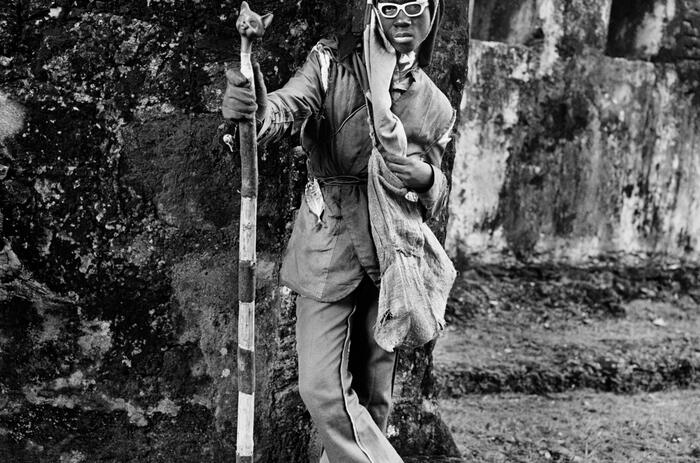
At the 22nd edition of Pinta BAphoto, the honored artist was Sandra Eleta, one of Latin America’s foundational photographers
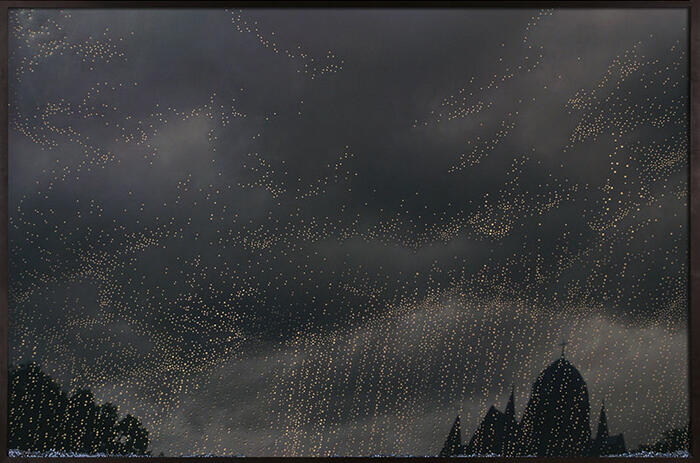
The Berlin-based Argentine artist was selected at Pinta BAphoto with a micro-perforated photograph.
Brazilian curator Thyago Nogueira, who heads Contemporary Art and Photography at Instituto Moreira Salles (IMS), reflects on the role of institutions, photography’s multiple dimensions, and the need to build new connections between the art scenes of Brazil and Argentina, ahead of his upcoming visit to Pinta BAphoto.
Whether it is from the archive to the gallery or spanning between research and curatorial practice, Mercedes Claus explores the different spaces that outline Argentina’s photographic scene. This is an interview about the circulation, legitimization, and interpretation of images, in light of her work as curator of RADAR at the upcoming edition of Pinta BAphoto.
Eve Schillo is an Associate Curator in the Wallis Annenberg Department of Photography at LACMA (Los Angeles County Museum of Art). During her upcoming visit to Buenos Aires, Argentina, for Pinta BAphoto 2026, she shares an organic and systemic perspective on photography, one that does not need to remain within its own boundaries.