By
Violeta Méndez
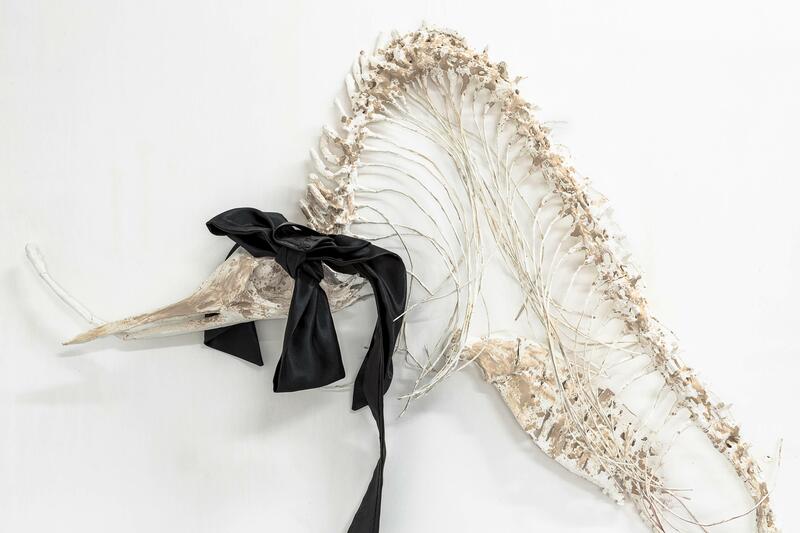
Just as Emilia de las Carreras (Buenos Aires, 1989) looks at the hermit crab and understands that leaving a mark means that life leaves marks on you too, engaging with her artistic practice inevitably means that little crusts of her narrative stick to us: the methodology she works with, her intuition as a collector, her thinking of the body as geology, her obsessions, her skeletal and exoskeletal sculptures. The artist's work explores bodies and their remains through a visual and sensory operation crossed with scientific research and self-knowledge, giving shape to pieces that evoke an intersection of the archaeological, the clinical, and the speculative. Her approach to art could easily fill dozens of pages; this is only one chapter.
How did your career as an artist begin?
My mom is an artist and my dad was a writer. Each of them had their own space for working things out, and that felt very natural to me, a privilege too. Having a personal space, a space for thinking, was important. Also, I'm the only woman among several brothers, and having that refuge—my room, or the studio—was always necessary. I got scolded a lot in primary school, for talking too much or causing trouble, and my logic was: "if I'm getting scolded this much as a little kid, that must mean I'm headed for prison when I grow up." And that didn't seem like such a bad scenario to me—romanticizing the whole situation completely, through the imagination of a child—I pictured that moment of confinement as a kind of privilege too. Having the time and the place to create: something that could get you through any situation, any obstacle.
I'd come home from school and my mom would be painting, and sometimes I'd paint over her work. That was my first approach to it. But painting frustrated me a lot. It took me to a very mental place, full of images. When I started working with my hands, with clay, that pressure I put on myself softened a lot. Being able to model things, to follow the morphology of objects, gave me a lot of pleasure. My painting surfaces were never the classic ones—they were always things I'd found on the street. So that's how I combined the act of collecting with starting to assemble things I'd gathered. My dad was a huge collector, and my whole house was full of scavenged stuff.
That's how I went from painting to sculpture, though the pictorial is still very present at a compositional level. With the objects I collect, the first thing that draws me in is often the color.
Three practices converge in your working methodology: a visual and sensory operation on bodies, captures from outside research—especially influences from various sciences like medicine and biology—which flow into a third element: self-knowledge and fictionalization. What led you to braid these three elements together instead of, perhaps, focusing on just one? And why do you think this triad works, that it found a place in art?
All the elements happen at the same time because I don't work in a unidirectional way. Everything coexists in the same ecosystem, simultaneously. That's how interconnections between works emerge. Not all of them speak to the same thing, but they all have some level of connection. One leads me to another, not in a linear way, but in layers, like sediment.
I work with materials that already have their own temporality, and putting them all together to coexist creates a new temporality; I even picture the image illustratively, this notion of braiding.
The pedagogical side interests me too. With Marina Daiez, who's an artist and a friend, we have a study group called El Grupo de Estudio de Arte y Salud [The Art and Health Study Group], where we work a lot on how we build our working methodologies, our processes. That led me to study and try to understand how I work, something I'm always revisiting because I also want to share it. That's how it expands and makes room for new things to come in. It's also an analysis with its own alphabet. On one hand, I share it, and on the other, it's encrypted; that's the mystery that ties all the connections together and gives me so much curiosity, and that's why I'm always studying, going back, trying to understand where things come from and how they connect—that's what keeps that little engine running, that interest.
It's a very thought-driven practice, but also a practice of thinking with your hands, with the material.
What's your work process like? Before you start, do you already see the finished piece?
No, not at all. There is a first image, though, sometimes a desire. I remember that for a show called Luego con los restos armarse [Then Assembling Oneself from the Remains], I had the image of a donkey that had no front legs, held up only by its back legs and a little wheel-less walker keeping it standing. I made a homemade taxidermy piece (fictional, because it wasn't really taxidermy)—I modeled the whole donkey based on the image I had in my mind, without looking at any photos. I ended up covering it with a corduroy fabric called "elephant skin." Then I added horsehair, and a horse's tail. It really looks alive, and it looks like a donkey, but if you look up a photo of the actual animal, it looks nothing like it. I enjoy working with the idea of things. I work a lot with morphology from that place, from where I feel it's a real image, working from the visual sensation.
I'm interested in processes. I'm more interested in hearing how someone made a piece than in the piece itself. There are a lot of works where I don't know how they're going to end up—I just have the desire to put a couple of things together, and the final result usually surprises me, and I love that.
Why are you interested in thinking about bodies from a geological, mineral perspective?
It has to do with a curiosity I've always had about the body, about seeing what's inside. Art history is full of this kind of imagery—those anatomical theaters where people spent three days inspecting a corpse. I've always felt drawn to those medical scenes. First, for personal reasons: I had scoliosis that was progressing very quickly, and I became a clinical case to study. I spent years going to physical rehabilitation centers, being examined, attending medical conferences. Aesthetically, I'd see those corsets, or they'd make a mold of my body, and with the fantasy of the plastic material and physicality I already had awakened in me, it seemed incredible. The shapes. How the body transforms. Questions of growth. Mummies. Orthodontics. There was always a very meticulous kind of observation of the body and anatomy.
I went through a phase of erotic imagery in my painting. Now it's more camouflaged, in a way. It shows up through the mineral, in the contrast between the skeleton and the exoskeleton.
You once said that you think of residue as a site of knowledge; given that you use residue in your work, we could think of your pieces as sites of knowledge too. Where does this image come from?
The idea of the site of knowledge came about because I was asking myself what my interest had to do with natural history or history museums. Like the history museum in Parque Lezama. Suddenly there's a lock of San Martín's hair; seeing that in person really moves me—that's where the question of temporality gets distorted. Like when you see museums that stole things from Egypt, seeing how someone carved something and you can still see the mark of the chisel, the human gesture on something made 4,000 years ago. It moves me deeply. In the end, natural history or history museums move me much more than art museums. At the same time, they're deeply controversial. Because who decides what gets preserved, and what doesn't? They carry a very anthropocentric, colonialist gaze. Practices tied to capture, extraction, and death, in order to later classify.
Museums produce in me both fascination and the urge to vomit. I always work with polarities. The fragile and the hard, that which protects and that which needs protecting. I also think museums are spaces that produce knowledge, but they don't question themselves—they stay stranded in time.
Here in Munich, I'm drawing with my feet, a lot of images I'm taking from these museums; I feel it's a more loving way of approaching that curiosity. By shifting the act of drawing from the hand to another part of the body, one that's not the usual one. It questions the hierarchical, whether in the body or in the ways we approach knowledge.
The idea of collecting objects to produce new narratives brings me to Ursula K. Le Guin's Carrier Bag Theory of Fiction, which proposes that the first human tool wasn't a heroic spear, but a container for gathering and sharing food, suggesting that fiction should focus on narrating everyday life and communal survival rather than conflict and violent heroes. Is that also how you see your artistic production?
Yes, totally. I think my work starts first from observation, and then from collecting. There's a specific kind of crab, the hermit crab, that picks up little crusts or gathers residue as it walks along; instead of leaving a trace, the environment leaves a trace on it. As if both possibilities existed.
It started out as something more intuitive, a desire to gather a few little things, and some of that became more obsessive. My first point of interest was watching people with certain obsessive tendencies to collect unnecessary things, and that struck me as a poetic act. There's a YouTube show called Extreme Cheapskates, which used to air on TV, that's spectacular—the people are completely out there, but there's a logic to their collecting that resonates with me a lot. There was one woman who'd go to every gas station with a bottle and take the liquid soap. Then, when it was about to rain, she'd rub the soap all over her car, and then it would rain and the car would get washed. All of that fascinates me.
Collecting is also about amplifying a gesture, and radicalizing it too. Taking the same gesture to an extreme can make something even more interesting, or give it more force.
What's your obsession right now?
I have an obsession that I don't think will ever become a piece: fruit stickers. I arrange them on the walls of my house, and suddenly I have whole vertical strips of fruit stickers. But it's more of a private practice.
In terms of my work, I've been really drawn to little pieces of glass lately. It's a bit like the practice of fakirs—gathering very sharp shards of glass without hurting myself. A kind of attempted practice of self-care.
Has the way you see art changed over time?
Yes, it's changed a lot, and I'm constantly reworking that thinking. But there's one throughline that's always held: honesty. I try to work from that place. I feel the relationship between art and life is very close, and I like a lot of artists who work that way, like Ana Gallardo, Fernanda Laguna, Flor Rodríguez Giles. People whose practices go beyond just participating in a gallery or a museum.
You're currently taking part in the AIR-M Ebenböckhaus residency in Munich. What are you working on there?
For years I was very interested in the Buenos Aires local scene, and I was always a big fan of my friends and colleagues—I wasn't that interested in going out to explore other scenes. But lately I've become curious about how my work might transform in a different context, because it does change my work quite a lot.
Right now I'm making these drawings I told you about, and also some sculptures. Germans have a different recycling system than we do, so I don't get that unexpected encounter of finding things on the street the way I used to. Everything is condensed into containers that are basically a treasure trove. I got put in touch with companies that generate waste, so now I'm working with industrial waste.
Emilia is currently part of the teaching team at Vergel for the "Painting in the Hospital" program, is a member of G.E.A.Y.S alongside artist Marina Daiez, and is an artist with Galería Grasa. She is now in Munich, having been selected by the Salta Art jury and the City of Munich's Department of Arts and Culture to take part in the AIR-M Ebenböckhaus residency.
Emilia will exhibit alongside Fátima Rodrigo (Lima, Peru) from September 17 to October 4, 2026, in Ways of Knowing Otherwise at SoSoSo Space, Lindenschmitstraße 27, Sendling, Munich, Germany.
Interview with Nuria Enguita, Artistic Director, MAC/CCB – Museum of Contemporary Art and Architecture Centre (Museu de Arte Contemporânea e Centro de Arquitetura), Lisbon.
Argentine by origin, the curator and former Director of the Visual Arts Department of the Artists in Berlin Program (DAAD) — a residency that connects creatives from around the world with Germany's cultural scene — has spent years building bridges between Latin American art scenes and the major centers of Western art.
Books are published about artists, museums, and collectors—but why not talk about the gallerist, the one who connects them all?
The curators present in their program at ARCOmadrid 2026 the exploration of the future as an open question. From theatrical play, where the dialogue between works and artists raises doubt and critique without certainties, the curators invite to “keep the eyes open” regarding what is to come.
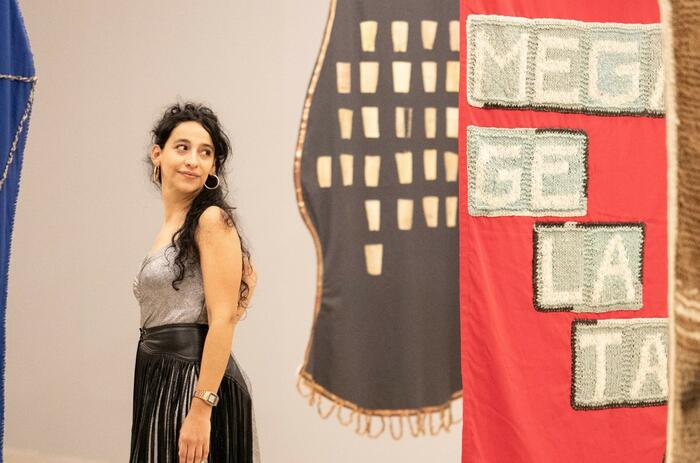
In this interview, the artist from Tucumán talks about her inspirations, goals, and connections with the public. About beauty, chance, and irony. About materials and words. About community.
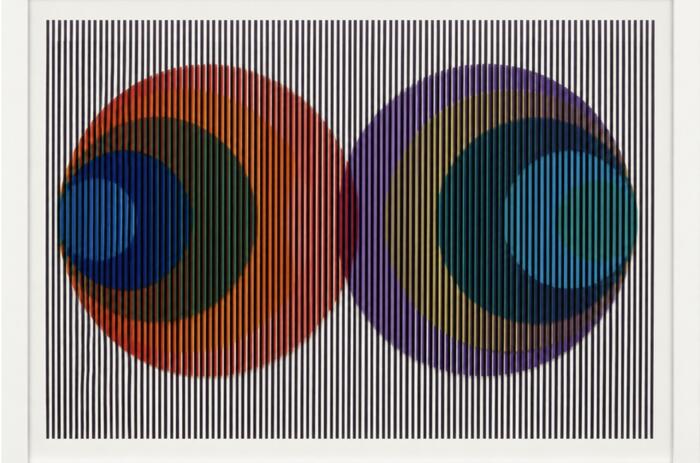
Talks with curators and artists, live music, and guided tours lasting between 60 and 90 minutes join an agenda that also includes the exhibitions by Alejandra Seeber and Agustín Riganelli at the Museo Sívori.
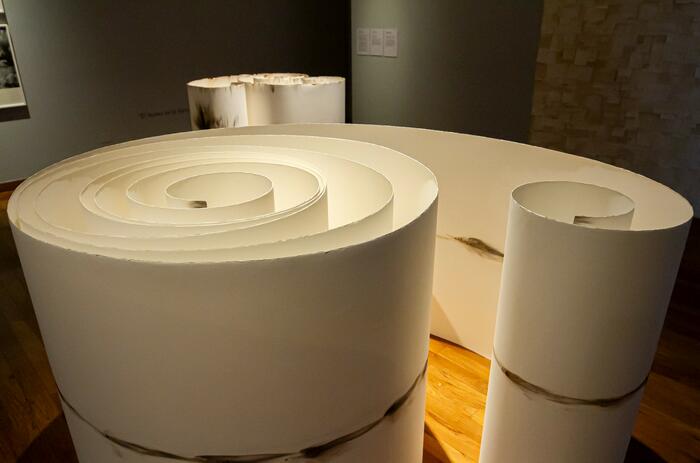
Yo, frágil brings together works by eight artists —including Nicolás Bacal, Marcela Cabutti, and Silvia Rivas— who explore interdependence through installations, sculptures, videos, and paintings. Through September 14 at Sarmiento 151, CABA.

An Interview with La Chola Poblete