
EXHIBITION ON FRAGILITY AS A SHARED CONDITION AT PALACIO LIBERTAD
Yo, frágil brings together works by eight artists —including Nicolás Bacal, Marcela Cabutti, and Silvia Rivas— who explore interdependence through installations, sculptures, videos, and paintings. Through September 14 at Sarmiento 151, CABA.
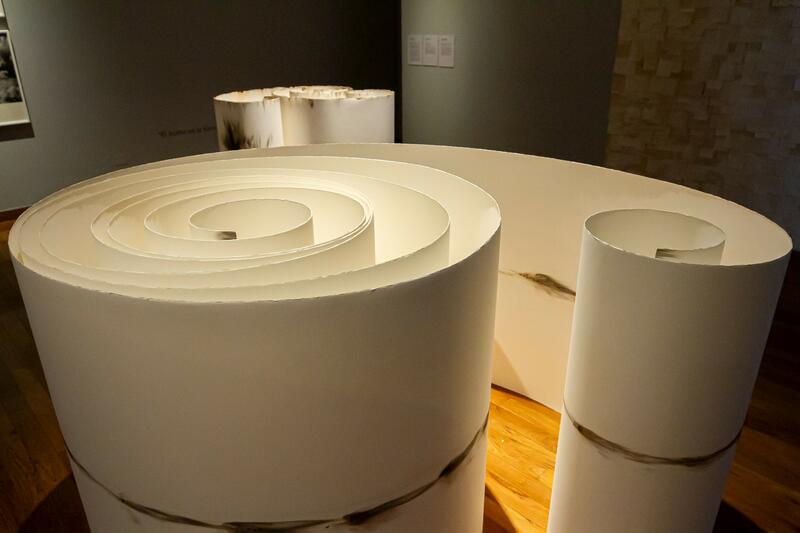
Palacio Libertad in Buenos Aires presents Yo, frágil (I, Fragile), a contemporary art exhibition that offers a sensitive exploration of the concept of fragility and contemporary ways of inhabiting the world. Curated by Sol Santich and Viviana Zargon, the show brings together the work of eight artists: Nicolás Bacal, Marcela Cabutti, Soledad Dahbar, Matilde Marín, Nicolás Oks, Silvia Rivas, Ángel Salazar, and Juan Sorrentino. The exhibition will remain open through September 14.
Yo, frágil proposes a reflection on the tensions of the present through installations, sculptures, videos, and paintings that articulate different temporalities and materialities. The show approaches fragility as a condition common to all forms of existence —human and more-than-human— and positions art as an open space for questioning and sensory perception.
The works brought together in this exhibition form a constellation of materialities, sounds, surfaces, lights, traces, and presences. Each piece extends beyond its own limits to come into contact with others, suggesting that what we see is only a fragment of a much larger network. Fragility then emerges as a relational condition: something revealed when we understand that no existence is entirely autonomous.
In this sense, the exhibition invites us to think of fragility not as an exclusively human condition, nor as a synonym for weakness, but as an experience shared with other forms of life. We are fragile because we are connected. We depend on what surrounds us and, at the same time, our actions transform the spaces, materials, and lives we share.
This perspective finds a particular resonance in contemporary research on mycelium. Beneath the surface, almost always out of sight, fungi build networks of exchange, communication, and collaboration that sustain multiple forms of life. Their logic answers to no single center or hierarchical structure: it expands, connects, branches off, and finds other paths.
Yasmine Ostejndorf-Rodriguez, in her text Seamos como los hongos, proposes recovering other ways of doing, listening, observing, organizing, and protecting, attentive to the bonds that hold together different elements and forms of life. The image of mycelium thus allows us to imagine other kinds of relationships. It also offers us a possible way of approaching art: not as a set of isolated objects, but as a web of connections.
Something of that logic runs through Yo, frágil. The works that make up the exhibition function as points in a network with no fixed beginning or end. Each holds its own temporality, while also carrying traces of others. There are materials that seem to hold onto a distant memory; sounds that evoke what is no longer there; surfaces that record the passage of time; forms that shift between the visible and the barely perceptible. The exhibition invites us to pause in front of these small signals and ask what happens when we pay attention to what usually remains at the margins of our perception.
In Mil mesetas, Gilles Deleuze and Félix Guattari describe the rhizome as something that "neither begins nor ends, but is always in the middle." Its fabric is made of connections: "and... and... and..." The power of this conjunction lies precisely in the way it displaces the idea of a fixed identity, closed in on itself. In place of the "I" that asserts itself as center, an "I" appears that is traversed by others, constituted in relation.
The "I" in Yo, frágil is, then, both an assertion and a question. It says "I," but that "I" is never alone. It is made of bonds, memories, materials, territories, sounds, and presences that precede it and accompany it.
Moving through the exhibition means entering into that web. That is why art appears here as a possible symbolic shelter — not because it offers definitive answers, but because it can open a space for questioning, listening, and imagination. Faced with a present crossed by multiple tensions, creating images, relationships, and possible worlds can also be a way of rehearsing other ways of being together.
Perhaps to inhabit is, precisely, to learn to listen to that of which we are part.
A stone. A sound. A trace. A surface. A body. A memory.
Each one can be a form of presence.
And perhaps fragility, far from being something we must hide or overcome, is the place from which a deeper awareness of our interdependence begins.
Yo, frágil invites us to pause there: in that uncertain territory where everything is connected, where no form exists entirely on its own, and where art can help us imagine —and feel— other ways of inhabiting the world.
The exhibition will remain open through September 14 at Sarmiento 151, Ciudad Autónoma de Buenos Aires, Argentina.
Related Topics
May interest you
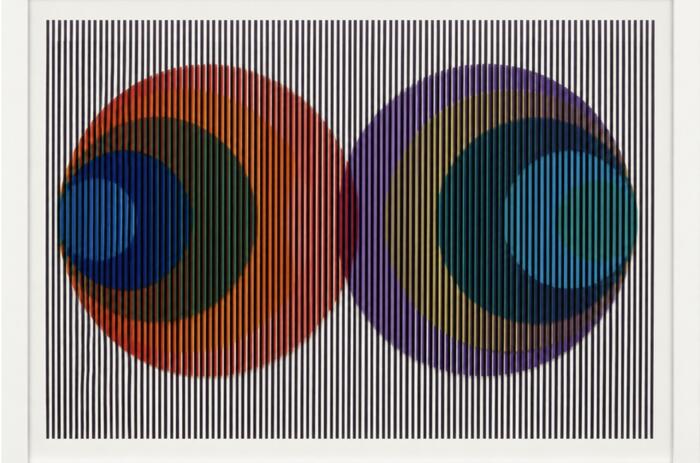
GALLERY RETURNS TO BUENOS AIRES WITH 14 SPACES IN PALERMO AND VILLA CRESPO
Talks with curators and artists, live music, and guided tours lasting between 60 and 90 minutes join an agenda that also includes the exhibitions by Alejandra Seeber and Agustín Riganelli at the Museo Sívori.
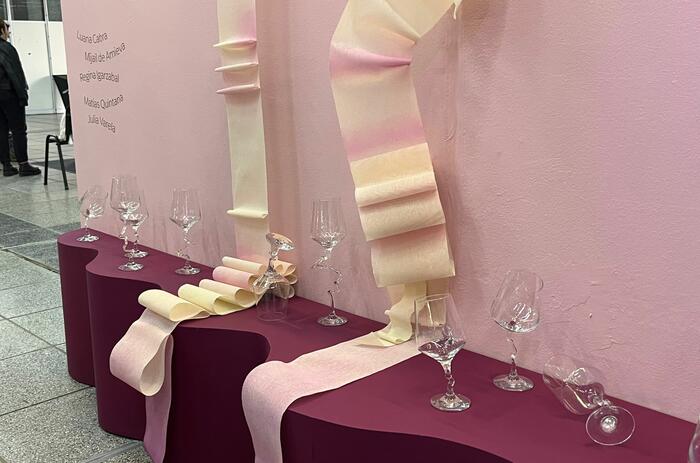
COLORS AND TEXTURES AT PLATEADA, LA PLATA’S ARGENTINE ART FAIR
With a work by Lido Iacopetti presented by Aldo de Sousa at the beginning of the fair, as a La Plata's city grail, as Facundo Belén—artistic director of Plateada alongside Virginia Martin—described it, the fair presents its 2026 edition in the main hall of the Teatro Argentino, in La Plata, Argentina.
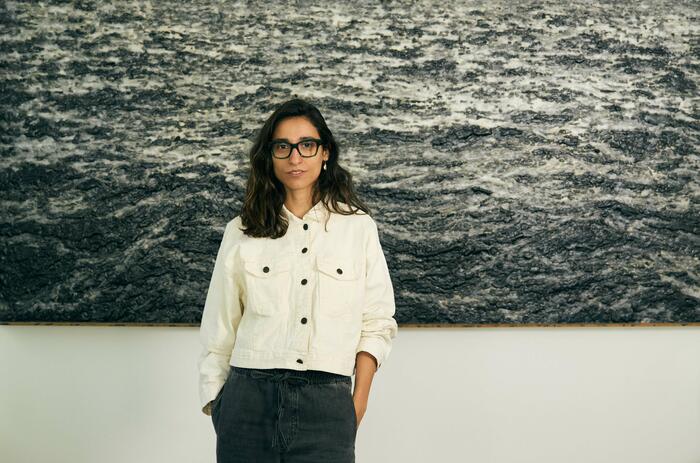
IRENE GELFMAN TO PARTICIPATE IN SECRETS OF COLLECTING
Various leading figures from the collecting world will come together at the Museo Nacional de Arte Decorativo to discuss the power of cultural platforms to drive artists and projects forward.
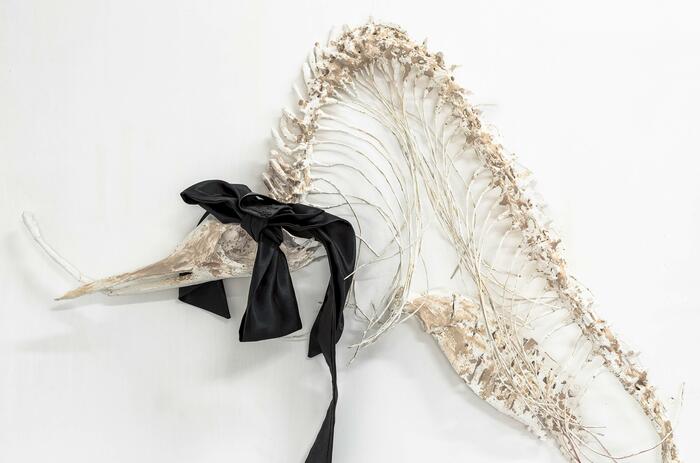
EMILIA DE LAS CARRERAS, THE ARTIST WHO PRACTICES FICTIONAL TAXIDERMY
Just as Emilia de las Carreras (Buenos Aires, 1989) looks at the hermit crab and understands that leaving a mark means that life leaves marks on you too, engaging with her artistic practice inevitably means that little crusts of her narrative stick to us: the methodology she works with, her intuition as a collector, her thinking of the body as geology, her obsessions, her skeletal and exoskeletal sculptures. The artist's work explores bodies and their remains through a visual and sensory operation crossed with scientific research and self-knowledge, giving shape to pieces that evoke an intersection of the archaeological, the clinical, and the speculative. Her approach to art could easily fill dozens of pages; this is only one chapter.
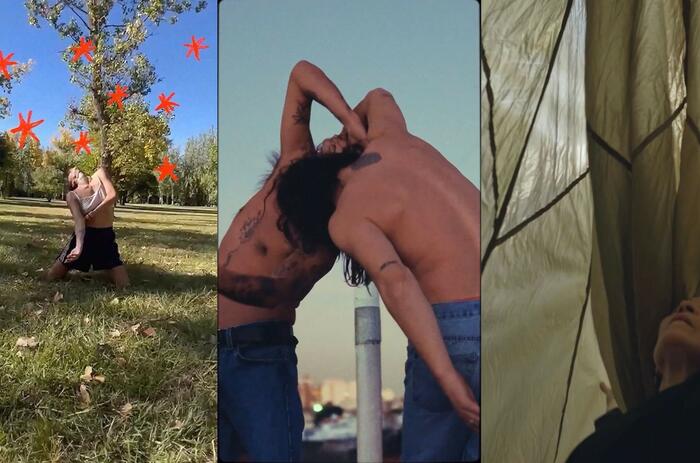
VENTANA GALERÍA PRESENTS “CORPORALIDADES” AT CANTRAL NEWBERY
The third edition of the curatorial cycle El amor puede funcionar brings together works by Jovita Kelmelmajer, Matías Jesús Funes, Romina Cruz, and guest artist Carla Fonseca.
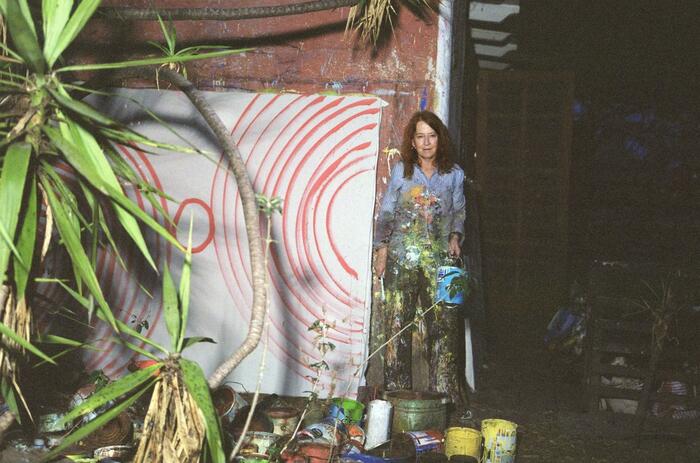
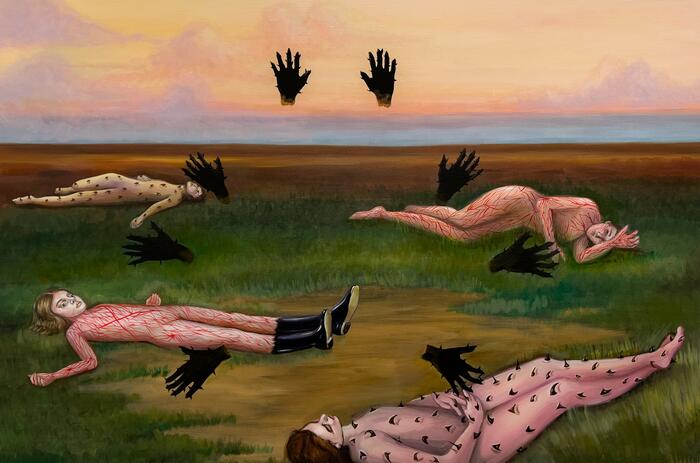
ESTRANGEMENT AND ANTICIPATION: ORNELLA POCETTI AND IVANA DE VIVANCO AT MACBA
The Museo de Arte Contemporáneo de Buenos Aires (MACBA) presented the work of two women artists. In ¿Cómo suenan las lágrimas antes de secarse? (What Do Tears Sound Like Before They Dry?), Ivana de Vivanco builds a warning. Snakes, with their capacity to sense catastrophe. In Curada de espanto (Cured of Fright), Ornella Pocetti brings together scenes that hold a story that never fully reveals itself. Both artists hold the abyss steady through anticipation and the suspicion of an estrangement. All you have to do is pay attention.