By
Álvaro De Benito
Interview with Nuria Enguita, Artistic Director, MAC/CCB – Museum of Contemporary Art and Architecture Centre (Museu de Arte Contemporânea e Centro de Arquitetura), Lisbon.
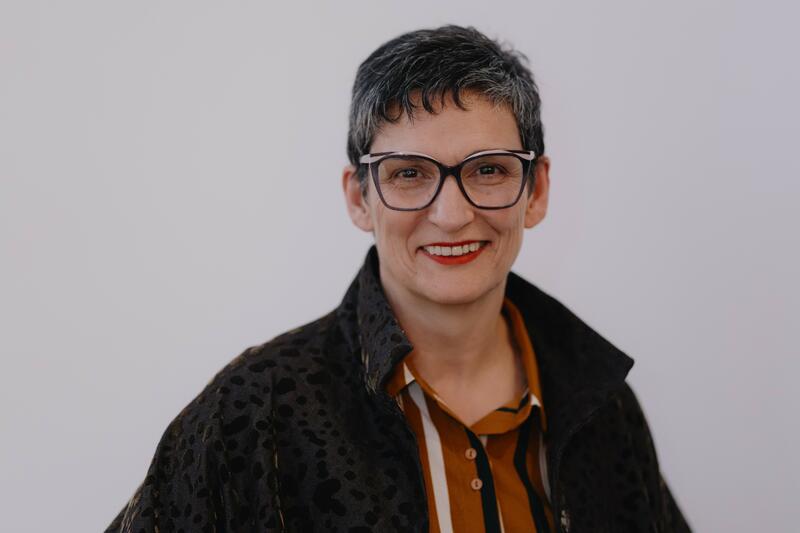
Nuria Enguita (Madrid, Spain, 1967) has served as Artistic Director of the MAC/CCB – Museum of Contemporary Art and Architecture Centre in Lisbon for the past two years, leading one of Portugal’s foremost museum institutions. Following her tenure as Director of IVAM (2020–2024) and, previously, of Bombas Gens Centre d’Art in Valencia (2015–2020), Enguita joined the institution shortly after its inauguration in 2023 as the Museum of Contemporary Art of the CCB, a space conceived to house four of the country’s most significant collections of modern and contemporary art. Drawing on extensive experience in the management of cultural institutions, she approaches the MAC/CCB project through a framework in which collections, research, and the relationship between the institution, its social context, and contemporary artistic practices occupy a central role, while remaining attentive to the complexities of contemporary cultural policy.
You joined MAC/CCB one year after the institution underwent a major restructuring, bringing together four collections within a model that combines public and private dimensions. What were the principal challenges upon your arrival, and how have you addressed this distinctive configuration?
When I arrived at MAC/CCB, the primary challenge was to articulate these markedly different collections. The task was not to begin anew, but rather to construct a coherent narrative from materials characterized by diverse origins, logics, and institutional statuses, both public and private. Our approach has been to develop a framework through which visitors can understand the evolution of art from the twentieth century to the present. To achieve this, we organized the permanent collection into two broad sections—modernity and contemporaneity—which function as interpretative structures. At the same time, another aspect was fundamental to me: situating this narrative from within Portugal. Museums do not speak from a neutral position; they operate from a specific context, and that context should be made visible. I do not subscribe to a binary opposition between center and periphery, but rather to the idea of a network of places engaged in dialogue with one another.
To what extent does the cultural policy of a public administration shape your role as director?
I have now directed four museums, and I have always maintained a very clear red line: I have never accepted, nor would I ever accept, political interference in programming. When someone is appointed to a directorship through an open competition on the basis of a project proposal, that appointment entails a clear agreement regarding their understanding of what a museum should be. I do not conceive of institutions as neutral spaces; rather, they are entities that require autonomy in order to generate critical thought. A museum is a site of knowledge and experience, not merely of entertainment or market activity, although it inevitably coexists with those tensions. For this reason, I believe cultural policy should be developed through a more open dialogue with cultural practitioners and institutions. That said, autonomy does not eliminate negotiation with public administrations, which is an inherent part of institutional life.
At such an early stage in the institution’s development, can this ongoing negotiation risk undermining the museum’s autonomy or public trust?
The crucial point is ensuring that negotiation does not become intervention in the content of the project itself. It becomes problematic when there is no clarity regarding the framework within which decisions are made. If boundaries are not clearly defined, negotiation can easily become a form of continuous pressure. However, when there is a clear recognition of and commitment to the project, negotiation becomes a normal and necessary aspect of institutional practice.
In an increasingly interconnected and globalized world, certain hegemonic cultural paradigms often become consolidated and reproduced—albeit with local variations—across diverse historical and geographical contexts. Do you believe that cultural policies are, in some sense, imposed, or is there still room for what we might call intellectual freedom?
As I mentioned earlier, in my own experience I have never worked under direct impositions regarding programming. The leadership of a museum requires genuine intellectual autonomy, particularly when articulating a curatorial or institutional vision. The question, rather, lies in how that autonomy is managed. There will always be institutional structures, forms of oversight, and shared decision-making processes, and that is entirely legitimate. Such mechanisms are part of the normal functioning of public institutions. However, this is fundamentally different from direct intervention in content, which, in my view, is unacceptable.
I have to ask about decolonization policies and the ways in which they frame institutional practices. Looking at many exhibition programs, one often encounters a recurring geography of artists originating from former colonies, which can arguably perpetuate a form of neo-colonial logic. How do you view the debates around coloniality and decolonization in Portugal?
Portugal experiences these debates differently from other European countries because its colonial history remains relatively recent. Most of its former colonies gained independence during the 1970s, and that history continues to exist as living memory. Lisbon is a city where this past is neither abstract nor distant; it is embedded in everyday life and visible in the city's social and cultural fabric. For that reason, the debate here possesses a particular intensity.
How does that translate into the cultural activities of the institution?
I believe it is essential to revisit inherited narratives and create space for alternative perspectives. I have always been interested in non-hegemonic histories, as well as in artists and practices that remained outside the canon, including many women artists who were rendered invisible for decades. At the same time, I think there is a risk in reducing these discussions to questions of symbolism or identity alone. Symbolic restitution is necessary, but it is not sufficient unless it is accompanied by substantive structural change. I am more interested in policies that create conditions for openness than in closed ideological frameworks. Within our program, this is reflected in the ways we construct narratives and organize exhibitions. We strive to ensure that narratives are neither singular nor fixed, but rather open to multiple points of entry and interpretation.
There is a particular historical dynamic within Ibero-America whereby Brazil represents Portugal’s principal colonial relationship in the region. Yet Brazil is also such a significant political and cultural actor that it inevitably occupies a central position. Does MAC/CCB approach Latin America primarily through Brazil, or are other dimensions and discourses equally important?
I always position myself from the place in which I work, and from Lisbon the relationship with Brazil is both evident and fundamental. Brazil produced one of the most significant artistic modernities of the twentieth century, making it an unavoidable point of reference. However, Latin America is not synonymous with Brazil. It encompasses a highly diverse constellation of countries, artistic scenes, and historical temporalities. I have worked with Brazilian artists from a range of contexts throughout my career, and it is precisely that diversity that has long interested me. Brazil is important to MAC/CCB, but it is by no means the only important context.
How, then, is this broader perspective on Latin America constructed within a museum such as MAC/CCB, which is often expected to engage with the region as part of wider political agendas?
It is constructed by resisting simplification. The objective is not to replace one center with another, but rather to expand the map. Each context possesses its own history, rhythms, and conditions, and museums must be capable of working with that complexity.
Can this approach also be extended to a more immediate context that includes Spain? I am asking not so much because of your own position as a Spaniard working in Portugal, but because the social, political, and perhaps even cultural distance between the two countries has traditionally seemed much greater than their geographical proximity would suggest.
I consider myself an Iberianist. Given the intensity of the actual relationships between Spain and Portugal, I am often surprised by the degree of cultural distance that still exists between them. There are countless human, economic, and cultural connections that do not always translate into sustained institutional cooperation. In that sense, I believe there is far more exchange than is commonly acknowledged, but also considerable scope for strengthening those relationships. I approach this not through the lens of national identity, but through the recognition of a shared geographical and historical reality.
Earlier, you outlined several principles that shape your understanding of what a museum should be, particularly beyond the exhibition itself. What do you see as the most important areas of activity in terms of research and public engagement?
Everything surrounding an exhibition is as important as the exhibition itself. Research, public programs, educational initiatives, debates, and conferences all add layers of interpretation and open pathways to different meanings. I am particularly interested in museums functioning as spaces where disciplines can engage in dialogue on equal terms, rather than being treated as ancillary components. In other words, they should operate as active mechanisms for the production of meaning. An exhibition should never be entirely closed; it should remain open, continually generating new possibilities for interpretation.
Ultimately, this seems to provide a clear and robust foundation for defining what a contemporary museum is today, from your perspective.
The contemporary art museum is a singular institution because it maintains relationships with many other spheres without being reducible to any one of them. It is connected to education, social movements, and the formation of artists, yet it cannot be confined to any of those domains. It is a complex ecosystem in which people, ideas, objects, temporalities, and geographies converge, and where multiple temporalities coexist. It is essential that the museum remain a space of intellectual freedom—a place where thought can unfold and where art enables us to think differently. Its particular strength lies in working through the constant superimposition of past, present, and future. From within this heterochronic condition, research, exhibitions, and public programs continually expand the ways in which we see and understand the world.
The acclaimed Chilean artist joins the institution that brings together the most distinguished figures in architecture, visual arts, literature, and music in the United States.
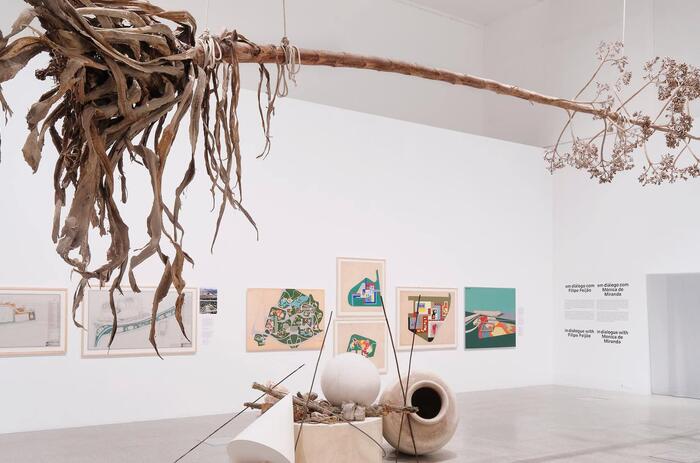
Lugar de estar: o legado Burle Marx (A Place to Be: The Legacy of Burle Marx) is the exhibition presented by Lisbon’s MAC/CCB – Museum of Contemporary Art and Architecture Center, showcasing an extensive selection of landscape projects for public spaces developed by Roberto Burle Marx (São Paulo, Brazil, 1909 – Rio de Janeiro, Brazil, 1994) and his collaborators over nearly seventy years.
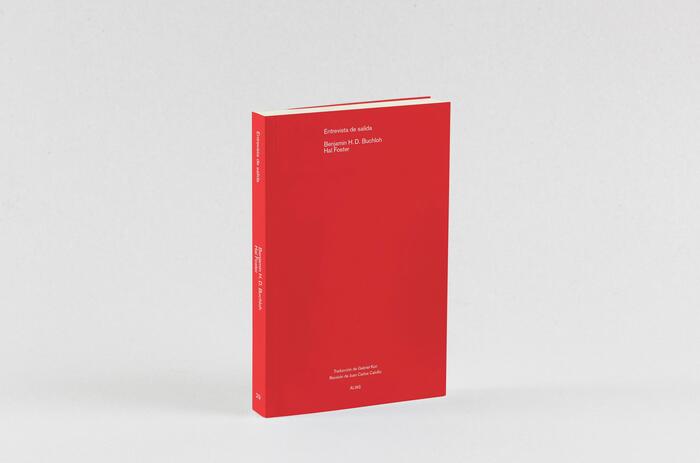
Alias editorial publishes the Spanish translation of the conversation between Benjamin H. D. Buchloh and Hal Foster, conceived as the farewell of one of postwar art criticism's central figures.
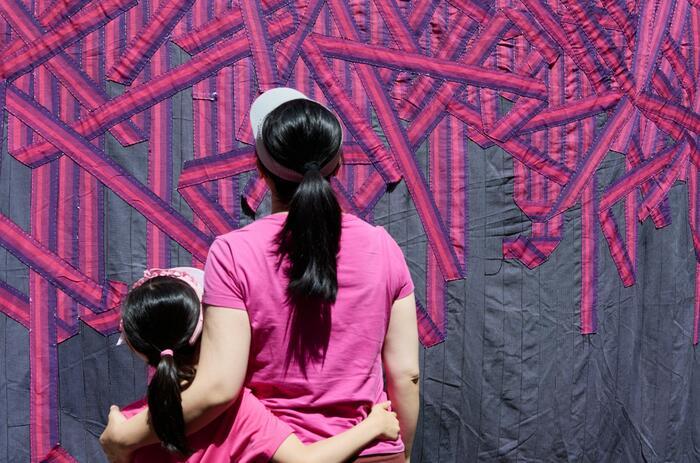
Art Basel in Basel remains the centerpiece of one of the most intense weeks in the international art calendar. While dozens of exhibitions, events, and satellite fairs take place across the city, the fair itself continues to set the tone for the market and offers a valuable opportunity to gauge both collector sentiment and broader trends in contemporary art.
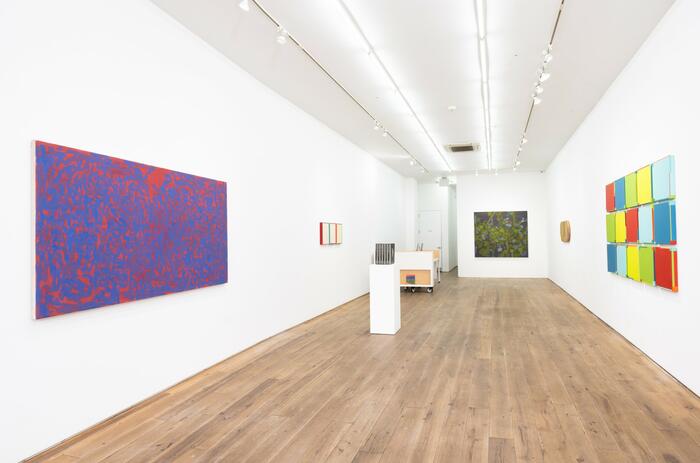
By Maria Paula Suarez and Montserrat Miranda Ayejes
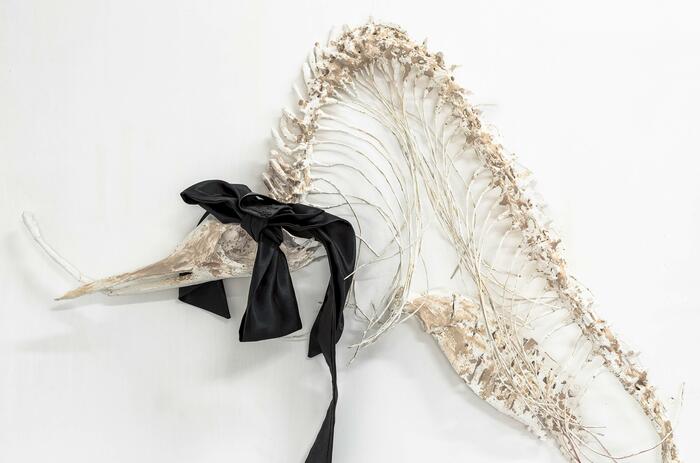
Just as Emilia de las Carreras (Buenos Aires, 1989) looks at the hermit crab and understands that leaving a mark means that life leaves marks on you too, engaging with her artistic practice inevitably means that little crusts of her narrative stick to us: the methodology she works with, her intuition as a collector, her thinking of the body as geology, her obsessions, her skeletal and exoskeletal sculptures. The artist's work explores bodies and their remains through a visual and sensory operation crossed with scientific research and self-knowledge, giving shape to pieces that evoke an intersection of the archaeological, the clinical, and the speculative. Her approach to art could easily fill dozens of pages; this is only one chapter.