
By
Álvaro De Benito
An Interview with La Chola Poblete
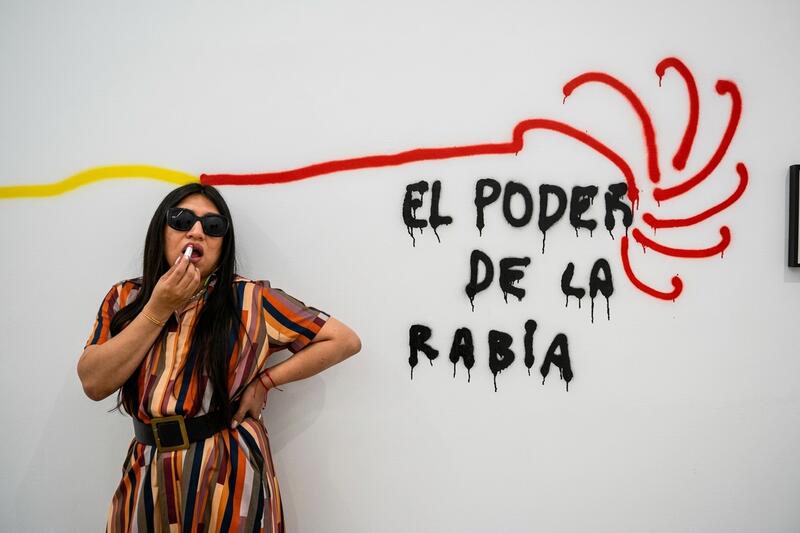
La Chola Poblete (Guaymallén, Argentina, 1989) has established herself as one of the major names to watch in Latin American art. Her practice, visually striking in its simplicity and impact, draws us into a body of work that emerges from a dialogue between the body, the street, the everyday, and a persistent idea that art should be understood as action. Emerging from the underground and popular culture, her visual language takes shape through painting, drawing, and materials capable of extending the performative activity through the artist’s own process of transformation.
Far from renouncing her transition into the institutional sphere, her work has begun to occupy institutional spaces, galleries, fairs, and museums—environments in which she feels comfortable playing with the expectations projected onto her. Taking advantage of her dual presence in Madrid these months, where she is exhibiting continentes como semillas at La Casa Encendida and presenting MARRÓN BARROCO at Travesía Cuatro, her first solo exhibition at the space, we spoke with her about the boundaries between art and life, the transformation of the body and materials, and the need to continue creating discomfort from any position.
You are now surrounded by the interdisciplinary universe of continentes como semillas, where performance, painting, drawing, and musical components coexist. Your practice also stands out for employing a variety of techniques and disciplines that engage in dialogue, yet whose results are markedly different. When the languages of others enter into play, how do you integrate them into your own expression in order to articulate a proposal like this?
I find it very interesting. When I was invited to work with Pedro G. Romero and Niño de Elche and saw the pieces, at first, I did not understand what the point was, but when I saw the completed exhibition, I found the relationship that emerged to be highly relevant. I felt that there was something performative in Niño de Elche’s music, in the gesture of the weaving, and in the mantle, which I strongly associated with aguayos. It is curious because originally, they were artisanal textiles that told stories and were passed down through generations, whereas today they are industrial and made by a machine. I am very interested in that formal relationship. On the other hand, I am also drawn to the idea of bursting into and invading a space with an exhibition: bringing that marginal space, from the street into the interior.
By invading the space with that projection, the work and you yourself enter into the dynamics of the institutional system. How do you negotiate the tension between criticizing the system and participating in it? Do you see it as an opportunity to make the critique visible, or rather as a provocation within the very game of the art world?
I have always positioned myself as an underground artist. My earliest works took place in spaces where the only thing that interested me was action art. My references at the time were Regina José Galindo, Pedro Lemebel, Giuseppe Campuzano, and Ana Mendieta, because there was something about the body and the street that interested me as I constructed my own identity. When opportunities arose to exhibit in galleries, fairs, and museums, I felt that the expectation was for me to limit myself, so I did exactly the opposite. My career has been based on understanding those mechanisms and systems of power in order to use them in reverse.
Perhaps there is also an expectation that artists who come from the margins, when they enter the institutional circuit, must adopt a more submissive position, one more attentive to the expectations of the market or of criticism.
When people talk to me about colonialism, I say, “Well, now I am going to appropriate this and colonize this place.” When they expect me to take on the role of the victim, I behave like a diva. It is a way of occupying a space, and I do not think there is anything wrong with that. At the end of the day, art is a job, although at first it felt strange to make a living from it. It is about turning clichés about where you are supposed to belong according to the work you produce on their head. I like to say many things through images. Anyone who understands the world in which I live can understand it. That is why it makes no difference to me whether I am on the street or inside an institution: I deny myself nothing.
There is a deliberate use in your work of an eminently urban and Western language, even though you were born and raised in a much more rural environment, more closely connected to Indigenous culture. This brings us to the question of what is expected of someone based on their origins and whether everything else is appropriation. Obviously, this is a constraint, but what is the meaning of this gesture and what do you intend by it?
I consider myself a collector of situations. I am very interested in contact with the street and the under. When I go bowling, for example, I go into the bathrooms and photograph all the graffiti and notes that people leave behind. I find that impulsive and immediate gesture of putting down what you are thinking or the song that came into your head beautiful. I have always considered it art. I also consider myself a rock person because I have lived in that environment for many years, and it is something that is very much my own. I also like to write, so I feel that language is very close to me, and I do not see it as appropriation, but rather as part of the world I inhabit. I have been part of collectives, I have gathered in people’s homes to come up with slogans for marches, and I have been involved in activism. All of that brings you closer to painted walls. Even when there is a curatorial framework, I like to bring in all those people who were decisive in generating cultural and social change.
When looking at the larger body of your practice, the performative charge remains evident in your pictorial and material language. That substrate underlying each drawing, each collage, and each pictorial action makes me wonder whether what we see functions as an end in itself, as a mere record, or as part of the performative action itself.
That is an interesting point. I have always drawn and consider myself a draftsman, but I began using my body to channel the questions I had about my identity and about what I believed art should be. Over time, I felt that this concept had become exhausted within performance, and I grew tired of my own body and of theory. I then began looking for materials that could be performative in themselves, such as bread. I realized that I could give it an initial form, but I was interested in the process that followed: whether weevils appeared or whether the form disappeared. That seemed to me the closest thing to transitioning, because the ultimate transition is death. I found it beautiful, and it had a great deal to do with what was happening to me in relation to my gender.
There, once again, you found a connection, more at the level of technique, between that history and personal projection and a concept such as transformation.
I also found something similar in watercolor. I work on them horizontally, mix pigments, and when I return to the studio the following day, I discover that everything has deformed. Action art or performance is still present, no longer in my body, but in the materials. The same thing happens with potatoes: they change color, lose their smell... There is something alive in that transformation that interests me greatly. I do not know whether it is a record or a residue; I see it more as a becoming of the body.
The reinterpretation of corporate logos and icons as symbols of what one seeks to oppose has traditionally not followed specific segments or classifications of artists. Would you say that there is a certain preference for using these symbols as a universal resource to create a greater impact in conveying a message of protest?
It functions somewhat like a church, where there is a very clear iconography and set of symbols. I am interested in ensuring that the viewer—the general public, not the theorist or intellectual—does not feel excluded and can recognize what they are seeing. I want anyone who enters a museum or gallery to be able to understand that language. On the other hand, the logos I choose have to do with Argentine identity. Quilmes beer, for example, takes its name from an Indigenous people, which is very interesting if you investigate its origins. In the exhibition, the first reading refers to beer, but on a deeper level it speaks about something else. In a church, you see a dove and do not think only of the animal, or you see bread and wine and do not think about getting drunk, but rather about religious symbolism. Playing with images and changing their context in order to generate another narrative seems to me a very powerful resource.
Along those same lines, as evidenced by some of the series of paintings and watercolors featuring Quiero dormir cansada (2026) shown in MARRÓN BARROCO, one can perceive a very pop language in your work, characterized by flat colors and a strong visual impact.
I consider myself a pop artist, and I have always been fascinated by Pop Art, and in Argentina there is a very strong current that resonates in my work. I am interested in the piece being received in the way one listens to a song, transporting you and allowing you to identify with what you are seeing. I do not believe in conceptual art; it bores me. I am not interested in sitting in front of a work simply to think because it does not change anything for me. I would rather paint a wall in a more punk, real, intimate, and popular way. There is a great deal of that Argentine folklore—the choripán, being out on the street with a beer, listening to cumbia—that leads you to become this kind of artist. Everything else makes me feel too refined, alienated, and I like to play with that idea of the popular. Whenever people tell me that I am ordinary, I say that I am not ordinary, but extraordinary.
Considering your most recent works, I wonder whether it can be said that physical bodily expression, performance in its strictest sense, is being relegated to the background. This raises the question of whether this is a progressive distancing from action or whether performance has simply been reconsidered in a more subtle form.
Last year I did my final mud performance in Buenos Aires, but I do not feel that I have stopped performing because I continue to practice performance in my everyday life. When I go out into the street, I am still a body moving through situations. If I go to a restaurant, I will probably make people uncomfortable, and that is the same thing I used to do with my body in art. I no longer need to frame it within an institution or in a photograph. For example, I never changed the name on my DNI. When I am at an airport and security personnel do not know how to react or how to address me, that is an everyday performance; I am simply not recording it because I am living it. I enter certain spaces as La Chola, but if the police stop me, I am the person my mother gave that name to. It does not cause me dysphoria or dissociation; it is about living alongside it. I am still a performance artist; I simply do not need anyone to document me.
La Chola Poblete, Niño de Elche and Pedro G. Romero: continentes como semillas can be seen through January 10, 2027, at La Casa Encendida, Ronda de Valencia 2, Madrid (Spain). Meanwhile, MARRÓN BARROCO can be visited through November 7, 2026, at Travesía Cuatro, San Mateo 16, Madrid (Spain).
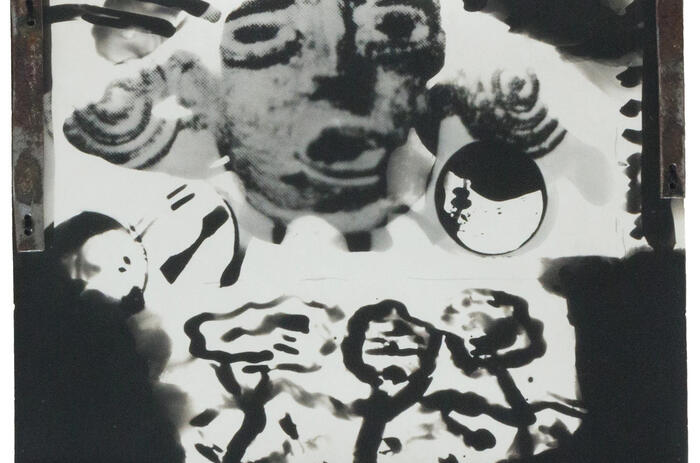
The institution is reinforcing its commitment to Latin American art with three exhibitions that, like the thematic lines underpinning this season, will explore the body, memory, and participation.
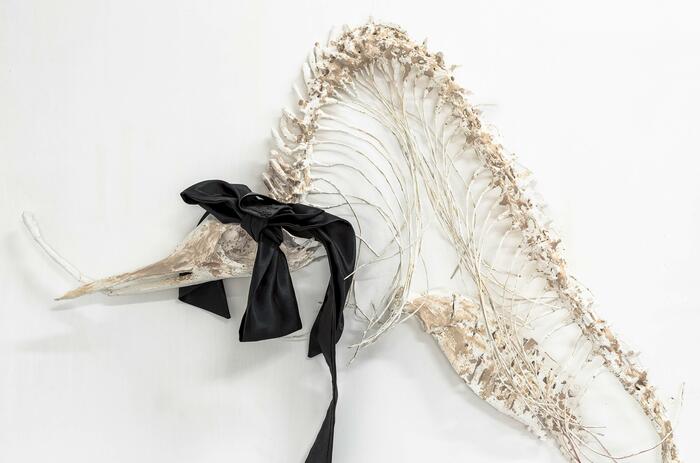
Just as Emilia de las Carreras (Buenos Aires, 1989) looks at the hermit crab and understands that leaving a mark means that life leaves marks on you too, engaging with her artistic practice inevitably means that little crusts of her narrative stick to us: the methodology she works with, her intuition as a collector, her thinking of the body as geology, her obsessions, her skeletal and exoskeletal sculptures. The artist's work explores bodies and their remains through a visual and sensory operation crossed with scientific research and self-knowledge, giving shape to pieces that evoke an intersection of the archaeological, the clinical, and the speculative. Her approach to art could easily fill dozens of pages; this is only one chapter.
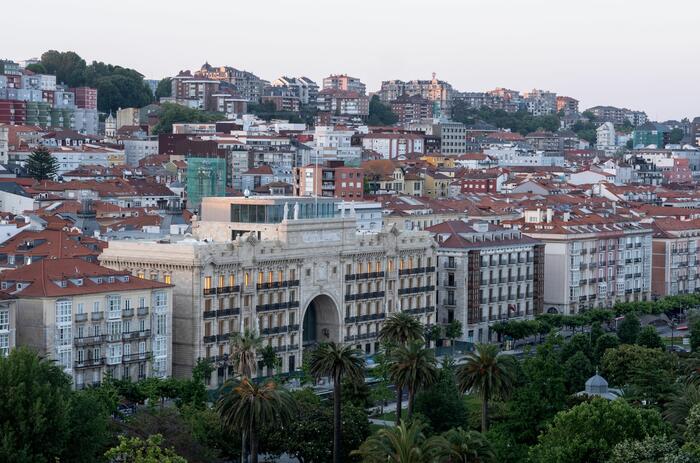
The new center opens its doors with exhibitions devoted to the Gelman Collection and Mexican art, another exploring Leonora Carrington’s connection with Santander, and a third featuring a selection of masterpieces from the Banco Santander Collection.
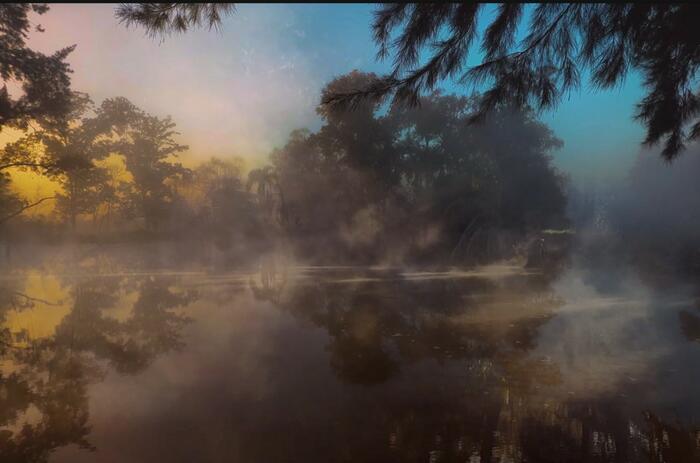
Suave es la noche, by Silvana Muscio, and Trago Amargo, by Claudia Coca and Claudia Casarino, propose two distinct ways of inhabiting memory from Buenos Aires: one sensory and oneiric, the other historical and colonial.
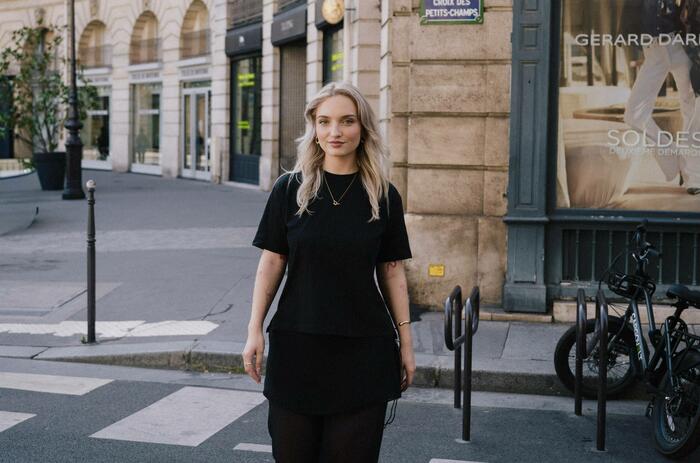
The contemporary art ecosystem is undergoing a profound paradigm shift, caught between the hyper-speed of algorithmic metrics and the unsustainable overheads of traditional gallery models. Today's primary market increasingly rewards virality over slow-burning studio practice, forcing artists into hyper-transactional cycles and leaving collectors searching for genuine depth beneath online trends.
The contemporary art ecosystem is undergoing a profound paradigm shift, caught between the hyper-speed of algorithmic metrics and the unsustainable overheads of traditional gallery models. Today's primary market increasingly rewards virality over slow-burning studio practice, forcing artists into hyper-transactional cycles and leaving collectors searching for genuine depth beneath online trends.
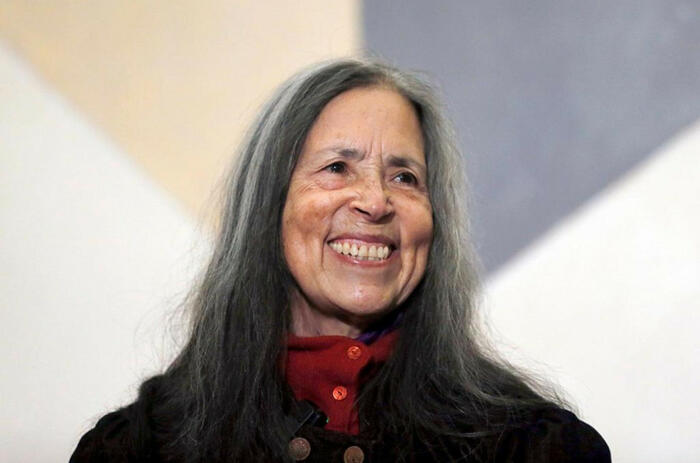
Interview with Cecilia Vicuña
A conversation with the curator of the 37th Ljubljana Biennale of Graphic Arts on navigating biennial management within a turbulent global landscape, detailing his collaborative, site-responsive project exploring expanded printmaking for the 2027 edition.