
WAYS OF REMEMBERING: YAHUARCANI AND MUÑOZ AT MASP
The Brazilian museum presents works by Santiago Yahuarcani and Oscar Muñoz, exploring ancestral knowledge and the fragility of images in Latin America.
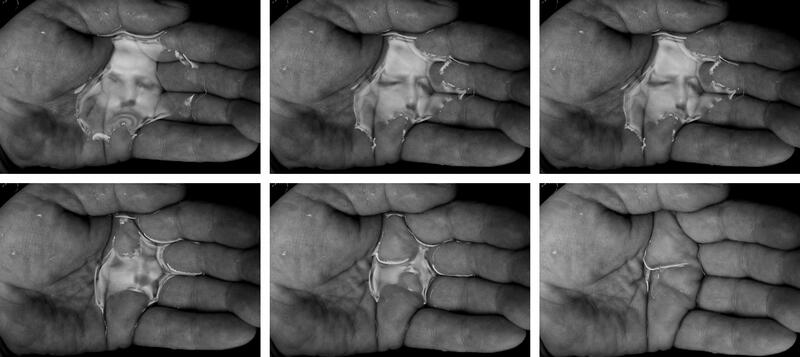
The Museu de Arte de São Paulo Assis Chateaubriand (MASP) is currently hosting two exhibitions that address, through different artistic approaches, the relationships between memory, violence, and identity in Latin America.
Santiago Yahuarcani: The Beginning of Knowledge brings together 35 works by Peruvian artist, marking his first solo exhibition in Brazil. Curated by Amanda Carneiro, the show open until Agust 2nd immerses viewers in the cosmology of the Uitoto people, who inhabit the Amazon region between Colombia and Peru.
-
Vista de exposición Santiago Yahuarcani: El comienzo del conocimiento, MASP, 2026. Foto: Eduardo Ortega
-
Vista de exposición Santiago Yahuarcani: El comienzo del conocimiento, MASP, 2026. Foto: Eduardo Ortega
-
Vista de exposición Santiago Yahuarcani: El comienzo del conocimiento, MASP, 2026. Foto: Eduardo Ortega
Organized into five sections—Painting Sounds, Time of Bloody Tears, Spiritual Worlds, Sacred Plants, and Guardians of the Amazon—the exhibition interweaves myths, knowledge systems, and historical trauma. Yahuarcani’s work combines hybrid figures and spiritual narratives with a strong denunciation of extractive violence, particularly during the Amazon rubber boom. His own family history is marked by this period, as his grandfather survived the Putumayo Genocide, which resulted in the death of around 30,000 Indigenous people.
Painted on llanchama—a vegetal surface made from Amazonian tree bark—the works emphasize a living relationship with the forest, understood not as a resource but as a spiritual entity and a repository of knowledge. In this worldview, humans, nature, and the invisible coexist without separation.
Alongside this exhibition, MASP presents Video Room: Oscar Muñoz until June 21, dedicated to Colombian artist Oscar Muñoz. Curated by Matheus de Andrade, the show features three video works that explore the fragility of memory and the instability of images in contexts shaped by political violence.
Using ephemeral materials such as water and charcoal, Muñoz creates images destined to vanish. In Narciso (2001), a floating face dissolves as water drains away; in Line of Destiny (2006), a reflection held in the palm of a hand distorts and disappears; and in Re/trato (2004), portraits painted with water on hot concrete evaporate before they can be completed.
These works resonate with a career deeply marked by the phenomenon of forced disappearance in Colombia, where images function both as traces and as absences. In Muñoz’s practice, memory is never fixed—it is a fragile, shifting process shaped by what endures and what fades.
Both exhibitions are part of MASP’s annual program dedicated to Latin American histories, offering a reflection on how art can shape collective memory, from ancestral narratives to contemporary urgencies.
May interest you
MASP: CONTESTED NARRATIVES BETWEEN REPLICA AND WEAVING
Two parallel exhibitions revisit dominant narratives through practices that interrogate archive, materiality, and community in Latin America.
LA CHOLA POBLETE PRESENTS HER FIRST SOLO SHOW IN BRAZIL
With references to Baroque, Pop Art, Andean cosmology, music, fashion, and political protest, the exhibition at MASP encourages reflection on gender, colonialism, and the Chola identity.
LATIN AMERICAN HISTORIES: MASP PRESENTS ITS 2026 PROGRAM
The museum explores the construction of the region’s identity through a major group exhibition and solo presentations by Jesús Soto, Damián Ortega, Sandra Gamarra, La Chola Poblete, among other artists.
CARLOS RUNCIE TANAKA’S CERAMICS IN PINTA LIMA’S SPECIAL PROJECT
"Repeating and mastering form, shaping clay spheres, is like offering a prayer with no beginning or end in time. When I look, I hear distant music" — Carlos Runcie Tanaka (A Zen Parable and Ten Small Stories, 2007)
WHO ARE THE CURATORS THAT WILL LEAD THE NEXT BIENAL DE SÃO PAULO
For the second time in its history, two Brazilian curators take on the artistic direction of Latin America's largest visual arts event.
ARMANDO ANDRADE: “SARA FLORES PRESENTS A SERIES OF WORKS THAT TAKE KENÉ TO A SCALE NEVER BEFORE EXPLORED”
As commissioner of the Peruvian pavilion in Venice, Andrade examines how the Shipibo-Konibo artist transforms a visual thinking system into an all-encompassing experience —and why that gesture reshapes the scale of what contemporary art can hold.

MASP PRESENTS INTERNATIONAL GROUP EXHIBITION “HISTÓRIAS LATINO-AMERICANAS”
Spanning five floors of the Pietro Maria Bardi Building, the exhibition brings together works by 148 artists, including previously unseen works, to examine how the idea of Latin America was constructed and continues to be contested today.