THE INSEPARABILITY OF ART AND POLITICAL ACTION – LEÓN FERRARI AT THE POMPIDOU
The Centre Pompidou hosts for the first time the sculptures, collages, artist's books, drawings and assemblages by the artist León Ferrari (1920-2013), considered one of the most influential in Latin America.
The exhibition "L'aimable cruauté" -The Kind Cruelty- takes its title from the book of poems and collages that the artist published in 2000 dedicated to his son Ariel, who disappeared during the military dictatorship. In that publication, Ferrari warned about a "cruelty so intimately mixed with kindness that it hides it." Capital figure of the post-war Argentine scene, he created works with a caustic spirit that resonate with the present. A work that places the artist as one of the greatest representatives of Latin American conceptualism, defending the inseparability of art and political action; operating under the tropism of stigmatization and denunciation of the cruelty of the western liberal world through colonialism, dictatorship and war.
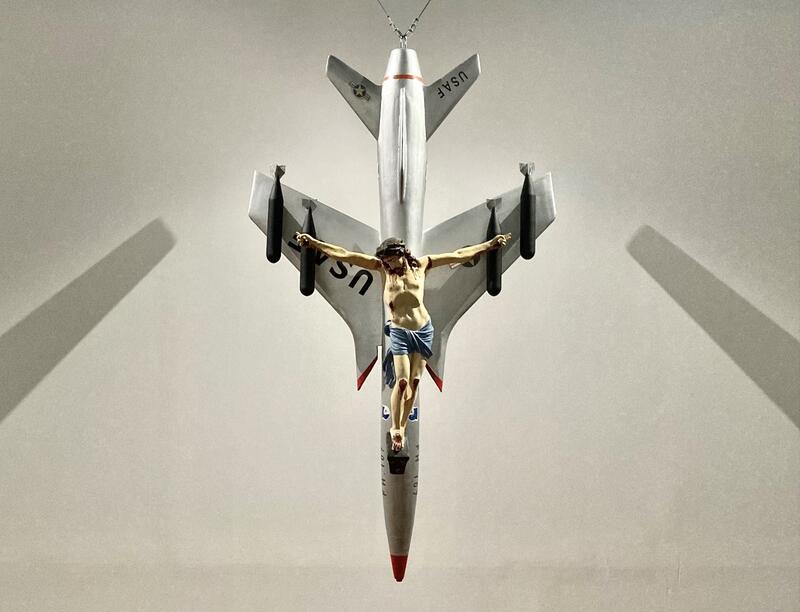
The exhibition is presented in three generic sections: "Western and Christian Civilization", "Architectures of Madness" and "Tangible Confusions", which unfold in a single open museum space that allows fluid wandering. Articulated around «Hongo atomico» 2007, and visually introduced by Leon Ferrari's most emblematic and notorious work «La Civilización Occidental y Cristiana» 1965, it reflects his different aesthetic practices.
-
León Ferrari. Hongo atómico. Fotos © Daniel AVENA
Author of a protean work, León Ferrari first devoted himself to drawing, which he self-taught from 1946, before delving into ceramics. In 1952, his daughter became ill and decides to take her to Italy so that she can have access to quality care. The artist, at this time, is passionate about clay and begins to create his first large sculptures in ceramics; it was in Milan too, where he created his first sculptures in welded wire. Many encounters followed, such as with Lucio Fontana, who invited him to participate in the Triennale X in Milan in 1954; his 1961 "Mujer preocupada", -a kind of rectangular Eva with a disemboweled body- is an inspiration of the Milanese abstraction in vogue at the time. Back in Argentina, he developed a work in permanent evolution; he became interested in new materials such as plaster, cement, wood and wire, with which he made fragile and complex constructions, including various pigments and inks in his drawings. Multiple productions gathered around a common point: a spirit of provocation and an undeniable charisma emerge from all of them. A will of the artist who, shocked by the violence of his time, uses his compositions to highlight the atrocities committed in the world.
In León Ferrari's career, 1965 was a key date. His work "The Western and Christian Civilization", which represents a crucified Christ on an American plane, bears witness both to his rejection of the Vietnam War, and to his anti-colonialism, but above all to his anti-clericalism. Through a subversive work with which the artist rejects a purely formal approach, Ferrari seeks both to present Christianity as the reason for all the evils of his time, as well as to put us on guard, warn us against trivialization, if not embellishment, of violence in art. The work, for which he received the Golden Lion at the 2007 Venice Biennale, was censored. From then on, León Ferrari dedicated himself to a political artistic practice, becoming a staunch anticlerical due to the support of the religious power for the military dictatorship. Works from this period combine collages that mix Christian representations and Nazi emblems. Ten years later, he will defecate canaries on a representation of Michelangelo's Last Judgment and will ask Pope John Paul II to annul the concepts of Final Judgment and Hell.
-
León Ferrari. La Civilización Occidental y Cristiana, 1965. Fotos © Daniel AVENA
-
León Ferrari. Relecturas de la Biblia. Fotos © Daniel AVENA
-
León Ferrari. Relecturas de la Biblia. Fotos © Daniel AVENA
-
León Ferrari. Relecturas de la Biblia. Fotos © Daniel AVENA
-
León Ferrari. Instalación. Fotos © Daniel AVENA
-
León Ferrari. Instalación. Fotos © Daniel AVENA
The poetic and subversive power of his work takes many forms, from painting and performance to drawing, sculpture and video. Many of his works echo the historical and political reality of Argentina and the Catholic hierarchy, whose role he criticizes during the last dictatorship (1976-1983). Ferrari's playful, often acid and sometimes joyful work is inseparable from his fight for freedom, for all freedoms. He participates in numerous events: homage to Vietnam, to Che Guevara; support to the workers of the sugar industry, to the president of Chile, Salvador Allende; the opposition to the corruption of the regime, the arrival of the American industrialist and politician Nelson Rockefeller, etc.
In the exquisite selection exhibited at the Pompidou, the exhibition allows the viewer to discover the collages of the series "Nunca más" and the series "No sabíamos nada" 1976, a set of newspaper articles about the disappeared, among which was his son Ariel. After the 1976 military coup, León Ferrari took refuge with his family in Brazil. During this period he experiments with photocopies, writes books and starts lithography with a series entitled "Heliographs" that illustrates the madness of urban life: road junctions or spirals spin little identical characters that go crazy. The "Héliographies" have the appearance of plans or urbanizations with a certain surreal humor. We can also see them, in a way, as an architecture of madness. In those years he resumed with abstract sculpture that led him to make structures of a certain monumentality, which appropriated an evident fragility thanks to the wire; such as "Opus 113" 1980, whose extremely tight mesh makes the visitor's eye vibrate while moving around.
-
León Ferrari. Nosotros no sabíamos, 1976. Fotos © Daniel AVENA
-
León Ferrari. Nosotros no sabíamos, 1976. Fotos © Daniel AVENA
-
León Ferrari. Nunca más, 1976. Fotos © Daniel AVENA
-
León Ferrari. Nunca más, 1976. Fotos © Daniel AVENA
-
León Ferrari. Nunca más, 1976. Fotos © Daniel AVENA
-
León Ferrari. Autopista, 2004. Fotos © Daniel AVENA
-
León Ferrari. Opus 113, 1980. Fotos © Daniel AVENA
Having himself fled from the dictatorship in his country in 1976, León Ferrari will mobilize throughout his life as an artist against dictatorships, fascism, discrimination and social inequalities. His works are protean, from sculpture to mail art, but always provocative, like his positions and his struggles, seeking to condemn with the greatest clarity the barbarism of the West. León Ferrari will never fail to warn us about the process by which art embellishes and trivializes violence.
Léon Ferrari
L'aimable cruauté
Centre Pompidou, Paris
Related Topics
May interest you
THE MACA IN MANANTIALES EXHIBITS LEÓN FERRARI: ENCAPSULATED GRAPHICS
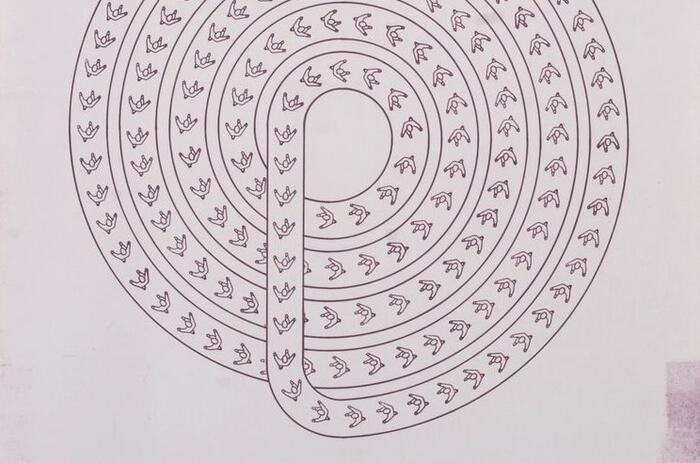
The MACA (Atchugarry Museum of Contemporary Art) hosts until mid-April the great exhibition entitled Gráfica Encapsulada (Encapsulated Graphics) by the Argentine artist León Ferrari. The show features a series of works dating back to the 1980s.
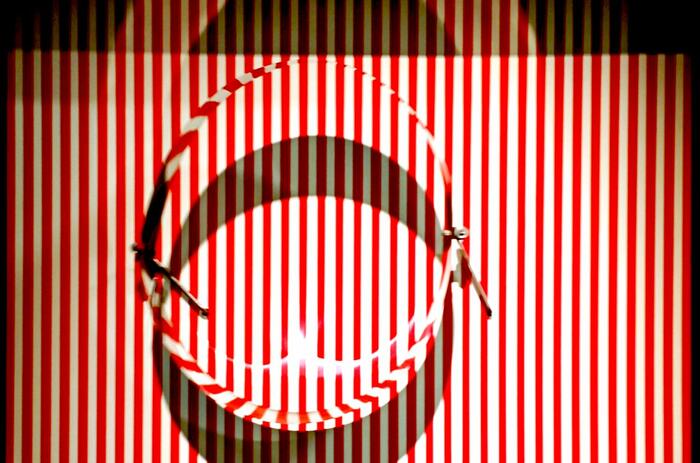
PARIS - CINETIQUE! THE SCULPTURE IN MOVEMENT
Welcome to the fascinating world of kinetic art! The Espace Monte-Cristo, the Parisian headquarters of the Fondation Villa Datris-Isle-sur-la-Sorgue, presents to celebrate its fifth anniversary "Cinétique! La sculpture en mouvement" (Kinetic! Sculpture in movement). The staging of this exhibition allows us to discover the creations of 25 French and international artists; kinetic sculptures from the 60s to the present mixing historical and scientific references. Static, dynamic or mechanical, these works play with our perception and evolve according to our movements. A colorful, sonorous, rhythmic and moving journey opens up before us.
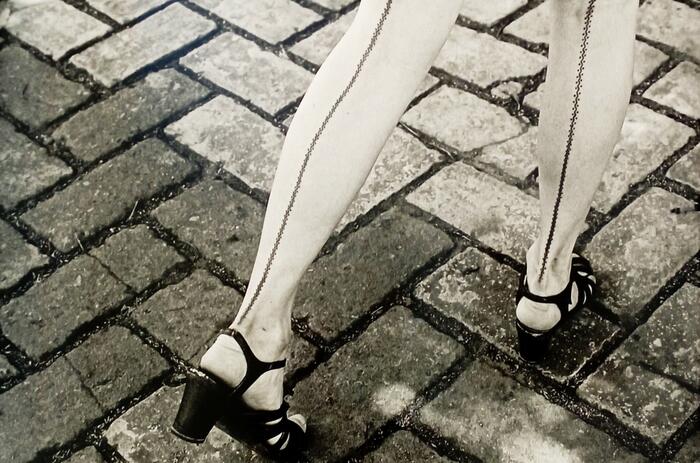
“GRACIELA ITURBIDE: HELIOTROPO 37” AT FONDATION CARTIER POUR L’ART CONTEMPORAIN
The Cartier Foundation presents "Heliotropo 37", the first major exhibition in France dedicated to the work of Mexican photographer Graciela Iturbide. It brings together more than 200 images from the 1970s to today. Photographs from the most iconic to the most recent, as well as a color series specially produced for the exhibition. If today she is famous for her portraits of the Indians of the Sonoran Desert, the women of Juchitán, or for her photographic essays on the ancestral communities and traditions of Mexico, Graciela Iturbide also draws an almost spiritual focus to landscapes and objects. Showing for the first time these two facets, these two points of view of the artist's work, the exhibition thus offers a renewed vision and reveals her great contribution to photographic art.
FERNANDA LOPES IS ATHENA'S NEW ARTISTIC DIRECTOR
Since September, Fernanda Lopes is the new Artistic Director of the Brazilian art gallery Athena. She will be in charge of several actions such as exhibition projects, public talks, publications, accompaniment of the represented artists and innovative and experimental research initiatives.
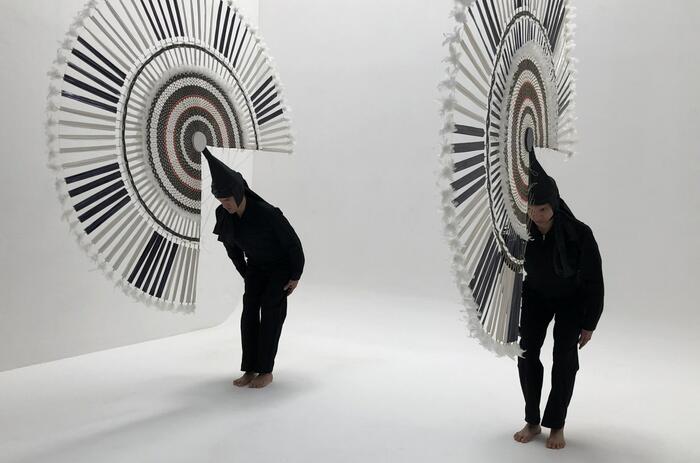
BEYOND THE SOUNDS OF SILENCE: LATIN-AMERICAN ARTISTS CONNECTING ART, SOUND AND SOCIETY
The Lowe Art Museum presents BEYOND THE SOUNDS OF SILENCE, a project curated by the Aluna Curatorial Collective that brings together a group of 19 Latin American artist working with sound art and its social intersections.
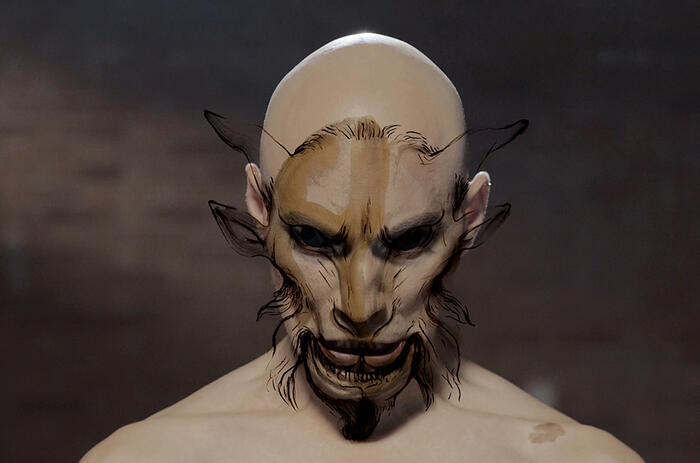
CARLOS MOTTA PRESENTS YOUR MONSTERS, OUR IDOLS IN WEXNER CENTER FOR THE ARTS
Colombian Artist Carlos Motta is presenting his largest exhibition in the US to date. Your Monsters, Our Idols celebrates commitment to radical difference and the debut of his Wex-commissioned project.
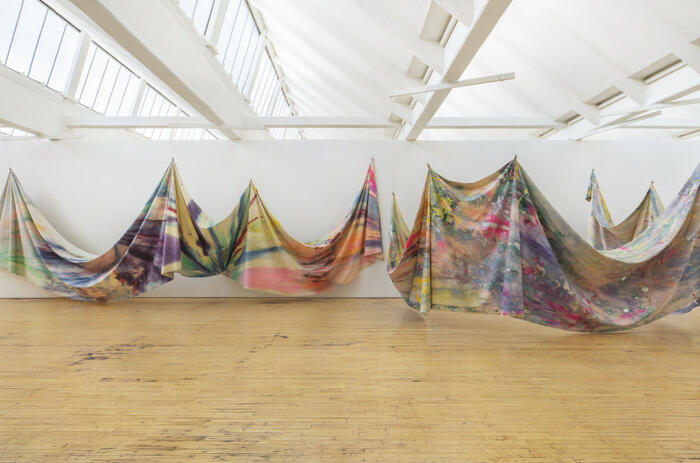
SKIN (NOTES ON THE DISAPPEARING PAINTING)
During the last years painting has continued its course in permanent metamorphosis, adapting to the times, reviving from its previous deaths, stripping itself of accessories, undressing and even disappearing. A part of this process has focused on the mechanisms of production; the other, has been accompanied by an intense reflection that goes beyond painting and meditates on the status of image.
Paris+ par ART BASEL ANNOUNCES LINE-UP OF 156 LEADING GALLERIES FOR ITS INAUGURAL EDITION
The first edition of Paris+ par Art Basel will bring together 156 premier galleries from 30 countries and territories. The fair will take place at the Grand Palais Éphémère through a program of collaborations with Paris’ cultural institutions and its city-wide sector Sites.
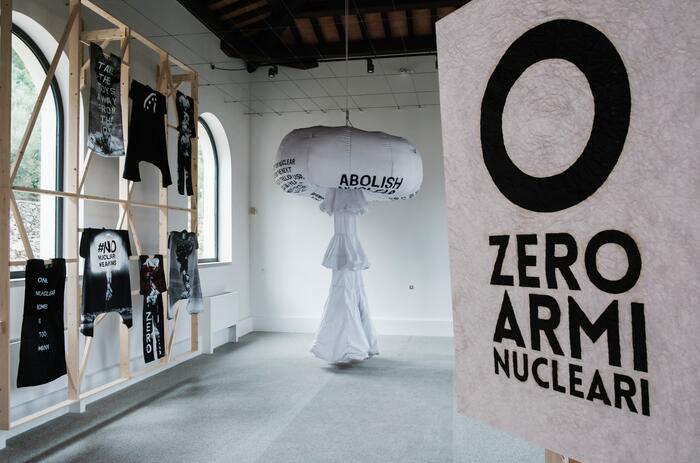
PEACE SYMBOLS AT ZERO ARMI NUCLEARI BY PEDRO REYES
Zero Armi Nucleari is Mexicam artist Pedro Reyes first solo exhibition in the Italian Museo Nivola, exposing through his work a strong message of nuclear disarmament.
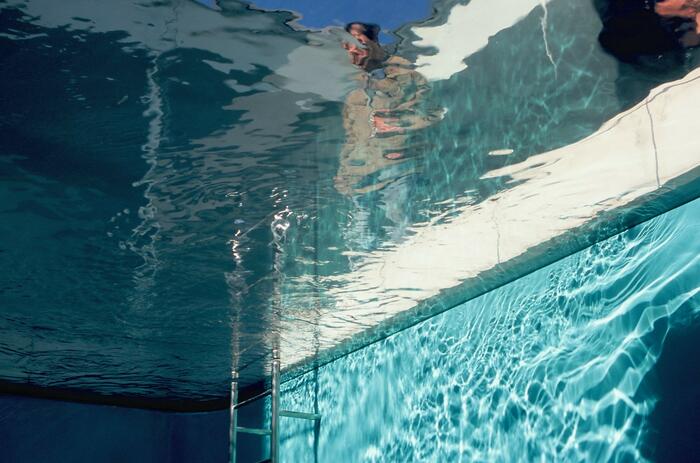
A NEW WAY OF INHABITING SPACES IN LIMINAL, THE EXHIBITION BY LEANDRO ERLICH
The Pérez Art Museum Miami (PAMM) presents, for the first time in the United States, a monographic exhibition of the work of Argentine artist Leandro Erlich. Curated by Dan Cameron, featuring sixteen works from more than two decades of production.