By
María Galarza
Presented at Argentine film festival BAFICI and soon to premiere at MALBA in Buenos Aires, Annemarie is the documentary about photographer Annemarie Heinrich, directed by her great-granddaughter, Mariana Sanguinetti. Heinrich's work, which has appeared in several editions of Pinta BAphoto, will also be on view this 2026 with the fair celebrating 200 years of photography.
In his reflections on how images are built, painter David Hockney drew a distinction between painting and photography. Painting, he argued, is an accumulation of time: the artist remains in their studio while the image transforms. In photography, it is the artist who moves, in pursuit of freezing time into an image.
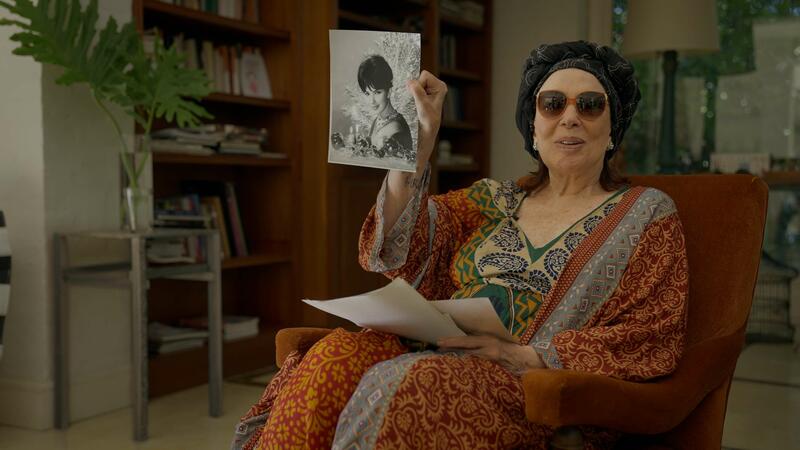
Annemarie Heinrich's documentary introduces a third variable: images in motion, which brings to life the work of one of Argentina's most emblematic photographers by drawing on her oeuvre, her archive, the people who built it, those who cared for and championed it, and those who took part in the development of her story and her life.
Born in Germany, Heinrich emigrated with her family to Argentina and, barely able to speak Spanish, began taking photographs as a trade and also as a way of getting closer to others. She was not the only one of that generation of European immigrants to Latin America: Claudia Andújar, for instance, who was born in Switzerland, passed through the United States and then settled in Brazil, did not speak Portuguese either, and both artists were able to channel photography as a way of connecting with their adopted country and communicating with its people.
And she did. She photographed, and often befriended, iconic Argentine figures such as Eva Perón, Mirtha Legrand, Graciela Borges and Mercedes Sosa, among many others. She was part of the groundbreaking group La carpeta de los diez (The folder of 10), pioneers in experimenting with photography in Argentina, which included names such as Anatole Saderman, Boleslaw Senderowicz and George Friedman, among others, who have also been shown across the editions of the Pinta BAphoto fair. Heinrich began to shape and cultivate her eye, to gather and debate with colleagues, and to exchange ways of working while she kept on photographing in her studio. She moved between light and shadow effects, body curvatures and sharp compositions that were provocative for their time.
The photographer Juan Travnik, who appears in the documentary, remarks Heinrich’s nobility in her work, which meant never betraying the person being portrayed. Because photography has that unpostponable yet enigmatic veracity of capturing (or freezing) a moment, thar creates an irremediably nostalgic mirror, both for those who are photographed (or looked at) and for those who look.
The documentary also reconstructs her story through the testimonies of relatives, gallerists such as Marina Pellegrini of Vasari, and colleagues such as Sara Facio, along with her own archive of interviews, footage and notes. The director and great-granddaughter lets herself be guided by a lively, honest, brave and funny Annemarie, not without her contradictions, drawing correspondences with her work as a photographer. Because of that, Sanguinetti conceives the documentary as a way of promoting the protection of her great-grandmother's archive. And she hopes this call will extend to the institutionalization of archives in general, so that the legacy of more than one artist can be incorporated into public heritage and recognized for its historical and cultural value.
Beyond its testimonial or biographical value, the film's intuitive journey captures humor, unforeseen moments and beauty. Sanguinetti reconstructs Annemarie through spontaneity, in a search to retrace (or verify) the established narratives about her great-grandmother. She shows the flip side, the "behind the scenes" where both photography and film reveal themselves as crafts that force you to navigate situations that often have nothing to do with what brought you there in the first place: playing with babies to capture the exact expression for a portrait, watching cats prowl through the photographic archive, or ordering a pizza after interviewing your relatives. The surrounding activities of great-grandmother and great-granddaughter intertwine to show everything that appears, surrounds and is created while a photograph is taken or a film is made.
Annemarie will screen on Fridays in October at Malba Cine. There will also be special screenings at Cine Atlas Patio Bullrich on the 11th and 14th of the same month.
The Fukushima control room, Snowden's refuge in Moscow, and Bill Gates's dorm room: built in cardboard, photographed, and destroyed.
In late October and early November, the city of Buenos Aires will host three fairs with three distinct identities in a single period of intense artistic activity.