
OCEAN AND MEMORY, MAC PANAMÁ PRESENTS TWO NEW EXHIBITIONS
An ocean-centered research project and a historical retrospective dedicated to Trixie Briceño shape MAC Panamá’s current program.
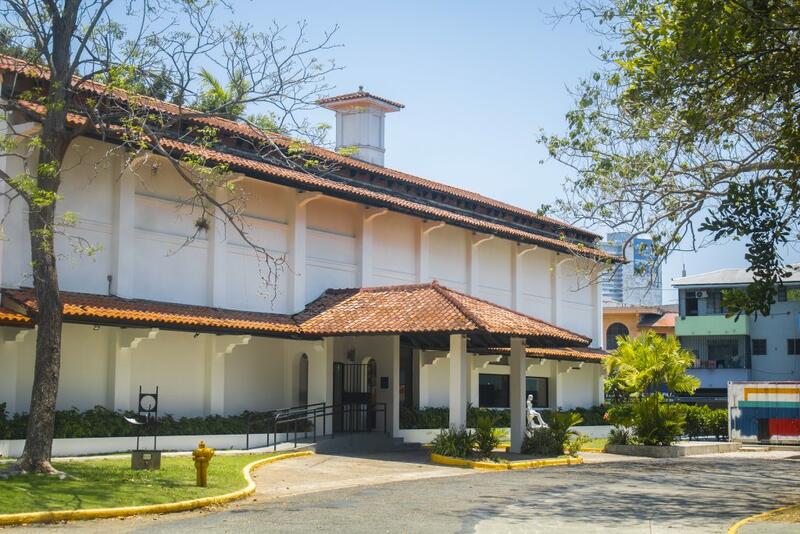
The Museo de Arte Contemporáneo de Panamá presents otras montañas, las que andan sueltas bajo el agua, an exhibition by Nadia Huggins (1984, Trinidad and Tobago) and Tessa Mars (1985, Haiti), curated by Yina Jiménez Suriel (1994, Dominican Republic) and Juan Canela (1980, Spain). The project is part of The Current IV, a three-year curatorial research program led by TBA21–Academy, whose main objective is to contribute to the construction of an oceanic perspective on tectonic plates.
The exhibition is the result of sustained work in the Caribbean that included residencies and collaborations in territories such as Bocas del Toro (Panama) and Jamaica, as well as its presentation in Venice. It is part of The History of Mountains, a curatorial research project initiated by Jiménez Suriel in 2013. Over three years, the program developed methodologies such as repetition, flotation, and improvisation~freestyle in different Caribbean territories, including Panama, where Flotation 2 took place in 2024 together with the Instituto de Investigaciones Tropicales Smithsonian.
The exhibition explores improvisation~freestyle as a tool to move beyond a historically binary and stable terrestrial perspective, opening onto an oceanic gaze in which life is understood as constant movement. Rather than a landscape, the ocean appears as a political, historical, and sensitive space from which to imagine other forms of existence.
Structured as a three-act dialogue, the exhibition situates the first and third acts in the oceanic space through Huggins’s video installation A shipwreck is not a wreck (2025). The shipwreck, far from being understood as an end, becomes a point of transformation: rocks, corals, human bodies, and mangroves coexist in a continuous process that presents the ocean as a generative force and space of recomposition.
The second act unfolds in Mars’s audio-pictorial installation a call to the ocean (2025). There, mountains are presented as historical territories of maroonage and as active entities that have shaped human and non-human life. Through the concept of “fugue,” formulated by Dénètem Touam Bona, the artist proposes constant variation as a form of resistance to structures of power. The work incorporates a sound component inspired by the fututo —a shell instrument used in revolutionary processes— connecting emerged and submerged mountains.
At the same time, MAC Panamá presents Trixie Briceño: sistemas de lo maravilloso, a retrospective exhibition dedicated to Beatrix "Trixie" Briceño (1911–1985), a pioneering figure of contemporary Panamanian art and one of the first artists to introduce surrealist sensibilities in the country. The exhibition brings together more than fifty paintings from public and private collections, along with materials from the MAC Archive that trace different stages of her production.
Briceño’s life was marked by early displacement, migration, and political instability. In her canvases, however, the world appears carefully organized: tables, shelves, interiors, gardens, and architectural structures function as settings where everyday objects —eggs, glasses, fruits, drawers, arrows, hearts, wheels, cubes, suns, and moons— are arranged with almost ritual precision. The domestic becomes symbolic language, and major questions —origin, desire, time, memory— are translated into an intimate and contained scale.
The exhibition includes a dialogue with Panamanian digital artist Ix Shells (Itzel Yard, 1990, Panama), whose practice focuses on generative art and audiovisual experimentation. For this project, she developed an immersive installation built from data extracted from Briceño’s work and biography —chromatic decisions, compositional patterns, life cycles, and narrative fragments— which, processed algorithmically, are translated into a dynamic environment of light and sound. Two generations, two languages, and two systems —one pictorial, the other digital— meet to activate each other and keep the legacy in motion.
Related Topics
May interest you
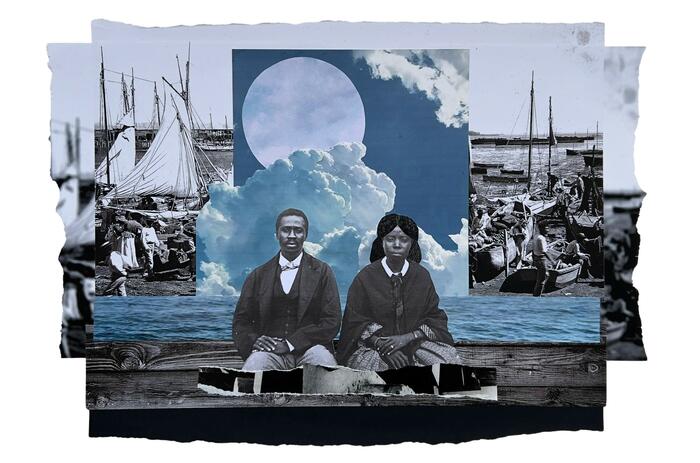
DE DIER: REIMAGINING THROUGH MEMORY AND REMEMBRANCE
Giana De Dier presents an exhibition in Madrid that proposes a visual reflection on memory. Through archival imagery, appropriation, and the technique of collage, the Panamanian artist reconstructs the affective memory of El Terraplén in response to its recent transformation.
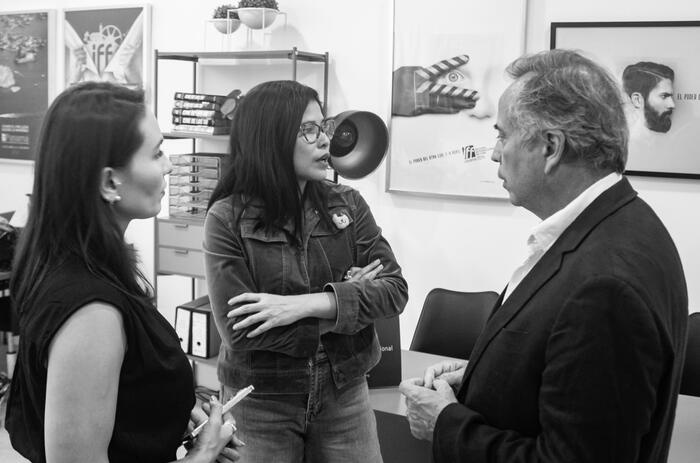
PINTA PANAMÁ ART WEEK 2026 OFFERS NEW DIALOGUE BETWEEN VISUAL ARTS AND CINEMA
This March, the event will once again take place in Panama City, opening new spaces for exchange to celebrate regional diversity.
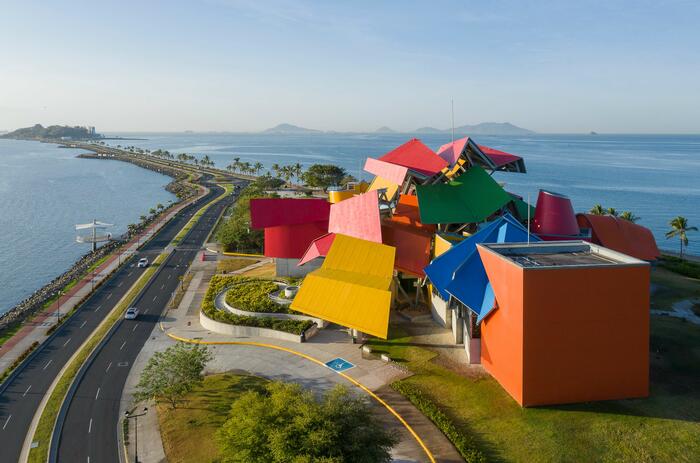
THE BIOMUSEO, SCIENCE AND ARCHITECTURE OF THE FIRST LEVEL
On the Amador Causeway, right at the entrance to the Panama Canal of the Pacific Ocean, the Museum of Biodiversity takes place, with a structure that does not go unnoticed both for its shapes and for its color. It is an avant-garde building that coexists with the natural environment.
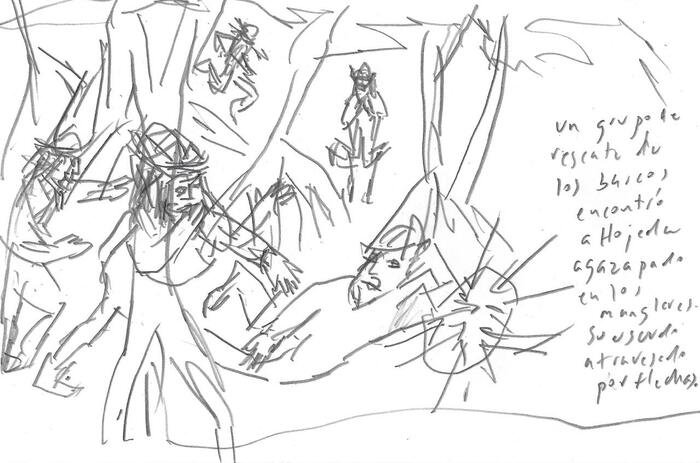
FOUR ARTISTS EXPLORE AND RECONSTRUCT SPACE AT PINTA PANAMÁ 2026
During the Central American country’s art week, works that study histories, recreate them, and bring them into reflection will be presented. From the play with materials to the manipulation of space, Lulu Molinares, Cisco Merel, Arístides Ureña Ramos, and Isabel de Obaldía create pieces that propose alternative readings of memory, territory, and everyday life.
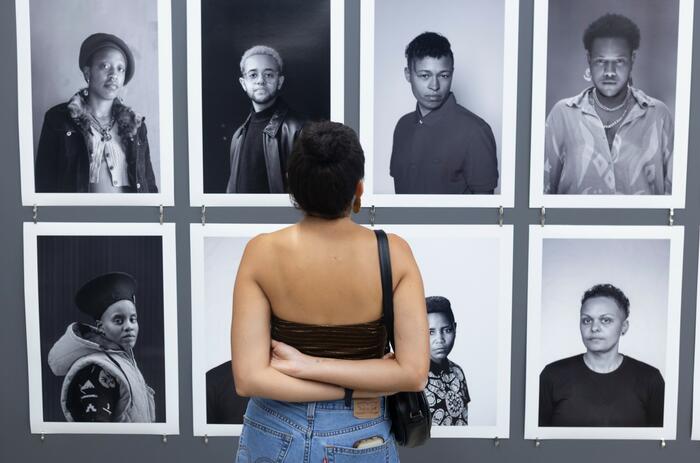
"DAYS ARE NOT THE SAME": ZANELE MUHOLI AT CASA SANTA ANA
Amalanga Awafani, an exhibition by the South African visual artist in Panama City, leads us to think about the passage of time and how identity and dignity cease to be a constant.
PINTA PANAMA ART WEEK 2026 REAFFIRMS THE COUNTRY AS A HUB FOR REGIONAL CONTEMPORARY ART
The event will unfold a public and free program including exhibitions, tours, talks, film screenings, music, and cultural and touristic experiences.