ANTIOQUIA BECOMES A GLOBAL HUB FOR CONTEMPORARY ART WITH BIAM 2025
The International Art Biennial returns after 44 years, bringing together over 120 artists from 25 countries, 300 artworks, and a free program spanning 15 municipalities.
The Biennial of Antioquia and Medellín (BIAM 2025) is underway, transforming the region into one of the world’s new capitals of contemporary art. After 44 years of absence, the event revives the spirit of the historic Coltejer Biennials and projects it into the present through a decentralized and inclusive approach.
Under the curatorial theme “Art, a Window to Freedom,” BIAM 2025 promotes art as a space for creation, reflection, and encounter—empowering local, national, and international talent. Organized by the Institute of Culture and Heritage of Antioquia (ICPA), directed by Roberto Rave under the leadership of Governor Andrés Julián Rendón, the biennial runs from October 2 to November 25, with free admission across all venues.
-
Cortesía BIAM
Featuring more than 120 artists from 25 countries—including Ghana, Japan, Cuba, Mexico, and Colombia—and over 300 artworks, BIAM 2025 positions Antioquia as an active node in the global contemporary art network. Highlights include Delcy Morelos (Colombia), Ibrahim Mahama (Ghana), Carlos Garaicóa (Cuba), Betsabeé Romero (Mexico), and Azuma Makoto (Japan), alongside renowned Colombian figures such as Miguel Ángel Rojas, María Elvira Escallón, and José Alejandro Restrepo.
The biennial opened on October 2 in El Retiro with a site-specific installation by Japanese artist Azuma Makoto at the Church of Nuestra Señora del Rosario, followed on October 4 by the opening of the Historical and Masters Line at the Museo de Antioquia—a tribute to the Coltejer Biennials (1968, 1970, 1972) and to key figures in Colombian art such as Beatriz González, Olga de Amaral, Dora Ramírez, and Óscar Jaramillo.
-
Cortesía BIAM
Main venues are distributed across Medellín and its metropolitan area, including the Museo de Antioquia, Palacio de la Cultura Rafael Uribe Uribe, former Coltabaco building, Parque de Artes y Oficios de Bello, Perpetuo Socorro Creative District, the Chamber of Commerce of Medellín, and the university spaces of the National University of Colombia, Pontifical Bolivarian University, and the University of Antioquia.
At the same time, the program extends to 15 municipalities across the nine subregions of Antioquia—among them La Ceja, Rionegro, Jericó, Santa Fe de Antioquia, Caucasia, Apartadó, Puerto Berrío, Ciudad Bolívar, and Urrao—transforming community centers, cultural houses, and local museums into platforms for contemporary creation.
-
Cortesía BIAM
The public program includes guided tours, workshops, forums, talks, and artist encounters, all free of charge. The biennial also invites citizens to participate as volunteers, mediators, and cultural presenters, in alignment with its thematic axes: Urban–Regional Identities, Ancestral Knowledge and Technologies, Memory–Nomadism, and Human Ecologies.
An audience of over 400,000 visitors is expected throughout the two-month event, generating an estimated 6,000 direct and indirect jobs in tourism, commerce, and cultural services—highlighting the biennial’s substantial cultural and economic impact on the region.
-
Cortesía BIAM
“BIAM 2025 marks a milestone for Antioquia: a biennial that transcends conventional spaces, integrating art into daily life and activating the creative potential of every corner of the department,” says Roberto Rave, director of the ICPA.
With this edition, BIAM 2025 reaffirms the role of art as a living force of transformation and collective encounter—placing Antioquia, and Colombia, firmly on the global cultural map.
*Cover image: courtesy of BIAM.
May interest you
ARTBO 2025: CARTOGRAPHIES OF MARKET, IDENTITY, AND NATURE
By Candelaria Penido
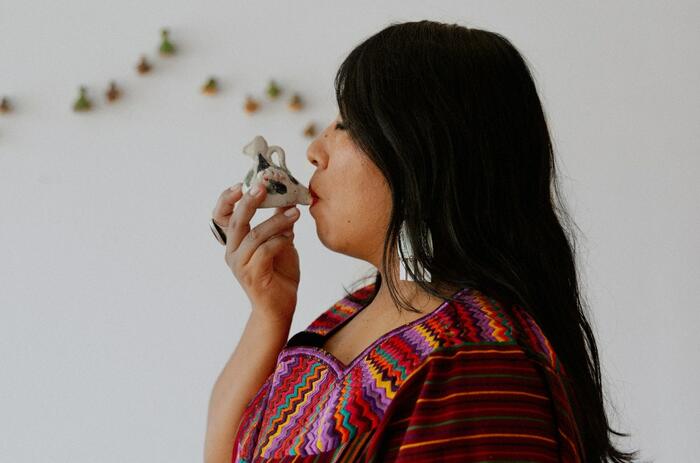
ARTBO, Bogotá’s international art fair held from September 25 to 28, once again reaffirmed its position as one of Latin America’s most relevant platforms. It brought together 46 galleries and more than 180 artists across the five floors of Ágora Convention Center. With a program intertwining market and thought, this year’s edition emphasized diversity in formats, trajectories, and geographies, offering a multifaceted map of contemporary regional production.
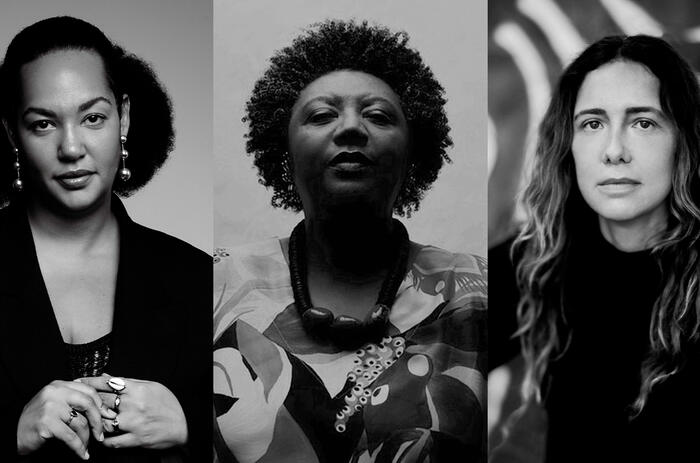
BRAZIL ANNOUNCES ROSANA PAULINO AND ADRIANA VAREJÃO FOR ITS PAVILION AT THE 2026 VENICE BIENNALE
Curated by Diane Lima, the project Comigo ninguém pode will bring together two of the most powerful voices in contemporary Brazilian art around themes of colonial memory, resilience, and poetic imagination in Brazil’s Pavilion.

LIMITS AND METAMORPHOSES OF THE HUMAN EXPERIENCE AT MAMBO
Ambra Castagnetti: Ephemeral Panic explores the mutability of the body and its link to the political and the poetic through sculpture, video, and performance.

RE-FILMING HISTORY: SU HUI-YU BETWEEN COLOMBIA AND TAIWAN
The Museum of Modern Art of Bogotá presents A Total Story, an exhibition that reinterprets historical archives and collective fictions to intertwine the memories of both territories.