
ART AGAINST COLLAPSE: 193 ARTISTS IMAGINE ALTERNATIVE FUTURES
Into the Time Horizon, at Nevada Museum of Art, unfolds as one of the most expansive surveys of environmental art in the United States, combining critical diagnosis with concrete proposals in the face of the climate crisis.
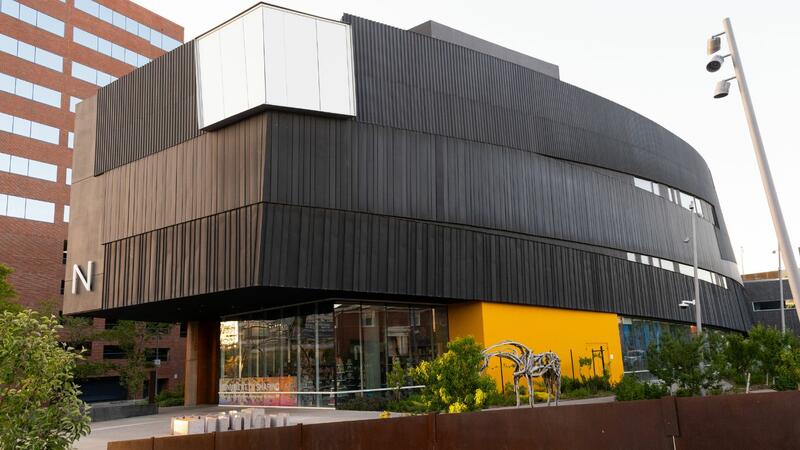
Nevada Museum of Art presents Into the Time Horizon, a groundbreaking exhibition that transforms the museum’s entire 120,000-square-foot building through diverse, thematic sections. One of the most expansive exhibitions to survey environmental art in a US institution, the project brings together 193 artists from around the globe to consider how humanity can reimagine its relationship with the Earth at a moment of accelerating ecological and social change.
Into the Time Horizon will be on view in its entirety until September 20, 2026, with some sections remaining on view until early 2027. Through a wide range of media, the exhibition confronts the climate crisis while also proposing pathways forward grounded in care and collective responsibility. A series of commissions for the robust catalogue unveils over 100 “Proposals for the Future” by artists, writers, architects, and visionary thinkers who provide their top ten solutions for creating a sustainable and resilient future.
-
Jeffrey Gibson. The Land is Speaking Are You Listening (detail), 2022. Mural, dimensions variable. © Jeffrey Gibson. Courtesy of the artist and Sikkema Malloy Jenkins, New York
The exhibition’s title refers to the concept of a “time horizon,” most commonly used in economics to describe a fixed point in the future at which outcomes are evaluated. In his novel The Ministry for the Future, participating writer Kim Stanley Robinson reframes the concept as the narrowing window of opportunity that remains to avert the most catastrophic effects of climate change. It is within this interval—between possibility and catastrophe—that Into the Time Horizon situates itself.
Organized into seven sections—Listening to the Land; Interspecies Relationships; Circularity; Altered Lands and the Anthropocene; This Vital Earth; Strange Weather; and The Sixth Extinction—the exhibition challenges visitors to confront environmental realities while also offering solutions of hope and collective action.
-
Credits: Nevada Museum of Art
The conceptual heart of the project, Listening to the Land, foregrounds Indigenous knowledge systems that long predate modern notions of environmentalism and sustainability. Featuring work by First Nations artists from Australia and North America, this section underscores Indigenous wisdoms that model close listening to land and Country. The title is inspired by Jeffrey Gibson’s mural, The Land Is Speaking Are You Listening, that is featured in the exhibition. Notably, 38 percent of artists participating in Into the Time Horizon are Indigenous.
Although numerous international exhibitions have explored aspects of environmentalism, Into the Time Horizon stands apart in its scope, duration, and geographic reach. It uniquely centers Australian Aboriginal and Torres Strait Islander artists who have been marginalized in Western contemporary art contexts, while also bringing together leading artists who have long furthered environmental concerns in their work such as El Anatsui, Ernesto Neto, Mark Dion, Otobong Nkanga, Jaune Quick-to-See Smith, Maya Lin, Mierle Laderman Ukeles, Pierre Huyghe, and Andrea Bowers, among many others.
The exhibition anchors the 2026 Art + Environment Summit, a triennial, multi-day convening of artists, scholars, scientists, and cultural leaders. A comprehensive publication co-published by Radius Books and the Nevada Museum of Art features contributions by Apsara DiQuinzio, Makeda Best, William L. Fox, N. Scott Momaday, Maia Nuku, Dare Turner, and a roundtable conversation on implementing sustainability in cultural institutions.
Into the Time Horizon is organized by Apsara DiQuinzio, Andrea and John C. Dean Family Chief Curator, with Kolin Perry, assistant curator.
Related Topics
May interest you
WHITNEY BIENNIAL 2026, A FIELD DENSE WITH ENCOUNTERS
The intergenerational selection traces a sensitive map of practices connected to the United States, where affective, political, and technological ties intertwine through an experimental lens.
IS THE ART MARKET FINALLY RECOVERING?
The art maket stabilizes, but the recovery remains uneven.
OFELIA ESPARZA SINCE 1945: MEXICAN TRADITIONS IN CALIFORNIA
The American museum shows a major retrospective of the Chicana artist’s work—an oeuvre that “embodies the power of art to preserve memory and culture.”
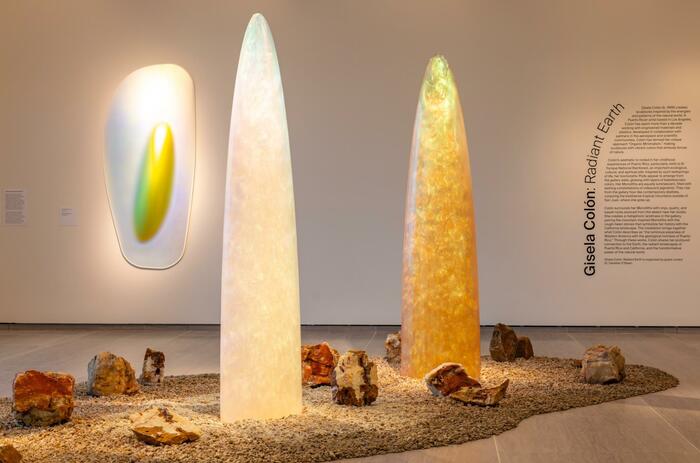
ENERGY AND PATTERNS IN THE COSMOS, GISELA COLÓN IN CONNECTICUT
The Latin American artist draws inspiration from the landscapes of Puerto Rico and those of her adopted home in California to create sculptures that reveal the transformative power of nature.

DISPOSSESSIONS IN THE AMERICAS: CONTEMPORARY ART AND THE COLONIAL LEGACY
The exhibition in Chicago brings together 36 Latin American artists who, through more than 40 works, challenge colonial narratives through critical, community-based, and resistance-oriented practices.
DANCING OUR PROBLEMS: LATIN AMERICAN PRESENCE AT MOCA’S ART ON THE PLAZA 2026 AWARDS IN MIAMI
In a context marked by the debate on immigration in the United States, Joan Jiménez Suero (Perú) has been recognized by the Museum of Contemporary Art - North Miami (MOCA) for a proposal that reflects on the identity, memory, and resistance of the Latin diaspora.
HUMANS, MACHINES, AND POSSIBLE FUTURES: THE LAST 100 YEARS AT NEW MUSEUM
The exhibition features more than 15 new commissions by artists such as Ryan Gander, Camille Henrot, Jamian Juliano-Villani, Wangechi Mutu, Hito Steyerl, Alice Wang, and Santiago Yahuarcani, among others.