
OFELIA ESPARZA SINCE 1945: MEXICAN TRADITIONS IN CALIFORNIA
The American museum shows a major retrospective of the Chicana artist’s work—an oeuvre that “embodies the power of art to preserve memory and culture.”
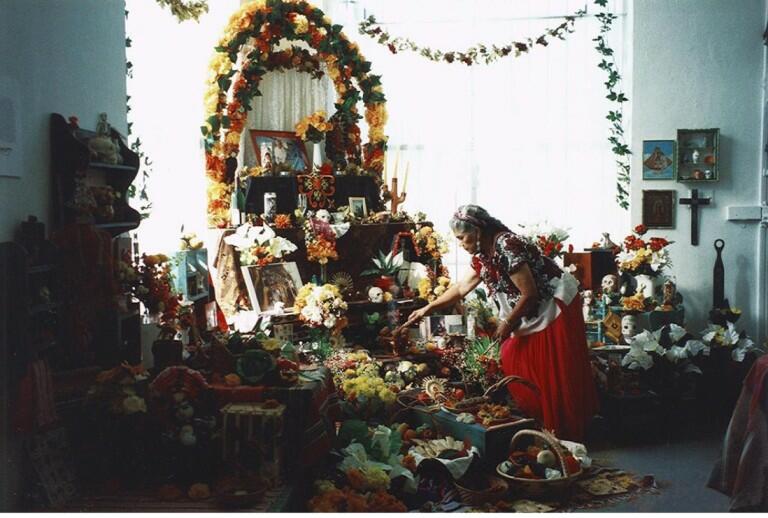
The Vincent Price Art Museum (VPAM) at East Los Angeles College (ELAC) presents until May 16, 2026,Ofelia Esparza: A Retrospective, the first museum survey exhibition dedicated to the Chicana artist, altarista, and educator. Recognized as one of California’s most influential folk artists, with a cultural impact spanning more than seven decades, Esparza helped bring the traditions of Mexican altar-making and Día de los Muertos to a wider American public beginning in the 1970s through her work with the community arts center Self Help Graphics & Art in Boyle Heights.
The new exhibition recreates a selection of her iconic altars while also presenting a broad overview of her prolific artistic production, spanning from 1945 to the present. “We are honored to organize this retrospective of Ofelia Esparza’s multidisciplinary and multidimensional artistic practice,” said exhibition curators Joseph Valencia and Sybil Venegas. “For decades, Ofelia has been a cherished member of the Eastside community, sharing her wisdom with artists, educators, students, and neighbors. Her work embodies the power of art to preserve memory and culture, strengthen communities, and expand the possibilities of Chicano and American art. We look forward to highlighting the breadth of her practice and her lasting influence, both locally and internationally.”
-
Ofelia Esparza. Jaguar, Lord of the Night (2002), Monotype. Courtesy of the artist. Photo: Paul Salveson
Although Esparza is best known for her altar-making, the retrospective places long-overdue attention on the scope of her artistic practice, which also includes drawing, painting, and printmaking. The 85 works on view reflect a lifetime dedicated to creative experimentation, many of them connected to the social and political movements of her time, including the Chicano Movement, the United Farm Workers Movement, and broader struggles for social and environmental justice.
Through original artworks, installations, and archival materials, the show traces Esparza’s evolution as an artist and cultural matriarch whose vision and influence have profoundly shaped the trajectory of American art and culture.
-
Ofelia Esparza. La de los Milagros (2009), Monotype. Courtesy of the artist. Photos: Paul Salveson
“This exhibition at the Vincent Price Art Museum at East Los Angeles College, my alma mater, represents the greatest honor of my career as an artist,” Esparza said. “My entire artistic practice is inspired by my community here in East L.A., and being recognized by that same community fills me with deep gratitude.”
The exhibition is organized into thematic and chronological sections, including Early Works and Family Life (1950s–1970s), Creative Experimentation and Teaching (1960s–1990s), Printmaking at Self Help Graphics (1980s–2010s), and Day of the Dead Altars and Public Art Installations (1990s–present). The retrospective is complemented by materials submitted by members of the community, highlighting the profound personal and cultural impact that Esparza and her family have had on East Los Angeles and beyond.
The show will also highlight the national and international recognition of the 93-year-old artist through the many invitations she has received to create altars and installations across the United States, Mexico, and Europe; her ongoing work with Self Help Graphics on the annual Los Angeles County Community Altar and the Noche de Ofrenda ceremony at Grand Park; and the Disney/Pixar film Coco (2017), which drew direct inspiration from her life and family stories.
Related Topics
May interest you
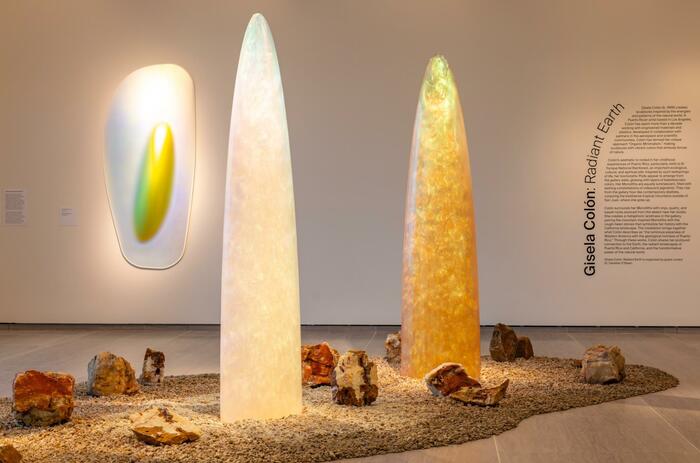
ENERGY AND PATTERNS IN THE COSMOS, GISELA COLÓN IN CONNECTICUT
The Latin American artist draws inspiration from the landscapes of Puerto Rico and those of her adopted home in California to create sculptures that reveal the transformative power of nature.
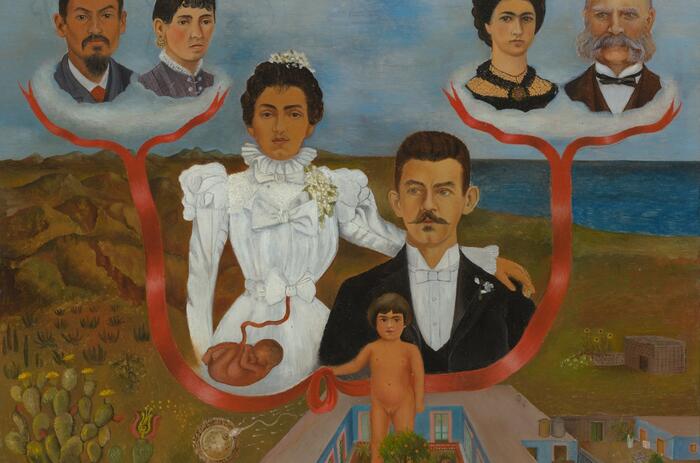
FIVE VIBRANT EXHIBITIONS OF LATIN AMERICAN ARTISTS TO VISIT IN THE U.S. IN 2026
The North American country presents a strong presence of Latin American art on its agenda this year, highlighting both historical and contemporary figures.

CHRISTIAN VIVEROS-FAUNÉ: “LATIN AMERICAN REPRESENTS A CRITICAL AND PRIVILEGED STANCE TOWARD POWER FROM THE ‘MARGINS’ OF THE EMPIRE”
From the curatorship of the Foco LATAM program at CAN Art Fair Madrid, Christian Viveros-Fauné approaches surrealism as a tool for reading global uncertainty, while advocating for painting and Latin American artistic practices as spaces of resistance and the creation of new imaginaries.
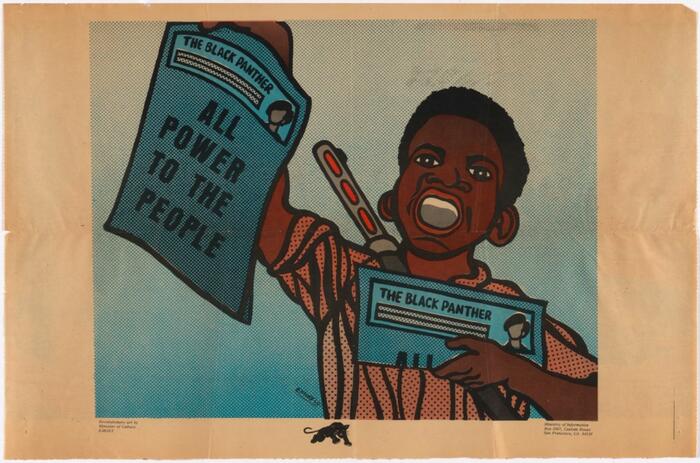
GRAPHIC DESIGN, JUDGMENT, AND VISUAL CULTURE IN THE CARIBBEAN AND LATIN AMERICA
The visual culture of the Caribbean and Latin America cannot be understood as a homogeneous or stable system; it is a territory shaped by flows, displacements, and symbolic overlaps in which images not only circulate, but constantly negotiate their meaning. Within this configuration, graphic design occupies a particularly distinctive position, as it does not function merely as a tool of mediation, but rather as a practice of judgment that intervenes in how the region represents, interprets, and projects itself.
CULTIVATING A VIRTUAL GARDEN: LEO CASTAÑEDA'S NEW INTERACTIVE DIGITAL WORK
Inspired by the Amazon rainforest and the Florida Everglades, the project commissioned for the 2026 Whitney Biennial invites players to explore the interconnections between natural ecosystems and technological systems.
ART AGAINST COLLAPSE: 193 ARTISTS IMAGINE ALTERNATIVE FUTURES
Into the Time Horizon, at the Nevada Museum of Art, unfolds as one of the most expansive surveys of environmental art in the United States, combining critical diagnosis with concrete proposals in the face of the climate crisis.