
By
Álvaro De Benito
The Círculo de Bellas Artes in Madrid is hosting the exhibition By Pass. La frontera del signo (By Pass. The Frontier of the Sign), a comprehensive presentation of the work of Lotty Rosenfeld (Santiago, Chile, 1943–2020), a key figure in Latin American video art whose practice emerged at the intersection of political activism and the creation of images as spaces of expression and freedom.
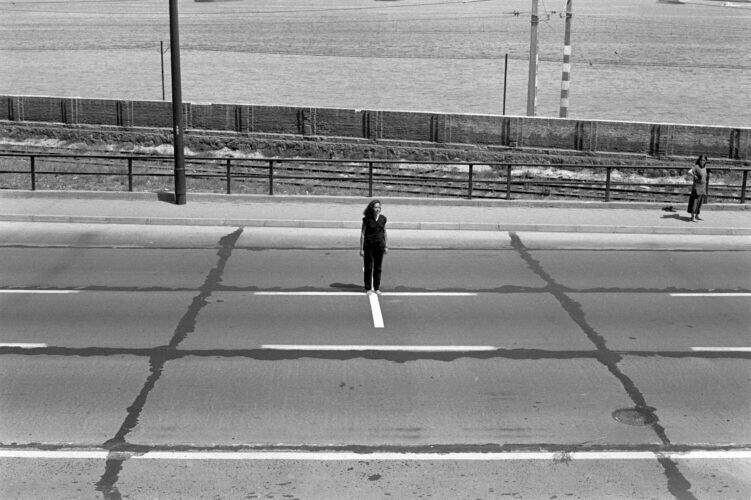
Curated by Marta Dahó and Alejandra Coz, the exhibition features some of her most significant works, with extensive documentation and the full display of several of her most representative videos. Spanning much of the Chilean artist’s career, the exhibition emphasizes the pioneering significance of her actions—both collective, through her participation in C.A.D.A. (Colectivo Acciones de Arte), and individual.
Para no morir de hambre (So as Not to Die of Hunger), Inversión de escena (Reversal of Scene), and Ay, Sudamérica (Oh, South America) are emblematic series from her early collective period, when her collaboration with Eltit, Zurita, Castillo, and Balcells marked a turning point in both artistic language and the form of political struggle. Also on view is Una milla de cruces sobre el pavimento (A Mile of Crosses on the Pavement), the most iconic work of that period and one around which its entire essence revolves.
In addition to this key reference, eleven other audiovisual works are presented that reflect the evolution of Rosenfeld’s expressive strategies and her use of media. Una herida americana (An American Wound) brings together three actions carried out in Atacama, Washington, and Santiago, and stands out particularly for its innovation in sound manipulation during the 1980s—a decade rich in audiovisual experimentation.
The action on the image and the use of shortwave sound in Proposición para (entre) cruzar espacios límites (Proposal for (Between) Crossing Boundary Spaces), or the combination of various fragments to create visual collages in Cautivos (Captives) and Paz para Sebastián Acevedo (Peace for Sebastián Acevedo), generate innovative and effective frameworks for expressing this activism.
The technical aspect is as crucial as the discursive development—a narrative that remained political throughout and gradually expanded into new directions over the decade. Works like Operaciones, El empeño latinoamericano, Sobreseimiento, and La Guerra de Arauco shift the discourse towards economic and systemic concerns, laying the groundwork for the development of new languages in the 1990s.
As with any action, its record takes on full significance. Not only the documentation but the recordings themselves form a whole essential to understanding Rosenfeld’s work. Her working method, her audiovisual production processes, and the thematic sources she chose for confrontation made her work a space for understanding resistance to the singular. In this forward movement, the imagination of collective participation in social transformation became the goal.
By Pass. La frontera del signo is on view until September 11 at the Círculo de Bellas Artes, Alcalá 42, Madrid (Spain).

The Reina Sofía Museum, in collaboration with BIENALSUR, presents the exhibition Resistencia. Una selección de video sudamericano (Resistance: A Selection of South American Video). Curated by Argentine art historian Diana Wechsler, artistic director of BIENALSUR, the exhibition offers two complementary ways to engage with the works, both situated around the museum’s cinema hall.
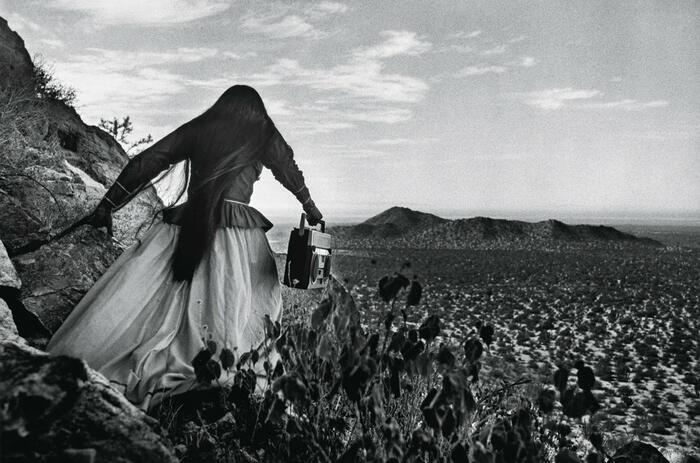
The Casa de México Foundation in Spain is hosting Cuando habla la luz (When Light Speaks), the first retrospective of Graciela Iturbide (Mexico City, 1942) since she received the 2025 Princess of Asturias Award for the Arts. Curated by Juan Rafael Coronel Rivera, the exhibition brings together 115 works spanning from 1972 to 2017.
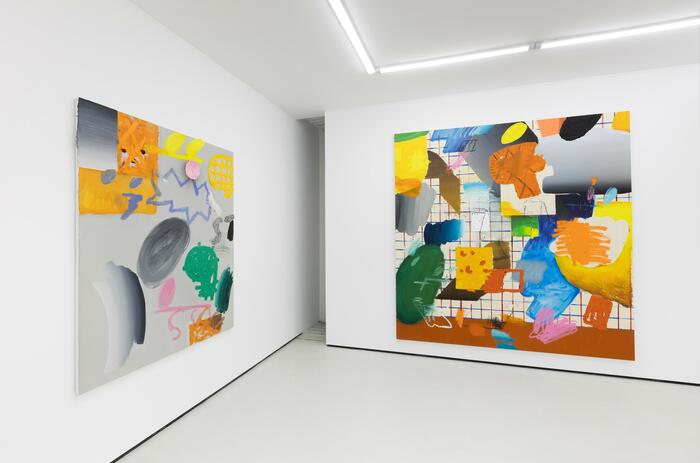

MARCO, the Museum of Contemporary Art in Vigo, presents Savia y sangre (Sap and Blood), a solo exhibition by Laura Lio (Buenos Aires, Argentina, 1967), which reveals the artist’s social vision and commitment through her work. Lio's practice involves a meticulous observation of certain organic and natural processes in search of a kind of internal order. With a poetic approach, the Argentine artist based in Spain challenges this natural structure through visual language and words.
By Álvaro de Benito
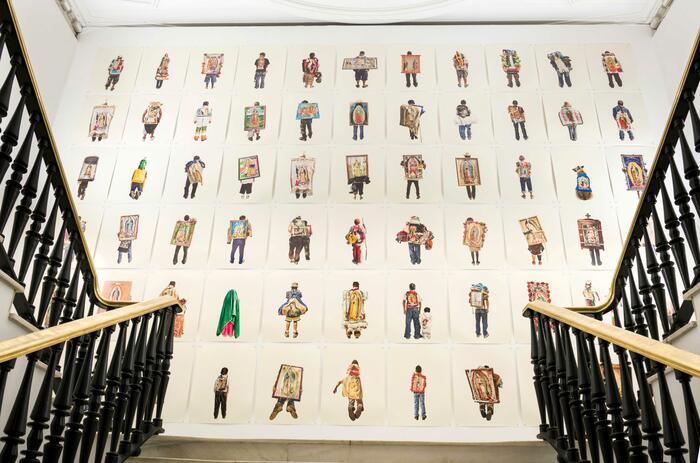
The Casa de México Foundation in Spain presents Guadalupe. La Virgen de México (Guadalupe. The Virgin of Mexico), an extensive program of exhibitions and activities centered around one of Mexico's most iconic and anthropologically significant figures. In addition to lectures and various screenings, the program revolves around two main themes: craftsmanship and popular culture on one hand, and anthropology on the other.

The Chilean gallery Casa Varas hosts Lincura’s provocative proposal: a new way of looking at the “exotic” —and a new way of looking into the mirror.