
By
Álvaro De Benito
The Casa de México Foundation in Spain presents Guadalupe. La Virgen de México (Guadalupe. The Virgin of Mexico), an extensive program of exhibitions and activities centered around one of Mexico's most iconic and anthropologically significant figures. In addition to lectures and various screenings, the program revolves around two main themes: craftsmanship and popular culture on one hand, and anthropology on the other.
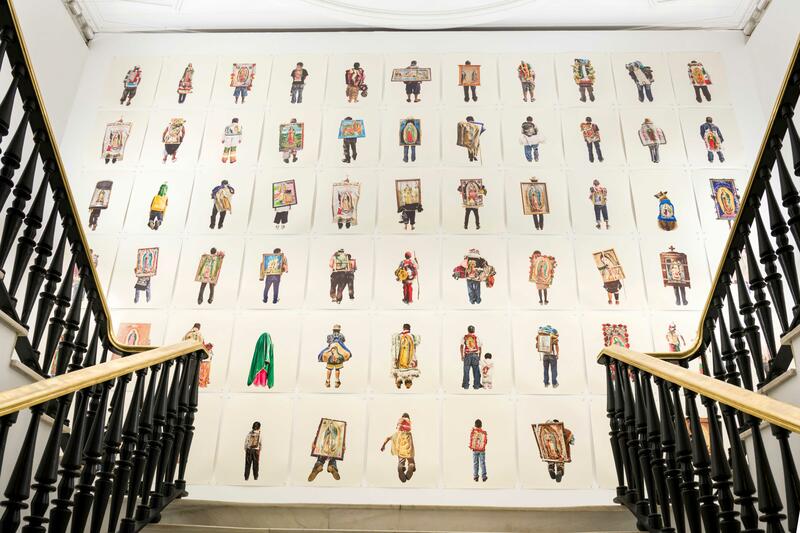
At the entrance of the exhibition space stands Camino al Tepeyac (2010), an installation by anthropologist and artist Alinka Echeverría (Mexico City, Mexico, 1981). The work consists of seventy photographs that collectively capture the pilgrimage to Tepeyac Hill. Through this piece, the Mexican artist explores the transformation of individual devotion into a communal act of faith and unity.
With an artistic lens, Echeverría offers a visual record of a ritual that channels movement and devotion, thereby elevating the intangible nature of belief and framing it within the theoretical realm of performance. The interplay between the visible and the invisible is also reflected in the iconography, underscored by the repetition and serial arrangement of the photographs—mimicking the cyclical rhythm of the ritual.
Guadalupe. The Virgin of Mexico also embraces the perspective of popular and folk art. The figure of the Mexican Guadalupe epitomizes religious syncretism, blending the Spanish Catholic Virgin with the indigenous deity Tonantzin and the image of the apocalyptic woman. The exhibition features nearly forty artworks depicting the icon, crafted by master artisans using various techniques and materials such as clay, talavera, wood, volcanic stone, and featherwork.
This representation of folk art offers visitors an unfiltered glimpse into the richness of Mexican culture. The convergence of pre-Hispanic and indigenous influences with European—and even Asian—traditions is evident in each piece. Folk art enables a more fluid connection to tradition, belief, and history, with each artisan expressing in their work the diversity that paradoxically shapes a shared Mexican identity.
Guadalupe. La Virgen de México is on view until September 21 at the Casa de México Foundation in Spain, Alberto Aguilera 20, Madrid (Spain).
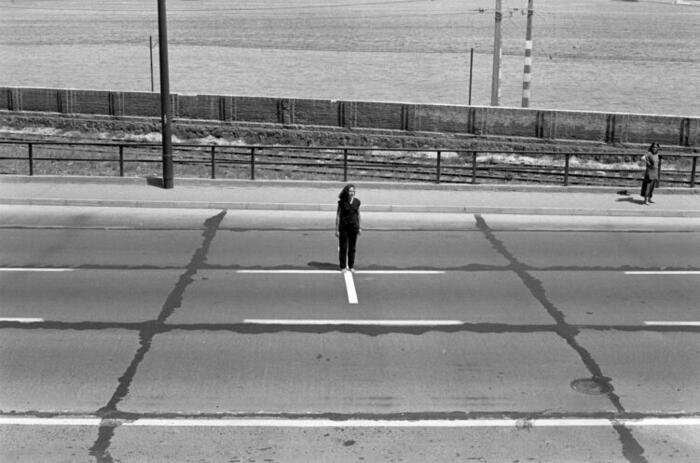
The Círculo de Bellas Artes in Madrid is hosting the exhibition By Pass. La frontera del signo (By Pass. The Frontier of the Sign), a comprehensive presentation of the work of Lotty Rosenfeld (Santiago, Chile, 1943–2020), a key figure in Latin American video art whose practice emerged at the intersection of political activism and the creation of images as spaces of expression and freedom.
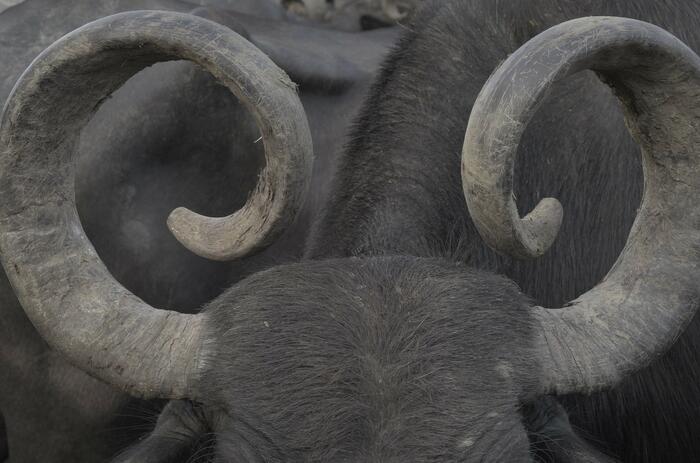
The Reina Sofía Museum, in collaboration with BIENALSUR, presents the exhibition Resistencia. Una selección de video sudamericano (Resistance: A Selection of South American Video). Curated by Argentine art historian Diana Wechsler, artistic director of BIENALSUR, the exhibition offers two complementary ways to engage with the works, both situated around the museum’s cinema hall.
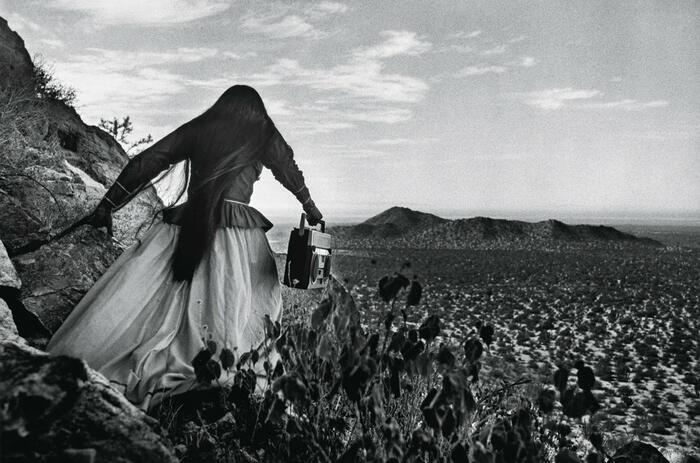
The Casa de México Foundation in Spain is hosting Cuando habla la luz (When Light Speaks), the first retrospective of Graciela Iturbide (Mexico City, 1942) since she received the 2025 Princess of Asturias Award for the Arts. Curated by Juan Rafael Coronel Rivera, the exhibition brings together 115 works spanning from 1972 to 2017.
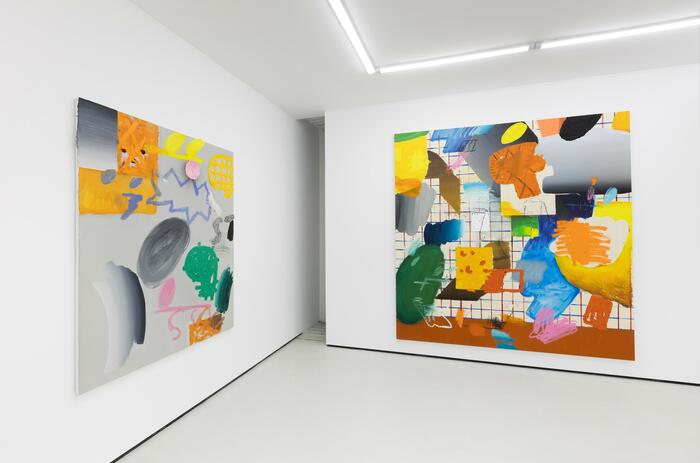

The artists will be featured in Emerging Current, an exhibition opening in November at the Eiteljorg Museum in Indianapolis, showcasing bold and experimental works that reflect diverse contemporary Indigenous perspectives.

Cave Art Centre of Cantabria 'Alberto I de Monaco' in Puente Viesgo is hosting its first-ever contemporary art exhibition.

The exhibition The Tiger’s Coat explores the many facets of the Italo-Mexican artist—photographer, militant, and enigmatic figure—through a constellation of historical documents and contemporary artworks.

Barcelona’s MACBA is hosting Plegarias de resistencia (Prayers of Resistance), the first major anthological exhibition of the work of Carlos Motta (Bogotá, Colombia, 1978) to be held at a European institution. The presentation spans more than twenty-five years of the artist’s production, practice, and activism.

MARCO, the Museum of Contemporary Art in Vigo, presents Savia y sangre (Sap and Blood), a solo exhibition by Laura Lio (Buenos Aires, Argentina, 1967), which reveals the artist’s social vision and commitment through her work. Lio's practice involves a meticulous observation of certain organic and natural processes in search of a kind of internal order. With a poetic approach, the Argentine artist based in Spain challenges this natural structure through visual language and words.