
By
María Galarza
What is a Culturally Specific Institution? Director of El Museo del Barrio for over eight years, Patrick Charpenel reflects on the role of museums in the United States, the visibility of Latinx communities, and the challenges of thinking about art beyond fixed categories and market logics.
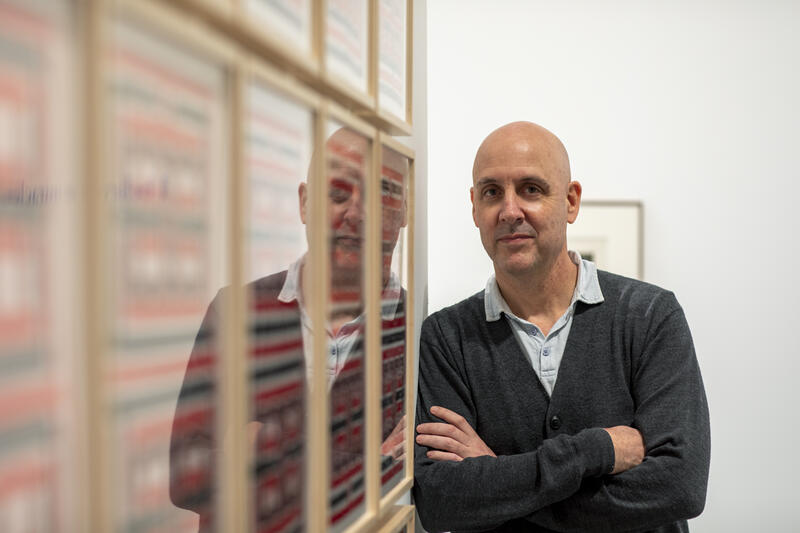
At the head of El Museo del Barrio, a key institution in representing Latinx cultures in the United States, Patrick Charpenel has developed a line of work focused on strengthening what, in the North American context, are known as “culturally specific institutions”: museums that take on a situated position to make visible historically marginalized productions, without aspiring to universal neutrality. In contrast to the growing homogenization of the global art system, his approach proposes thinking of the museum as a critical platform, one capable of generating knowledge, opening up conversations, and operating as an active agent within its social context.
You’ve been director of El Museo del Barrio for over eight years. How do you look back on that trajectory today?
It has been one of the greatest privileges of my career. Leading an institution that represents the Latino community in New York City.
There are more than 60 million Latinos in the United States, and yet we remain a community with a worrying level of invisibility in terms of our creative output and our role as active agents. That’s why I see directing a museum with this social, cultural, and political function as an enormous privilege.
How does the interpretation of Latin American art change depending on the context in which it’s presented?
I moved from one extreme to the other. In Mexico City, when I was directing Fundación and Museo Jumex, there was a strong presence of local artists, but with an international vocation.
Here it’s different. We are what in the United States is called a “culturally specific institution”. We have a very particular focus, which is presenting and representing Latinx and Latin American artists.
What issues are you interested in pushing today within the art agenda and the Latinx community in the United States?
I am concerned that museums are going through the same process as airports or supermarkets. They’re starting to look more and more alike.
They’re designed by international architects and tend to feature artists who are already well represented by the market. That pattern is replicated globally, and creates nearly identical institutions, regardless of cultural or political context.
In response to this, museums with a specific mission are breaking away from an increasingly homogeneous pattern. They present less Eurocentric perspectives and bring to light what has been left in blind spots.
We have a very important social role, which is to open up a field of research and knowledge that had not been explored before.
You also mentioned a difference between Latin American artists and Latinx artists in the United States. How does that tension arise?
It’s curious because the representation of Latin American artists in U.S. galleries is growing, but it’s still harder to find Latinx artists (those who live and produce in the U.S., even across generations) within the market.
We operate outside that logic. We’re closer to academia, to research, to exploring and recognizing both historical and contemporary practices.
What kind of relationship should exist between institutions, the market, and academia?
I would like to see those tensions ease and for things to flow more. I wish visibility for everyone, for artists to sell and to be present at fairs. But it’s also important to open up conversations that many established museums are not opening.
There is a sector that has operated more marginally, and yet it plays a major role in the current art conversation.
How do you think about the category of “Latin American art”?
We have to be very careful with cultural identity. Gerardo Mosquera has said that we should avoid essentializing identities, because that leads to exoticizing them. There is no such thing as Colombian art or Mexican art as fixed categories; there is art from Colombia, from Mexico, from specific contexts. It is dangerous to fall into those essentialisms or to construct caricatures.
What are the main challenges you face today in your role as director?
One is fundraising. There are foundations and corporations that are sensitive to this kind of institution, but it’s still difficult. Another challenge is growth, becoming a major platform, and a cultural ambassy with strong convening power.
And also fostering collaboration between museums, universities, and other centers of knowledge, without retreating into ourselves or looking inward.
How do you imagine these new forms of collaboration?
They can range from research projects between museums and universities to collaborations with the city.
I’m interested in art becoming an agent that not only produces material forms but also social forms. One that inserts itself into social structures and has the ability to dislocate them, open them up, and make them more responsive to vulnerable groups.
In relation to all this, the question of identity also comes up…
When I speak about identity, I’m not only talking about countries. I’m talking about queerness, gender identity, multiple dimensions.
These issues can’t be addressed without introducing complexity. Otherwise, we end up producing caricatures.
Jorge Volpi, after one year as Artistic Director of Contemporánea Condeduque, reflects on programming through a multidisciplinary narrative and how it fosters dialogue while giving Latin American art a central role in Madrid’s cultural scene.
Vásquez, Rodrigo, Másquez, Verovcha, and Yone Makino transform the space into a living organism. A Special Project that questions what it means to make art in Peru today.

Galería Enlace, Forum, and Livia Benavides participate in the fair with a selection of artists with a presence in the national and international contemporary landscape.
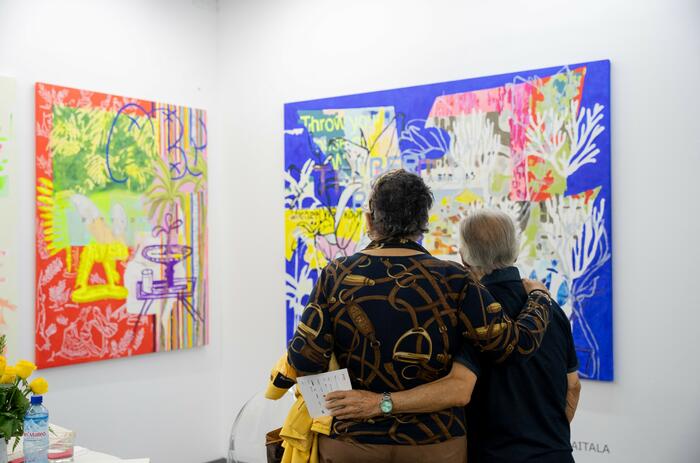
The fair commits to a program that brings together processes, technology, and identity, with curatorial sections that expand ways of thinking about contemporary art.
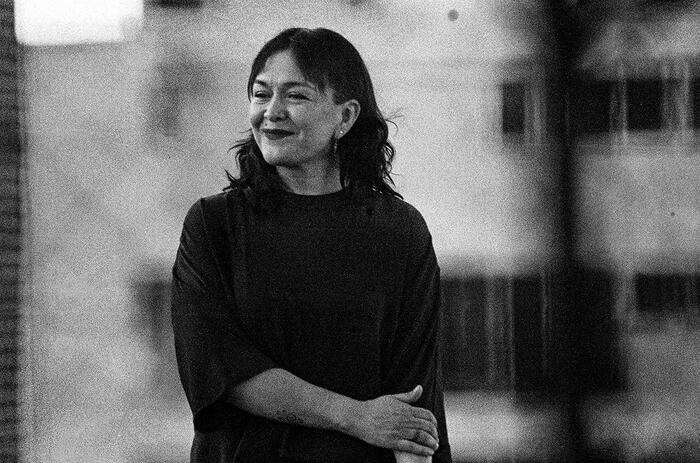
Director of the Museo Universitario del Chopo, Sol Henaro reflects on her role, the tensions within the institution, and the construction of communities from a curatorial perspective.
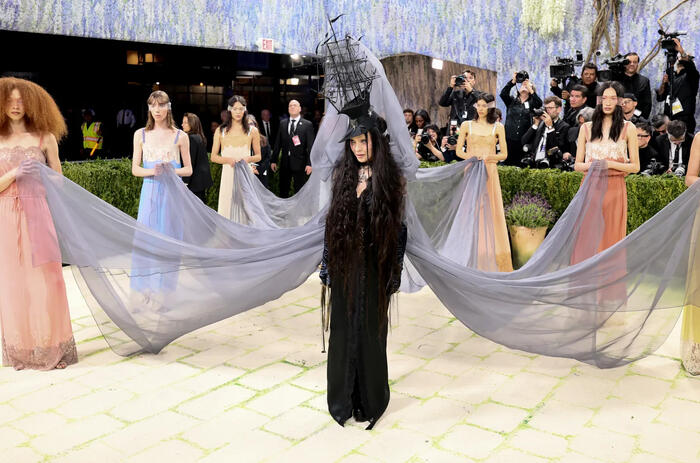
Between references to art history and spectacular visual statements, the 2026 Met Gala once again pushed the boundaries between aesthetic creation and performance.
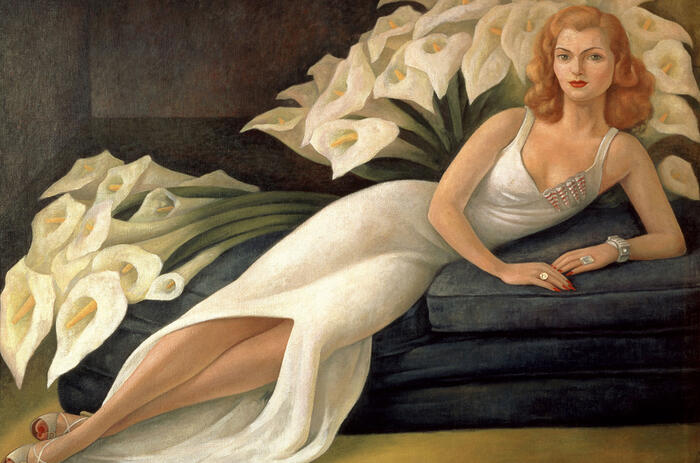
The current controversy highlights the difficult coexistence between the collection’s private ownership and the heritage protection that covers part of its works.
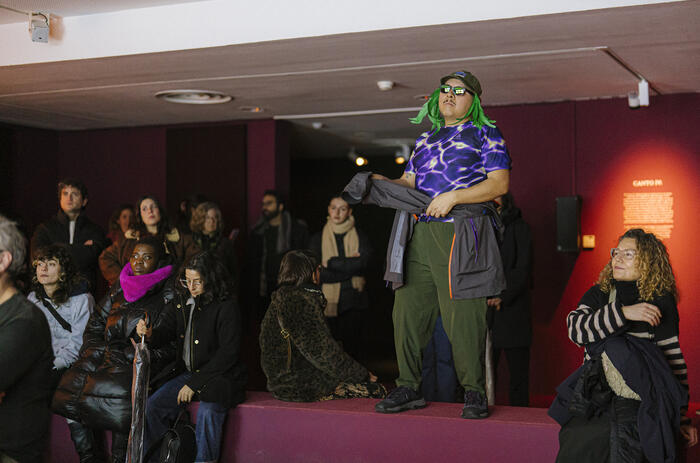
The call for submissions, open until May 31, is aimed at creators residing in Spain and invites them to design performative tours and workshops in dialogue with “Cautín,” the exhibition by the Mapuche trans artist.