PLURAL AMAZONIA: A LIVING CARTOGRAPHY IN THE HEART OF NEW YORK
Americas Society presents Amazonia Açu, an exhibition that explores the cultural, historical, and spiritual diversity of the Pan-Amazon region through contemporary and Indigenous perspectives.
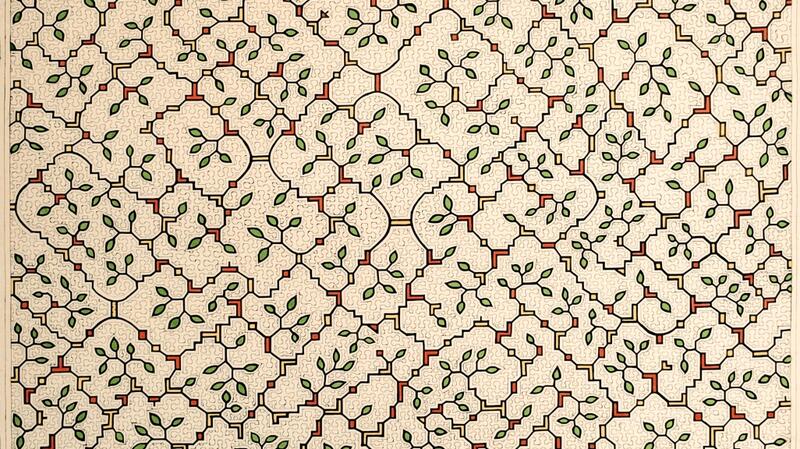
From September 3, 2025, to April 18, 2026, Americas Society in New York will present Amazonia Açu, an exhibition that considers the Amazon as a plural region encompassing communities and territories across Bolivia, Brazil, Colombia, Ecuador, Venezuela, Guyana, Suriname, French Guiana, and Peru.
Featuring over fifty modern and contemporary artworks—ranging from paintings, textiles, and ceramics to drawings, videos, photographs, and sculptures—the show spans works created from 1990 to the present. Emphasizing Indigenous ontologies, cultures, and knowledge systems, Amazonia Açu seeks to move away from any monolithic or stereotyped view of the region, instead highlighting the multiplicity of worldviews and ways of life that coexist within it.
-
Pablo Amaringo. El baile de los Puca-bufeos (Puca-bufeos’ dance), 2009. Oil on canvas, 44 ½ × 34 ¾ inches (113 × 88.5 cm). Hochschild Correa Collection. Photo: Christian Bendayán
-
PV Dias. Interior de uma casa (Interior of a house), from the series Rasura (Erasure), 2021. Digital painting on photograph printed on cotton paper, 27 ⅝ × 27 ⅝ inches (70 × 70 cm). Courtesy of the artist. Photo: Courtesy of the artist
-
Sri Irodikromo, Metamorphosis, 2022. Driftwood and clay, 7 ⅛ × 11 × 16 ½ inches (18 × 28 × 42 cm). Courtesy of Readytex Art Gallery. Photo: Gilbert Jacott/Courtesy of Readytex Art Gallery
-
Sara Flores. Untitled (Pei Kené 1, 2019), 2019. Natural dyes on wild-cotton canvas, 59 1⁄8 × 55 1⁄8 inches (150 × 140 cm). Courtesy of the Hochschild Correa Collection, the artist and The Shipibo-Conibo Center, NY
The exhibition is co-curated by a committee of representatives from each country in the Amazon region: Elvira Espejo (Bolivia), Keyna Eleison and Mateus Nunes (Brazil), María Wills (Colombia), Diana Iturralde (Ecuador), T2i and NouN (French Guiana), Grace Aneiza Ali (Guyana), Christian Bendayán (Peru), Miguel Keerveld (Suriname), and Luis Romero (Venezuela).
The thirty-four participating artists and collectives include Danasion Akobe, Angélica Alomoto, Pablo Amaringo, Johan Amiemba, Chonon Bensho, Elías Caurey Caurey, Colectivo TAWNA, Comunidad Weenhayek, PV Dias, Sara Flores, Sheroanawe Hakihiiwe, Sri Irodikromo, Carlos Jacanamijoy, Thiago Martins de Melo, Hélio Melo, Claudia Opimí Vaca, Abel Rodríguez (Mogaje Guihu), Aycoobo (Wilson Rodríguez), Gê Viana, and Santiago Yahuarcani, among others. Their works reflect on memory, territory, tradition, and the biodiversity that surrounds and sustains their communities.
Through this collective, transnational approach, Amazonia Açu proposes a sensitive and decentralized vision of the Amazon, where art becomes a space to inhabit, narrate, and safeguard one of the world’s most complex and vital regions.
Related Topics
May interest you

AFRO-CUBAN SPIRITUALITY AT PAMM: DIASPORIC HERITAGE AND CONTEMPORARY VISION
Twin Photography Duo’s First Solo Museum Exhibition Weaves Afro-Cuban Spirituality with Painterly Explorations of their Cultural Heritage.

WIFREDO LAM AT MoMA: BETWEEN DREAM AND DECOLONIZATION
The Museum of Modern Art will host the most extensive retrospective devoted to the artist in the United States, on view at MoMA from November 10, 2025, through March 28, 2026.

FAIR EXPANSION AND BRANDING: FROM LOCAL EVENTS TO GLOBAL POWERHOUSES
By Maria Sancho-Arroyo
Over the past two decades, the global art fair landscape has undergone a radical transformation. What was once a relatively contained circuit of regional events has exploded into a complex network of branded cultural destinations. Since 2000, the number of art fairs has skyrocketed - from fewer than 60 to over 300 worldwide -reshaping how art is marketed, sold, and consumed.


WHITNEY MUSEUM UNVEILS A NEW INSTALLATION OF ITS PERMANENT COLLECTION
The museum draws on the thinking of Felix Gonzalez-Torres as a starting point to celebrate the past, present, and future of its collection, which spans works from 1900 to 1980.

BEAUTY, MEMORY, AND ENVIRONMENTAL COLLAPSE AT BALTIMORE MUSEUM
Black Earth Rising brings together artists from the African diaspora, Latin America, and Indigenous communities to explore the links between environmental devastation, colonial legacy, and the possibility of imagining alternative futures.

THE CONTEMPLATIVE IN THE LABORIOUS, IN NEW YORK
Apexart presents the work of seven Latin American artists who, through meticulous and repetitive handcraft processes, transform labor into an act of resistance, joy, and the creation of possible futures.

THE UNKNOWN AND ITS POETICS AT KINOSAITO
The interdisciplinary art center located in New York presents work shaped by the experience of relating to the foreign in order to build a unique identity.

CIRCLES, SPOKES, ZIGZAGS, RIVERS: CONTEMPORARY ABSTRACTION AT WHITNEY MUSEUM
Artist Grace Rosario Perkins’s solo exhibition reveals a dynamic process of layering, erasure, and renewal, where personal and collective histories converge.specifically for this exhibition.

“BETWEEN COCA AND GOLD” AT THE 2025 NEW YORK TRIENNIAL
Tatiana Arocha's artistic approach examines the connections between nature, history, and cultural resilience, presented alongside a collaborative publication blending critical thought and visual research.
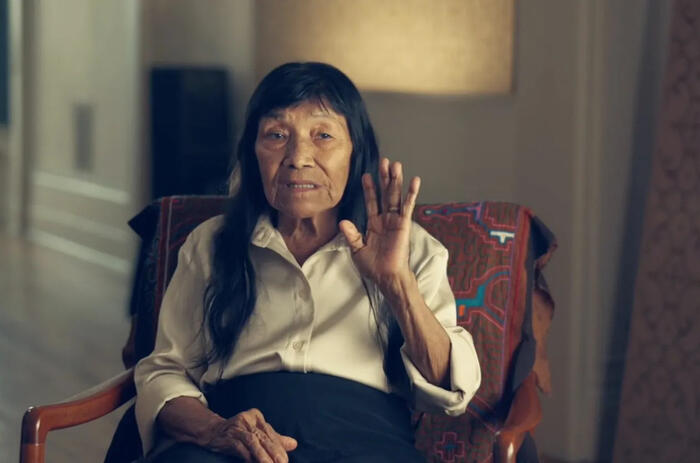
INDIGENOUS ARTIST SARA FLORES BRINGS SHIPIBO-KONIBO WORLDVIEW TO THE VENICE BIENNALE
Her project From Other Worlds will occupy the Peruvian Pavilion at the 61st Biennale, exploring the relationship between contemporary art, ancestral memory, and the Amazonian worldview.