

By
Álvaro De Benito
A conversation with the curator of the 37th Ljubljana Biennale of Graphic Arts on navigating biennial management within a turbulent global landscape, detailing his collaborative, site-responsive project exploring expanded printmaking for the 2027 edition.
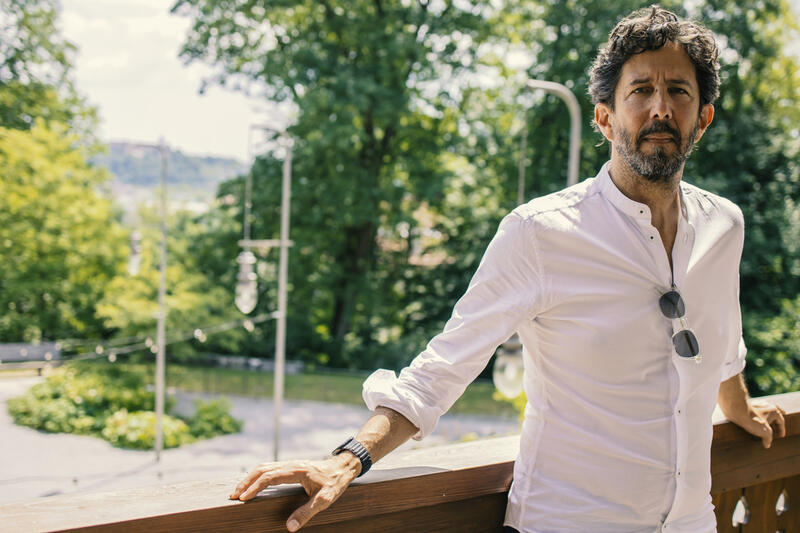
José Roca (Barranquilla, Colombia, 1962) is one of Latin America’s most internationally established cultural practitioners, with an extensive career as a cultural agent and curator of some of the leading contemporary art biennials. From his work with the São Paulo Biennial, the Poly/Graphic Triennial of San Juan, and the Mercosur Biennial in Latin America, to his directorship of the Biennale of Sydney, his practice has explored the relationships between art, nature, material culture, and territory, as well as forms of non-human agency. His work has contributed to positioning Latin American art within a range of international contexts.
He is currently immersed in preparations for the Ljubljana Biennial of Graphic Arts in Slovenia, having been appointed curator of its 37th edition. For For the occasion, he will revisit some of his reflections on expanded graphic arts through an ambitious project developed in collaboration with local curators and cultural practitioners. We spoke with him to learn more about his approach to curating one of Europe’s longest-running biennials, as well as about his understanding of curatorial practice and the management of such events within an especially turbulent contemporary landscape.
The Ljubljana Biennial of Graphic Arts has a distinctive geopolitical history and a highly particular medium-based identity spanning more than seven decades. To what extent does this legacy shape the way you approach the project? I wonder whether it represents a challenge in terms of developing your own perspective without simply deferring to the past, or whether it is precisely this history that ultimately gives the project its form.
All biennials associated with a specific medium have had to rethink themselves. During the relative isolation of the Cold War, the Ljubljana Biennial brought contemporary artistic practice closer to local audiences; graphic arts travelled more easily and enabled these exchanges. Following the conflicts in the Balkans, the region underwent a significant opening-up, but the Biennial maintained its connection with printmaking for some time. Aware of the need to open itself up to more contemporary proposals, the institution—which comprises the International Centre of Graphic Arts and the Biennial—decided that the former would take responsibility for the medium’s specificity, thereby “liberating” the Biennial from that obligation and giving it greater freedom to present an event devoted to contemporary art —without necessarily being centered on printmaking. I had experience with similar projects, such as my co-curatorship of the Poly/Graphic Triennial of San Juan and Philagrafika in 2010, and I believe this was decisive. In fact, they had already expressed an interest in having me participate in 2012, but circumstances did not allow it. When they invited me again years later, this time I accepted the challenge.
Do you think this move beyond the strict boundaries of what is understood as printmaking has emerged organically, or has there been a certain pressure from the market and the art world to expand these boundaries?
I would say it emerged organically. They felt that this particular vein had been exhausted and wanted to shake things up. Sometimes, as in the edition curated by Chus Martínez, the shift is radical and has virtually nothing to do with printmaking, whereas in previous editions the relationship with graphic practices has been more direct, as when Ibrahim Mahama revisited the tradition of political and libertarian printmaking in the Non-Aligned countries. The specificity of a medium serves to generate an expectation that can subsequently be disrupted. This is why I am interested in the Drawing Center in New York, where the idea of what drawing can be is continually expanded, revealing new possibilities within a discipline. Specificity should not function as a straitjacket, but rather as a framework that calls for expansion. This tension between expectation and reality contributes to the project and, although I have worked on biennials where I was free to do whatever I wanted, here I prefer to retain that framework.
In this regard, one of the central ideas of your proposal for Ljubljana is the “trace” or “imprint.” It is a very broad concept with many different approaches. Which of the many dimensions encompassed by this concept interests you most?
I begin with a hypothesis that subsequently transforms. For the Biennale of Sydney, I revisited an exhibition on rivers and weaving in Colombia and opened it up to a global perspective. That evolved as I worked with local curators, and the idea of weaving gradually lost its relevance until rīvus emerged, a project focused on the relationship between water and conflict. I think something similar will happen here. I have a hypothesis that understands the body as a matrix or support for the imprint, and I am developing it with two local curators who work at the museum, Yasmín Martín Vodopivec and Ajda Ana Kocutar. They bring a form of local knowledge that I could not access in the same way. I do not conceive of the project as something that belongs to me, but rather as a collective project in a constant state of evolution.
I am particularly interested in this collaboration with local practitioners. Within this emphasis on the immediate and local context, what balance are you seeking between an international and a local perspective? Is this merely a discursive consideration, or does it also respond to logistical and contextual forms of knowledge?
I have always been convinced that, in order to curate a biennial, one should live in the place where it takes place, although this is not always possible. That is why I decided to form a team with local curators, because they know the Ljubljana, Slovenian, and regional art scenes in depth, and can contribute a kind of knowledge that I could not reach in the same way. The idea of constructing the project collectively is realized by combining my perspective with their experience and knowledge of the context. They can also identify which artists are currently at an important point in their practice, which ones have already participated too frequently, and which proposals have become clichés or commonplaces—things that would take me a great deal of time to understand.
In the field of biennials, in which you have extensive experience, how prescriptive can a particular location become when developing a specific curatorial project?
Contracts usually state that the local art scene must be taken into consideration, although in this case there is no minimum quota of artists from the country or region. Here, local participation will emerge organically: first, because it is something that interests me, and second, because I am working with collaborators who have an in-depth knowledge of the context. At the same time, I am interested in expanding this perspective towards what we might call the Global South and the peripheral North. For this reason, there may be a greater presence of artists from Latin America, as is the case with all my projects, because this is a field I know well and it naturally emerges within my practice.
Latin American art is currently experiencing a moment of considerable international visibility. What criteria do you use to determine whether particular artists or proposals fit within the biennial’s curatorial framework? Is it a matter of representation, personal interest, or does it evolve organically?
The knowledge I mentioned makes it easier to think of specific names when we are considering particular themes or practices. After so many years of working in the region, I have an archive of artists and proposals that I can readily draw upon. It is more difficult for me to propose artists from Eastern Europe, precisely because I do not know that scene with the same degree of depth. In any case, it is never a matter of establishing a regional quota, but rather of identifying which practices are most appropriate to the themes we are discussing.
After your experience with so many biennials, do you perceive any risk of “contamination” from one experience to another? To what extent does each biennial incorporate and transform previous experiences, and what elements remain constant throughout your curatorial practice?
One never starts from scratch and, in a way, one project leads into the next. rīvus ended up becoming the second part of something I had never conceived as a trilogy about water. The first was Waterweavers, at the Bard Graduate Center in New York. I then expanded it in Australia, but it ultimately became something else. There was a third project that was supposed to take place in Germany, followed by another in Spain, but neither came to fruition. There are simply certain themes that keep circling in my mind and I develop them when an opportunity arises. For the Ljubljana Biennial, I am revisiting reflections on expanded printmaking that were already present in the Poly/Graphic Triennial of San Juan and in Philagrafika in Philadelphia. Many threads were left unresolved, and one always returns to those conversations and lines of inquiry, including those emerging from projects that could not ultimately be realized.
I assume the same applies when working with artists with whom you have collaborated previously. How do you balance this continuity with the need to discover new artists and new practices in a biennial?
One of the things I enjoy most is reconnecting with artists I worked with a long time ago. It is like a friendship: an artist can be completely different ten years later. But I invite them again because I am interested in seeing how their practice has evolved and whether it makes sense in relation to the theme and the local context. Biennials have a kind of imperative to show what is new. I believe a biennial is a place where one discovers things, and I advocate for a combination of existing practices, works that I already know, and elements that emerge through the process. In Eastern Europe, for example, one can discover Latin America almost from scratch because, apart from the best-known names, many artists have never been presented there. And there are always new artists who will probably become the threads to follow if I undertake another project in the future.
We have discussed your ideas about how a biennial should be approached, and I would like to ask you about the political dimension of these events. In recent editions, particularly at the Venice Biennale, we have witnessed an enormous degree of polarization and politicization, with art itself being pushed into the background. If we consider the different models of biennials, which do you find most interesting from the perspective of curatorial politics?
Venice is, as they say in the United States, “the show you love to hate”: whatever one does, there will always be something that has been left out. It has a problem at its very origin, because it is an artistic version of competition between nations and reproduces geopolitics: the former colonial powers have their palazzi, poorer countries have no pavilion, and newly wealthy countries can rent enormous spaces. It is the mother of all biennials and, like a mother, it must be respected, but it has a thousand problems from the outset. I prefer smaller biennials, such as this one, where one can say something without pretending to shift the center of the art world. I believe one has to consider who the actual audience of each biennial is. I am clear that I am making this one for Slovenia and the region, and there will be some international audiences, but they are not necessarily the audience one should be primarily addressing.
The 37th Ljubljana Biennial of Graphic Arts will take place at the International Centre of Graphic Arts and other venues across the Slovenian capital. It is scheduled to open on 15 June 2027
Interview with Cecilia Vicuña

An Interview with La Chola Poblete