

By
Santiago Brignardelli
Paraná Delta and the Rhine-Meuse-Scheldt, between domination and resistance
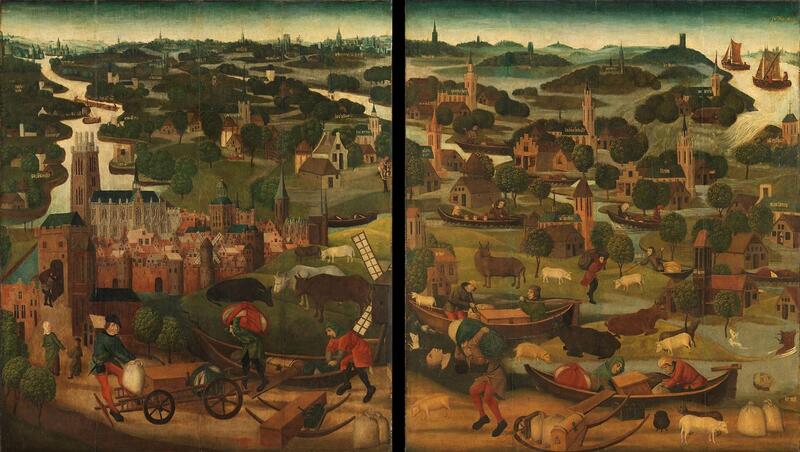
This article marks the beginning of an investigation — one grounded in design and architecture, in territory and space, that doesn't aim to compete with the annals of science. It works in that friction between the objective and the subjective. We choose subjects that draw us in and use our discipline — architecture, and reflection on space — as a tool for telling stories. Today, territory reaches us mediated by data, elevation, satellite imagery. We want to hold onto the other side: the subjectivity of encounter, what's learned by going, by traveling. Telling the story of these rivers brings us back to an uncomfortable question — how much of our intervention on the existing world is actually necessary, and whether there aren't other ways of approaching the natural that don't begin by correcting it. We're following the line of Humboldt and Thoreau here, where there's still much to learn about how living systems connect, and a delta that escapes every taxonomy is a good place to start.
1. The Cage
In Tigre (the gateway city to the Paraná Delta), there's a house inside a glass box. It's the house of Domingo Faustino Sarmiento — wood and a gallery painted white, preserved as a museum on an island in the Paraná Delta. The glass protects it from humidity, from floods, from the river itself. The image is hard to improve on: the man who wanted to tame the delta ends up caged by it. His house, embalmed, and the river outside, waiting.
Sarmiento saw the Carapachay as a territory to be civilized. Canals, wicker, settlers in a delta imagined as an agricultural promise — a Creole Holland forty minutes from Buenos Aires. Before him, Marcos Sastre had described it as Eden in El Tempe Argentino. Literature first, engineering after. Territories are narrated before they're built, and that narration is already a form of occupation.
2. Two Deltas
These two deltas tell the same story with opposite endings — the Paraná, and the Rhine, the Meuse, and the Scheldt, where Holland built its founding myth. Two amphibious plains that the State tries to fix, to draw, to drain. Two languages that each invented a word for what lies outside the line: "matrero," the one who lives beyond the law; "buitendijks," the land left outside the dike. Naming what escapes is the first attempt to catch it.
The artifacts of that domestication are still there — they're the bestiary of this story. The dike and the ditch, the polder and the country estate, the pumping station and the canal that was planned but never dug. Every piece of infrastructure is a sentence in the same statement: water is governed.
But in both deltas the water is coming back — it always does — and that's where the story splits. In Holland it comes back by decree, as in the case of Noordwaard: the State that spent centuries winning land from the sea now dismantles its own polders to give the river back its space. In the Paraná it comes back through abandonment. Sarmiento's projects never took hold, the wicker plantations were left empty, the floating marsh advances over what used to be farmland. One delta undoes its domestication by decree, the other by resistance and neglect. Opposite mechanisms, the same result. The fugitive land reclaims its condition.
3. Bestiary of Memory
Haroldo Conti wrote Sudeste in 1962 — a novel where the protagonist isn't the islander but the river itself, with its slow time, its way of erasing and giving back. Freed from the land/water dichotomy, the voice of this story dissolves into the landscape. This investigation reflects on architecture's capacity to hold memory in a territory strained between domination and resistance. The dismantled dikes or the flooded wicker plantations, the stilt houses of the Paraná and the Dutch "terpen," suggest an architecture that negotiates with the river, that remembers it differently.
To answer that, the archive isn't enough. You have to go. The project takes the form of an expedition to both deltas in the tradition of Alexander von Humboldt — not focused on the scientific, but on the way he returned from his travels with stories and objects rather than reports — to record in the field the artifacts of domination and those of resistance.
Sarmiento's house will stay inside its display case, perfect, dry, still. Outside, the river keeps rising and falling twice a day, indifferent to the glass. Between those two temporalities — the monument's and the tide's — this project's question plays out. The fugitive landscape doesn't need rescuing. It needs to be listened to before it slips away again.
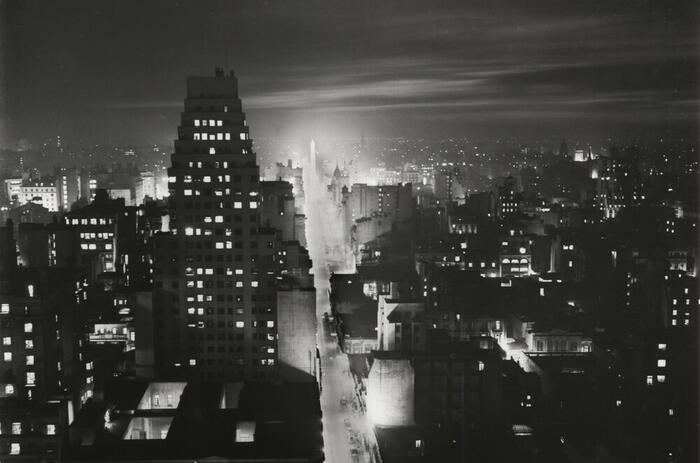
The exhibition at the museum in St. Louis features how exile, exchange, and collaboration in Buenos Aires shaped modern art.
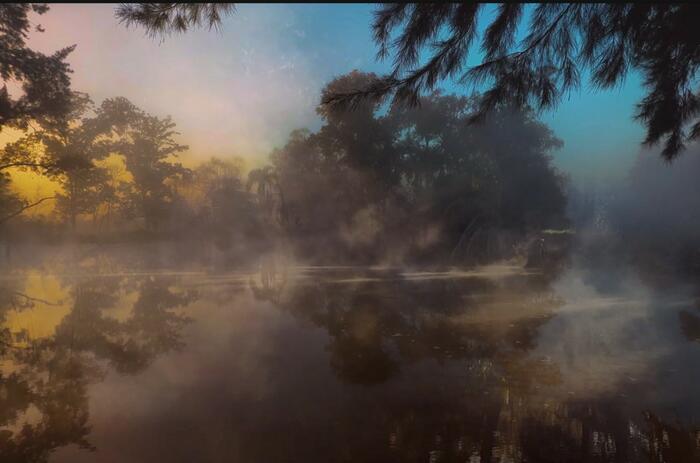
Suave es la noche, by Silvana Muscio, and Trago Amargo, by Claudia Coca and Claudia Casarino, propose two distinct ways of inhabiting memory from Buenos Aires: one sensory and oneiric, the other historical and colonial.
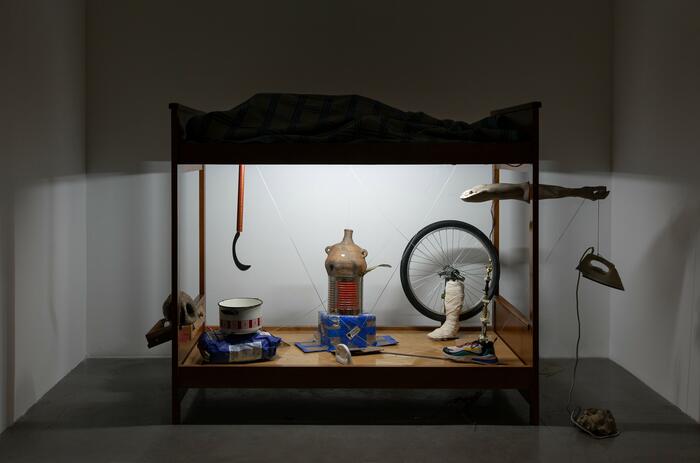
With a characteristic exercise of Ruth Benzacar's exhibition program, intergenerational dialogue is established between Roberto Aizenberg's works in "La flor de la distancia" (The flower of distance) and Andrés Piña's "El alma volvió preñada de materia" (The soul returned pregnant with matter).
The cultural strategy office will open in late October with a site-specific exhibition by Olivier Mosset and Gilda Picabea.