
By
Julia P. Herzberg
El Dorado: Myths of Gold is an extensively researched, impeccably installed exhibition featuring one-hundred objects and artworks from the Pre-Columbian period to the 21st century by sixty artists.
The thematic thrust of the exhibition addresses the myriad ways in which the aura of gold has undergirded creative endeavors, religious imagery, extraction of land, and destruction of human lives. The myth of El Dorado as an imagined golden kingdom filled with gold and precious stones took root when the Spanish conquistadors arrived: and, as improbable as it may seem, the power of gold on the collective imagination continues to galvanize artistic imagination. One of several objectives is to understand that the invasion of the continent served as a justification for the conquest of indigenous peoples as well as the destruction of their ancestral territories and the environment. The curatorial team posits the need to come to terms with the long-term sociopolitical and environmental effects of the long arm of colonialism. The curatorial aspiration of the New York exhibition together with the collaborative exhibitions at Foundation Proa in Buenos Aires and the Museo Amparo in Puebla, Mexico is to advance an unfinished dialogue implicit to these exhibitions.
The first of three galleries introduces gold as a treasured element through mostly Pre-Columbian objects from Costa Rica, Colombia, and Panama. An outstanding example is Gold Mask from northern Peru, an area rich in precious metals. Over the centuries, grave robbers have looted body ornaments from high-status tombs as well as from surface digs. Karen Lofgren’s Gold Flood of 2009/2019, from a series of site-specific sculptures, occupies one of the corners of the gallery’s floor. The work, made of plywood and automotive paint, looks like a liquid spill, perhaps reminding us of gold spills that have damaged the environment. In contrast to the small corner sculpture, Olga de Amaral’s beautiful tapestry occupies an entire wall. Magnificently woven colored fibers and materials configure the geometric outlines of circles and squares. A tour de force.
The center gallery features works from across time and place that deal with mapping and the body. Since El Dorado was believed to have existed as an actual place until Humboldt disputed the claim, it is fascinating to discover Thomas Hariot’s 16th century map, Magnificent Untitled Manuscript Map of the Guianas Region (present-day Venezuela)which depicted El Dorado as an actual place. As markedly detailed as are the series of surrounding maps, Laura Vinci’s Morro mundo pin (Pin world hill) of 2018 is a miniature gold-plated outline of the world contorted in shape and pinned to the wall offering an image of extreme fragility. Two additional works, one by the 19th-century academic painter Johann Mortiz Rugendas, the other by the contemporary artist and writer Pablo Helguera, interrogate notions of place. Rugendas’ View of Valparaiso of 1842 features an idealistic academic view of the Chilean harbor where miners disembarked. Near the painting of the harbor, Helguera’s Chuquicamata of 2023 presents a different physical landscape of Chile. The artist’s video features slides of archival photographs of the largest open-pit copper mine in the world, one formally owned by the Guggenheim family. The voice-over narrative offers a socioeconomic account of the region in 1915. The photographs expose the extractive damage to the earth. We are left to reckon with the ways in which economic power led to the creation of one of greatest art collections in the western world.
Opposite the artworks that address geographies, numerous works deal with the body as both subject and object. Priscilla Monge’s Healing Surfaces of 2023 and Sherezade García’s Cathedral from the series Theories of Freedom of 2009-11. Monge’s four polaroids are covered with sheets of gold to hide the anatomical identity of the body’s private parts. In our current moment of hyper-sexualized imagery, such discretion seems welcome. García’s gold spray-painted inner tubes fastened together recall the innumerable oceanic passages dared by people who felt forced to flee because their lives were endangered.
The contemporary works in last gallery elicit the same admiration vis a vis their iconographic and thematic excellence. Leda Catunda’s Eldorado, an abstract landscape merging such recognizable forms as ladders, footsteps, and hills, is masterly constructed similar to a maze. Mathias Goeritz’, Marta Minujin’s, and Alfredo Jaar’s now iconic works resonate perfectly with the multilayered issues of the exhibition. Goeritz’ Untitled of mixed perforated brass mounted on wood, extends the possibilities of abstraction as well as the beauty of a hand-crafted object has the aura of centuries-old gilded gold work.
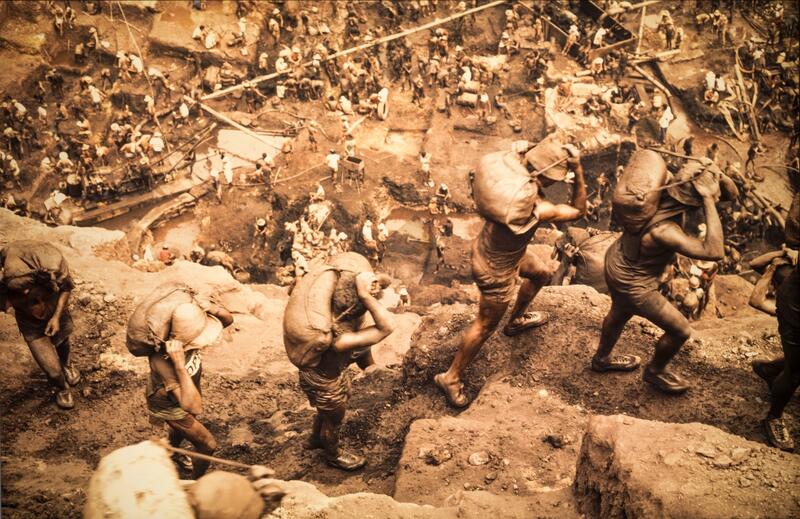
In Marta Minujín’s photo-performance, Payment of the Argentine Foreign Debt to Andy Warhol with Corn, The Latin American Gold, the artist hands Warhol gold-sprayed corn cobs as if they were commercial currency. From Minujín’s witty perspective, corn, a basic food commodity, is Latin America’s gold, and as such it should be used to even out unequal trade relations. In contrast to the Minujín-Warhol performance, Alfredo Jaar’s Gold in the Morning captures the dangers faced by multitudes of miners who descend Serra Pelada, an open pit gold mine in Brazil. The photos capture the conditions of grinding poverty, physical exhaustion, and hazardous conditions experienced by those desperate to find profit. The Minujín and Jaar works were executed the same year.
In ending let’s consider El Salto (The Jump), the last works viewed in the exhibition. The video focuses, as many works did in El Dorado, on landscape and the problem of extractivism. The famous Tequendama Falls have a mythic history too long to unroll here: suffice it to say, they were measured by Humboldt and explored by 19th century North-American artists. In recent times the Bogotá River has been polluted and some of the surrounding landscape degraded. Covelli’s video juxtaposes technology, nature, historical imagery, and narration to issue a needed ecological warning.
The America’s Society excellent curatorial team—Aimé Iglesias Lukin, Tie Jojima, and Edward J. Sullivan—worked in partnership with the curatorial teams at the Foundation Proa in Buenos Aires and the Museo Amparo in Puebla, Mexico to facilitate the ways in which the histories and effects of myth, particularly around contemporary artistic production, have been understood and interpreted by their respective audiences. This first part is on view until December 16; the second-part will continue from January 24 through May 18, 2024.

Americas Society presents the first part of El Dorado: Myths of Gold, a two-part group exhibition exploring the legend of El Dorado as a foundational myth of the Americas.
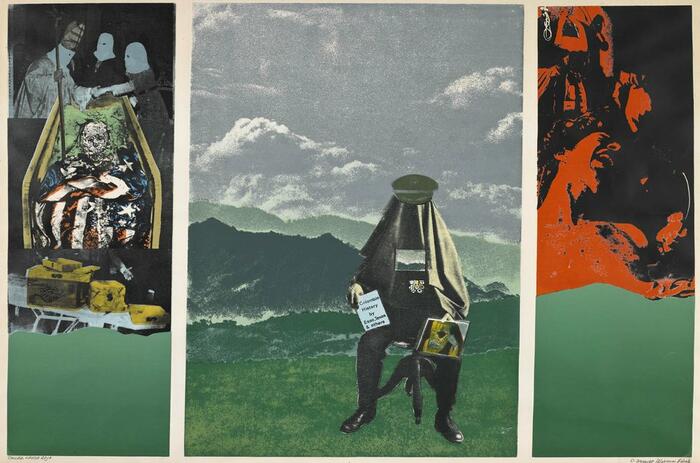
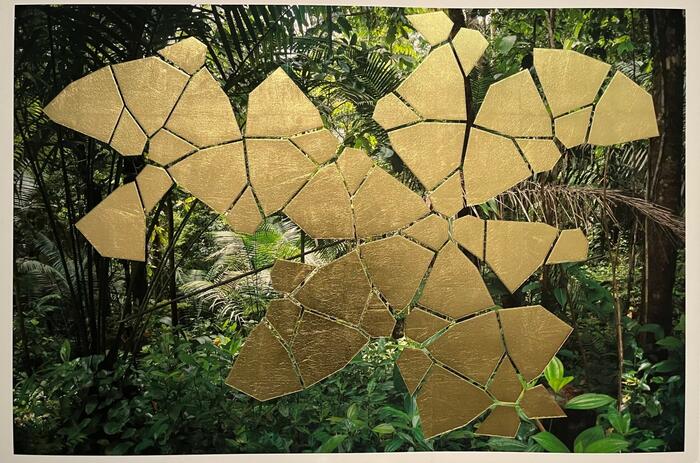
Fundación PROA presented a reflection on the myth of "El Dorado" in the American continent, with a selection of works by artists from different countries and times to rethink the impact and meaning of one of the most influential legends in history.
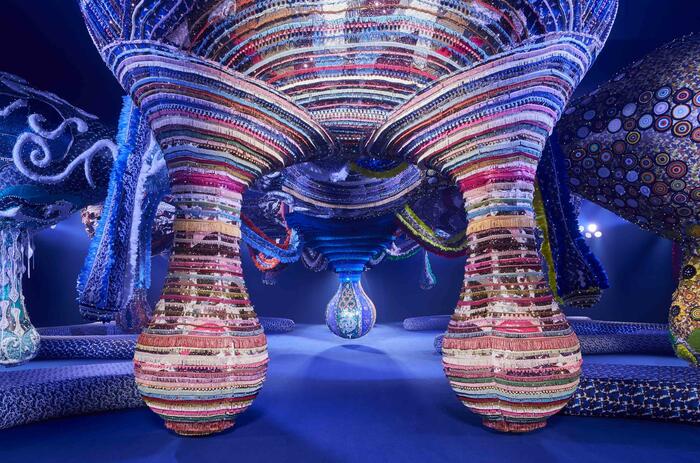
Extravagances is Portuguese artist Joava Vasconcelos’ largest solo show at Brazil in the Oscar Niemeyer Museum (MON). Curated by Marc Pottier, the exhibition invites the audience to an immersion into the magical world of the artist.
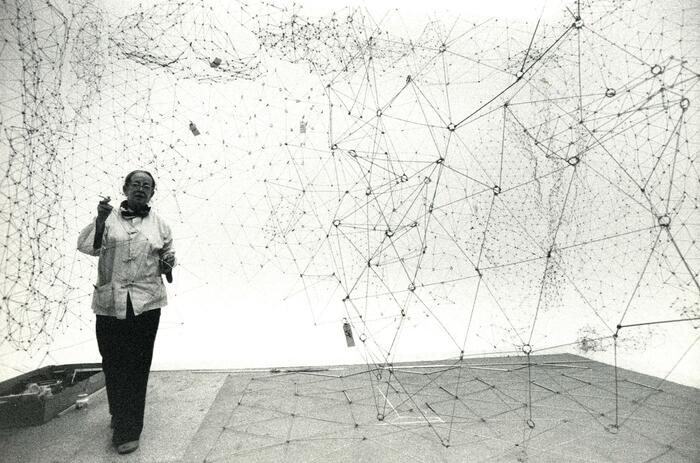
With the intention of rethinking the legacy of the Venezuelan-German artist Gego and its historical significance from the contemporary context, LA ESCUELA___ created a project of dialogue, learning and exchange Collective Reticulárea: Communal Cartographies.
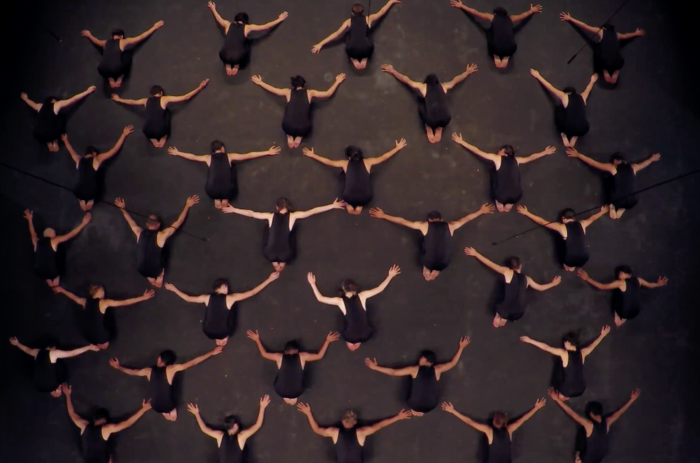
Magdalena Fernández's Mobile Body Paintings arrived at the Clavijero Cultural Center, in Morelia, to breathe with the Mexican public.
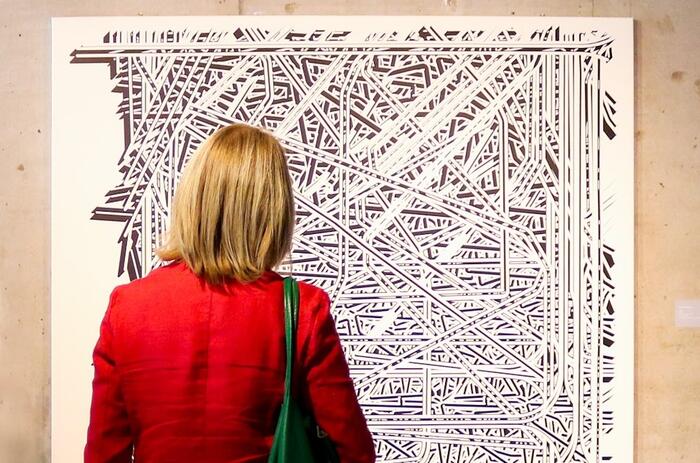
MACBA presents the exhibition Obsceno (Obscene) by artist Pablo Siquier, curated by Rodrigo Alonso. It is a collection of works never seen before in Argentina, which are part of the museum's collection.
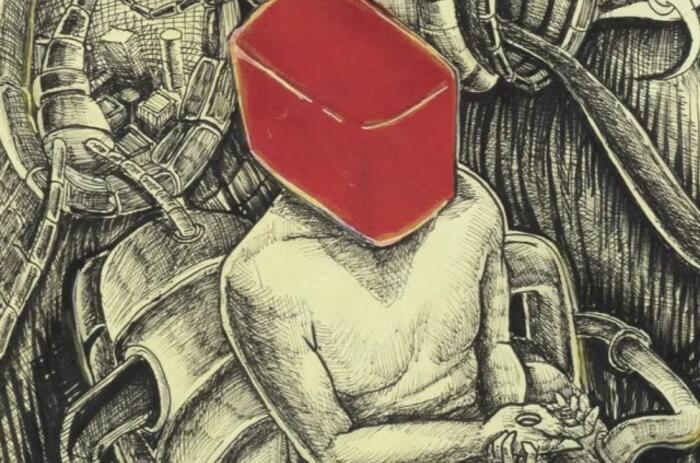
The Museu de Arte Moderna de São Paulo (Museum of Modern Art of São Paulo) and the Museu Afro Brasil Emanoel Araujo (Emanuel Araujo Afro Brazil Museum) presented the exhibition Mãos: 35 anos da Mão Afro-Brasileira (Hands: 35 years of the Afro-Brazilian Hand).
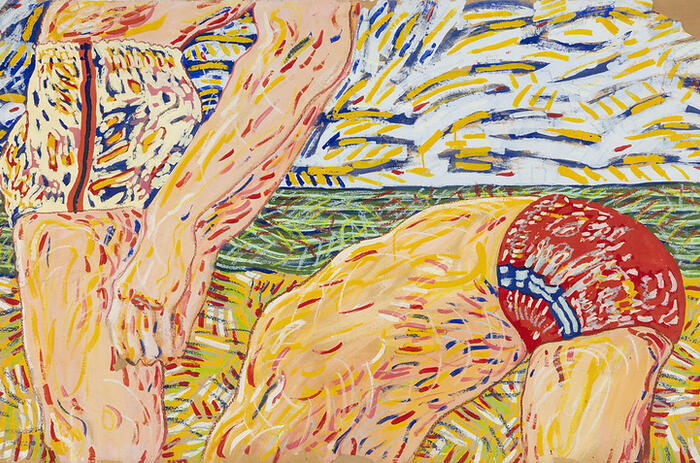
The exhibition From the Margins. Gumier Maier in the 80s, at the Museo de Bellas Artes, brings together nearly 90 paintings, drawings, illustrations, photographs, publications and documents from the early years of Jorge Gumier Maier's career (1953-2021). It is curated by Natalia Pineau.
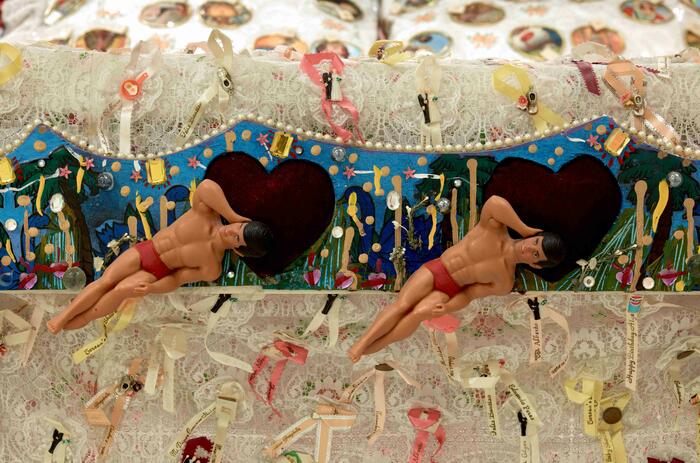
El Museo del Barrio announced the second rotation of its permanent collection exhibition Something Beautiful: Reframing La Colección.
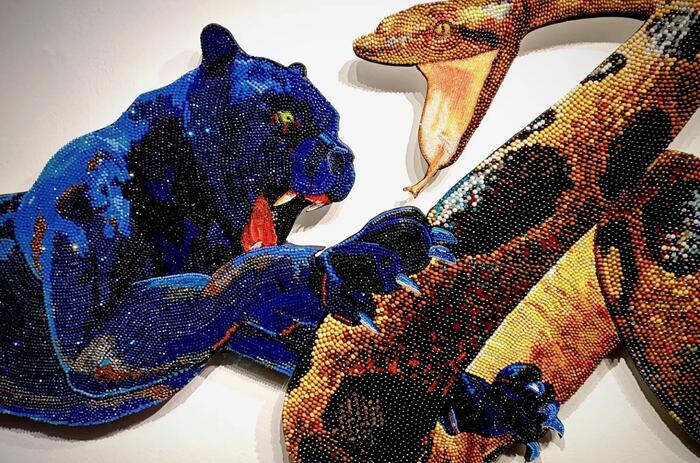
La Otra Verdad (The Other Truth), the most recent individual exhibition of the artist Harry Chavez, is presented at the Ricardo Palma Cultural Center.
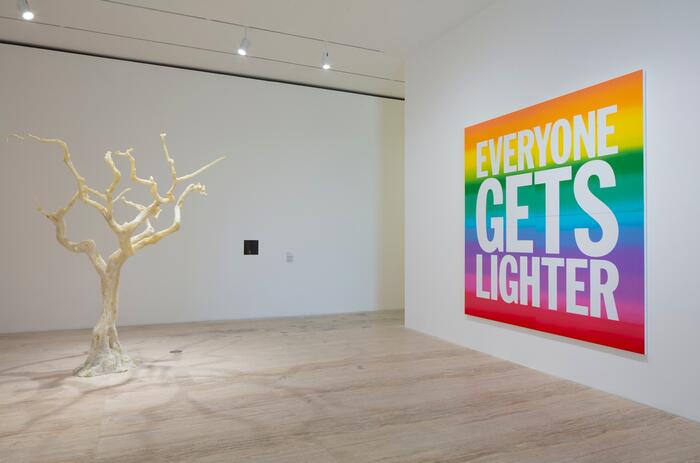
Featuring works by 67 national and international artists, Everything Becomes Lighter is a thematic exploration in keeping with the current times. The exhibition at JUMEX considers the healing power of light and lightness as an antidote to the forces of darkness and heaviness that surround humanity today.
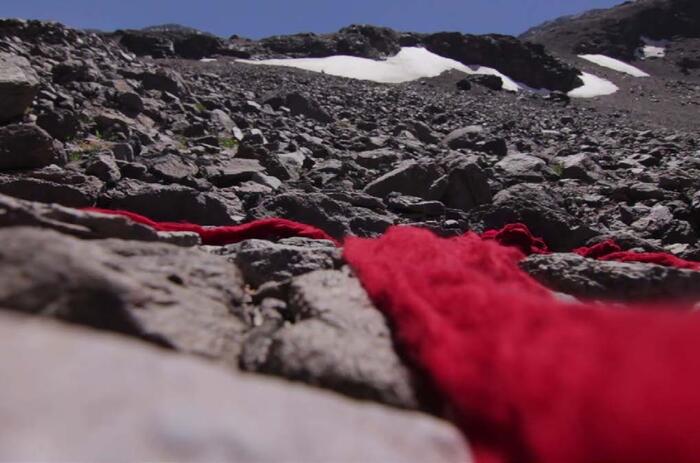
Presented at Tai Kwun Contemporary, Green Snake: women-centred ecologies gather more than 60 works—16 of them new commissions—from 30 artists and collectives in an exhibition that draws on mythologies and world views with women at their heart to explore possibilities for other ecological relationships.
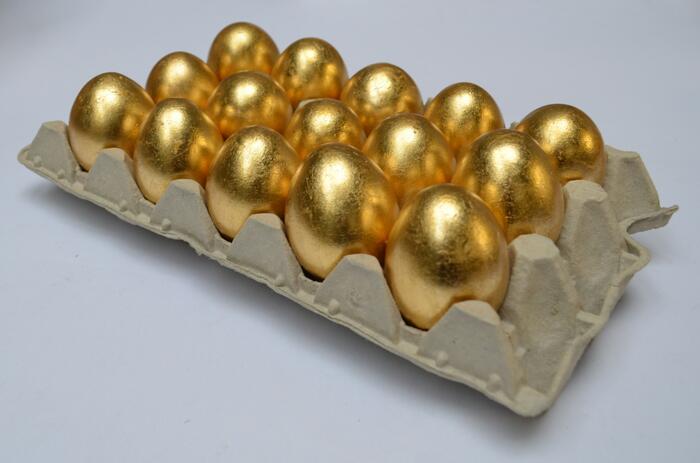
Americas Society opened Part II of El Dorado: Myths of Gold, an exhibition showcasing artworks by more than 60 artists that challenge, reinforce and question the continuity of the myth of El Dorado into the present.
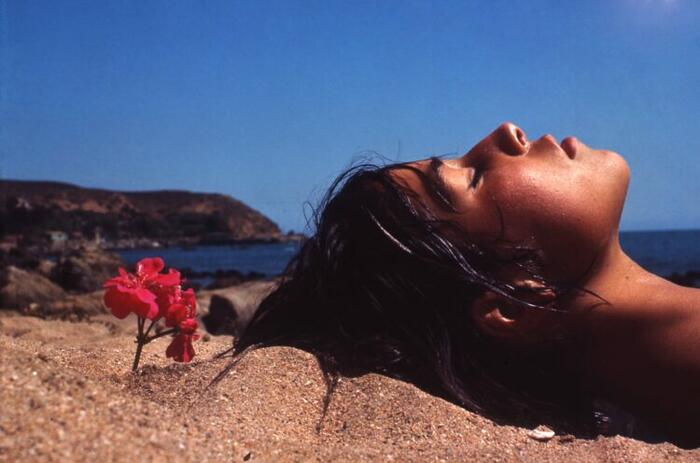
Soñar el agua, una retrospectiva del futuro (1964-...) [Dreaming of Water, a Retrospective of the Future (1964-...)] is the most comprehensive exhibition at MALBA dedicated to this day to the poet, visual artist and feminist activist Cecilia Vicuña (Santiago de Chile, 1948). It is under the curatorship of Miguel A. López.