

By
Jorge Luna Ortuño
“I think painting is the possibility of creating and materializing in the physical world something that did not exist before.” — Kate Araoz, 20251
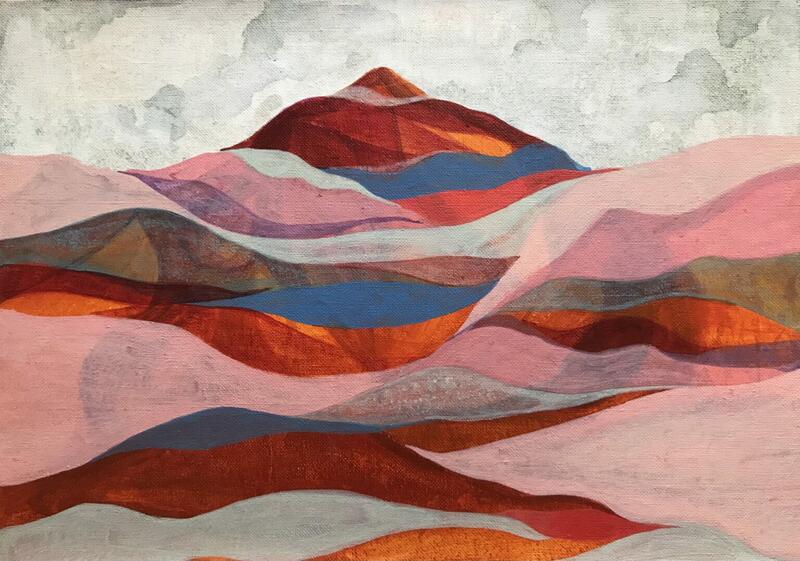
Painting as Vital Reconciliation
The work of the Bolivian artist Kate Araoz (La Paz, 1993) proposes a space of reconciliation between worlds: between memory and displacement, between painting and poetic ecology, between La Paz (BOL) and Paris (FRA). Having migrated from her native country in 2014, Araoz paints onto the canvas an unexpected territory of continuity, where uprootedness is not a fracture but a catalyst for reconnecting with what binds us to nature.
From La Paz—a city suspended at 3,600 meters above sea level and surrounded by tutelary mountains—to Paris, where she currently lives and works, the artist has forged a singular relationship with painting: a third space where identities do not clash but find a shared rhythm. Biography here is more than background; it fuels Araoz’s aesthetic. Her still-emergent body of work occupies that precise threshold where contemporary Latin American painting begins to rethink landscape not as representation but as an affective, spiritual, political, and ecological site.
In Pulso Mágico, her most recent exhibition at Fundación Patiño (2025), this tension appears with clarity: the Altiplano, the Bolivian Amazon, Paris, and the pistachio tree overlap as layers of a single affective territory—a kind of emotional cartography. In her “Statement of Intent,” Araoz writes that painting becomes a place where the worlds she inhabits “are reconciled.”2
The duality between the countries in which I live could have caused conflict, but the canvas has become the space where these two worlds are reconciled, as well as the place where I can relate to others and exist as a person… (Araoz, 2025)3
It is worth recalling that within dominant Latin American traditions, landscape often represents identity, denounces injustice, or constructs a national imaginary. Rarely is it approached as an affective or everyday bond. Unlike the European tradition of landscape as an autonomous genre, in Latin America landscape was early burdened with ideological function (Indigenism, Neorealism, Andean Modernism).
Araoz’s painting situates itself in a zone that approaches landscape from a transnational dimension of ecological intimacy. The reconciliation she enacts through painting carefully avoids imposture. It does not rely on autobiography or nostalgia, nor on exoticization or identity markers. Her practice is sober and intimist. Her compositions embrace a void closer to Taoist sensibility, where subtlety replaces dramatic gesture.
A Painterly Gesture
Two series currently shape her practice: Cartografía sensible de un árbol—oil on linen and mixed media on paper—and Pensar como una montaña—oil on linen and ink on paper.
In the forms that seem to emerge in her paintings—mountains, leaves, trunks—one perceives a technical decision consistent with her restrained, intimate temperament: cool palettes, milky greens and blues; glazes; soft edges; a deliberate absence of hard lines. The stroke, rather than descriptive, registers presence in tactile terms. This tactile-atmospheric quality is evident even in the small oil paintings of Pensar como una montaña. The mountains appear as if emerging from a state of apparition, an aesthetic trait that seems to converse simultaneously with two distant geographies: a certain Nordic Romantic landscape (Arne Næss, whom the artist often cites) and the Andean watercolor tradition.
“I read that Arne Næss contemplated Mount Tvergastein from a very young age, and that having seen it for so many years made the mountain become a paternal form for him. This happened in Norway, and for me it resonates with our way of seeing mountains like Illimani or Mururata in La Paz: as grandparents, ancient and wise guardians who protect us. I believe that the need to draw closer to natural elements transcends nationality, culture, or language, and painting helps me approach that feeling.” (Araoz, 2025)
This is not imitation but resonance—vibrations occurring as if connected across different parts of the world. A landscape painting conceived as prolonged intimacy, as sustained observation, where territory does not “mean” something but affects, transforms, and accompanies.
To achieve this accumulation of sensations, the artist works within the tension between warmth and coolness. Her signature palette relies on mixtures derived from cobalt blue, gray-violet, chromium oxide green, and Naples yellow.
Continue reading part two here
1 Araoz, K. (Personal communication) (October 23, 2025)
2 Exhibition brochure for “Pulso mágico,” p. 4.
3 Taken from the artist’s text for the exhibition Pulso mágico. (p. 4). Fundación Patiño La Paz, 2025.
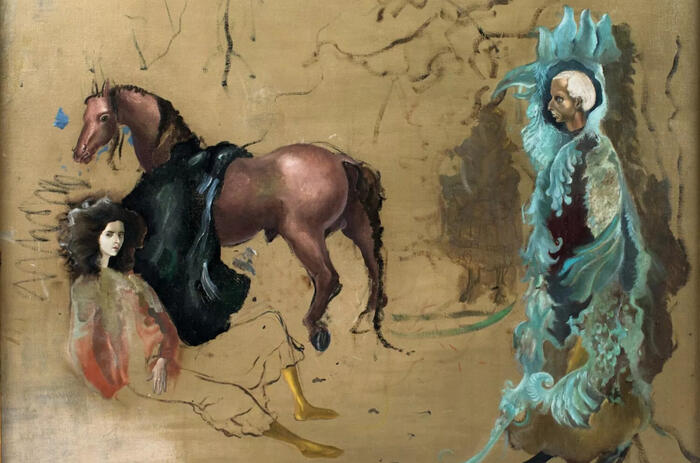
The museum presents the work of the Mexican artist through a journey that articulates her main interests, combining chronological and thematic perspectives.
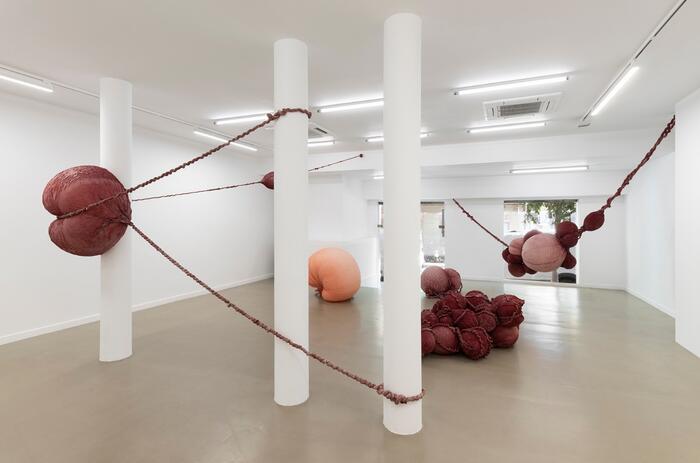
Spanish art galleries are protesting with a temporary closure against a tax policy that places them at a competitive disadvantage compared to their European counterparts. The sector is calling for the application of a reduced VAT rate to ensure commercial competitiveness and to continue strengthening and reinvesting in the cultural ecosystem.
By Mónica Sotos
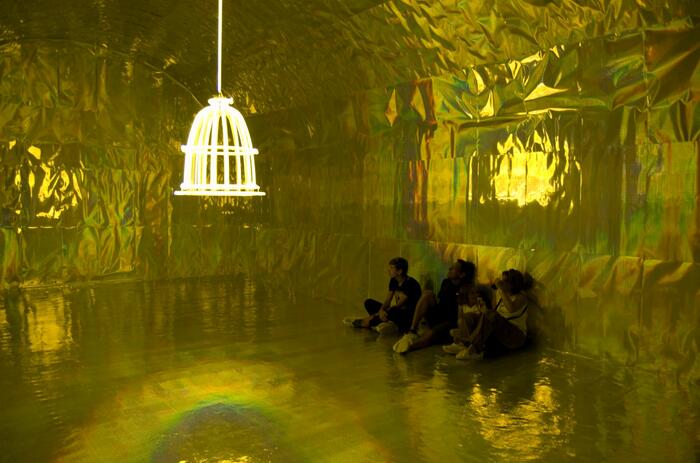
What are the successive diasporas of Latin American artists to Spain about, from the final years prior to the turn of the twenty-first century to the present? Article 2 of a series of 3.
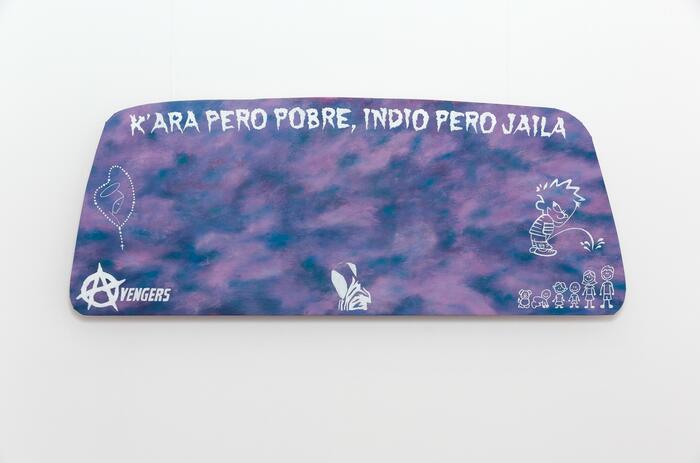
“From a distance (while living in Europe), I saw another Bolivia through the ways it was (self-)represented on social media and in the press, and I consumed images produced in the country that did not fall within the sphere of ‘culture,’ yet in my view revealed a much richer complexity. The Cedición projects emerged from these collections of images, or from texts and representations that were not official, so to speak.” (Coloma, 2025).