
LEONORA CARRINGTON: THE VITRUVIAN WOMAN IN LUXEMBOURG
The museum presents the work of the Mexican artist through a journey that articulates her main interests, combining chronological and thematic perspectives.
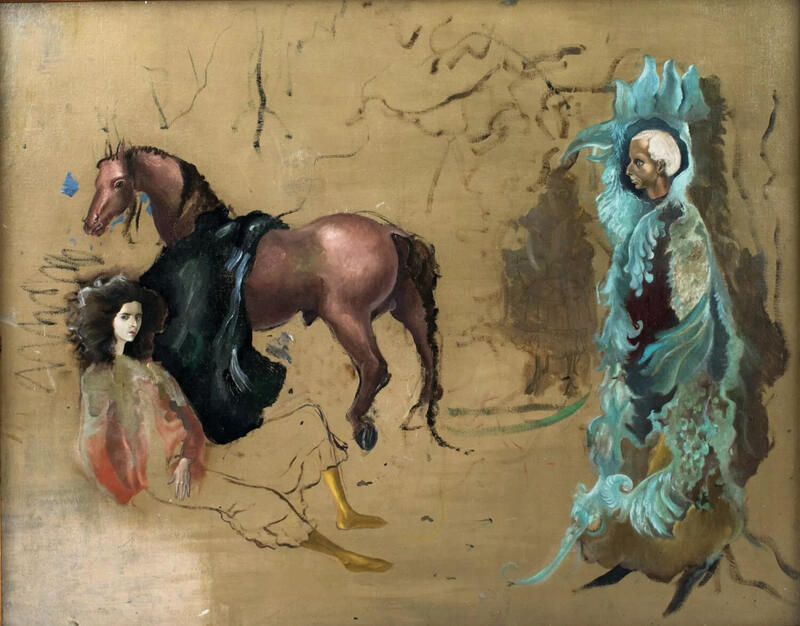
On Wednesday, the Musée du Luxembourg inaugurated the first major exhibition in France devoted exclusively to the work of Leonora Carrington (1917-2011). This exhibition, open until July 19, brings together 126 works and aims to present her as a complete artist, as well as to highlight her artistic and intellectual universe through an unprecedented presentation of her various visionary creations.
The life and work of Carrington were marked by her inner and outer journeys, which took her far from her native Lancashire and her Celtic ancestors to Florence, Paris, the South of France, Spain, New York and Mexico, her final home, where she has long been considered one of the most important female artists, alongside Frida Kahlo and Remedios Varo.
-
Kati Horna. Retrato de Leonora Carrington, 1947. Silver gelatin print, 25 x 20 cm. Archivo Fotográfico Kati y José Horna, © Estate of Kati Horna, Mexico, © Archivo Fotografico Kati y José Horna
A cult figure in Mexico since the 1960s, Leonora Carrington has been the subject of renewed interest in Europe and the United States in recent years. Following the retrospective co-organised in 2018 by Tere Arcq on the occasion of her centenary, Leonora Carrington. Cuentos Mágicos, her work has been featured in exhibitions offering new interpretations of surrealism. Carrington’s work has thus been highlighted in group exhibitions, but in very few monographic exhibitions, and never in a major solo exhibition in France.
The curatorial approach of the exhibition consists of presenting it as a ‘Vitruvian Woman’, an artist who represents a model of innovation and harmony, in response to Leonardo da Vinci’s Vitruvian Man, a symbol of perfection and of Man as the centre of the universe during the Renaissance – a work that may have inspired Carrington’s Map of the Human Animal. In this extraordinary cartography, brimming with metamorphoses and esoteric and mythological references, the artist, who described herself as a ‘female human animal,’ shows us a harmony based on the alchemical fusion of human and animal, masculine and feminine.
-
Leonora Carrington. Artes 110, 1944. Oil on canvas, 40.6 x 60.9 cm. NSU Art Museum Fort Lauderdale; gift of Pearl and Stanley Goodman. © 2026 Estate of Leonora Carrington / ADAGP, Paris © NSU Art Museum Fort Lauderdale
-
Leonora Carrington. Ballerina II (Mythical Figure), 1954. Oil and gold leaf on masonite, 12 x 8.9 inches. Private collection © 2026 Estate of Leonora Carrington / ADAGP, Paris
-
Leonora Carrington. The Joy of Skating, 1941. Oil on canvas, 45.7 x 60.9 cm. Pérez Simón Collection. © 2026 Estate of Leonora Carrington / ADAGP, Paris. © Pérez Simón Collection / Courtesy Christie’s, New York
The exhibition takes this initial perspective to explore the artist’s lifelong relationship with Italy and France, which serves as a starting point that illuminates her entire career: from her discovery of classical Italian art in Florence during her adolescence to her fascination with the Renaissance, her Celtic and post-Victorian origins, and her involvement in Surrealism during her stay in France.
Alongside these essential aspects of her life, the project is structured around themes that recount Carrington’s journey as an artist and perpetual traveller who spent her life immersed in other dimensions, in search of self-knowledge. A feminist and avant-garde environmentalist, woman, mother, migrant, sufferer of mental illness, victim of 20th-century psychiatry and constantly evolving spiritual seeker, Leonora Carrington leaves behind a legacy as extraordinary as it is radical.
This project aims to present Carrington’s main themes and interests by combining chronological and thematic approaches. It is based on current research conducted by curators on her work and biography.
Related Topics
May interest you
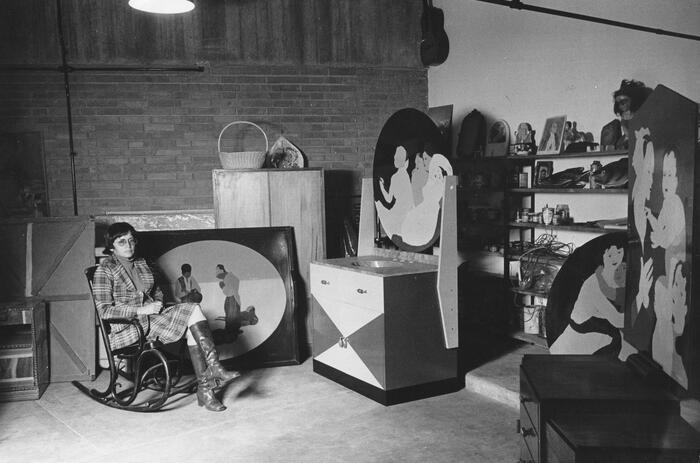
BEATRIZ GONZÁLEZ IN LONDON: A MONUMENTAL RETROSPECTIVE FOLLOWING HER PASSING
The acclaimed Colombian artist will be honoured at the Barbican Centre with an exhibition bringing together more than 150 works spanning seven decades of production.
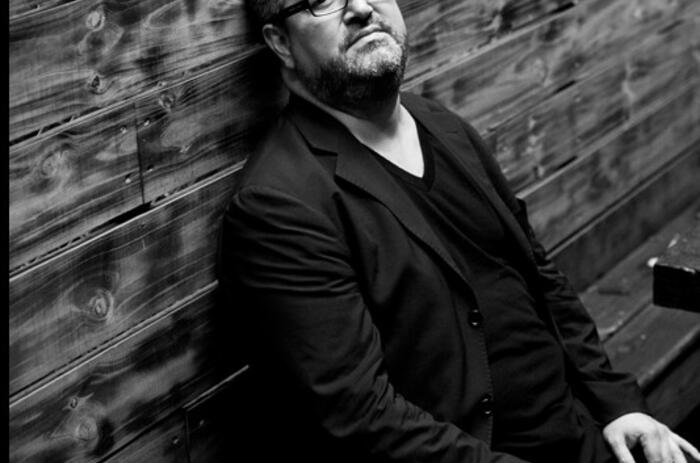
CHRISTIAN VIVEROS-FAUNÉ: “LATIN AMERICAN REPRESENTS A CRITICAL AND PRIVILEGED STANCE TOWARD POWER FROM THE ‘MARGINS’ OF THE EMPIRE”
From the curatorship of the Foco LATAM program at CAN Art Fair Madrid, Christian Viveros-Fauné approaches surrealism as a tool for reading global uncertainty, while advocating for painting and Latin American artistic practices as spaces of resistance and the creation of new imaginaries.
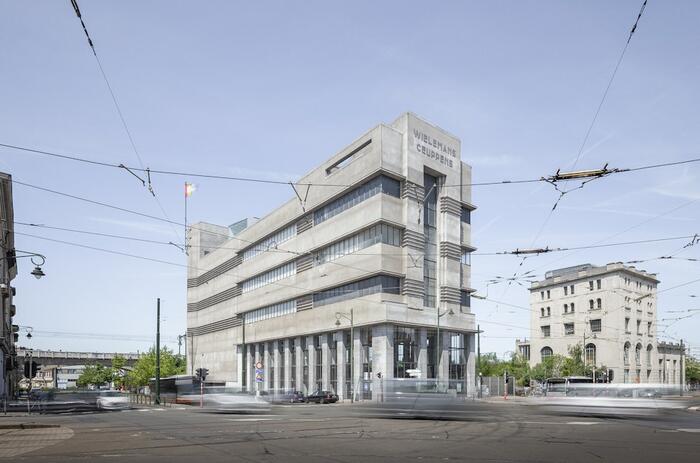
WIELS AND AC/E OPEN RESIDENCY CALL FOR ARTISTS IN BRUSSELS
The program will select one artist residing to take part in a six-month residency at one of Europe’s leading contemporary art institutions. Application deadline: March 1, 2026.
SPANISH GALLERIES AND TAX DISPARITY: A COMPETITIVE DISADVANTAGE
Spanish art galleries are protesting with a temporary closure against a tax policy that places them at a competitive disadvantage compared to their European counterparts. The sector is calling for the application of a reduced VAT rate to ensure commercial competitiveness and to continue strengthening and reinvesting in the cultural ecosystem.
NOTES ON GABRIEL VALANSI AT DOT FIFTYONE GALLERY, MIAMI
EIGHT KEY LATIN AMERICAN ART EXHIBITIONS TO SEE ACROSS EUROPE IN 2026
From historical retrospectives to immersive installations and new commissions, museums across the continent will host the work of seminal artists.
DISPLACEMENT AND ATTENTION IN KATE ARAOZ’S INTIMIST PAINTING
“I think painting is the possibility of creating and materializing in the physical world something that did not exist before.” — Kate Araoz, 20251
DISPLACEMENT AND ATTENTION IN KATE ARAOZ’S INTIMIST PAINTING
Part 2
CRUZ-DIEZ AT ISLAA: COLOR AS AN EXPERIENCE IN CONSTANT TRANSFORMATION
The exhibition brings together 23 works that trace the Venezuelan artist’s fundamental investigations into chromatic perception.
A CONTEMPORARY QUIPU TRAVERSES CASTELLO DI RIVOLI
The Chilean artist Cecilia Vicuña unfolds an intervention connecting ancestral practices, ecology, and shared memory.