
By
Violeta Méndez
No formal application, no galleries, and uncertain funding: the artist representing the United States in Venice explores the transformation of matter and the American landscape.
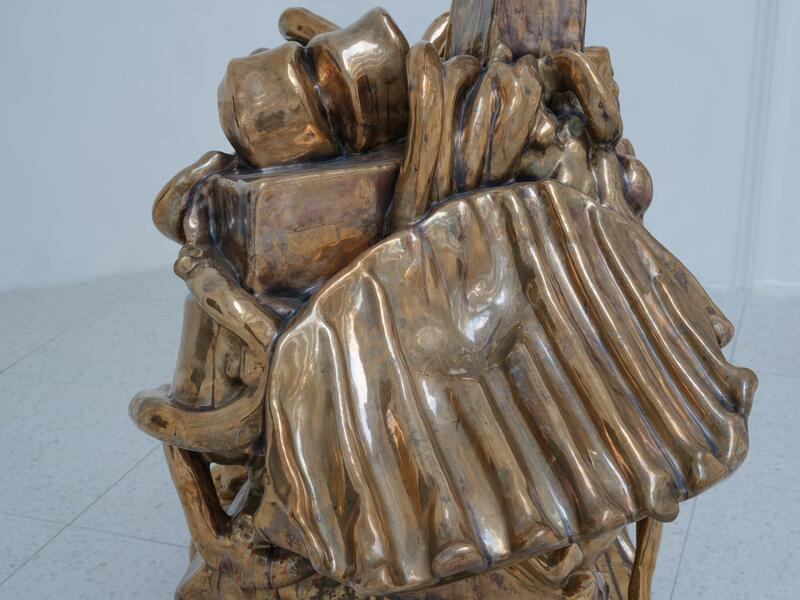
With no clear funding in place just ten days before its opening, the United States Pavilion presented the work of sculptor Alma Allen (Utah, United States, 1970) at the 61st International Art Exhibition – La Biennale di Venezia. The show, titled Call Me the Breeze, "explores the concept of elevation, both as a physical manifestation of form and as a symbol of collective optimism and self-realization," according to the Biennale di Venezia Foundation.
The financing of the US project did not follow the same model as previous editions. Unlike the numerous sponsors who publicly backed Jeffrey Gibson's 2024 pavilion — among them the Ford and Mellon foundations — no organization or individual declared any direct funding ties to Allen's exhibition. According to Hyperallergic, the US government contributed $375,000, but the pavilion's total cost far exceeded that amount: Simone Leigh's 2022 pavilion cost an estimated $7 million, while Gibson's exceeded $5 million. To bridge the gap, the American Arts Conservancy (AAC), the nonprofit organization overseeing the project, raised funds through its website, where anyone could donate a minimum of $100.
Allen's selection was equally unconventional. According to Hyperallergic, the State Department — which took over the selection process following Trump's budget cuts to the National Endowment for the Arts — imposed restrictions on diversity, equity, and inclusion policies and required proposals to promote "American exceptionalism." The first pair chosen, sculptor Robert Lazzarini and curator John Ravenal, never came to fruition after a funding agreement with a university collapsed. In November 2025, curator Jeffrey Uslip reached out directly to Allen — without the artist having submitted a formal proposal, as tradition dictates — and Allen accepted quickly, despite never having met Uslip before. The decision came at a cost: his two representing galleries, Olney Gleason and Mendes Wood DM, asked him to turn down the commission and, when he refused, dropped him from their rosters. Even so, two weeks before the opening, curator Jeffrey Uslip told CNN: "This is the smoothest exhibition I've curated in 30 years."
Allen's abstract biomorphic sculptures are inspired by the natural landscapes of the Americas. The work combines preindustrial carving and hand-shaping methods with advanced technology. The artist uses local materials such as American walnut burl and Cantera verde volcanic rock to create a body of work that "highlights the alchemical transformation of matter: the strata of rough rock appear smoothed through the passage of time," says the Biennale di Venezia.
For Allen, "the sculptures are often in the act of doing something: they are going away, or leaving, or interacting with something invisible. Even though they seem static as objects, they are not static in my mind. In my mind, they are part of a much larger universe," he shared on social media in conversation with Perrotin. Call Me the Breeze seeks to champion allocentric art and embody a state of alterity, weightlessness, and freedom of thought.
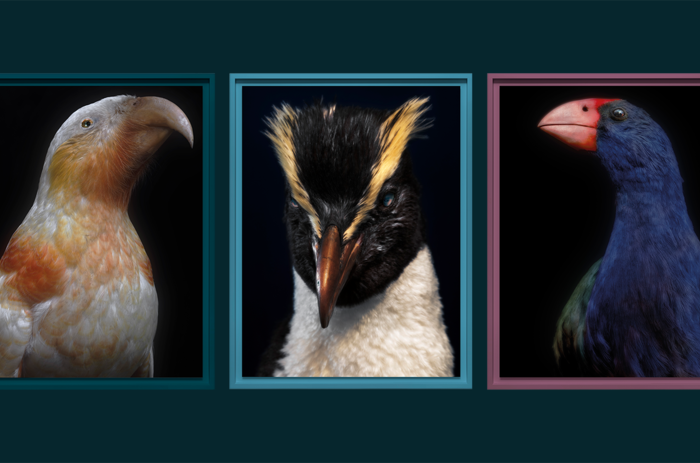
A new series of large-scale photographs of taxidermied birds — some extinct, many endangered — explores the intersection of colonial history, Māori spirituality, and ecological loss.
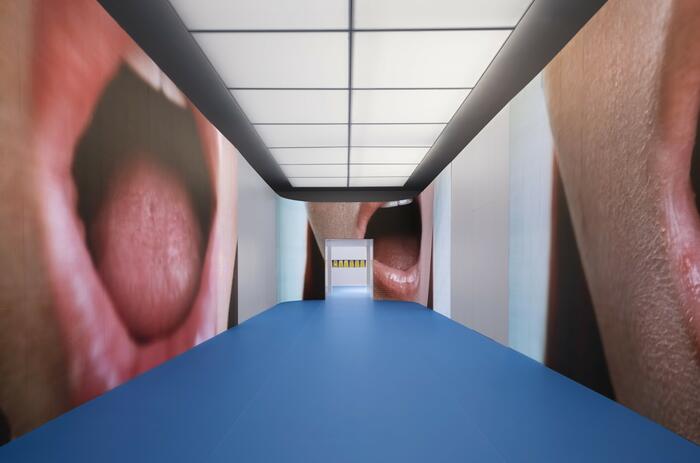
For the 61st edition of the world's oldest contemporary art exhibition, Denmark selected Maja Malou Lyse and curator Chus Martínez to represent the country at the Giardini.
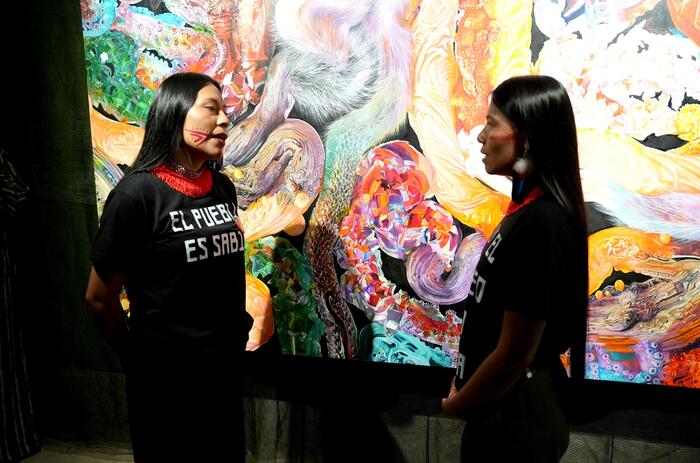
In the run-up to the Venice Biennale, the Ecuador Pavilion project offers solar-powered boat tours and intimate conversations about extractivism, rivers, territories, and ways of life in the Amazon.
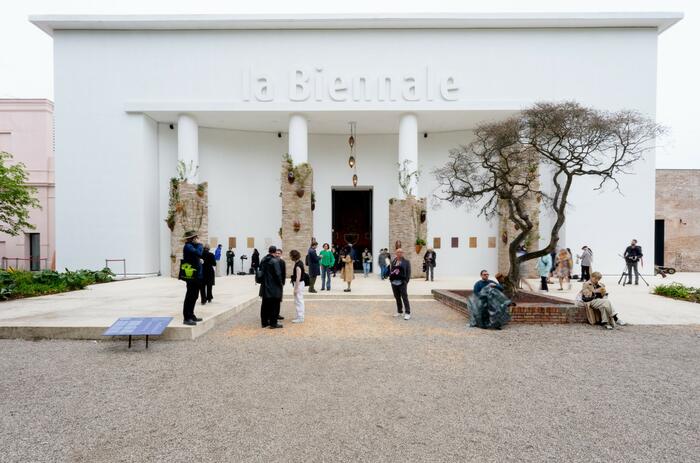
The Venice Art Biennale is approaching the inauguration of its 61st edition amid resignations, protests, and controversies. Never indifferent to its time, its launch also converges within an intense context of wars, genocides, and geopolitical crises. From Arte al Día, we ask ourselves: how can we trace the relationships between politics and art?
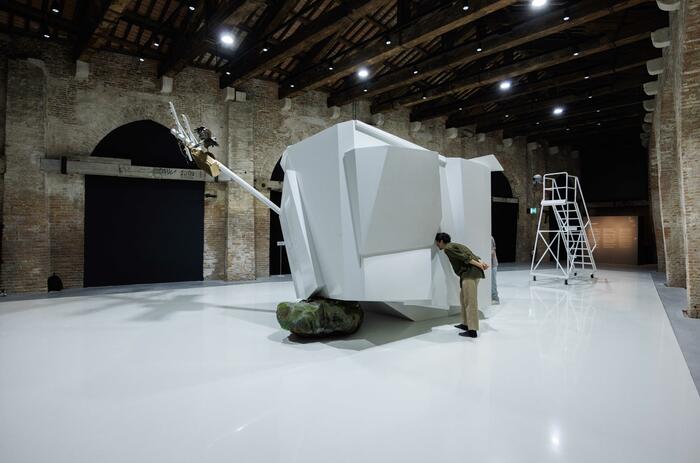
The proposal selected for the Chilean pavilion brings an immersive experience in Venice that addresses contemporary tensions.
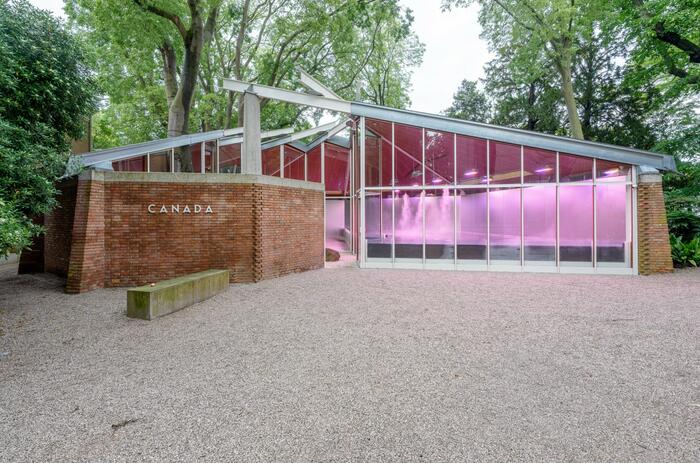
With Victoria water lilies as protagonists, Abbas Akhavan transforms the Canadian pavilion into a liminal space that invites to rethink humanity's relationship with the natural world.
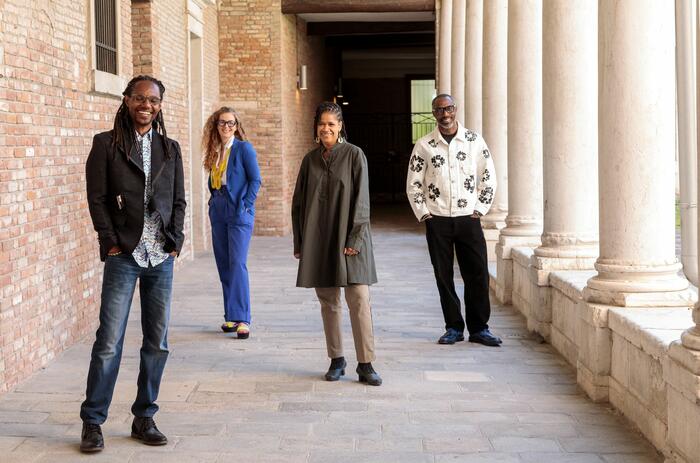
The 2026 Venice Biennale hosts an exhibition exploring the Bahamian Junkanoo tradition through the work of John Beadle and Lavar Munroe — two generations of artists united by discarded materials and collective memory.
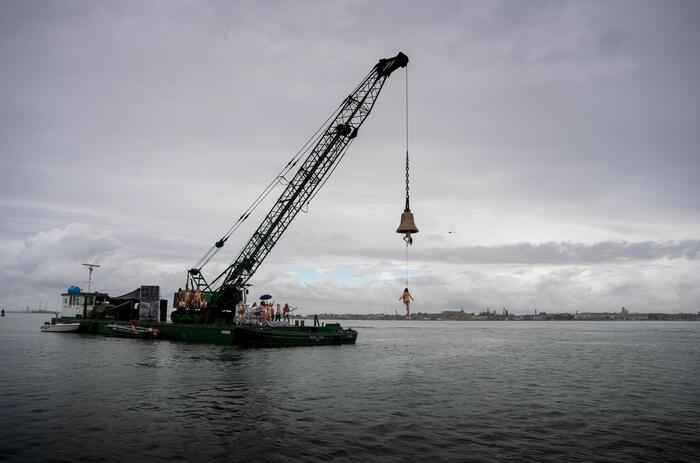
Florentina Holzinger represents Austria at the 61st International Art Exhibition with a live installation exploring water, purity and feminist resistance. On view through 22 November at the Giardini della Biennale.
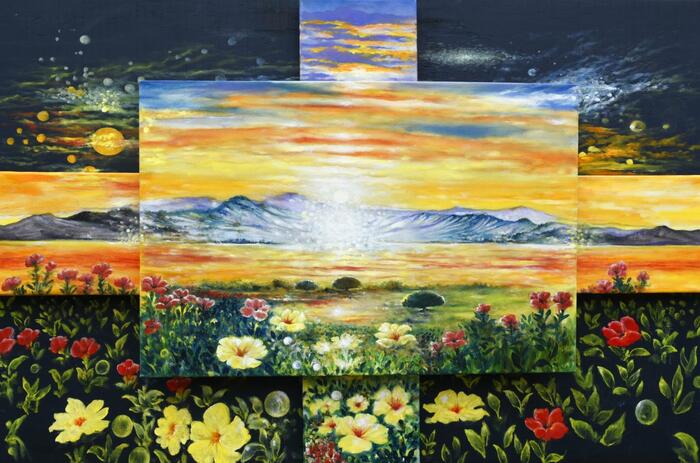
Haitian artist Enock Placide's installation offers an immersive experience of time, space, and perception, on view through November 22 at Palazzo Albrizzi-Capello.
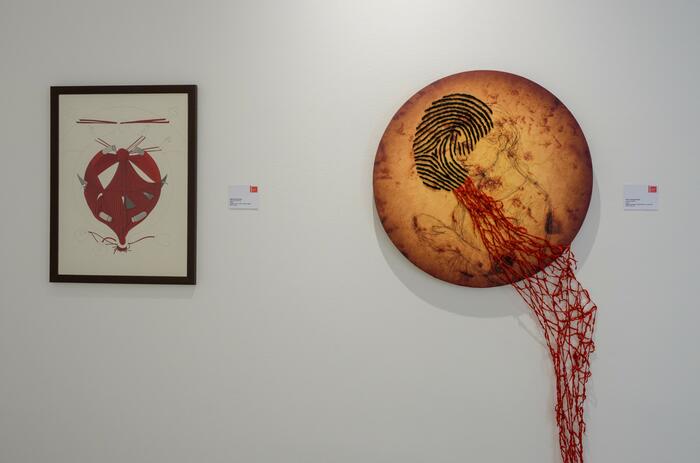
Memory, identity, and abstraction intersect in the exhibition by Ana Lorena Núñez, Jorge Chavarría, Manuel Navichoc, and Elsie Wunderlich for the international art fair.