THE BROOKLYN MUSEUM PRESENTS “DEATH TO THE LIVING, LONG LIVE TRASH” BY DUKE RILEY
The artist has created a full-fledged maritime museum within the walls of the Brooklyn Museum, debuting approximately 250 new and recent works made entirely out of discarded plastic found in New York waterways. DEATH TO THE LIVING, Long Live Trash, a critical, provocative look at the ecological impact of capitalism across centuries, connects the history of American maritime art to current themes of environmental justice.
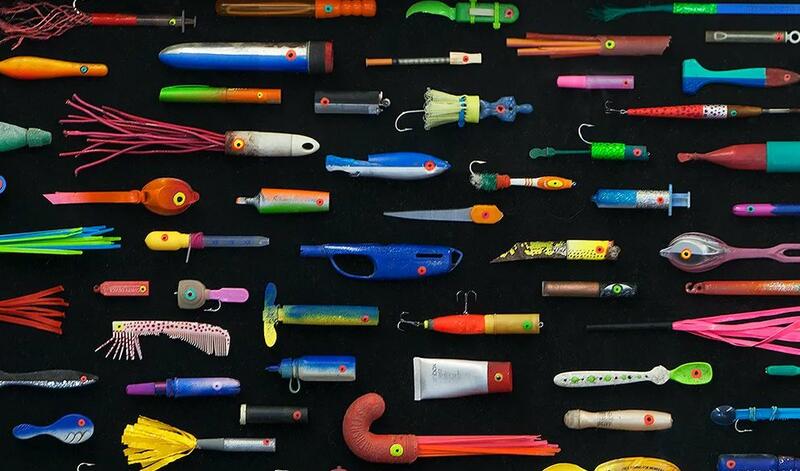
The exhibition presents a suite of new works by Brooklyn-based artist Duke Riley. Many are shown in the Museum’s seventeenth- and eighteenth-century American period rooms known as the Jan Martense Schenck and Nicholas Schenck houses, which will be open for visitors to step inside for the first time. This immersive display emphasizes the exhibition’s historical context and creates a vivid dialogue between past and present environmental devastation. The artist has also selected examples of nineteenth-century scrimshaw from the Brooklyn Museum’s collection to draw further parallels between the whaling and plastics industries, and between the decimation of whale populations and of New York’s waterways.
Riley’s practice often tackles political and social issues and examines the relationship between the precarious nature of the waterfront and transgressive culture. The artist works across drawing, printmaking, mosaic, sculpture, performance interventions, and complex multimedia installations, intertwining obscure historical events with populist myths to shine light on social and environmental issues that remain unsolved. From presenting historical reenactments, such as his elaborate recreation of a Revolutionary War submarine mission in After the Battle of Brooklyn (2007), to scouring New York and northeastern beaches for the trash that he transforms into his canvases, Riley seeks to emphasize what nearby communities have at stake in the devastation of their regional ecosystems.
-
Written, directed, and produced by Duke Riley, cinematography by Alexandra Egan, and edited by Brett Land and Duke Riley. Welcome Back to Wasteland Fishing, Episode Two, 2019. Single-channel video, color, sound, 6 min. 12 sec. Courtesy of the artist
-
Courtesy of Duke Riley Studio, Plastic Free July
-
Courtesy of Duke Riley Studio, Plastic Free July
-
Duke Riley. No. 265 of The Poly S. Tyrene Memorial Maritime Museum, 2020. Salvaged, painted plastic. Courtesy of the artist. © Duke Riley. (Photo: Duke Riley Studio)
-
Found plastics become mosaics, sculptures, fishing lures, and more in order to tell the tale of local pollution and global maritime devastation in "DEATH TO THE LIVING, Long Live Trash." (Photo: Duke Riley Studio)
-
Contemporary interpretations of maritime crafts made from littered plastic confront the effect that corporations have on the environment through single-use plastics. (Photo: Duke Riley Studio) Monument to Five Thousand Years of Temptation and Deception VIII, 2022. Found objects. 63.5 × 99.1 × 8.9 cm
As part of the exhibition’s call for visitors to assess the impact of their personal consumption of plastic, the Museum is developing partnerships with the New York Aquarium, among other institutions, and grassroots organizations to promote education around green consumer habits and the restoration of New York waterways.
Related Topics
May interest you
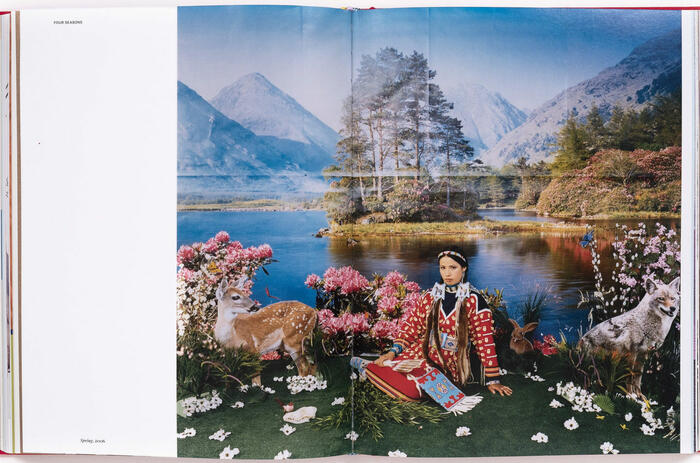
WENDY RED STAR ON FEMINIST, INDIGENOUS REPRESENTATION – MONOGRAPH AND EXHIBITION
GUADALUPE MARAVILLA: TIERRA BLANCA JOVEN
The exhibition Tierra Blanca Joven at the Brooklyn Museum, draws from the artist’s own experiences as an undocumented immigrant and cancer survivor to weave together themes of displacement, illness, recovery, and healing in new and existing works; objects from the Museum’s Maya art collection; and a Healing Room.

CECILIA VICUÑA. SEEHEARING THE ENLIGHTENED FAILURE
The Miguel Urrutia Art Museum of the Banco de la República presents the exhibition Veroír el fracaso iluminado (Seehearing the Enlightened Failure), a retrospective that brings together more than 100 works by the Chilean artist Cecilia Vicuña, whose work addresses issues such as the environment, feminism, human rights humans, decolonization and the relationship between art and politics. The exhibition, curated by Miguel López, one of the most outstanding curators on the current Latin American art scene, arrives in Colombia thanks to the collaboration between the Kunstinstituut Melly (Rotterdam) and the Banco de la República.
CATHOLIC, BOUNDARY-BREAKING ANDY WARHOL
Presenting more than one hundred works—from iconic paintings such as The Last Supper to archival materials, drawings, prints, film, and rarely seen and newly discovered items—Andy Warhol: Revelation brings a fresh perspective to the canonical artist, exploring his career-long engagement with Catholic themes, as well as the tension between Warhol’s spiritual upbringing and his life as an out gay man.

13 BRAZILIAN ARTISTS EXHIBIT IN FRAMER FRAMED, AMSTERDAM
Framer Framed in Amsterdam exhibits The Silence of Tired Tongues. Curated by Raphael Fonseca, the show presents the works of thirteen emerging artists born in Brazil. The artworks in the group exhibition bring together a sense of ‘saudade’, which can be translated as a mixture of melancholy and longing.
BERLIN - “CHURCH FOR SALE” EXPOSES THE VIOLENCE OF POLITICS AND THE POETICS OF COMMUNITY
On its 25th anniversary, Hamburger Bahnhof – Museum für Gegenwart – Berlin shows important works from the Nationalgalerie Collection and the Haubrok Collection. A spacious architectural design was developed in the museum’s Historical Hall especially for the occasion. Highlighted among the works are those by Alfredo Jaar and Ruben Ochoa.