THE BAHAMIAN HERITAGE THAT ANINA MAJOR SCULPTS AT PAMM
The Bahamian artist’s most significant institutional presentation in the United States to date transforms the museum’s waterfront gallery into a protective landscape of woven clay, bottle trees, and shells.
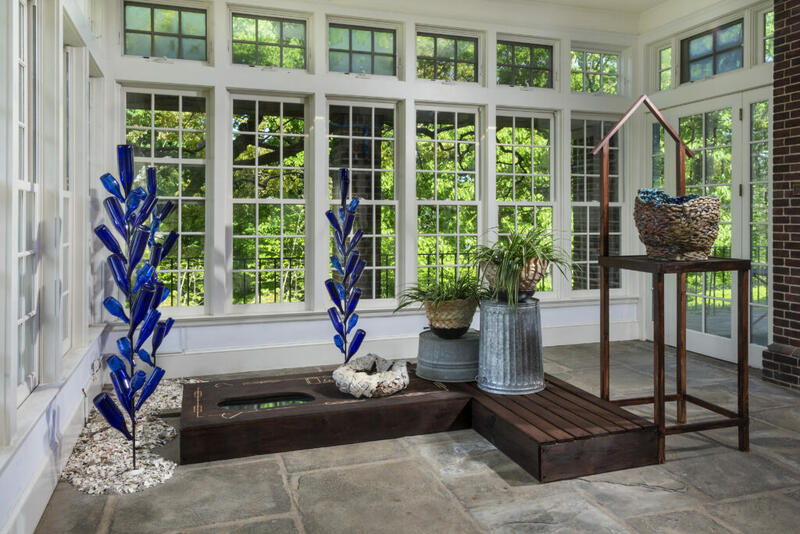
Pérez Art Museum Miami (PAMM) presents Anina Major: The Sacred Mangrove, on view from October 1, 2026–August 1, 2027. The exhibition marks the Bahamian-born artist’s most significant institutional presentation in the United States to date and a turning point in her practice, expanding her woven ceramic sculptures into an environment where sculpture, architecture, and landscape operate together.
Conceived as a walkable ecosystem, The Sacred Mangrove brings together a series of large-scale woven clay sculptures alongside bottle trees, crushed shells, and materials drawn from the Caribbean landscape. Visitors move among island-like groupings of tower forms, through a forest of protective objects, and along a shell path that turns the gallery into a space for slow looking. Together, the works consider how cultural knowledge is carried, translated, and preserved across materials, places, and generations.
-
Anina Major. The Pearl. Courtesy of PAMM
Major’s engagement with weaving is rooted in the work of her grandmother, Saphora Newbold, a Bahamian straw weaver whose palm-leaf hats, dolls, and bags helped support the family and put both Major and her mother through college. Yet, her grandmother hoped the next generation would not need to continue the practice. This contradiction, between weaving as a source of livelihood and independence and as labor to be left behind, became foundational to Major’s work.
After relearning palm-leaf plaiting, Major began rebuilding woven forms strand by strand in clay, preserving their woven structures beyond the natural lifespan of palm. This material shift preserves the knowledge embedded in the practice while questioning what society considers precious or disposable. By translating objects and practices tied to the tourism economy into ceramic sculpture, Major challenges the distinction between craft and fine art and affirms the cultural, ancestral, and economic value of Bahamian weaving.
-
Anina Major. Water Tower. Courtesy of PAMM
The exhibition’s title draws on the mangrove as both a living Caribbean landscape and a model of reciprocal care. Mangroves protect shorelines and sustain complex ecosystems; people, in turn, must safeguard the mangroves that make life along those shores possible. Major extends this relationship into an environment shaped by responsibility, tenderness, resilience, and protection. Bottle trees reference a folk tradition in which glass vessels capture and ward off malevolent spirits, while shells evoke both safety and what remains after a living body has departed. Reused ceramic shards bring earlier works into new forms, allowing destruction and renewal to coexist within the installation.
Installed in PAMM’s waterfront lobby gallery, The Sacred Mangrove remains in direct conversation with the world outside the museum. Biscayne Bay and the cruise ships visible through the gallery’s windows extend its themes into Miami’s present-day landscape. Tourism is not an abstract subject here; the systems of movement, consumption, and exchange that shape the Caribbean can be seen beyond the glass. In a city with deep historical and cultural ties to the Caribbean, Major’s work places local experience within a wider geography of labor, migration, memory, and belonging.
Anina Major: The Sacred Mangrove will be on view October 1, 2026–August 1, 2027, at PAMM, A 1103 Biscayne Blvd., Miami, FL 33132, United States.
Related Topics
May interest you
BERNARDO MEDINA'S JÍBARO POP AND BORICUA IDENTITY AT CASA DE AMÉRICA
The Puerto Rican artist explores in Madrid the historical, cultural, and political tensions that define the relationship between Puerto Rico and the United States through a highly symbolic visual language.
LANDMARK OLGA DE AMARAL RETROSPECTIVE DEBUTS AT THE PULITZER ARTS FOUNDATION IN ST. LOUIS
Weaving the Infinite brings together 86 works curated by Stephanie Weissberg and will be on view in September.
WHO WAS MIGUEL FERRANDO, THE DOMINICAN PAINTER OF NEW YORK'S QUEER DOWNTOWN SCENE?
GETTY PUBLISHES “INSTANTE/REVELACIÓN”, A CENTURY OF MEXICAN PHOTOGRAPHY
The J. Paul Getty Museum's new bilingual book brings together nearly 150 images by Lola and Manuel Álvarez Bravo, Graciela Iturbide, and Pablo Ortiz Monasterio, among others.
ASCOLI AND MORBÁN FIRST ARTISTS OF NEW LONDON RESIDENCY
El Espacio 23 and Delfina Foundation chose two Latin American artists through an open call; they will each complete a fully funded three-month stay.
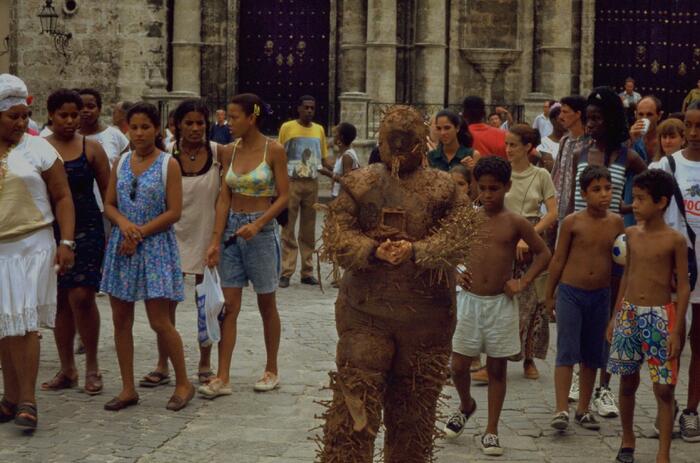
PAMM INVESTIGATES CARIBBEAN PERFORMANCE ART PRACTICES AND THEIR DIASPORAS IN “BEYOND REPRESENTATION”
The ongoing project, curated by Iberia Pérez González and presented by the museum's Caribbean Cultural Institute, combines live art events with a digital video-performance platform.
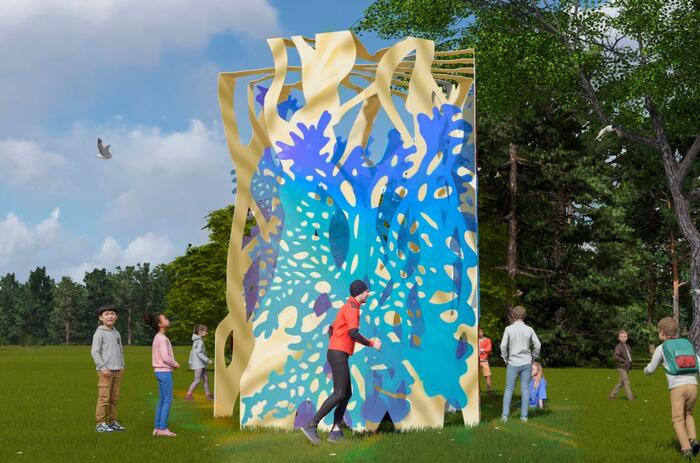
THE MORTON ARBORETUM ANNOUNCES "TREE DIMENSIONS," AN IMMERSIVE ART EXHIBITION IN ILLINOIS
Rommy González presents five large-scale sculptures that invite visitors to enter, explore, and experience trees in unique ways.
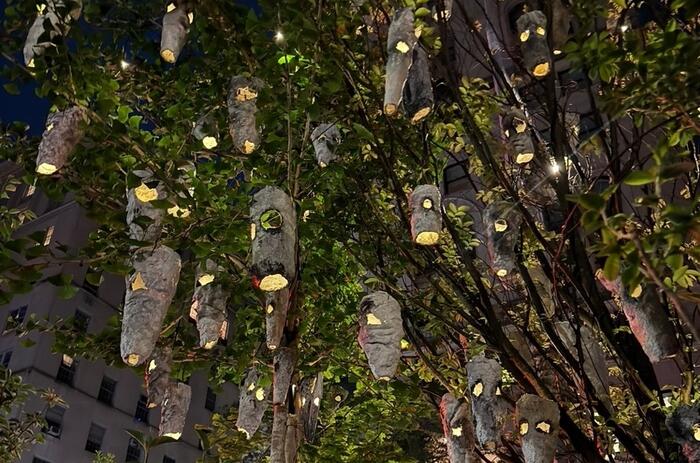
A CONVERSATION BETWEEN MICHELE OKA DONER AND JULIA P. HERZBERG – TALISMAN, A SACRED GROVE
Talisman, A Sacred Grove is a natural grove featuring twenty-one different species of trees that support approximately two hundred hand-formed heads, known as Talisman. The grove is installed on Park Avenue mall near the corner of East 66th Street in front of The Park Avenue Armory.
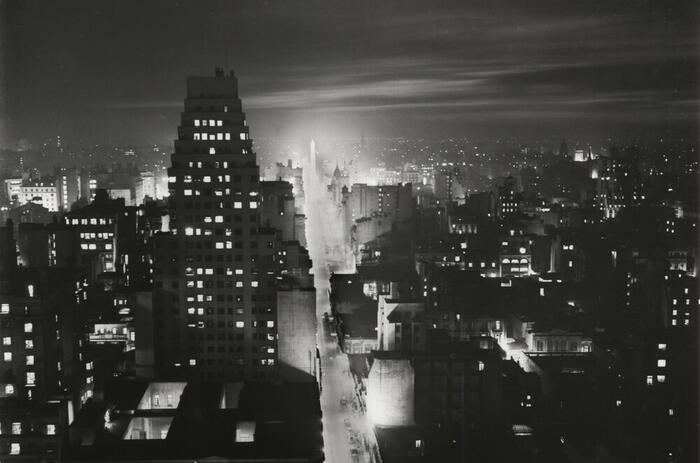
WHAT WAS BUENOS AIRES' MODERNIST ART SCENE LIKE BETWEEN 1935 AND 1950?
The exhibition at the museum in St. Louis features how exile, exchange, and collaboration in Buenos Aires shaped modern art.
PINTA ART FOUNDATION AND EL ESPACIO 23 ANNOUNCED A NEW PARTNERSHIP
The collaboration covers airfare, accommodation, and participation in the Miami space's residency program for one selected artist.