POLITICAL/SUBJECTIVE MAPS: ANNA BELLA GEIGER, MAGALI LARA, LEA LUBLIN AND MARGARITA PASKA
The Institute for Studies on Latin American Art (ISLAA) presents Political/Subjective Maps: Anna Bella Geiger, Magali Lara, Lea Lublin, and Margarita Paksa. It will explore how these four visionary Conceptual artists have appropriated the visual language of maps to highlight entrenched power structures; mine social, political, emotional, and personal subjects; and imagine new ways of apprehending the world.
Curated by Cecilia Fajardo-Hill, the exhibition will bring together key works by Anna Bella Geiger (Brazilian, b. 1933), Magali Lara (Mexican, b. 1956), Lea Lublin (French Argentine, 1929–1999), and Margarita Paksa (Argentine, 1933–2020).
Maps have an extensive legacy in the history of Latin American art—from Joaquín Torres-García’s América Invertida (1943) to Juan Downey’s Map of America (1975)—and have offered productive terrain for confronting the colonialist systems underpinning international dynamics. Whereas maps are often accepted as neutral, depoliticized, and scientific, artists have emphasized their origins as constructed and symbolic representations, informed by the biased viewpoints and covert objectives of their creators. From the ancient period through the European conquests to the present day, cartography has been used to cement hierarchies, demarcate territory, and visualize power relationships through elements such as scale, positioning, and orientation.
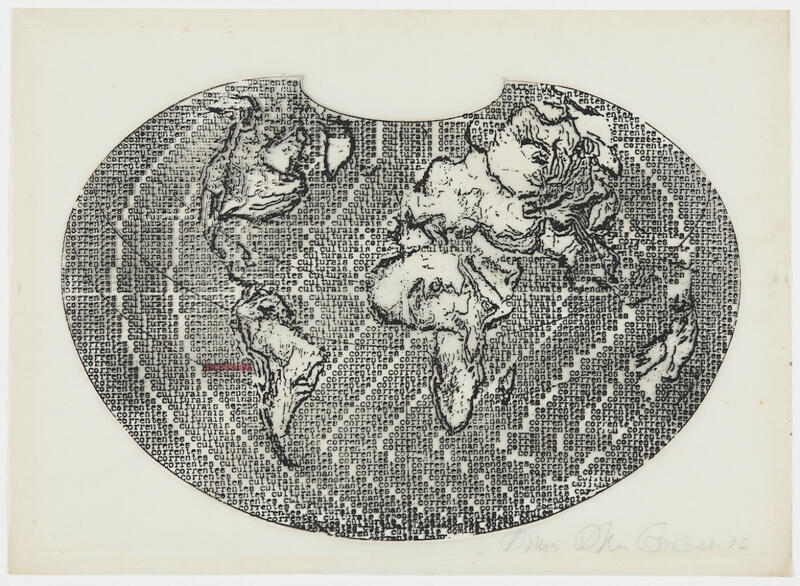
Engaging a variety of mediums and conceptual approaches, Geiger, Lara, Lublin, and Paksa have challenged the colonialist and patriarchal perspectives embedded within map making in their work. Geiger defies neocolonial categories in her reconceived maps, while Paksa examines histories of state violence in Uruguay and Argentina in series such as Diagramas de batallas (1970–76). In opposition to the scientific rationality of ordering systems such as charts and atlases, Lara addresses intimacy, emotion, and desire in her drawings and watercolors. By contrast, Lublin constructed interactive environments such as Fluvio Subtunal (1969) that sought to generate new, liberatory ways of experiencing art.
By presenting these diverse projects side by side, Political/Subjective Maps illuminates the multifaceted uses of the map as a tool for challenging, distilling, and understanding sociopolitical and personal experience. Through their distinct conceptual practices, Geiger, Lara, Lublin, and Paksa have pushed the visual language of cartography in new directions. By reframing their work in relation to this subject, this exhibition provides unique opportunities for further study of the role and importance of mapping in their individual practices, building a foundation for additional research and scholarship.
-
Magali Lara, No. 4, from the series Sielo, 1978. © the artist. Photo: Arturo Sánchez.
-
Anna Bella Geiger, Correntes culturais (Cultural Currents), 1975. © the artist. Photo: Arturo Sánchez.
-
Anna Bella Geiger, O pão nosso de cada dia (Our Daily Bread), 1978. © the artist. Photo: Arturo Sánchez.
-
Magali Lara, De lo amoroso, personal, confidencial, etcétera (On the Loving, the Personal, the Confidential, Et Cetera), 1982. © the artist. Photo: Arturo Sánchez.
-
Lea Lublin, Fluvio Subtunal, Santa Fe, Argentina #1 — Plano #1 (Subtunnel Flow, Santa Fe, Argentina #1 — Blueprint #1), 1969. © the artist. Courtesy Nicolas Lublin / 1 Mira Madrid gallery.
-
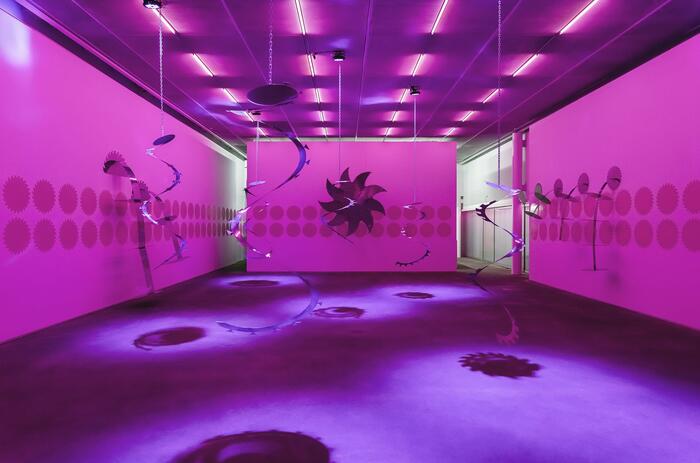
Lea Lublin, Fluvio Subtunal (Subtunnel Flow), 1969. © the artist. Courtesy Nicolas Lublin / 1 Mira Madrid gallery.
-
Margarita Paksa, Libres o muertos (Free or Dead), from the series Diagramas de batallas (Battle Diagrams), 1975. © the artist. Courtesy estate of the artist. Photo: Arturo Sánchez.
-
Margarita Paksa, Tupamaros, una situación fuera de foco (Tupamaros, An Out-of-Focus Situation), from the series Situaciones fuera de foco (Out-of-Focus Situations), 1967. © the artist. Courtesy estate of the artist. Photo: Arturo Sánchez.
Anna Bella Geiger (Brazilian, b. 1933) is a multidisciplinary artist whose work excavates the systems governing knowledge and experience. From her early experiments in video to her exploration of bookmaking as an art form, she has produced a groundbreaking body of conceptual work that confronts hegemonic structures, geopolitical dynamics, and the hierarchies of the art world.
Magali Lara (Mexican, b. 1956) is an artist and writer whose evocative work across painting, drawing, and other media often probes feminist, personal, and biographical subjects. Her early work in painting referenced the organic forms of the natural world, while her collages represented introspective themes and events. Inspired by a life-long commitment to writing, Lara has also incorporated text into her visual art throughout her career.
Lea Lublin (French Argentine, 1929–1999) was a Polish-born French Argentine artist whose multimedia work addressed feminist issues and challenged the boundaries of art. She began her career in Buenos Aires, where she was associated with the experimental art center Instituto Torcuato Di Tella, and spent most of her life in Paris, turning to sculpture, installation, and performance in the mid-1960s. In the 1970s and ’80s, Lublin developed several research-based projects, inspired by psychoanalysis and feminist theory, that included examining art historical motifs and interviewing members of the public about art and gender issues.
Margarita Paksa (Argentine, 1933–2020) was a key figure of conceptualism in Argentina, whose work in installation, drawing, and other media explored communication, language, and politics. She began her career as a ceramicist and began producing sculptures using iron and found objects in the early 1960s. Influenced by critic Oscar Masotta, her work in the 1960s and ’70s engaged with philosophy, linguistics, communication theory, and the idea of the dematerialization of the art object, leading to her experimental use of sound and technology.
Related Topics
May interest you
CURRICULUM ZERO. EXHIBITION OF THE 2022 SELECTED ARTISTS
RETORNO SOLAR. THE MAC LIMA ART AND INNOVATION AWARD 2022
The project Retorno Solar (Solar Return) by Luis Enrique Zela-Koort, winner of the MAC Lima Art and Innovation Award 2022, proposes to return to the Sun as the representation of all that exists and has existed, witness and creative agent of the facts of the history of the Earth and of the fragment that, in this case, represents the history of humanity.
HABITAT BY LUCIANA LEVINTON. THE SHOW AT MACBA
The Museum of Contemporary Art of Buenos Aires presents Habitat, a selection of works by artist Luciana Levinton that includes large canvases and unusual supports.
AN ANTHOLOGICAL EXHIBITION BY MARÍA SILVIA CORCUERA TERÁN
Art and childhood meet in many points. One of them is the ability to transform reality into something else by reformulating it, questioning it, expanding it. This is shown in the work of Argentine artist María Silvia Corcuera Terán (Buenos Aires, 1955), which includes paintings, sculptures, textiles and reliefs, with a preeminence of objects and collage.
JUAN FRANCISCO ELSO: POR AMÉRICA
El Museo del Barrio presents Juan Francisco Elso’s exhibition Por América, offering a new, contemporary revisions on canonical figures and figures and theories from Latinx, Caribbean, and Latin American art history.
OPEN CALL FOR FUTURE GENERATION ART PRIZE 2023
The Future Generation Art Prize is a biannual global contemporary art prize to discover, recognize and give long-term support to a future generation of artist. Deadline to apply April 30th, 2023.
MARGARITA RITA RICA DINAMICA: THE EXHIBITION AT REINA SOFIA MUSEUM
The exhibition Margarita Azurdia. Margarita Rita Rica Dinamita is the first monographic exhibition in Europe dedicated to Margarita Azurdia (Antigua Guatemala, 1931 - Guatemala City, 1988), one of the most emblematic Central American artists of the 20th century.
DORA GARCÍA: SHE HAS MANY NAMES
The exhibition She Has Many Names in Musesum of Contemporary Art Antwerp (M HKA) surveys some of the most important performances, drawings, installations, printed matter and films created throughout the artist’s three-decades career.
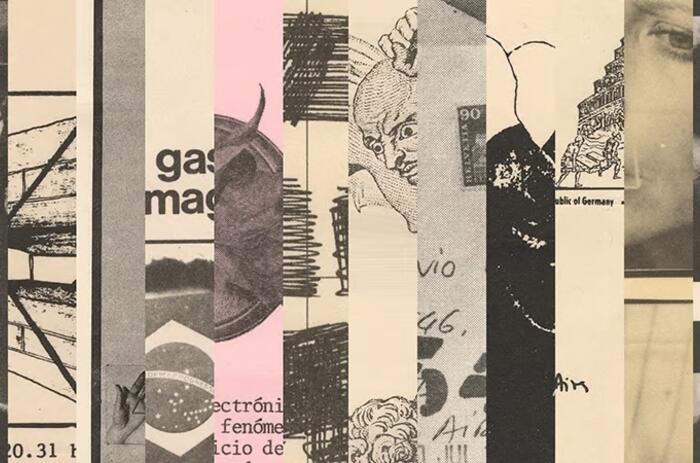
NEW DIGITIZATION PROJECT FOR THE CAYC FILES
The CAYC Files is the first initiative organized as an integral part of a long-term partnership between the ICAA (International Center for the Arts of the Americas) of the Museum of Fine Arts, Houston, and the New York-based ISLAA (Institute for Studies on Latin American Art).