“BETWEEN COCA AND GOLD” AT THE 2025 NEW YORK TRIENNIAL
Tatiana Arocha's artistic approach examines the connections between nature, history, and cultural resilience, presented alongside a collaborative publication blending critical thought and visual research.
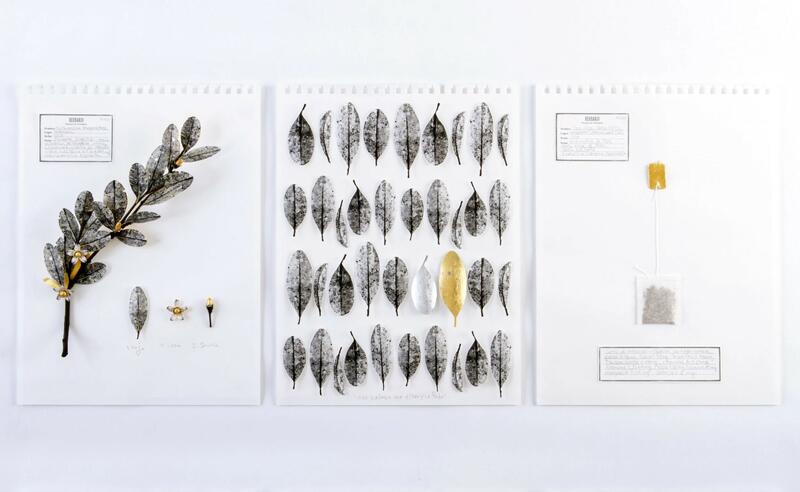
Colombian artist Tatiana Arocha has been invited to participate in the 2025 New York Latin American Art Triennial, a major event that brings together creators from across the region to engage in critical dialogue on identity, territory, and memory. Her contribution will take the form of the installation Entre la Coca y el Oro (Between Coca and Gold), which will be presented at the Newhouse Center in Snug Harbor, Staten Island.
The work reflects on the historical and contemporary tensions surrounding coca leaves and gold—two elements deeply rooted in Andean cosmovision, yet entangled in processes of extractivism, violence, and stigmatization. Through a poetic and critical visual language, Arocha revisits these symbols from their ancestral dimension, questioning colonial narratives and the imaginaries that have criminalized cultural practices associated with coca.
Alongside the exhibition, Arocha will launch the book Decocanizing Coca, a collective research project developed in collaboration with other women scholars. The publication documents the artist’s creative process, her body of work, and the critical thinking she has developed around coca as a sacred plant, its alternative uses, and its role in the history and culture of Indigenous communities. The book not only offers an artistic perspective but also opens space for historical, social, and political analysis aimed at dismantling prejudices and reclaiming the cultural and spiritual value of coca.
Through this dual proposal—installation and book—Tatiana Arocha reaffirms her commitment to an artistic practice that bridges art, research, and activism. Her participation in the 2025 New York Latin American Art Triennial expands the international reach of her work while contributing to an urgent debate on the decolonization of knowledge and the preservation of ancestral wisdom.
Related Topics
May interest you

THE ARMORY SHOW 2025: LATIN AMERICAN ARTISTS AND NEW TRENDS
By Violeta Lozada
The Armory Show 2025 returns to the Javits Center in New York, reaffirming its status as one of the most influential events in modern and contemporary art since nineteen ninety-four. Every year, the fair brings together leading international galleries to showcase innovative works, with a strong focus on curatorial excellence, engaging public programming, and bold artistic activations.

CIRCLES, SPOKES, ZIGZAGS, RIVERS: CONTEMPORARY ABSTRACTION AT WHITNEY MUSEUM
Artist Grace Rosario Perkins’s solo exhibition reveals a dynamic process of layering, erasure, and renewal, where personal and collective histories converge.specifically for this exhibition.

FROM FIELD TO FABRIC: THE ECOLOGICAL JOURNEY OF AMERICAN QUILTS
The American Folk Art Museum presents an innovative exhibition examining the natural history of quilts and their connections to agricultural production, industrial manufacturing, and international trade, revealing the environmental and social impact of this quintessentially American art form.

THE CONTEMPLATIVE IN THE LABORIOUS, IN NEW YORK
Apexart presents the work of seven Latin American artists who, through meticulous and repetitive handcraft processes, transform labor into an act of resistance, joy, and the creation of possible futures.

PLURAL AMAZONIA: A LIVING CARTOGRAPHY IN THE HEART OF NEW YORK
Americas Society presents Amazonia Açu, an exhibition that explores the cultural, historical, and spiritual diversity of the Pan-Amazon region through contemporary and Indigenous perspectives.