
ON THE POLITICS OF SPACE AND GENDER DYNAMICS: PHOTOGRAPHY AT MoMA
The exhibition will feature a groundbreaking feminist work by late German artist Marianne Wex alongside works by seven contemporary artists.
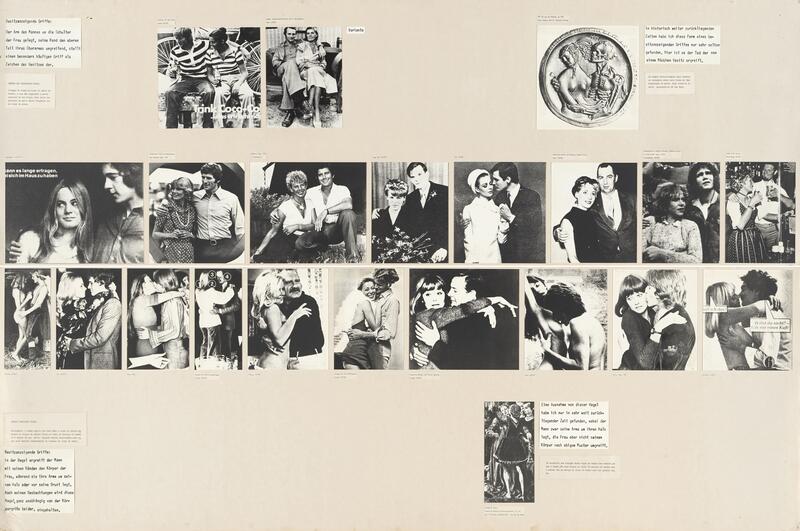
The Museum of Modern Art (MoMA) announces Taking Back Our Space: Photographic Perspectives, presenting eight artists who use the photographic medium to explore the relationship between bodies and space from intersectional feminist perspectives. On view from September 20, 2026, this exhibition brings Marianne Wex's (Hamburg, Germany, 1937) 1977 feminist photographic project Let's Take Back Our Space: 'Female' and 'Male' Body Language as a Result of Patriarchal Structures —which MoMA acquired in its entirety in 2018— into dialogue with recent works by seven contemporary artists: Nona Faustine, Martine Gutierrez, K8 Hardy, Yuki Kihara, Joiri Minaya, Paulina Olowska, and Wendy Red Star.
From 1972 to 1977, Wex photographed the bodily postures of women and men on the streets of Hamburg, paying close attention to the specific positions of their arms, legs, feet, hands, and heads. She also rephotographed advertisements, fashion magazines, newspapers, studio portraits, pornography, film and television stills, and a world history catalogue of figurative sculpture. Influenced by the era's defining feminist activism and efforts toward collective consciousness-raising, Wex separated these images by gender and organized them into categories such as "Standing Arms," "Seated Legs," and "Possessive Holds," revealing how women and men had been socialized to inhabit space differently.
-
Marianne Wex. Panels from Let’s Take Back Our Space: “Female” and “Male” Body Language as a Result of Patriarchal Structures. 1977. Gelatin silver prints, paper, and ink, mounted on 277 boards; top 19 3/4 × 29 7/16″ (50.2 × 74.8 cm), bottom 19 5/8 × 32 15/16″ (49.8 × 83.7 cm). The Museum of Modern Art, New York. Committee on Photography Fund, and The Modern Women’s Fund. © 2025 Marianne Wex Estate
To create Let's Take Back Our Space: 'Female' and 'Male' Body Language as a Result of Patriarchal Structures, Wex mounted thousands of gelatin silver prints and accompanying textual analysis onto nearly 250 boards, which she arranged into sequences that reflect the long impact of patriarchy on bodily expression in the West.
"Wex's pedagogical survey of gendered body language in everyday life is exceptional on several counts: it combines the history of social documentary, street photography, with the typologies of Conceptual art and the anti-relational potential of photomontage; it brings classical sculpture into dialogue with contemporary life to expose gender norms perceptible in the everyday; and it is an epic visual archive, a feminist version of such art-historical touchstones of cataloging and typology as Aby Warburg's Mnemosyne Atlas. Its project of identifying and unlearning prejudicial forms is as relevant as ever in the 21st century," said Roxana Marcoci, Acting Chief Curator of Photography and the David Dechman Senior Curator, who organized the show with Caitlin Ryan, Assistant Curator, Department of Photography.
-
Wendy Red Star. Catalogue Number 1944.26 from the series Accession. 2019. All inkjet prints, 17 1/8 × 28″ (43.5 × 71.1 cm) or 28 × 17 1/8″ (71.1 × 43.5 cm). The Museum of Modern Art, New York. Acquired through the generosity of Christine A Symchych and James P McNulty. © 2025 Wendy Red Star
-
Joiri Minaya. Wake. 2022. Inkjet print, 60 × 40″ (152.4 × 101.6 cm). The Museum of Modern Art, New York. The Photography Council Fund © 2025 Joiri Minaya
-
K8 Hardy. Position Series (detail). 2007–12 (printed 2017). Fifty chromogenic color prints, 30 × 20″ (76.2 × 50.8 cm) each. The Museum of Modern Art, New York. Acquired with support from Fund for the Twenty-First Century and through the generosity of The Estate of Byron R. Meyer. © 2025 K8 Hardy
-
Paulina Olowska. Body Movement Alphabet Studies (detail). 2007. Cut-and-taped printed paper, printed plastic sheet, and paint on fifteen sheets of paper; dimensions range from 18 1/4 to 18 5/8″ (46.4 to 47.3 cm) in height and from 24 1/2 to 25 ¾” (62.2 to 65.4 cm) in width. The Museum of Modern Art, New York. Gift of the artist. © Paulina Olowska
-
Nona Faustine. They Tagged The Land With Trophies and Institutions From Their Rapes and Conquests, Tweed Courthouse, NYC. 2013. Inkjet print, 33 3/8 × 50″ (84.6 × 127 cm). The Museum of Modern Art, New York. Vital Projects Fund, Robert B. Menschel. © 2025 Nona Faustine Estate
-
Martine Gutierrez. Body En Thrall, p. 120 from Indigenous Woman. Chromogenic print, 90 × 60″ (228.6 × 152.4 cm). The Museum of Modern Art, New York, Fund for the Twenty-First Century. © 2025 Martine Gutierrez
-
Yuki Kihara. Two Fa’afafine (after Gauguin) from the series Paradise Camp. 2020. Chromogenic print, 37 3/16 × 28″ (94.5 × 71.1 cm). The Museum of Modern Art, New York. The Photography of Council Fund. © 2025 Yuki Kihara
The gallery space will also contain works, all from MoMA's collection, by contemporary artists who consider the intersections of race and gender beyond the binary. Within this context, the artist's notion of "taking back space" engages crucial questions of sovereignty and decolonization, resonating both as a reclamation of physical territory and the ability to represent oneself.
Mutually inflecting one another, these works offer a new critical lens through which to reimagine Wex's watershed installation. The exhibition will be accompanied by an artist-centric, lushly illustrated volume edited by Marcoci and Ryan. Featuring a never-before-published interview with Wex, who passed away in 2020, by Roxana Marcoci and Madeline Weisburg, the publication also includes brand new conversations between each contemporary artist and a scholar or curator, including Kaitlin Booher, Sophie Cavoulacos, Stuart Comer, Nisa Mackie, Joseph Pierce, Caitlin Ryan, and Lanka Tattersall, whose interview with Faustine took place prior to the artist's premature passing in 2025.
Taking Back Our Space: Photographic Perspectives will be on view from September 20, 2026, to Spring 2027, at MoMA, 11 West 53 Street, New York, New York, United States.
Related Topics
May interest you
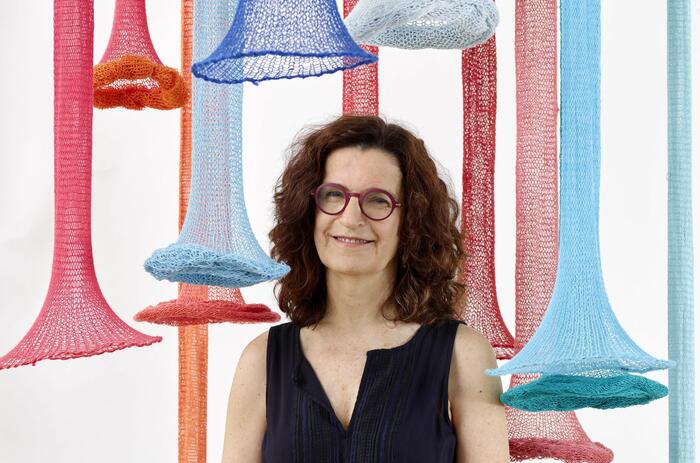
THE LEGACY OF EVELYN W. POLITZER (1961–2026) IN MIAMI'S ARTISTIC COMMUNITY
In the week that followed the passing of Evelyn W. Politzer (1961–2026), a pivotal figure in the city's textile art scene, countless expressions of affection emerged alongside a mobilization of cultural initiatives that revealed how, in a time when the sense of community seems to have vanished, art in a city like Miami has been capable of building a social fabric able to bind itself to the meaning of creation even beyond death.

THE ART MARKET REGAINS MOMENTUM IN NEW YORK
New York Art Week 2026 appears to confirm something the market has been cautiously anticipating for months: the upper end of the art market has decisively returned, while the middle market continues to recover more selectively. Across fairs and auctions alike, buyers showed strong appetite for established artists, fresh-to-market works, and collections with exceptional provenance.
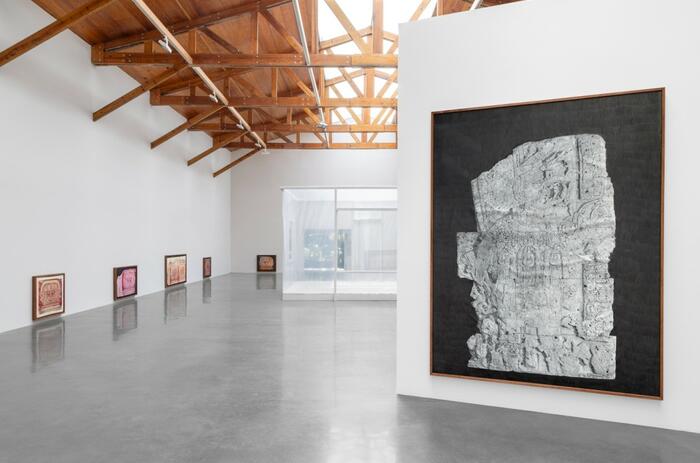
GALA PORRAS-KIM RECONSTRUCTS THE ORIGINAL CONTEXT OF LOOTED PRE-HISPANIC OBJECTS AT KURIMANZUTTO
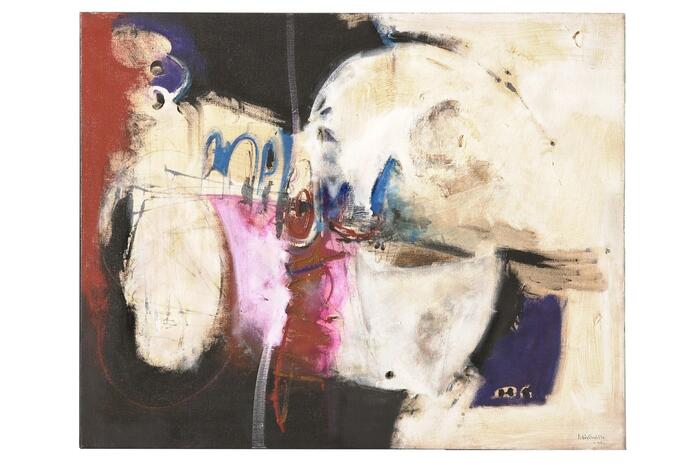
LILIA CARRILLO IN NEW YORK: THE MEXICAN PAINTER WHO WAS AHEAD OF HER TIME
A new exhibition at Americas Society reclaims the work of a painter who defied muralism and held her own in dialogue with American Abstract Expressionism and European Informalism.
INTERTWINED NARRATIVES: CASSANDRA MAYELA ALLEN EXHIBITS IN NEW YORK
The Venezuelan artist presents a body of work at the Instituto Cervantes in New York that stems from a desire to create from the distance imposed by forced migration.