
By
María Sancho-Arroyo
New York Art Week 2026 appears to confirm something the market has been cautiously anticipating for months: the upper end of the art market has decisively returned, while the middle market continues to recover more selectively. Across fairs and auctions alike, buyers showed strong appetite for established artists, fresh-to-market works, and collections with exceptional provenance.
Despite geopolitical instability, tariffs, financial volatility, and broader economic uncertainty, the New York May auctions demonstrated a significant rebound at the top end of the market. The clearest sign of recovery was the return of the so-called “trophy lot” at levels approaching or surpassing $100 million. Christie’s offered three works that either crossed or came very close to that threshold: Jackson Pollock’s Number 7A at $181.2 million, Constantin Brancusi’s Danaïde at $107.6 million, and Mark Rothko’s No. 15 (Two Greens and Red Stripe) at $98.4 million. Sotheby’s also achieved a major result with Rothko’s Brown and Blacks in Reds from the Robert Mnuchin collection, which sold for around $80 million including fees.
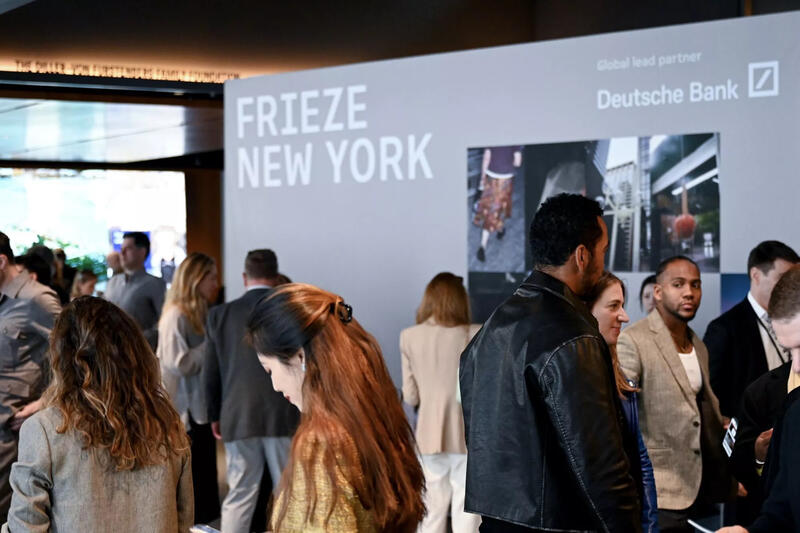
At fair level, dealers reported solid sales activity across multiple price brackets, suggesting a healthier degree of market confidence than many had anticipated. Importantly, sales were not limited to trophy works. Transactions were reported across a broad spectrum, from emerging artists to established blue-chip names, indicating that while the strongest momentum remains concentrated at the top tier, activity has also returned to other segments of the market. However, the price levels achieved at the fairs remained well below those seen in the auction rooms. The highest publicly disclosed sales at Frieze New York were in the low single-digit millions, led by works by El Anatsui sold by White Cube for $2.2 million and $1.9 million.
This broader activity matters because sentiment in the art market often functions psychologically, and auction houses continue to play a central role in setting that tone. Strong evening sale results at Sotheby’s and Christie’s, particularly at the ultra-high end, help create a wider climate of optimism that gradually filters down through the ecosystem, encouraging buying activity across different collecting categories and price segments. While the recovery remains uneven, the combination of active fairs and successful evening sales suggests a market that is regaining stability beyond the ultra-high-end level.
At Sotheby’s, the evening sales confirmed the continued strength of demand for museum-quality postwar material with impeccable provenance, led by the strong result for the Rothko from the Robert Mnuchin collection. Yet the strongest material this season arguably belonged to Christie’s, particularly through the S.I. Newhouse collection. Christie’s generated more than $1 billion in a single evening across the Newhouse sale and the 20th Century Evening Sale, making it only the second auction event in history to surpass that threshold after the Paul Allen Collection Sale in 2022.
The result also invited inevitable comparisons with the Rothko sold days earlier at Sotheby’s. On paper, the Mnuchin Rothko, with its deep reds and classic visual language, arguably corresponds more closely to the type of composition that collectors have traditionally pursued most aggressively in Rothko’s market. However, unlike the Gund painting, the work had reportedly been shown privately to potential buyers over time, something that can occasionally reduce the sense of urgency surrounding a trophy lot. By contrast, the Gund Rothko benefited from both rarity and freshness to the market, factors that continue to command a significant premium at the highest level of the market.
While only two works ultimately crossed the $100 million mark, the concentration of works at this level had not been seen in several years and represents an important psychological turning point for the market. What makes these results particularly significant is not simply the prices themselves, but what they signal about collector appetite. The return of multiple trophy works above or near $100 million suggests renewed conviction among top-tier collectors and consignors after a period in which many major owners preferred to hold rather than sell. At the same time, it is important to introduce some nuance into that reading. Many of the season’s top lots emerged from estate-related or legacy collections, where sales are often driven not only by market timing but also by succession planning, philanthropy, or the financial realities that accompany generational wealth transfer.
What may be more revealing than the decision to sell itself is the fact that these works were brought openly to public auction rather than discreetly placed through private sales. During weaker market periods, owners at this level often prefer private transactions in order to avoid the reputational risk attached to a public failure or an underperforming result. The willingness to place such major works in the auction arena again suggests renewed confidence not only in pricing, but also in the public market’s ability to absorb and validate trophy-level material. At the same time, guarantees continue to play an important role in securing major consignments and maintaining stability around the highest-value works.
In many ways, this season also reinforces the idea that the renewed preference for historically validated art has become increasingly evident. In moments when the market becomes more cautious, collectors tend to gravitate toward artists and categories that are institutionally recognized and historically established. The strong demand this season for canonical twentieth-century artists reflects that dynamic, with buyers clearly favoring rarity, quality, and established provenance.
Overall, New York Art Week 2026 may be remembered as an important confirmation that momentum is returning to the art market, particularly at the highest level. Selective though it remains, the market appears once again willing to compete strongly for rarity, quality, and historically significant works.
At the same time, the week once again reinforced New York’s position as the undisputed center of the international art market. Beyond the sales themselves, New York Art Week remains one of the key moments when the global art world converges in a single city. The concentration of fairs, auctions, exhibitions, private events, and institutional programming not only offers a real-time pulse of the market but also continues to make New York one of the art world’s most important environments for networking, relationship-building, and international visibility.
What remains to be seen is whether this renewed confidence will consolidate beyond New York. The next major test will come in June with Art Basel, traditionally the most important fair on the global calendar. While fairs do not offer the same transparency as public auctions, Basel will nonetheless provide an important indication of whether this renewed momentum is extending across the broader international market.
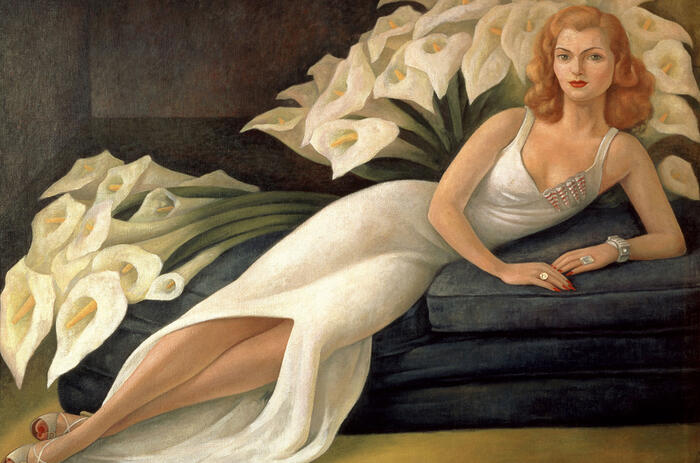
The current controversy highlights the difficult coexistence between the collection’s private ownership and the heritage protection that covers part of its works.
Prestige at a Discount: Salaries and Careers in the Art World
Hong Kong Sales Week: A Stabilizing Market with Strong Regional Demand
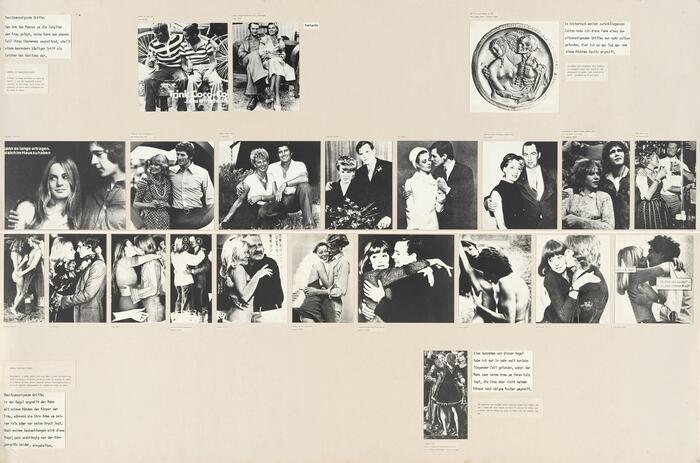
The exhibition will feature a groundbreaking feminist work by late German artist Marianne Wex alongside works by seven contemporary artists.
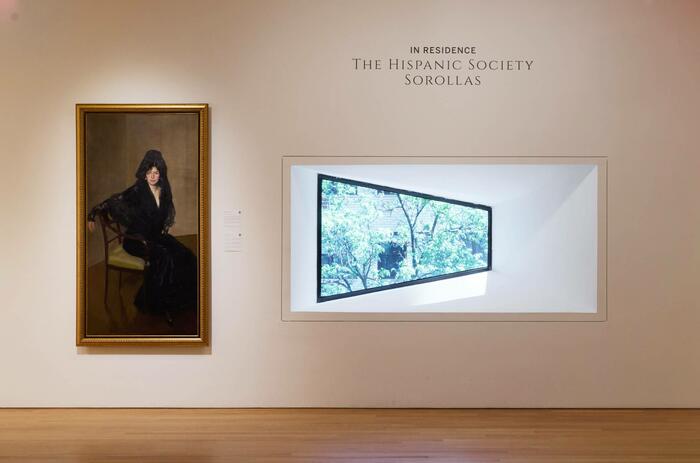
Three paintings by Joaquín Sorolla from the Hispanic Society Museum & Library have travelled south from Washington Heights to Madison Avenue. Installed this spring at Sotheby’s New York headquarters, they are part of a small exhibition with a broader significance: the launch of a new initiative that reflects the increasingly fluid relationship between museums and market institutions.
Art Basel in Basel remains the centerpiece of one of the most intense weeks in the international art calendar. While dozens of exhibitions, events, and satellite fairs take place across the city, the fair itself continues to set the tone for the market and offers a valuable opportunity to gauge both collector sentiment and broader trends in contemporary art.
By Maria Paula Suarez and Montserrat Miranda Ayejes