
LILIA CARRILLO IN NEW YORK: THE MEXICAN PAINTER WHO WAS AHEAD OF HER TIME
A new exhibition at Americas Society reclaims the work of a painter who defied muralism and held her own in dialogue with American Abstract Expressionism and European Informalism.
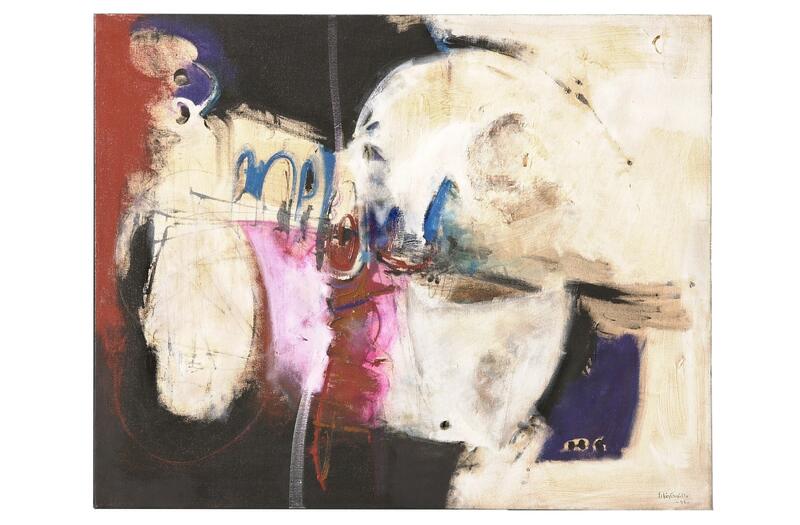
Americas Society opened Lilia Carrillo: Ruptures and Premonitions this Wednesday. Curated by Tobias Ostrander, the exhibition introduces the work of Lilia Carrillo (Mexico City, 1930–1974) to New York audiences, positioning her as a central figure within the group of postwar Mexican painters known as the Generación de la Ruptura. On view through August 1, 2026, the show brings together 24 of her most significant paintings, created between 1961 and 1974, alongside a selection of archival photographs, letters, invitations, and publications that document her active participation in the diverse and often contentious cultural landscape of her time.
"By focusing on 'ruptures' and 'premonitions,' the exhibition seeks to highlight the mysterious and ritual character of the works, while also addressing their references to the complex environmental and political contexts in which they were created," said Ostrander, Estrellita B. Brodsky Curator of Latin American Art at Tate Modern.
-
Lilia Carrillo. Esencia (Essence), 1961. Oil on canvas on wood, 7 1/8 x 5 3/4 in. (18 x 14.5 cm.) Courtesy of Sasha Sokol Cuillery. Photo Credit: Gabriel Batiz
-
Lilia Carrillo. Premonición (Premonition), 1970. Acrylic on canvas, 31 1/2 x 39 2/5 x 4/5 in. (80 x 100 x 2 cm.). Courtesy of kurimanzutto, Mexico City / New York. Photo Credit: Gerardo Landa Rojano
-
Lilia Carrillo. Sin título (Untitled), n.d. Oil on canvas 10 5/8 x 14 3/8 in. (27 x 36.5 cm.). Courtesy of kurimanzutto, Mexico City / New York. Photo Credit: Gabriel Batiz
Carrillo and her circle pursued a decisive break with Mexican muralism, turning instead toward abstraction — a shift that allowed them to engage in international dialogue with the pictorial movements taking shape in New York and Paris. The exhibition foregrounds her innovative gestures: building dense surfaces that she would then carve or scrape, embedding fabric or fragments of paper into her canvases, blurring her compositions, and using brushes of varying sizes alongside other tools to apply and disperse pigment.
The show is also shaped by the notion of premonitions — the sense that an ominous event is about to unfold. Her 1970 work Premonición reflects the deep awareness of mortality that Carrillo developed after suffering a spinal aneurysm, whose complications would ultimately lead to her death, as well as her engagement with Surrealist and ritualistic practices.
Lilia Carrillo: Ruptures and Premonitions also traces a broader historical shift in Mexico's social fabric and collective mood. While her early 1960s works convey an exploratory optimism — in step with the country's economic boom and rapid urban growth — her later canvases respond to an increasingly dark political climate, including the Tlatelolco massacre of 1968 and mounting environmental concerns. In her final years, Carrillo's celestial references gave way to expansive compositions evoking pollution and debris.
The exhibition is part of Americas Society's Women Artists Series, dedicated to significant yet underrecognized Latin American artists.
Lilia Carrillo: Ruptures and Premonitions is on view through August 1, 2026, at Americas Society/Council of the Americas, 680 Park Avenue, New York, (United States).
Related Topics
May interest you
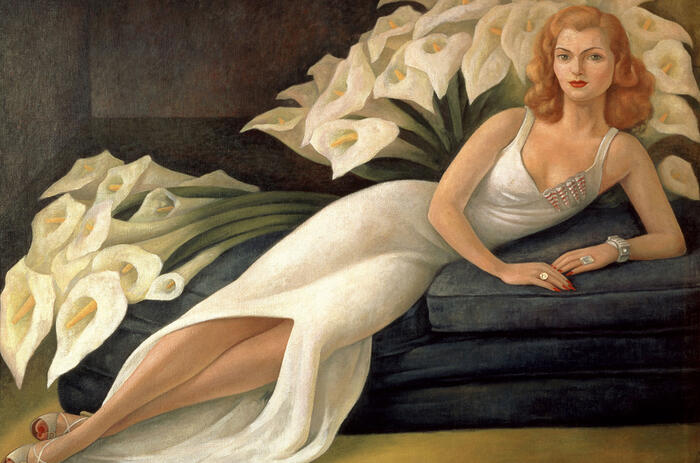
THE GELMAN COLLECTION: BETWEEN NATIONAL HERITAGE AND FINANCIAL ASSET
The current controversy highlights the difficult coexistence between the collection’s private ownership and the heritage protection that covers part of its works.
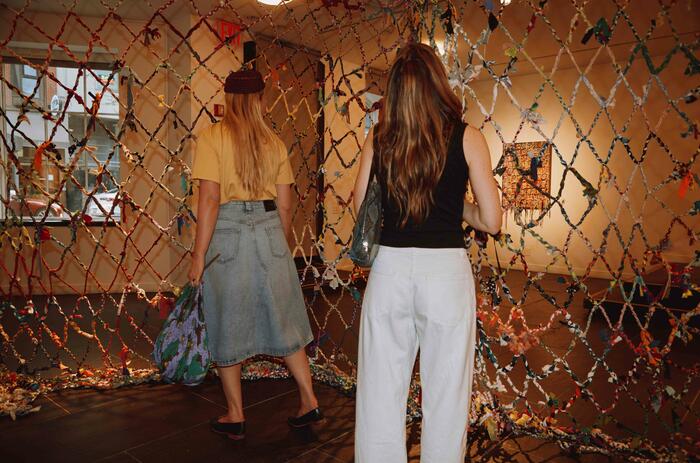
INTERTWINED NARRATIVES: CASSANDRA MAYELA ALLEN EXHIBITS IN NEW YORK
The Venezuelan artist presents a body of work at the Instituto Cervantes in New York that stems from a desire to create from the distance imposed by forced migration.
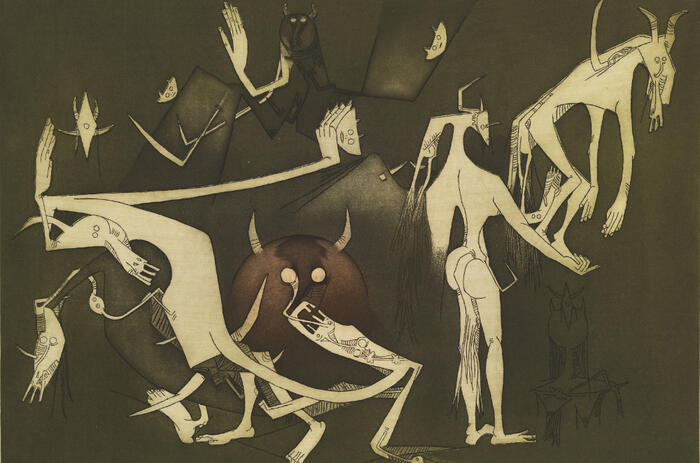
WIFREDO LAM: “WHEN I DON’T SLEEP, I DREAM” - RETROSPECTIVE AT MoMA
ON THE POLITICS OF SPACE AND GENDER DYNAMICS: PHOTOGRAPHY AT MoMA
The exhibition will feature a groundbreaking feminist work by late German artist Marianne Wex alongside works by seven contemporary artists.