MODELS OF GALLERY COLLABORATION MARC STRAUS AND NUEVEOCHENTA: AN ALLIANCE BETWEEN COLOMBIA AND NEW YORK
By María Paula Suarez and Montserrat Miranda Ayejes
The art market currently navigates one of its most complex moments. While major auction houses continue to report record figures, the Spring 2026 auction season was not the exception, many mid-sized galleries face mounting pressure: participation in international art fairs has become increasingly expensive, leasing exhibition spaces in cities like as New York and London is more challenging than ever, and logistical costs and constraints have risen significantly. In this context, galleries are persistently seeking ways to adapt and rethink their presence.
Consignments, loans for exhibitions, and joint participation in art fairs are among the most familiar forms of collaboration between galleries. In recent years, however, longer-term strategic partnerships have become increasingly prevalent. In these arrangements, galleries exchange exhibition spaces and develop collaborative shows, through which they expand their audiences, curatorial resources, and collector networks, building a stronger presence in scenes that would be more difficult to access independently.
These types of alliances are not entirely new but they have gained prominence amid the structural conditions of the art market and a time defined by the need for flexibility and dynamism.
-
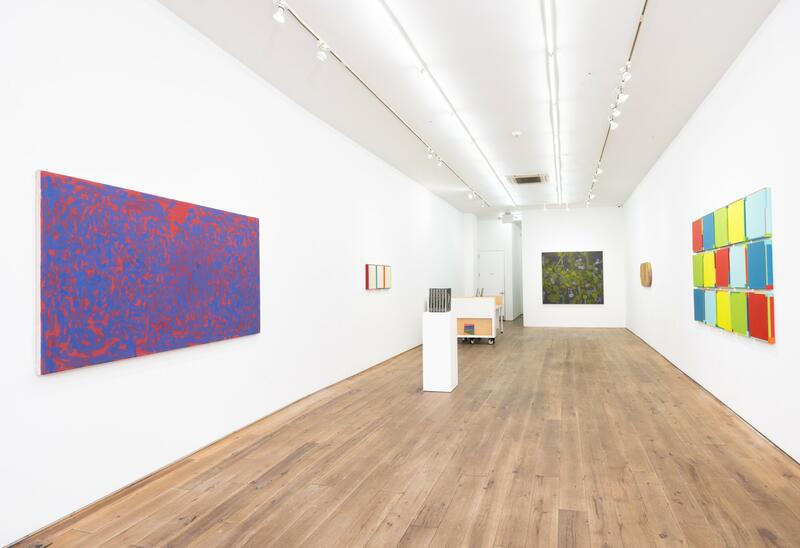
Installation View. SEVEN COLOMBIAN ARTISTS: NUEVEOCHENTA GALLERY AT MARC STRAUS. Courtesy of Marc Straus Gallery
Collaborative Exhibitions and Space Exchanges: A Bilateral Strategy
One of the clearest examples of this model is the collaboration between New York-based gallery Marc Straus and Nueveochenta Gallery in Bogotá, Colombia. In 2025, Nueveochenta presented Seven Colombian Artists in New York, introducing its program to a new audience. This year, Marc Straus is presenting Structures of Meaning, a group exhibition featuring seven artists from its roster, in Nueveochenta’s space from June 4 through July 9, 2026.
The exhibition explores how contemporary artists construct meaning through material and form, and includes sculptures by Edgar Orlaineta and Mauritian artist Jong Oh; installations by Ozioma Onuzulike and Clive Smith; textiles by Indian artist Natasha Das; and paintings by Anna Leonhardt and Antonio Santin. The result is a compelling and cohesive presentation with a distinctly international character, bringing together artists whose work is held in museum and public collections worldwide.
What makes this model distinctive is its ability to establish a long term presence without a permanent outpost or reliance on the fair and pop-up format (both inherently temporary and difficult to support over time). An exhibition in an established gallery, supported by its collector base and institutional credibility, offers what an art fair booth rarely can: time for the work to breathe and space for viewers to engage without the pressure of immediacy.
A Growing Phenomenon
The partnership between Marc Straus and Nueveochenta is not an isolated case. Similar alliances have become increasingly common in recent years, each one with its own terms.
In 2016, Vanessa Carlos, director of Carlos/Ishikawa in London, founded Condo, a large-scale exhibition platform in which host galleries share their spaces with visiting galleries from other cities and countries. Each year, new editions take place across one or several cities, and the initiative is currently active in galleries throughout London, New York, Mexico City, São Paulo, and Shanghai. Condo derives from the “condominium,” referencing the project's emphasis on shared space and collective participation, and seeks to promote a more collaborative and sustainable approach to producing international exhibitions.
Since 2018 and 2019, Mexico City and São Paulo have become integral points of connection between the Latin American art scene and galleries from Europe, North America, and Asia.
The inaugural Mexico City edition brought together forty-nine galleries across more than twenty venues. Among its collaborations, Kurimanzutto hosted New York based gallery White Columns, which presented a show by Christopher Knowles and Dale Jackson alongside a design project by Kim Gordon/Design Office. In the 2024 edition, Kurimanzutto welcomed the LA based gallery Château Shatto, which exhibited works by Aria Dean and Zeinab Saleh. Mexico City was the main host of the most recent edition in April 2026, bringing together twenty-seven galleries across fourteen venues.
-
Installation View. Condo 2024. Chatêau Shatto at kurimanzutto Mexico City, featuring Aria Dean & Zeinab Saleh. Courtesy Château Shatto, Los Angeles
Meanwhile, Condo took place in São Paulo in 2019, 2020, and 2023. Among the notable collaborations was the partnership between Grimm Gallery, with spaces in New York and Amsterdam, and Casa Triângulo in São Paulo, which hosted Grimm's presentation by Danish artist Guido van der Werve. In the 2023 edition, Galeria Gentil Carioca, based in Rio de Janeiro, hosted Isla Flotante Gallery, from Buenos Aires, which exhibited works by Valentina Liernur.
Another notable example is the collaboration between La Cometa Gallery, with locations in Bogotá, Medellín, Miami, and Madrid, and Catalysta, a New York–based platform for contemporary Latin American art founded by Valerie Cabrera Brugal in 2020. Together, they have built a partnership that fosters dialogue between closely connected audiences. La Cometa’s strong presence across the Latin American art scene, spanning four strategic cities, and Catalysta’s position within New York’s gallery landscape reflect a shared belief that cultural exchange between these ecosystems is best advanced through collaboration.
Equally noteworthy is the partnership between Instituto de Visión, founded in Bogotá in 2014, and ProxyCo, established in New York in 2017. Both galleries have built strong programs centered on Latin American art while establishing an international presence. In 2025, they began sharing a space on Eldridge Street in New York City. Although they continue to operate independently, the two galleries have adopted a cooperative model that allows each to retain its distinct identity while benefiting from a shared platform.
Why Now?
The question underlying these examples is the same: why is this model gaining traction now? There is not just one answer, but rather a combination of factors that has made this approach both viable and increasingly compelling.
-
Installation View. Condo 2023. Isla Flotante at Gentil Carioca, Rio de Janeiro, featuring Valentina Liernur. Courtesy of Gentil Carioca
First, there are economic pressures. The traditional gallery business model is under increasing strain. Operations costs continue to rise, participation in art fairs requires substantial investment with uncertain returns, and younger generations of collectors engage with the market in different ways from their predecessors. In this sense, collaboration for many mid-sized galleries is no longer a strategic choice; it has become an essential means of remaining competitive.
At the same time, Latin America has been attracting sustained international attention in recent years. Collectors in the United States and Europe show growing interest in the region, a shift that would have been difficult to imagine a decade ago.
Last but not least, a growing sense of generosity and mutual support among galleries, particularly those with shared curatorial affinities or regional ties.
A Flexible and Dynamic Model
What makes these cases compelling is the range of forms they take; from program exchanges and shared spaces to institutional partnerships built around specific projects.
Structures of Meaning, which opened in Bogotá on June 4, is a clear and well-articulated example of this approach. But its significance goes beyond a single exhibition. It reflects a broader shift taking place across the art market. Galleries that embrace collaboration as a strategy are not giving up their independence or identity. Rather, they are testing, flexibly and pragmatically, new ways of positioning themselves within a constant changing landscape.
May interest you
ART BASEL 2026: THE PULSE OF A SELECTIVE MARKET
Art Basel in Basel remains the centerpiece of one of the most intense weeks in the international art calendar. While dozens of exhibitions, events, and satellite fairs take place across the city, the fair itself continues to set the tone for the market and offers a valuable opportunity to gauge both collector sentiment and broader trends in contemporary art.
NURIA ENGUITA: “MUSEUMS DO NOT SPEAK FROM A NEUTRAL POSITION, BUT FROM A CONTEXT THAT SHOULD BE MADE VISIBLE”
Interview with Nuria Enguita, Artistic Director, MAC/CCB – Museum of Contemporary Art and Architecture Centre (Museu de Arte Contemporânea e Centro de Arquitetura), Lisbon.
BRINGING SOROLLA TO MADISON AVENUE: THE HISPANIC SOCIETY AND SOTHEBY’S
Three paintings by Joaquín Sorolla from the Hispanic Society Museum & Library have travelled south from Washington Heights to Madison Avenue. Installed this spring at Sotheby’s New York headquarters, they are part of a small exhibition with a broader significance: the launch of a new initiative that reflects the increasingly fluid relationship between museums and market institutions.
THE ART MARKET REGAINS MOMENTUM IN NEW YORK
New York Art Week 2026 appears to confirm something the market has been cautiously anticipating for months: the upper end of the art market has decisively returned, while the middle market continues to recover more selectively. Across fairs and auctions alike, buyers showed strong appetite for established artists, fresh-to-market works, and collections with exceptional provenance.
THE GELMAN COLLECTION: BETWEEN NATIONAL HERITAGE AND FINANCIAL ASSET
The current controversy highlights the difficult coexistence between the collection’s private ownership and the heritage protection that covers part of its works.
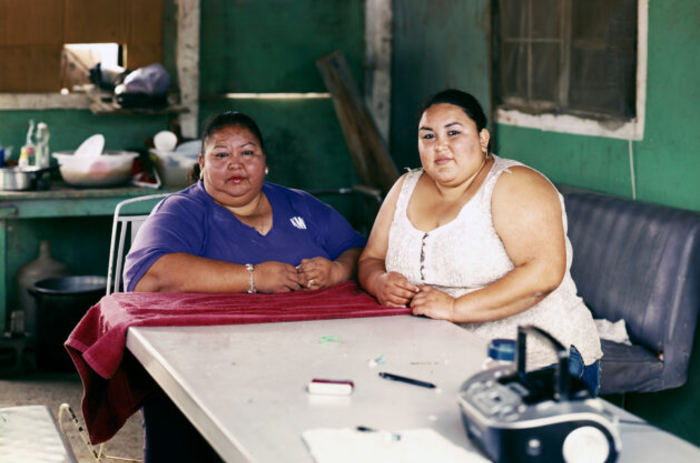
ALEJANDRO CARTAGENA: A PHOTOGRAPHIC PRACTICE FOR THE COLLECTIVE NARRATIVE
The Dominican-Mexican photographer explores the social and territorial transformations of Mexico through a critical and serial photographic practice in a major exhibition presented as part of PhotoEspaña.
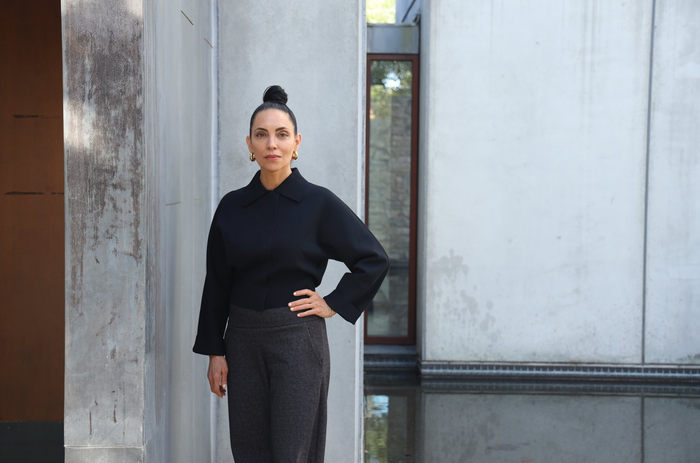
FROM THE SUBTERRANEAN TO THE COSMIC: TERESITA FERNÁNDEZ REAWAKENS A DORMANT HOUSTON LANDMARK
After nearly a decade closed, The Menil Collection's Fresco Building reopens with a meditation on spirituality and matter.
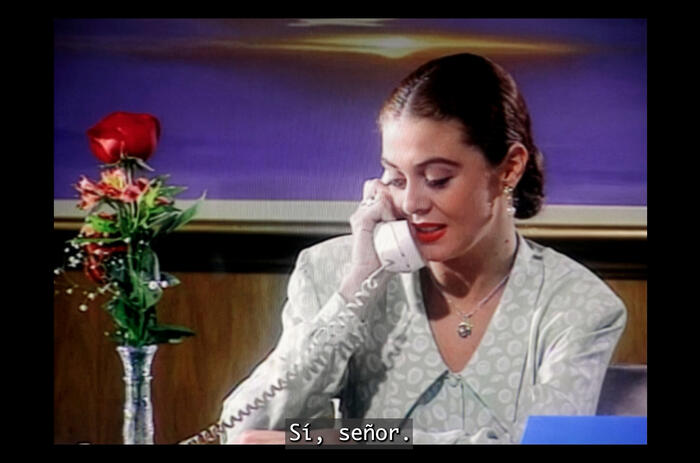
THE TELENOVELA AS A SUBJECT OF RESEARCH AT AMERICAS SOCIETY
The exhibition in New York will feature more than 50 works from the 1970s to the present, including an installation commissioned from Mexican artist Pablo Helguera.
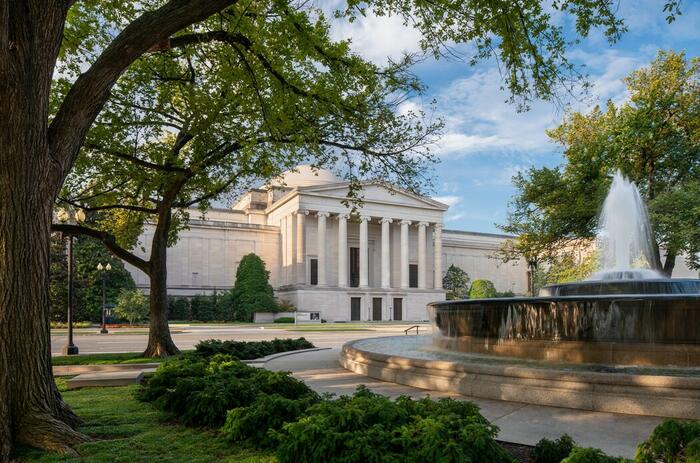
THE NATIONAL GALLERY OF ART RECEIVES NEARLY 50 WORKS FROM THE BEREZDIVIN COLLECTION
The gift by Diana and Moises Berezdivin brings works by Allora & Calzadilla, Rafael Ferrer, Damián Ortega, Chemi Rosado-Seijo, and Rosângela Rennó, among others, to the Washington museum.
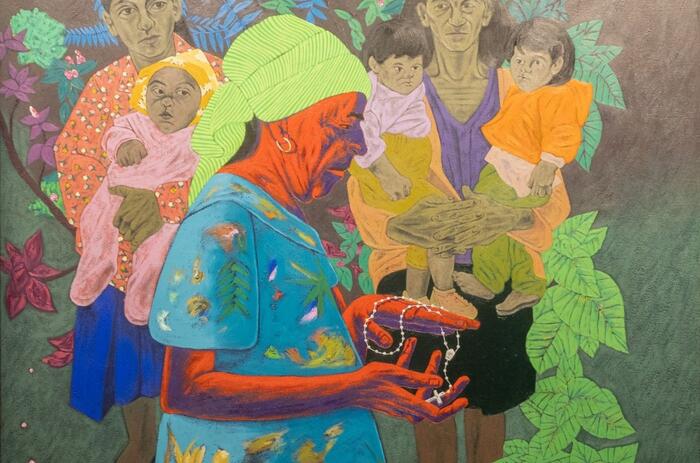
WHEN ART EXPANDS THE MEANING OF DEVELOPMENT: THE INTER-AMERICAN DEVELOPMENT BANK COLLECTION
When discussing the growing international recognition of Latin American and Caribbean art, attention often turns to museums, galleries, art fairs, and collectors. Yet some of the earliest and most sustained initiatives emerged outside the traditional art world. This is the case of the art collection of the Inter-American Development Bank (IDB), which, with a history spanning nearly seven decades, today brings together close to 1,800 works from Latin America and the Caribbean.
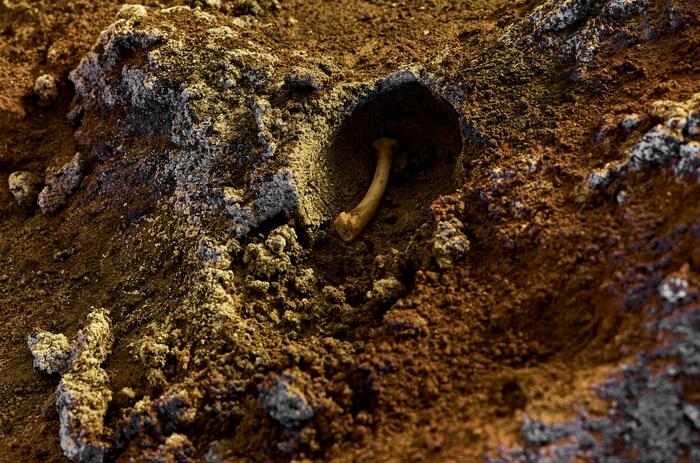
ADRIÁN VILLAR ROJAS TRANSFORMS THE ASPEN ART MUSEUM INTO GEOLOGICAL AND MYTHOLOGICAL CAVE
First Gods, Lost Animals, curated by Claude Adjil, traces the symbolic systems humans built to navigate a universe that exceeds their cognitive scale.
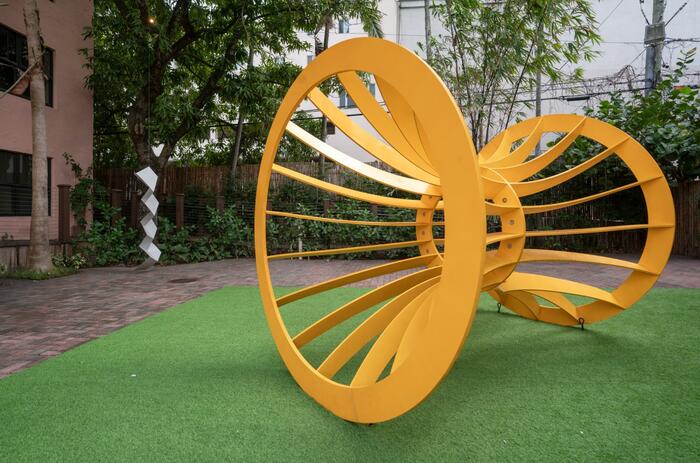
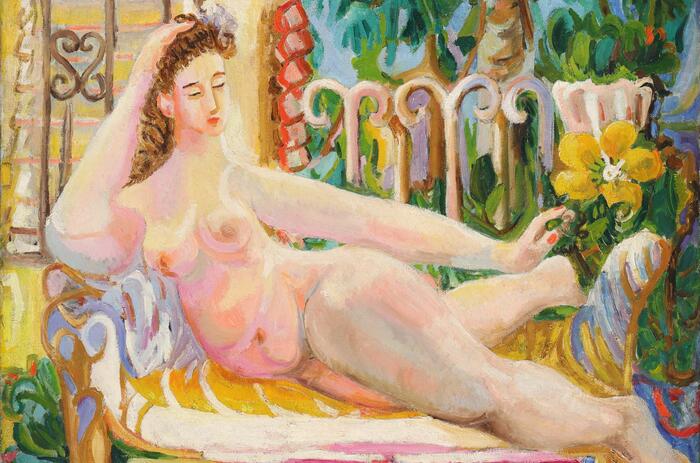
MIAMI REVISITS MOMA'S HISTORIC 1944 EXHIBITION OF CUBAN PAINTERS
The exhibition brings together works by Wifredo Lam, Amelia Peláez, and Mario Carreño, preserved by private collectors for more than 80 years.
LONDON JUST GOT A NEW HOME FOR LATIN AMERICAN ART
Founded by Brazilian collector Flavia Nespatti, ANTESALA opens its doors on October in Fitzrovia with the inaugural group show Assembly Lines.
IRENE GELFMAN TO PARTICIPATE IN SECRETS OF COLLECTING
Various leading figures from the collecting world will come together at the Museo Nacional de Arte Decorativo to discuss the power of cultural platforms to drive artists and projects forward.