
By
María Sancho-Arroyo
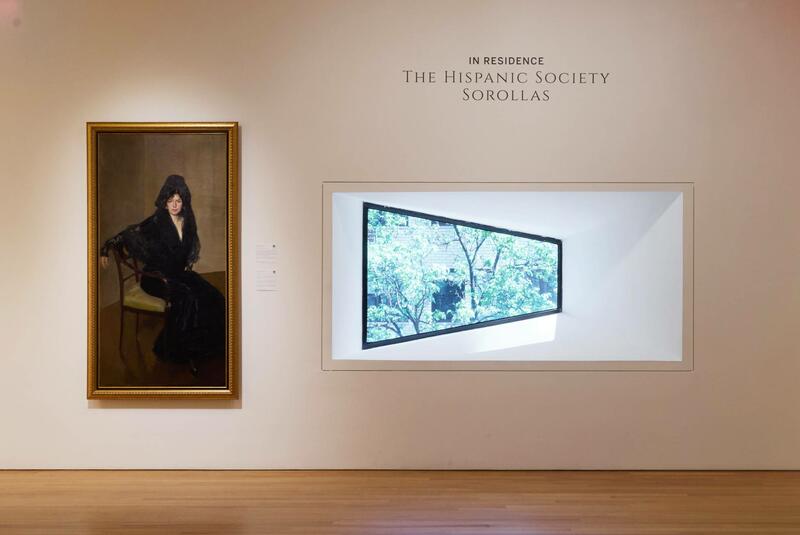
Three paintings by Joaquín Sorolla from the Hispanic Society Museum & Library have travelled south from Washington Heights to Madison Avenue. Installed this spring at Sotheby’s New York headquarters, they are part of a small exhibition with a broader significance: the launch of a new initiative that reflects the increasingly fluid relationship between museums and market institutions.
For much of the twentieth century, museums, galleries, and auction houses occupied clearly distinct roles. Today, those boundaries are increasingly porous. Auction houses are expanding beyond sales into exhibitions, educational programs, and institutional partnerships, positioning themselves not only as commercial actors but also as cultural destinations.
The collaboration between Sotheby’s and the Hispanic Society is a compelling example of this shift. It is also particularly appropriate in the Breuer building, originally designed by Marcel Breuer for the Whitney Museum of American Art and later occupied by both the Metropolitan Museum of Art and the Frick Collection. Few buildings in New York carry such a strong museum legacy.
As Guillaume Kientz, Director and CEO of the Hispanic Society Museum & Library, notes, the project offers an opportunity to “raise awareness” of the institution’s mission and collections while bringing them before new audiences. He also points to the symbolic importance of exhibiting the works in the Breuer, a space long associated with some of New York’s leading museums.
The exhibition, In Residence: The Hispanic Society Sorollas, inaugurates Sotheby’s new In Residence series, an initiative designed to invite museums and cultural institutions to present selected works from their collections within Sotheby’s Breuer building. Rather than functioning simply as a selling space, the building is being used as a platform for institutional collaborations and public exhibitions. The first edition brings together three paintings by Sorolla from the Hispanic Society’s holdings: Sea Idyll (1909), Louis Comfort Tiffany (1911), and Señora de Sorolla in a Spanish Mantilla (1902). Together, they show the artist’s exceptional ability to capture light, atmosphere, elegance, and modern life.
Founded in 1904 by Archer Milton Huntington, the Hispanic Society Museum & Library is one of New York’s most remarkable cultural institutions. Its collections encompass the art and cultures of Spain, Portugal, Latin America, and the broader Hispanic world, ranging from manuscripts and rare books to sculpture, decorative arts, archaeology, and paintings by artists such as Velázquez, El Greco, Goya, and Zurbarán. Yet despite the quality and importance of its holdings, the institution remains surprisingly unfamiliar to many New Yorkers. Located in Washington Heights, away from the city’s traditional museum corridor, it is often overlooked by visitors who would readily travel across the Atlantic to see comparable collections.
The museum is perhaps best known for its unrivalled holdings of Sorolla, including the monumental Vision of Spain cycle commissioned by Huntington between 1911 and 1919. Installed at the Hispanic Society in 1926, the series offers a sweeping portrait of Spain through its regions and traditions. Yet the murals are equally remarkable for Sorolla’s mastery of light. Moving from one canvas to another, the viewer experiences not only different parts of the country, but also the changing qualities of its sunlight, from the bright Mediterranean coast to the softer tones of the north.
The Sotheby’s exhibition arrives at a significant moment. Beyond celebrating Sorolla, it coincides with a period of renewed activity and international visibility for the Hispanic Society, including plans to bring more than 200 works by the artist to Valencia, his birthplace, later this year. The initiative also reflects Sotheby's broader ambitions for the Breuer building. As Christy Coombs, Head of Sotheby's Museum and Corporate Art Group, notes, the In Residence series highlights Sotheby's commitment to presenting "extraordinary collections to a public audience." The Hispanic Society, she explains, was a natural choice to inaugurate the program given the significance of its holdings.
The result is a partnership that benefits both institutions. Sotheby’s strengthens its role as a cultural platform, while the Hispanic Society gains exposure to audiences who may never have visited its campus in Washington Heights. More broadly, the collaboration shows how museums and market institutions can work together to broaden access to art while remaining true to their distinct missions. If some visitors are inspired to continue their journey north to Washington Heights, the exhibition will have achieved something more lasting than a successful collaboration: it will have introduced new audiences to one of New York’s most remarkable cultural treasures.
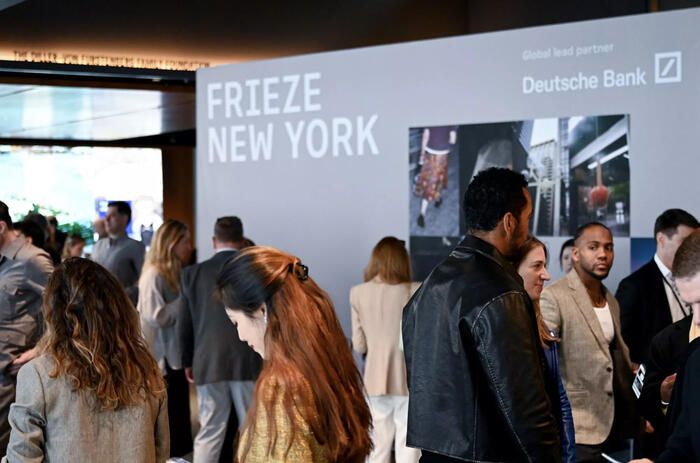
New York Art Week 2026 appears to confirm something the market has been cautiously anticipating for months: the upper end of the art market has decisively returned, while the middle market continues to recover more selectively. Across fairs and auctions alike, buyers showed strong appetite for established artists, fresh-to-market works, and collections with exceptional provenance.
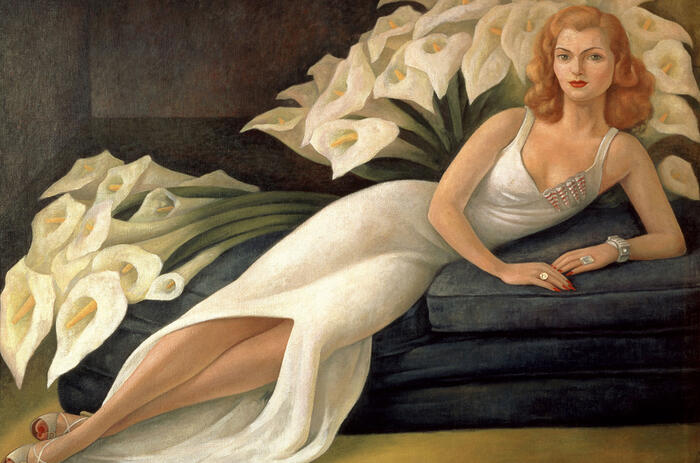
The current controversy highlights the difficult coexistence between the collection’s private ownership and the heritage protection that covers part of its works.
Prestige at a Discount: Salaries and Careers in the Art World
The acclaimed Chilean artist joins the institution that brings together the most distinguished figures in architecture, visual arts, literature, and music in the United States.
Works by Beatriz Cortez, Simón Vega, Walterio Iraheta, and Verónica Vides are now part of one of the most important collections in the world, thanks to a donation by collector Mario Cáder-Frech.
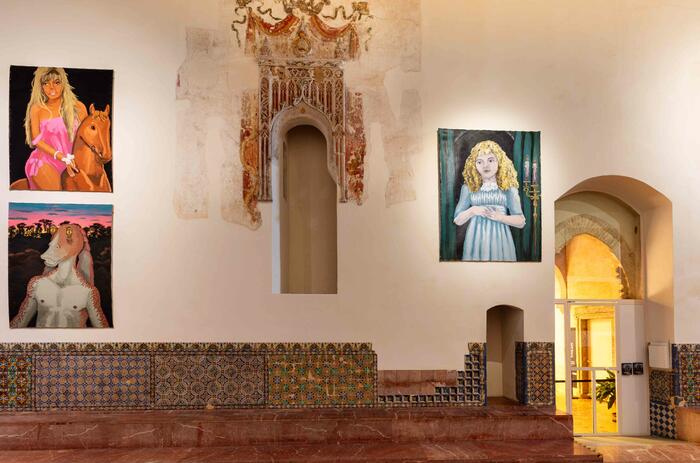
The Mexican artist explores the relationship between memory and identity in her exhibition in Seville through more than thirty large-scale paintings in which the visual language of pop culture invites viewers to recognize themselves and question socially constructed roles.
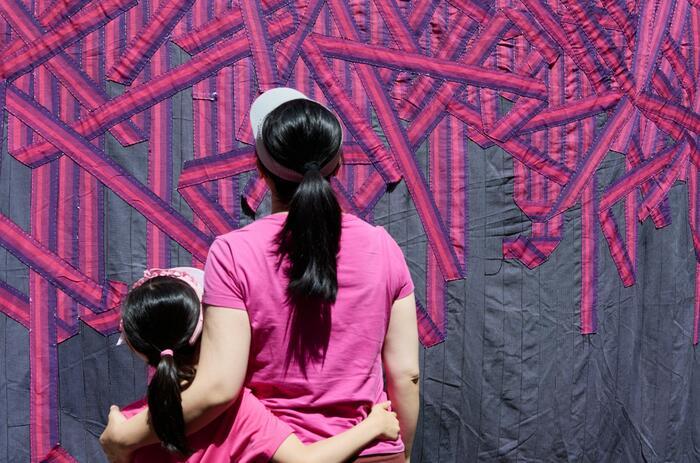
Art Basel in Basel remains the centerpiece of one of the most intense weeks in the international art calendar. While dozens of exhibitions, events, and satellite fairs take place across the city, the fair itself continues to set the tone for the market and offers a valuable opportunity to gauge both collector sentiment and broader trends in contemporary art.
By Maria Paula Suarez and Montserrat Miranda Ayejes