

By
Álvaro De Benito
We speak with Tobias Ostrander, the Estrellita B. Brodsky Adjunct Curator of Latin American Art at Tate Modern, at a moment of growing international recognition for Latin American art, as the institution presents three major exhibitions. The conversation explores the region’s growing visibility, the reassessment of the art-historical canon, and the importance of building a global art history grounded in diverse perspectives and local contexts.
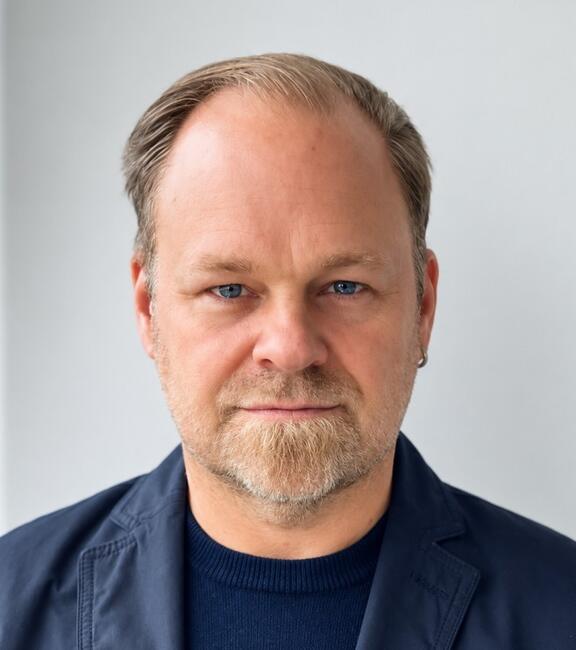
Tobias Ostrander (Boston, United States, 1970), Estrellita B. Brodsky Adjunct Curator, Latin American Art at Tate, is a key figure in understanding how major international institutions are revising art history and expanding their narratives beyond the Western canon, where Latin American art is acquiring special relevance. Examples of this are the exhibitions Julio Le Parc: Light. Colour. Action., Frida: The Making of an Icon, and Ana Mendieta, which Tate Modern in London is currently devoting to three of the region’s most recognizable figures. In this conversation with Ostrander, we discuss the growing recognition of Latin American art, the role of museums in shaping art historiography, the region’s increasing international visibility, and the need to promote research grounded in local contexts so that its recognition does not depend exclusively on external perspectives and the market.
Álvaro de Benito [Á.B.]: Let us begin with the three exhibitions currently on view at Tate Modern in London and ask directly: are they a triumph for Latin American art or a barometer of a reality that already exists?
Tobias Ostrander [T.O.]: For me, it is rather the latter. I think that, depending on the context, Latin American art is much more integrated into the discourse of contemporary art today than it was in the past. These three exhibitions are no coincidence; they reflect the importance of Tate’s Latin American collection and the institution’s interest in exploring different, more open and transnational forms of modernism. Julio Le Parc, for example, is a transnational figure because, although he is Argentine, he spent much of his life in Paris. Ana Mendieta is also transnational in many ways. These exhibitions reflect different strands of research at Tate.
Á.B.: These are three major figures who, I presume, exemplify the lines of research you mention. What curatorial interests at Tate do these exhibitions represent, and what does each contribute to the institution’s understanding of Latin American art?
T.O.: In the cases of Ana Mendieta and Frida Kahlo, there is a commitment to feminism. The Julio Le Parc exhibition builds on the research behind Electric Dreams and explores Latin American artistic legacies linked to Europe, optical and kinetic art, and geometric abstraction. Mendieta’s exhibition also addresses ancestralism and the connections between her work, the earth, goddesses, and the female figure as an archetype for a different relationship with nature. Frida Kahlo, for her part, is a global icon: she represents a strong woman, an artist who asserts her cultural identity, and a symbol of physical, emotional, and cultural resistance. Together, the three exhibitions strengthen the presence of Latin American art at Tate, while reflecting different strands of research and institutional interests.
Á.B.: So this moment is particularly significant from a curatorial perspective, but I would like to explore how it fits into Tate’s broader institutional strategy.
T.O.: Tate has been working intensively with Latin America for around 25 years, and the region has played an important role in building its collection. As chair of the Latin American Acquisitions Committee, I believe the institution holds one of the world’s most important collections, alongside those of MoMA and Houston. Since Tate Modern opened, the institution has been committed to the region through years of research, which has become embedded in its curatorial approach and transnational vision. Latin America occupies an important place in Tate’s international perspective, both through its own dynamics and through its dialogues with other parts of the world, extending beyond the continent and the Spanish-speaking sphere.
Á.B.: If curatorial practice is becoming increasingly transnational, does it still make sense to speak of Latin American art as a single, homogeneous category?
T.O.: The term is always complicated. It is a construct, certainly, but there are shared legacies, histories, and sociopolitical structures, as well as dialogue among the countries of the region as a cultural sphere. Argentina, Brazil, and Mexico, for example, are very different contexts, which is why the term is useful in some situations but not in others. We always seek to examine individual artistic practices rather than understand artists as representatives of entire cultures. For years, Latin American art struggled to gain recognition in relation to the European and North American canon. Although the need for validation has not disappeared entirely, it is much less pronounced today, and artists from the region are now fully integrated into the international conversation.
Á.B.: I’m interested in how these local specificities are addressed within the broader category of Latin American art. The Caribbean, for example, seems particularly relevant here, and it is a region you have worked on extensively.
T.O.: Some parts of the region remain underexplored in art history. I have been working extensively on the Caribbean and Central America, for example. These areas are underrepresented in the history of Latin American art. Each context has highly sophisticated art histories, but some are less well known and have a more limited presence in international dialogue. It remains important to bring greater visibility to those parts of the Spanish-speaking world that have not received the recognition they deserve.
Á.B.: Ultimately, there is no single Latin America, although from the outside it can appear that way. You mentioned the question of external “validation.” If recognition continues to be shaped by outside perspectives, who should lead this discourse: Latin American institutions themselves or international institutions?
T.O.: Both are involved. Today, there is much more dialogue among institutions in Latin America and greater interest in exhibiting artists from the region. There were periods when presenting artists from Europe and the United States in Latin America was particularly important. Now there is much more interest in the region itself and a stronger regional perspective. However, there is still much work to be done to recognize the equal importance, relevance, and value of different contexts. The same is true in Europe.
Á.B.: What role do institutions and research play in this transformation?
T.O.: Institutions are conducting increasingly more research on Latin America, an enormous region that can be approached in many different ways. Brazil and Mexico are now recognized as worlds in their own right, with distinct centers of influence and regional dynamics. Perspectives have become more sophisticated: Latin American curators are adopting a more regional outlook, while museums in Europe, the United States, and elsewhere are taking a much more active interest in the region.
Á.B.: The global understanding of Latin American art is also shaped by how its relevance and significance are interpreted in different countries. Cultural policies often respond to local rather than global realities. To what extent do these policies shape the way Latin American art is understood within a broader perspective?
T.O.: Museums always try to ensure that their programming responds to their communities and the complexity of those communities. An institution like Tate also has a transnational vision and plays a role in shaping the art-historical canon. These two responsibilities coexist. An exhibition such as Nigerian Modernism responds to the interest in giving visibility to London’s African community and its diaspora, while also challenging a canon that has excluded Africa from art history. Something similar is happening with the reassessment of Latin American modernisms. The Latin American community in London, for example, is not as large demographically as the community connected to the British Caribbean. I am interested in exploring the connections between Cuba, the Dominican Republic, and Puerto Rico, on the one hand, and Jamaica and other territories, on the other. Despite their differences, they share historical structures that make it possible to connect Latin America with London’s Caribbean diaspora.
Á.B.: As a brief digression, do you think Spain’s perspective on and cultural relationship with Latin America is significantly different?
T.O.: Spain is a very different context. I think the way Spain talks about Latin America has changed considerably. I have followed Spain's relation and interacting with Latin America closely, and witnessed that evolution. If we look at former colonies, countries such as Mexico and Brazil sometimes have stronger economies than Spain. The cultural relationship has also changed significantly, and there is greater interest. Spain’s approach to Latin America is now more nuanced. The challenge is to understand these cultures as partners engaging with Spain in the present.
Á.B.: Let us return to Tate’s role in revising art history from a global perspective. How can an institution rooted in the West incorporate traditions and forms of knowledge that have long been marginalized by the Western canon, even when the intention is to challenge that very perspective?
T.O.: There are many examples. In the British context, Tate has a very important collection of Brazilian Constructivism, including works linked to Tropicalia and Hélio Oiticica. This has helped reshape the history of Modernism and Constructivism. The international recognition of this Brazilian tradition has changed the broader history of the movement, and Tate has played a part in that process. The institution is also very interested in Indigenous knowledge systems, both in Latin America and Africa, and in ancestralism as a source of learning for the present. These interests form part of a broader reflection on decolonization and the value of non-Western knowledge systems.
Á.B.: Each country can develop an art-historical narrative shaped by its own cultural priorities and social needs. If we imagine a truly global history of art, what place does Latin America occupy within it?
T.O.: Latin America is a very potent source for rethinking art history. The exhibitions devoted to Frida Kahlo and Julio Le Parc illustrate two fundamental aesthetic trajectories. On the one hand, Frida Kahlo brings together Surrealism, figuration, and questions of cultural identity, in dialogue with France and Europe. On the other, Julio Le Parc represents Constructivism and kinetic and optical art, in connection with movements in Venezuela and Brazil, although he spent much of his career in France. These currents occupy an important place in Latin American art history, but they have always intersected with Europe and other contexts. These artists should be understood as global figures, not simply as representatives of Latin America. Their work transcends the region and contributes to rethinking art history as a whole.
Á.B.: Brazil is particularly interesting in this context. Despite having its own distinct cultural ecosystem, it has maintained a strong historical relationship with the United Kingdom. To what extent has this connection contributed to the international recognition of Brazilian art?
T.O.: Guy Brett was a key figure in the relationship between Brazil and London during the 1970s. He organized important exhibitions featuring Lygia Clark and Hélio Oiticica, who lived in London for a time. There were also significant musical and artistic exchanges during the Brazilian dictatorship, when artists such as Caetano Veloso were in the city. These are concrete examples of exchanges that had a wider impact. They also show when it is useful to speak of Latin America: the term makes it possible to include Brazil in a conversation that would exclude it if limited to the Spanish-speaking world. Brazil has always occupied a distinctive position, but today it is more interested in cultural integration with the rest of Latin America. It is reassessing its relationship with the region and establishing new dialogues. It is a fascinating shift.
Á.B.: We agree that institutions such as Tate play a major role in shaping art historiography. You have considerable responsibility in representing Latin American art within such an institution. As someone responsible for many of its acquisitions, what criteria guide your decisions?
T.O.: Building a collection is complex because we always look at history from the present, and our interpretations change over time. When I consider the collection, I think it is essential to examine what it contains and identify the gaps in the dominant narratives of Latin American art history. We seek to acquire works and artists that can change how we interpret what is already there. Contemporary perspectives on Indigenism, for example, can transform our understanding of geometry or performance. The task is to identify omissions and select artists who can reactivate history from a contemporary perspective, bringing attention to figures we may have overlooked. One example is Rubem Valentim, an Afro-Brazilian artist associated with Constructivism whose work is being reassessed in light of its African dimensions. This new reading renews the dialogue with Constructivism and opens up new interpretations of art history.
Á.B.: You mentioned that Tate has been working with Latin American art for around 25 years. How would you characterize the current moment: the beginning of a new phase, a resurgence, or a turning point?
T.O.: That is a good question. In fields such as performance and photography, artists from Africa, Latin America, India, and other parts of the world are increasingly considered together, often around shared themes such as ancestralism. These transnational perspectives are very enriching. However, it is also important to conduct research from within the region itself, because specific contexts require particular attention. Without researchers, curators, or approaches focused on the region, there is a risk of responding solely to the market. We need people conducting research on the ground, working with communities, and familiar with local and national histories, rather than focusing only on what the market has already validated.
Á.B.: How can a regionally grounded perspective be maintained while ensuring that Latin American art continues to gain international visibility?
T.O.: Dialogue among the countries of the region remains important for understanding both their differences and their connections. It is positive that Latin America has become more integrated and visible, but we must also preserve a specialized regional perspective because important nuances remain. There are distinct centers and networks of dialogue within Latin America, as well as significant differences between them. We need to combine both perspectives. More Latin American artists are gaining visibility around the world, but research rooted in the region remains essential to bringing that knowledge to international audiences and preventing existing dynamics from being reproduced. The problem of the external gaze on Latin America also persists. That is why it is vital for Latin American perspectives to reach the wider world.

The Mexican cultural practitioner and president of CIMAM discusses the principal challenges facing museums—from diversity and funding to ethics and independence—ahead of the Annual Conference of an organization seeking to broaden the voices participating within it.

The London-based museum presents a pedagogically structured retrospective on the Franco-Argentine artist, yielding a successful outcome that showcases his experimentation with light, movement, and color while maintaining viewer participation as a key element.
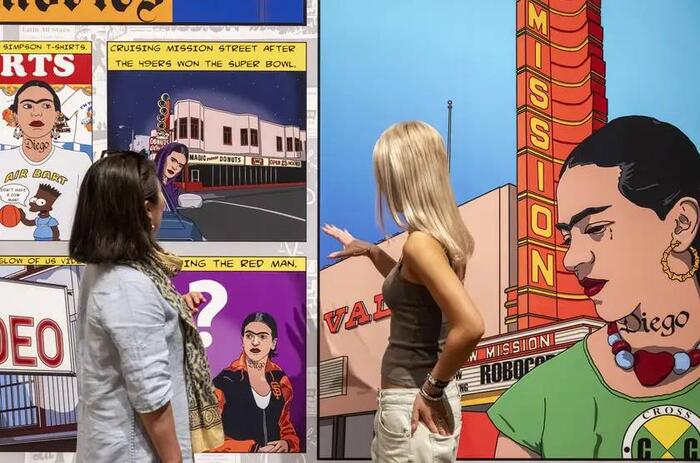
The Tate Modern presents a sociological reflection on the construction of Frida Kahlo as a cultural icon through a curatorial discourse that risks becoming a theoretical justification for a proposition of immense commercial appeal.

The British institution reclaims the legacy of the Cuban artist through an exhibition that examines the intersection of her lived experience, nature, and identity, utilizing a museographical approach that transcends mere documentation to bridge ephemeral actions, moving-image works, and sculpture.

For years, the proximity of Frieze London and Art Basel Paris has prompted the same question: which city comes out on top? Having visited both fairs this autumn, I think the question deserves a different approach.