

By
Álvaro De Benito
The London-based museum presents a pedagogically structured retrospective on the Franco-Argentine artist, yielding a successful outcome that showcases his experimentation with light, movement, and color while maintaining viewer participation as a key element.
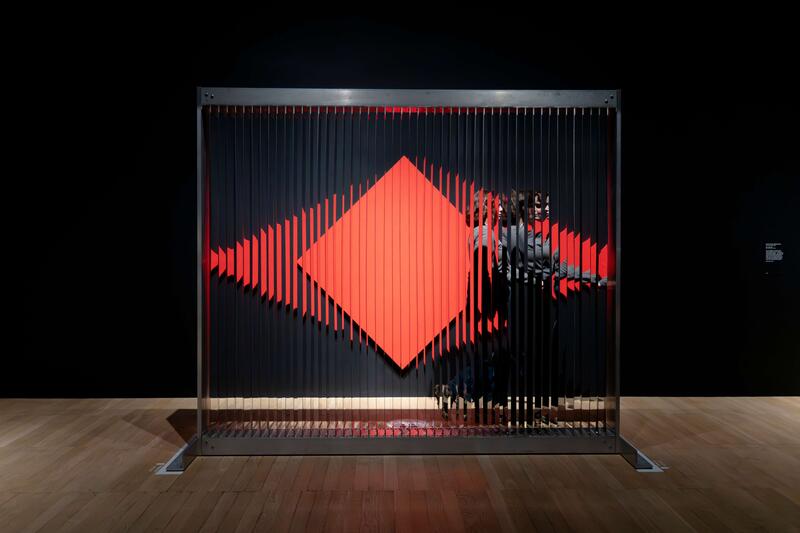
Tate Modern in London presents Julio Le Parc: Light. Colour. Action, a compelling retrospective on Julio Le Parc (1928–2026). Comprising nearly sixty works spanning all periods of his artistic career, the exhibition is both instructional and explanatory, effectively harnessing the striking nature of his light investigations alongside the interactive capacity of his proposal. The labyrinthine layout allows the viewer to delve into the Argentine artist's artistic evolution through optical effects, sensory experiences, and proposed physical interactions.
The exhibition opens with his series Surface (1959), black-and-white studies and paintings produced in the late 1950s with which he began to consolidate repetitive geometric forms as a formal language, using mathematical principles as a scientific foundation to generate optical illusions before the viewer's eyes. This capacity for dialogue with science enabled the artist to expand his research and work on the premises of perception and contrast. In this initial phase, Le Parc challenged the notion of the passive spectator, transforming the subjectivity of perception into a fundamental component of the experience.
The most striking section of the exhibition emerges with the display of his lumino-kinetic works—proposals of Optical and Kinetic art that combine light, movement, and reflective materials, elevating the formal development of his research to a new level. From his early light boxes to his mobiles, the visual elements maintain the necessity of interaction while establishing themselves as aesthetic elements of visual interest. While some move with the air currents generated by visitors, others explore the possibilities of luminous distortion.
The stainless-steel strips of 64 Reflecting Strips (64 lames réfléchissantes) capture the attention of the curious visitor, who moves around to fragment and distort their reflection, thereby incorporating their own figure into the artistic composition. Its presence in the room dedicated to ludic installations appears to correspond to a transition between visual languages. In this space, the installations from his Game Rooms (Salas de Juegos), such as Set of 11 Surprise Movements (Ensemble de onze mouvements-surprise, 1965) or Grid to Manipulate (Trame à manipuler, 1967), heighten interaction by compelling the public to directly explore and play with the works.
The sculpture Blue Sphere (Sphère bleue, 2001–2022), acquired by the institution in 2024, occupies a privileged place within the display, restoring a sense of spectacle to the visitor through its radiation of light. Archetypal for understanding how Le Parc revisited and expanded upon the ideas of his early mobile sculptures and light installations, the defining role it assumes within the curatorial narrative is doubly essential—both theoretically and in terms of visual impact.
In this sense, the viewer's experience may fluctuate when confronting visual languages that yield such contrasting results; nevertheless, they will continue to engage with the possibilities offered by these differences, rendering the breadth of the Argentine artist's practice all the more evident. A case in point is the final room, dedicated to Le Parc's research into color carried out in his earliest creations, alongside the exploration undertaken in Colour Project (Projet couleur), which is also present in his most recent paintings.
Throughout his career, this chromatic experimentation and the use of black-and-white patterns—together with his innovative vision of Kinetic and Optical art—transformed the relationship between the artwork and the viewer. It is precisely upon this relationship that a museographically and pedagogically successful display is built, deepening the concept that movement, perception, and public participation were paramount to his understanding of artistic production.
Julio Le Parc: Light. Colour. Action can be seen until May 3, 2027, at Tate Modern, Bankside, London (United Kingdom).
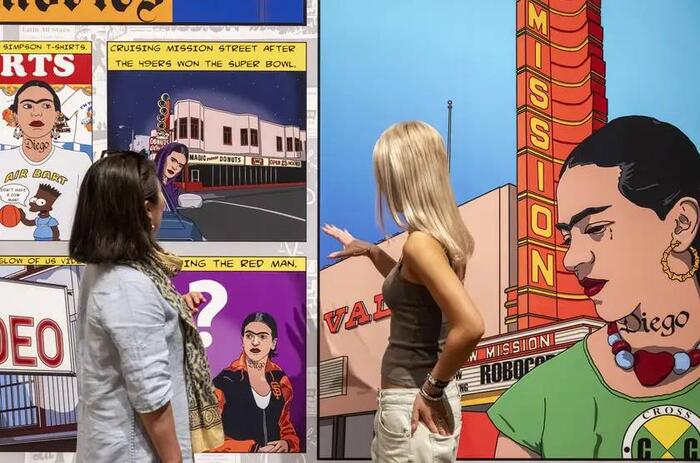
The Tate Modern presents a sociological reflection on the construction of Frida Kahlo as a cultural icon through a curatorial discourse that risks becoming a theoretical justification for a proposition of immense commercial appeal.
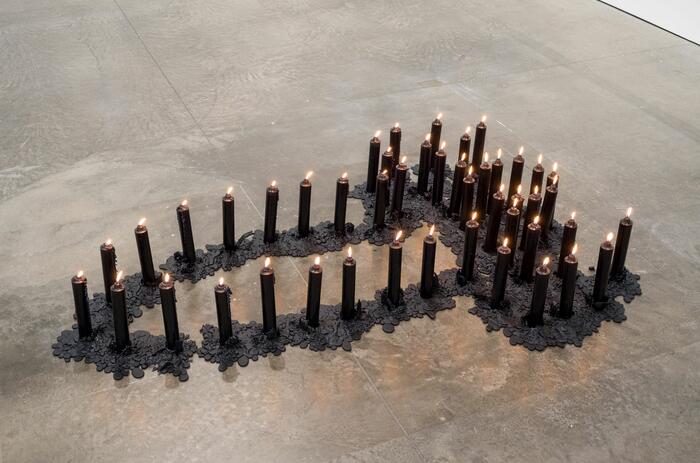
The British institution reclaims the legacy of the Cuban artist through an exhibition that examines the intersection of her lived experience, nature, and identity, utilizing a museographical approach that transcends mere documentation to bridge ephemeral actions, moving-image works, and sculpture.
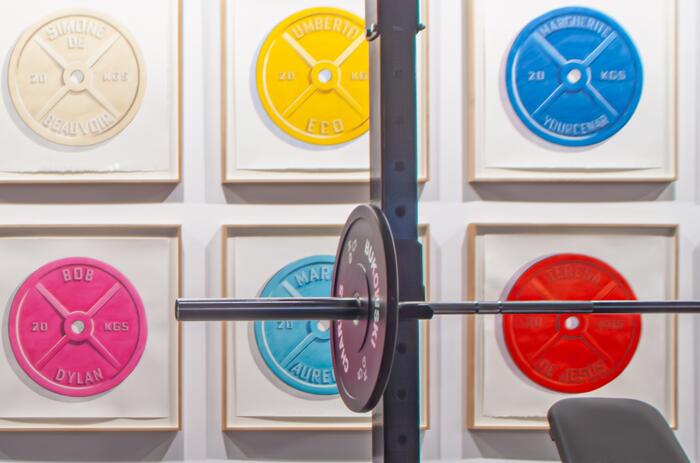
The co-founder of Los Carpinteros presents his first solo exhibition in the country at Château de Bourglinster and a former church in Roodt-sur-Syre.

An exhibition at the Capitoline Museums traces the development of modern Mexican art, muralism, and the search for a national identity, structuring its narrative around the figure of the master.