

By
Álvaro De Benito
The British institution reclaims the legacy of the Cuban artist through an exhibition that examines the intersection of her lived experience, nature, and identity, utilizing a museographical approach that transcends mere documentation to bridge ephemeral actions, moving-image works, and sculpture.
Tate Modern in London has achieved, with its major retrospective dedicated to Ana Mendieta (Havana, Cuba, 1948 – Greenwich Village, United States, 1985)—the first large-scale exhibition devoted to her work in the United Kingdom in over a decade—a seamless immersion into the figure of one of the 20th century’s seminal Latin American artists. Crucially, the exhibition effectively articulates the artist’s oeuvre through a meticulous museographical design that attends to every medium and technique, imbuing the galleries with a physical presence that goes far beyond the spiritual.
Comprising well over a hundred works, the display is structured around thematic nodes, conceptual frameworks, and symbolic sites—an essential organization for mapping a body of work capable of reflecting the distinct phases of her career. Given the conceptual breadth and multiplicity of perspectives inherent in Mendieta’s artistic production, the curatorial vision succeeds by omitting no facet of her output. Photographs, films, archival material, paintings, drawings, sculptures, and installations converge to form a rigorous inquiry into the artist’s understanding of art and her relationship with nature.
Mendieta’s lived experience profoundly conditioned her practice, fostering from a state of displacement an imperative need to reclaim her origins and reconnect with the land. While maintaining clear affinities with Land Art and performance practices, the exhibition successfully offers a cohesive synthesis between documentary record and material work. Silueta (1973–1980), one of her best-known series, exemplifies this approach. By carving, molding, or burning her body’s silhouette into varied terrains using natural materials such as earth, fire, flowers, and water, her practice assumes a dimension of transformation and rebirth that, through its progressive disappearance, destabilizes traditional notions of the art object as permanent.
A prominent feature of the exhibition is the spatial atmosphere, which enhances the exploration of Mendieta's engagement with territory and identity. Her Esculturas Rupestres (Cave Sculptures, 1981), carved directly into limestone and inspired by prehistoric forms as well as Taíno and Afro-Cuban cultures, preside over a deeply sensory journey. Furthermore, the reconstruction of her Untitled: Silueta Series (1978), originally executed on the campus of the State University of New York at Old Westbury, reasserts through this sensory immersion the historiographical significance of what is widely considered a seminal work of earth-body art.
The display of her moving-image works, such as the film Ochún (1981), reiterates this search for identity and the enduring connection between the United States and Cuba that she never abandoned. The exhibition highlights the importance of this locus of convergence by charting her participation in the artistic, social, and political movements of the 1970s, a period during which she consolidated her place within the experimental avant-garde and collaborated with students on audiovisual projects such as Parachute (1973) during her tenure in Iowa.
The exhibition justifiably accords central importance to video as an autonomous artistic outcome and to her most technically innovative films, incorporating documentation in a fluid and organic manner. Illustrative of this approach is the significance assigned to Bird Run (1974). The gallery directs the viewer’s gaze toward this brief film in which the artist visually transforms into a hybrid figure between woman and bird, reinforcing themes of metamorphosis and fluid identity.
Following her relocation to New York, Mendieta integrated into the city’s artistic and feminist movements, becoming a member of A.I.R. Gallery, a pioneering artist-run initiative for women. Subsequently, in the 1980s, her work evolved toward more durable studio-based sculpture, albeit without ever abandoning nature as an active subject of her practice. Works such as Nile Born and La Jungla (Totem Grove) (1985) demonstrate her sustained commitment to the organic as a holistic system, applying this principle to the exploration of female forms through drawings on leaves—at times executed on bark paper, as seen in the Amategram series.
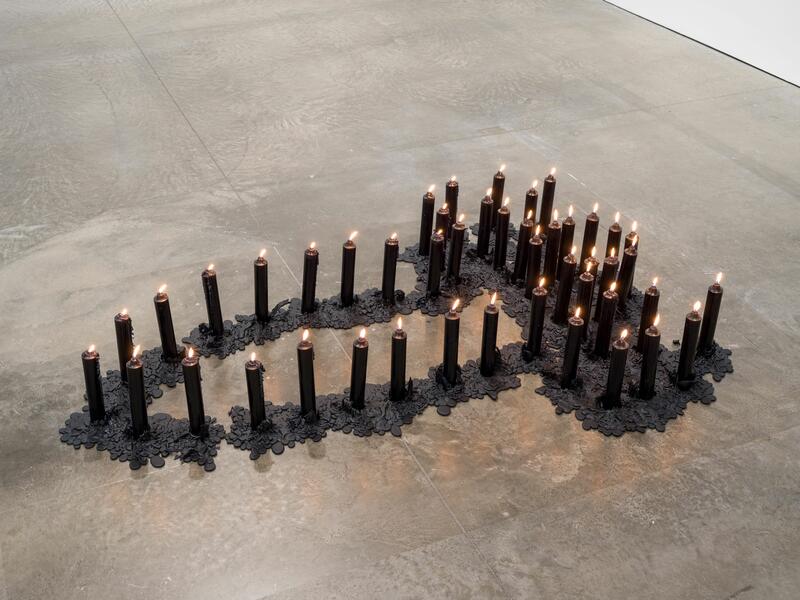
Beyond successfully unifying action and archive, the exhibition retrieves the dynamic and temporal essence of Mendieta’s art through the reconstruction of several ephemeral sculptures of immense iconographic and semiotic import. Perhaps the most prominent of these, Ñañigo Burial (1976), commands attention with a silhouette outlined by black ritual candles that are periodically lit, preserving the vital connection to Santería as a fundamental marker of identity.
Ultimately, Tate Modern succeeds in synthesizing the expanse and complexity of Mendieta’s legacy. By centering on the personal dimension and the specific materiality of her practice, the exhibition avoids reductive, purely ideological readings that might otherwise have compromised this full vindication of an artist crucial to the history of 20th-century art—both in her life’s trajectory and in her creative output.
Ana Mendieta is on view through January 17, 2027, at Tate Modern, Bankside, London, UK.
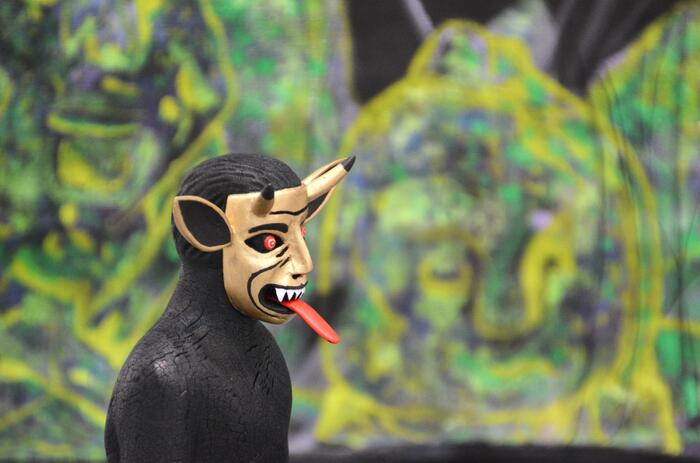
The British event highlights the growing presence of Latin American contemporary art, although its visibility remains conditioned by the commercial dynamics of a global fair and by local cultural policies that pragmatically contribute to shaping a contemporary art landscape closer to its audience.
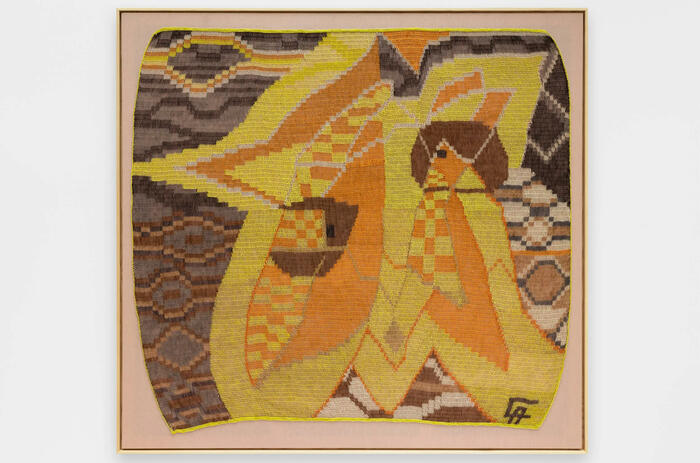
Yanantin and Cecilia Brunson Projects present it in London during Frieze week.