
By
Álvaro De Benito
The Tate Modern presents a sociological reflection on the construction of Frida Kahlo as a cultural icon through a curatorial discourse that risks becoming a theoretical justification for a proposition of immense commercial appeal.
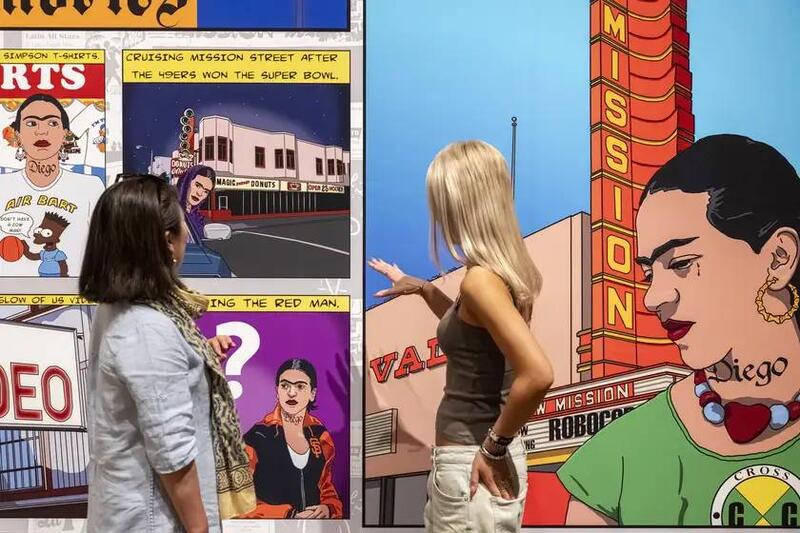
Within the wave currently engulfing the world of Frida, there still appear to be unexplored angles. Although a unanimous consensus exists regarding her iconic and iconographic resonance, the conceptual axes of exhibitions deemed essential to uncovering these new perspectives are frequently subject to heightened scrutiny—meant to determine, with or without skepticism, the ultimate objective of each proposal. Tate Modern, London, reclaims the figure of Frida Kahlo (Coyoacán, Mexico, 1907–ibid., 1954) in Frida: The Making of an Icon through a sociological lens in which the Mexican artist is framed as a pop icon.
"Fridamania" in itself is hardly distinct from any unbridled obsession that ultimately disfigures and destabilizes certain artistic realities in pursuit of popularity. As a movement of social perception, it possesses all the requisite elements to transform the Mexican painter into a mass idol through her iconography. Consequently, the institution’s curatorial intent—preceded by its initial production and display at the Museum of Fine Arts, Houston—to illuminate Frida Kahlo's influence on subsequent artists and movements holds undeniable scholarly interest.
Starting from the museum-grade imperative of exhibiting roughly thirty works of unquestionable artistic value by Kahlo, the exhibition raises further questions that extend beyond mere relational aesthetics. First, the question of Frida herself, an issue of undisputed significance within art history and, even more so, its historiography. Second, the proliferation of projects tied to her figure, which has turned into a catch-all category for disparate endeavors. Third, the risk of opportunism and the potential conversion of the exhibition’s theoretical premise into a commercial pretext.
Regarding Frida Kahlo’s historiography, little more can be added at this stage. In an era where constructing new thesis lines is imperative, examining the construction of the myth holds genuine sociological interest. Yet, can a rigorously explanatory thesis fail? Indeed it can. In fact, the exhibition is primarily absorbed through visual impact, operating on a premise wherein the vast majority of visitors leaving the galleries feel no need to comprehend the underlying mechanics that drew them there in the first place.
This links directly to the overwhelming scope deployed by Tate Modern: an expansive narrative trajectory that accumulates genres, styles, generations, and movements in which a connection to Kahlo is asserted. Within this museum-curated cosmology, certain lineages seem designed more to expand the roster sustaining the phenomenon of Fridamania than to serve a rigorous intellectual purpose. Naturally, these instances remain a minority—no spectator today would object to expanding artistic horizons—and they oscillate among connections that nevertheless reveal a narrative thread grounded in chronological logic and artistic admiration for Kahlo.
Finally, one must confront the everlasting question regarding the exhibition's ultimate motive. If its primary aim was didactic and educational from a sociological standpoint, the result may prove disappointing—not due to a lack of effort, but rather due to the adoption of underlying premises that render it a blockbuster from inception. This dynamic risks being perceived as an attempt to mask the true nature of the project: a commercial dimension that threatens to overshadow its theoretical framing.
The popularization of Kahlo does not inherently degrade her legacy; her phenomenology can—and must—continue to be an object of critical study, whether as an artist, a feminist reference point, or a subject of political resistance. However, the construction of Frida Kahlo as an icon is inherently compelling: whether an institution chooses to explore the influence of her visual vocabulary or the symbolism of flora and fauna in her self-portraits, the presence of Kahlo’s original works guarantees public engagement regardless of the thesis advanced.
Precisely herein lies the risk of appearing opportunistic: when critical analysis ends up fueling the very phenomenon it purports to deconstruct. The curatorial discourse risks becoming part of the institutional machinery that produces and reproduces the myth, articulating a meta-argument simply to justify the necessity of Frida: The Making of an Icon beyond its commercial bottom line.
Frida: The Making of an Icon is on view through January 3, 2027, at Tate Modern, Bankside, London (United Kingdom).
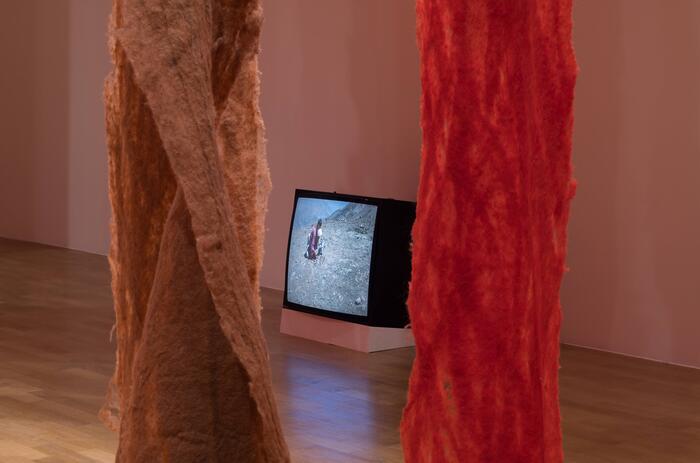
The Whitechapel Gallery presents a retrospective survey of Cecilia Vicuña’s oeuvre in an exhibition that weaves together art, poetry, political resistance, indigenous memory, and ecology.
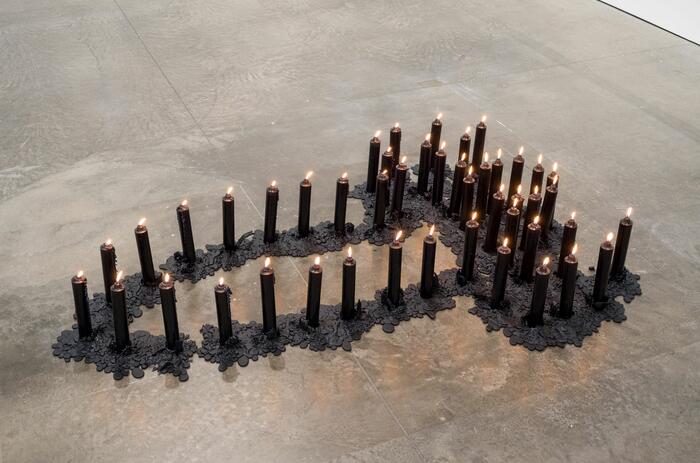
The British institution reclaims the legacy of the Cuban artist through an exhibition that examines the intersection of her lived experience, nature, and identity, utilizing a museographical approach that transcends mere documentation to bridge ephemeral actions, moving-image works, and sculpture.
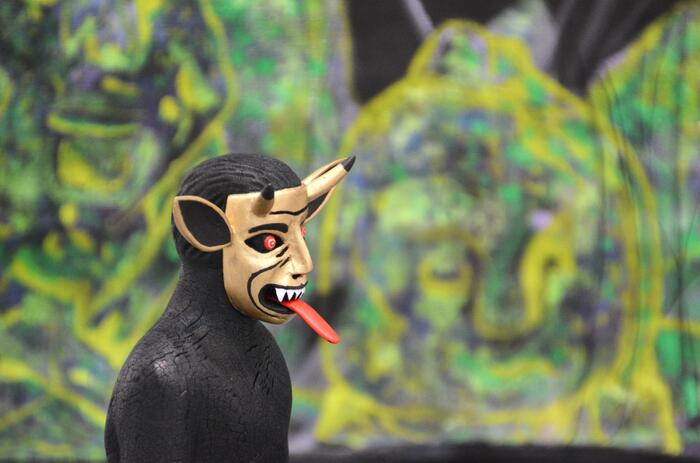
The British event highlights the growing presence of Latin American contemporary art, although its visibility remains conditioned by the commercial dynamics of a global fair and by local cultural policies that pragmatically contribute to shaping a contemporary art landscape closer to its audience.
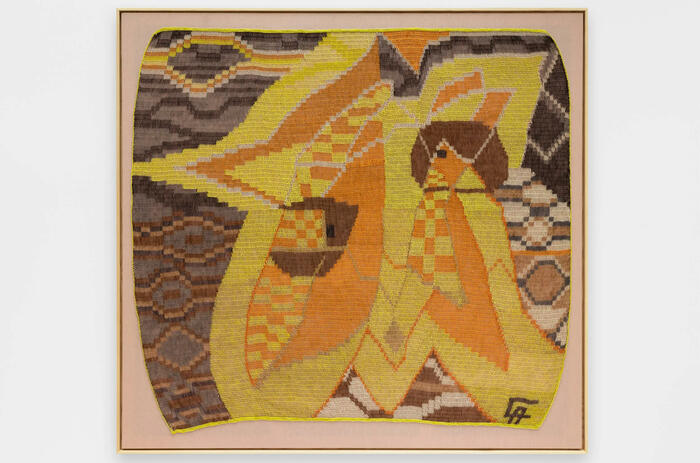
Yanantin and Cecilia Brunson Projects present it in London during Frieze week.