By
María Galarza
With a background shaped by humanities and a trajectory in cultural practice, Rafael Tamayo promotes a model of the museum that is conceived in relation to its social context. Director of the Museum of Modern Art of Medellín, he will take part in the FORO of Pinta Panamá, where he will engage in discussions on how institutions construct narratives, community, and debate in the region.
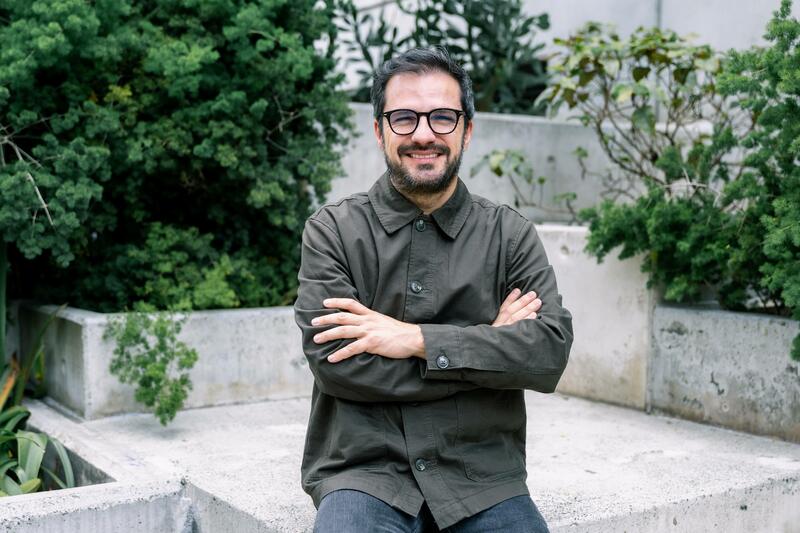
Rafael Tamayo leads the Museum of Modern Art of Medellín from a perspective that combines administrative tools with a sensitive reading of the artistic field. In this conversation, he addresses the challenges faced by cultural institutions in Latin America and shares a perspective that moves across tensions between local and global perspectives and the ways museums engage with their communities.
You come from a background in history, international law, and cultural policy. How does this trajectory influence the way you think about curating and directing a museum?
In addition to law, I studied theology, then completed a PhD in history, and in that process an interest in artistic and cultural issues—somewhat familial—also took shape. I also felt that this background, so different from that of the visual arts themselves, contributed to certain needs within the sector. There are often very imperative realities in administrative terms, in project development, in international cooperation, in legal discussions around copyright, usage licenses, contracts, and so on.
For me, it was technical knowledge, but I also understood the needs expressed by artists, curators, communicators, and other professionals related to museums. At least in the Colombian case, we have a great deal of talent and many people with initiative, but someone who helps to make those initiatives happen is sometimes harder to find.
I really enjoy the cultural world, and then, in a less entertaining world of administrative work with cultural sensitivity, I try to put everything in the right place so that things can happen.
About the Antioquia and Medellín Art Biennial 2025: What were you interested in activating through that biennial within the artistic context of the city and the region?
An important process of relationship-building took place, not only with artists but also with the private sector in Colombia, particularly in Medellín, where there is a strong interest in the arts. I think it works differently in Bogotá because Medellín’s private sector has cultural departments and consistently allocates part of its budget to one or several cultural institutions in the city.
The main intention of the Biennial was to activate a debate around the central theme defined by the Institute of Culture: freedom. In a very political context in Colombia, marked by polarization, the issue of freedom was a significant wager. Many artists responded to that call by thinking through their installations, their existing work, or new work in terms of freedom.
Then, what the Biennial sought was to shake up the local scene. Medellín is a mid-sized city, with around five million inhabitants in its metropolitan area, while Bogotá has almost double that. It has two major museums—the Museum of Modern Art of Medellín and the Museum of Antioquia—and some smaller ones. But there are many artists, few independent cultural centers, and perhaps five art galleries.
Shaking up the scene meant having many artists, many voices, many techniques, many venues, and inviting an entire city that had not experienced a biennial for more than 40 years to engage with it.
Many people would ask: “What is a biennial?” In two months, it managed to attract the same number of visitors that any museum in the city receives in a full year.
That demonstrated a strong public interest in visual arts, in modern and contemporary art. And that was also one of the intentions: for the public to engage, as a kind of pedagogical function within the city. Despite the difficulties of large-scale urban projects, tight timelines, and aspects that could certainly be improved, the 2025 Biennial achieved its goal.
The Museum of Modern Art of Medellín has developed an identity closely linked to the city. What aspects of that institutional narrative do you consider central for its future?
The relationship between MAMM and the history of the city has been very strong. The museum was founded in 1978 by nine artists along with a group of businesspeople and cultural supporters. These were artists living in the city who did not see modern or contemporary art represented in Medellín. And although it may sound like a far-fetched idea, it actually gained momentum. Two years later, they had a space on loan from the city government and continued to grow steadily.
When you look at the museum’s history, the volume of exhibitions and the way it was financed is almost miraculous. There are things that were done in the 1980s without resources or staff that today, even with more resources and people, feel difficult to achieve. The museum is about to turn 50 years, the artists are now older, but seeing the transformation of the museum alongside the transformation of the city is very gratifying for them.
Medellín went from being one of the most violent cities during the era of drug trafficking to becoming a city with Netflix productions, a global music hub with artists like Maluma and Karol G, and a place with many digital nomads. But at the same time, it is a city under tension: population growth, gentrification, rising prices, and sex work.
Here, the museum has a fundamental role: to be a place for the development of critical thinking. Universities also do this, but having spaces where communities can gather and discuss migration, encounters with other cultures, urban pricing, or sex tourism is essential. It helps us, as a society, to be self-critical.
Museums and libraries have great potential as places of encounter and also of resistance to the idea that our meeting places must be shopping malls. And also, to bring in younger audiences. Something that always makes my day is seeing young people and schools interested in visiting a contemporary art museum.
What topics are you institutionally interested in bringing into question?
One of the themes that runs through much of the museum’s programming is gender. In Colombia, there is an ongoing and important conversation around gender, equality, minorities, sexual orientation, equal opportunities, and related issues. Nature and the environment are also key areas we are actively engaging with.
This is also tied to how these themes emerge: certain issues become more urgent within broader social dynamics, and through ongoing discussions between the curatorial team and other departments, they gradually take on a more central place in the program.
At the same time, there is the museum’s own history and the legacy of the group that founded it, who in its early years carried out projects that were quite radical for their time. In the 1980s, for example, they organized video art biennials at a moment when there was no internet, no digital storage as we know it today. And yet they held four editions between 1986 and 1992, generating an entire movement. Or the Rabinovich Salons, with youth art biennials that ran for two decades, bringing together nearly 400 artists across different editions between 1981 and 2001.
One thing that comes up often in our internal discussions is the importance of looking back at that history not as something fixed, but as a source of energy. There’s a kind of vibrant, experimental spirit there: a willingness to take risks, to try things differently from what was happening elsewhere in the city and the region.
The museum has grown in terms of infrastructure, but it remains relatively small as a team. That can be challenging at times, but it’s also a strength that allows for a more direct, collaborative way of working, and a certain agility in how projects are developed.
In Latin America, many cultural institutions are shaped by debates around memory, violence, and recent history. How do you integrate these issues into institutional narratives without them becoming merely discursive?
Something important has happened over the past 15 years in the museum’s trajectory. There was a conscious decision by previous directors to move from being a neighborhood museum to a city museum, and then toward becoming a regional one. As part of that shift, the chief curator has consistently been appointed internationally.
At one point it was Emiliano Valdés, a curator from Guatemala. And now it is Marielsa Castro, a Mexican curator who comes from a very different scale and arrives in a different kind of city. For her, for instance, the issue of sex tourism stands out as a major concern—something that locals may perceive differently or have become somewhat accustomed to.
That perspective is incredibly valuable. It allows someone in a key position within the institution to notice aspects of the city that we, as locals, might overlook or take for granted.
At the same time, it’s clear that questions of memory and violence are already present in artistic production at both local and national levels. The museum’s role is to engage with how artists approach these issues, and to think carefully about how those conversations can reach different audiences.
What role do you think regional cooperation plays today in strengthening cultural institutions in Latin America?
For a long time, this wasn’t a central concern for the museum, which was more focused on its immediate surroundings. But today, regional cooperation is absolutely essential.
There are relatively few contemporary art museums in Colombia, so dialogue has to extend beyond national boundaries. We need to be in conversation with institutions across the region.
There is also an ongoing relationship with Spain, which is interesting and somewhat complex. On the one hand, there are strong decolonial and postcolonial debates; on the other, there is active collaboration with Spanish institutions that continue to support projects in Latin America.
This raises questions about what kind of cooperation model we want to build. It can involve funding, of course, but also technical exchange, co-curation, co-production, and shared ways of thinking. From my perspective, those forms of collaboration open up much richer conversations.
When you meet colleagues at fairs—in Mexico, in Madrid, or now in Panama—you start to notice shared concerns, common experiences across institutions and communities. Latin America is a very resourceful region, and that’s precisely why cooperation plays such a vital role.
Cultural institutions have historically been producers of narratives. Do you think museums today need to revise or rewrite the narratives they have inherited?
I think there is a great responsibility here, particularly in our region. Museums, like narratives, can become fixed over time. And then the institution begins to feel distant, especially for audiences who don’t necessarily see themselves reflected in what is being presented.
For me, the key is for museums in Latin America to remain open, flexible, and responsive. There has to be room for spontaneity, for responding to what people are talking about, even if it wasn’t part of the original plan. To say: “This conversation matters right now, let’s create space for it.”
In that sense, there is also a responsibility to humanize institutional processes, to keep sight of the museum as a place where people come together. That, ultimately, is what gives it meaning.
What tensions do you see between institutional narratives and the multiple social narratives that shape contemporary art today?
I think there are two main tensions. The first is between modern and contemporary art. Even if it’s not always explicitly acknowledged, that tension is there. Certain forms of Latin American modern art have become canonical, with established interpretations and recognized figures. There is a sense that those narratives are already settled. And yet, I think there are still possible dialogues between those traditions and contemporary practices, though they don’t always happen.
The second tension is between local and global perspectives. To what extent are exhibition programs shaped by local artistic scenes, and to what extent by international circuits?
In Colombia, there is an ongoing demand from local artists for greater visibility within museums. And that brings up multiple factors: trajectory, technique, the strength of the work, as well as the institutional capacities of museums. It’s not a simple issue—it’s something that needs to be discussed more openly.
Spaces like Pinta Panamá can be important in that sense, because they foster exchange, cooperation, and the building of curatorial and institutional connections.
There are also questions around what we mean by “local.” Territory certainly matters, but I think it’s ultimately the themes and the artistic approaches that allow work to circulate across the region.
Galleries tend to be very active in promoting the circulation of the artists they represent. Perhaps museums, within their own scope, could play a more active role in building those bridges, both relational and curatorial.
In the end, I think the tensions we are experiencing today are also opportunities. They open up new ways of thinking and working within the arts.
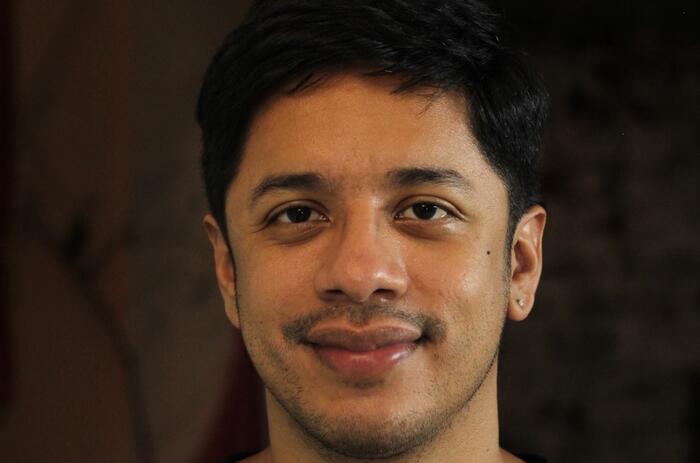
The Salvadoran curator reflects on the relationship between art, memory, and politics, and on how his work at Y.ES Contemporary seeks to generate opportunities for local artists while building networks with the international scene. He will be participating in the 2026 edition of Pinta Panamá in the FORO talk.
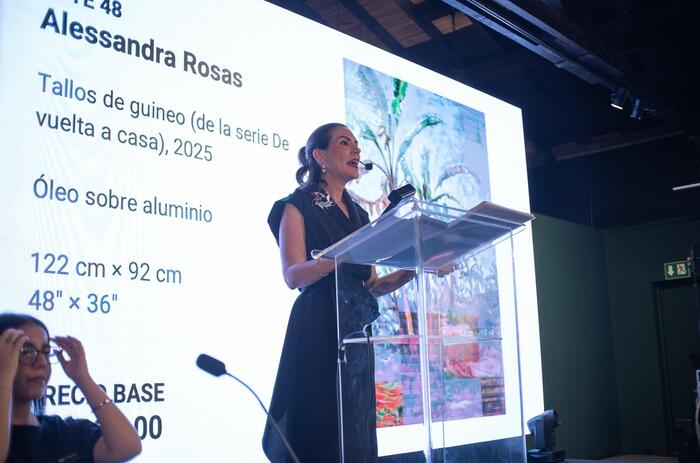
The executive director of MAC Panama, who will participate in the discussion Building Institutional Stories, part of the Pinta Panamá FORO initiative, envisions great opportunities for Central America with the strengthening of its institutions and joint work.
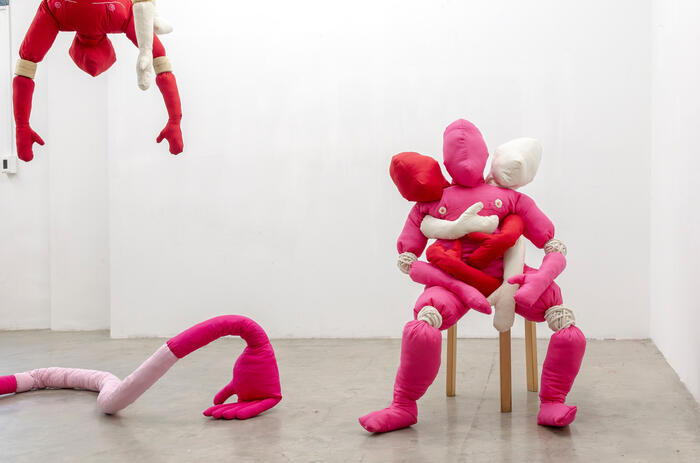
Video, textiles and the body make up a network of relationships in constant construction in the exhibition curated by Irene Gelfman with the participation of artists from Latin America.
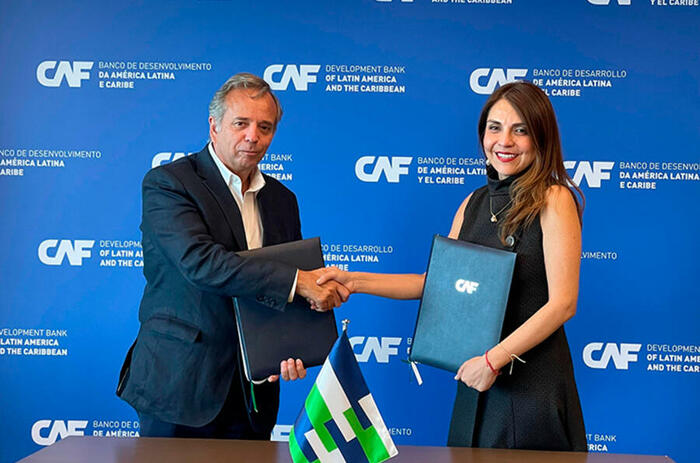
The collaboration between the two institutions will promote cultural platforms, professional exchanges, and spaces for dialogue aimed at advancing Latin American art and its international projection.
During the Central American country’s art week, works that study histories, recreate them, and bring them into reflection will be presented. From the play with materials to the manipulation of space, Lulu Molinares, Cisco Merel, Arístides Ureña Ramos, and Isabel de Obaldía create pieces that propose alternative readings of memory, territory, and everyday life.
The event will unfold a public and free program including exhibitions, tours, talks, film screenings, music, and cultural and touristic experiences.