

By
Álvaro De Benito
Jorge Volpi, after one year as Artistic Director of Contemporánea Condeduque, reflects on programming through a multidisciplinary narrative and how it fosters dialogue while giving Latin American art a central role in Madrid’s cultural scene.
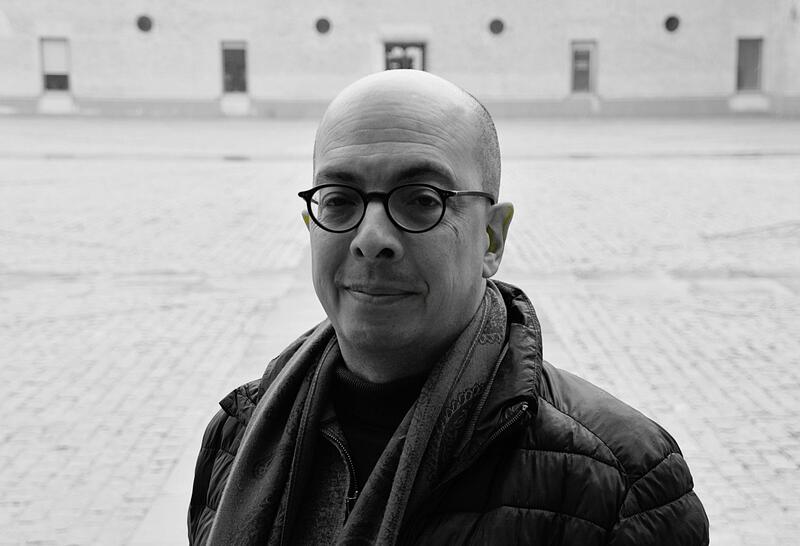
Jorge Volpi (Mexico City, Mexico, 1968) marks one year as Artistic Director of Contemporánea Condeduque, one of Madrid’s public institutions with the greatest visibility and activity. Following both a nominal and strategic transformation, the center now emphasizes a multidisciplinary program with a clear and intentional connection to the Ibero-American sphere. We spoke with him about how he has experienced this evolution and what the key points are for understanding the presence and strength of Latin American arts in Spanish institutions.
Álvaro de Benito [Á.B.] From your position, you have chosen to develop a cultural program built around a defining conceptual axis. With so many facets, how is it possible to achieve a truly transversal structure?
Jorge Volpi [J.V.] For many years I have divided my life between literature and cultural management—first in France, then in Mexico, and now here. And yet they do not seem so different to me: in both cases, it is about telling stories that are relevant to our time and to a specific audience. I have always believed that there must be a certain coherence in programming. I call that coherence “telling stories”: creating threads and connections that link one discipline to another, one performance to another, in a natural way.
Á.B. Even so, could we say that there has been a stronger emphasis on reinforcing the autonomy of each artistic discipline?
J.V. Of course. That does not mean everything must revolve around a single theme or that there are fixed parameters. There can be enormous variety, but within a shared narrative that articulates the different disciplines. I worked this way in other institutions and contexts, and I have tried to do the same here. We have a deliberately broad central programming axis to allow that articulation in a center like this one, where all disciplines have a place. This prevents absolute dispersion, but there is enormous freedom, both for the curators of each area and for us when selecting projects.
Á.B. I would like to return to the idea of literature and your perspective from that field, because I understand that your literary background and experience underpin your way of understanding cultural management and how to develop it.
J.V. It influences that idea of narratives and stories that must be told through different languages: literary, visual, performative. We try to ensure there is a shared logic. Sometimes I think of cultural management as a polyphonic novel from the Latin American Boom: multiple voices moving in different directions but ultimately forming part of the same great novel. A cultural center can also be understood in that way.
Á.B. From the beginning, almost as a manifesto, you stressed the importance that Latin America would have in your leadership. Does this respond more to a desire to articulate a vision from Spain, or does it stem from your own background and personal outlook?
J.V. It comes from several places. First, from being Mexican and Spanish, and from having had a long relationship with Spain, where I feel equally at home. It also comes from having witnessed, since I first came to live here in 1996, the transformation of Spain—especially Madrid—which has become a Latin American and multicultural capital as well. That change has been very significant. There have always been ties between Latin America and Spain—sometimes conflictive, sometimes cooperative or confrontational—but always present. That alone is reason enough for this dialogue to be one of the main focuses.
Á.B. During this first year you have programmed a strong Latin American presence in both performing and visual arts, including both the plastic arts and a commitment to performance. How do you understand that relationship, and why was it decided to promote this initial wave of artists?
J.V. Although the relationship is natural, there is still a certain mutual unfamiliarity. A public center like this has the responsibility to try to address that, facilitating Spanish audiences’ access to artists who may not yet be as visible here. In the performing arts—even the more performative ones—and in the visual arts, we decided that there would always be a Latin American presence. In the case of exhibitions, I discussed it with Marta Ramos-Yzquierdo and we agreed it was equally important.
Á.B. It is in those interrelations within the performing arts, as you mention, where certain boundaries have been blurred—bringing together performance art and theater, for example—and where this Latin American relevance has been highlighted even more clearly.
J.V. My goal has been to ensure that all contemporary languages have a place at Contemporánea Condeduque, but this is even more visible in the performing arts. We began with a Latin American performance cycle to give those artists greater visibility in Madrid, but throughout the year there is a constant presence. For example, in dance we programmed a dramaturgy cycle in which three of the artists are Latin American. Across the entire program, this synergy of telling stories from both sides is reflected.
Á.B. You mentioned Marta Ramos-Yzquierdo, resident curator of the Centro de Cultura Contemporánea Condeduque. If we focus exclusively on the field of visual arts, where there is that specialization, what is your collaboration with her like?
J.V. I directed the Instituto de México in Paris, a center essentially dedicated to contemporary Latin American art, and I was also responsible for the Museo de Arte Contemporáneo de la UNAM (MUAC). The director I appointed there was Amanda de la Garza, now deputy director of the Reina Sofía. So I have been involved with contemporary art, but beyond my experience, I recognize that my specialty lies closer to the performing arts. That is why it seemed essential to have a specialized curator.
Á.B. Her proposal in the specific field of contemporary art has consistently kept Latin America very much in focus, programming key exhibitions in Madrid with a strong critical approach.
J.V. In evaluating her previous work at Condeduque, the earlier phase had been very good, and I have never believed that what works well needs to be radically changed. In speaking with her, I saw that she had a very clear vision for the Caballerizas space, the center’s main exhibition hall. My insistence was that there should always be a Latin American presence each season—something she already had in mind—so everything was very aligned and straightforward.
Á.B. Linking this to the evolution of Madrid and its relationship with Latin America that you mentioned earlier—something now discussed at the institutional level—is there any line of public policy that conditions the programming?
J.V. I can say with complete clarity that the freedom is absolute. And if it were not, I would not say so. In every place I have directed, including in Mexico, I have had complete freedom. When that is not the case, I prefer not to direct.
Á.B. We are witnessing cultural policies that are strongly shaped by public administrations and, in relation to institutions and contemporary art, decolonization may be the most omnipresent framework in the relationship with Latin America. Where does Condeduque stand?
J.V. I would say that all art is political. There are different ways of approaching that: some begin with political discourse and build the artistic program from there. We try to seek out the artistic, which will inevitably be political. Many of the works we present address Latin American, Spanish, or global political contexts. The political dimension is present, but it must emerge from the narratives that the artists themselves construct here, not be imposed from outside.
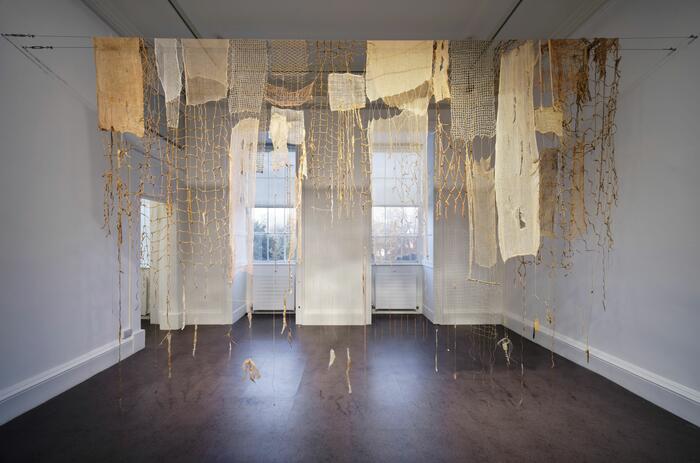
The exhibition presented at the Irish institution showcases an artist who reflects on the interrelation between humanity and nature and advocates listening as a path toward transformation through memory and connection.
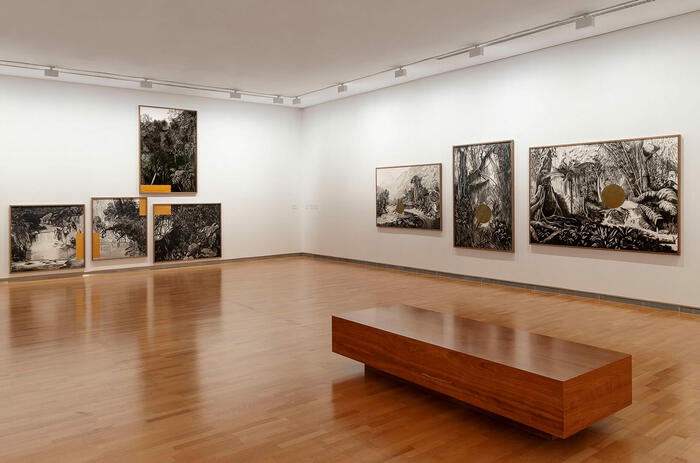
The first retrospective in Spain of Gabriela Bettini reflects on absence and the politics of forgetting through images that challenge official history.
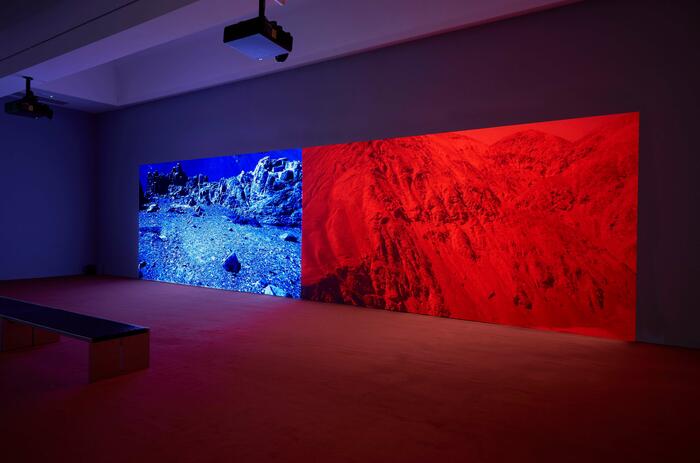
The exhibition, originally conceived to represent Chile at the Venice Biennale, reflects on memory and landscape through a dialogue between the Atacama Desert and Mars.
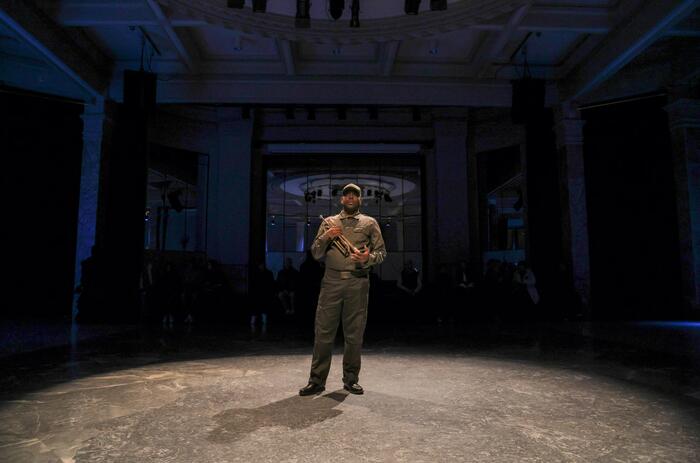
La lechuza de Minerva reflects on the power of cultural institutions in the contemporary context and creates a space where proposals by Dagoberto Rodríguez, Regina Silveira, and Los Carpinteros, among others, coexist in order to re-read the trajectory of the institution itself.
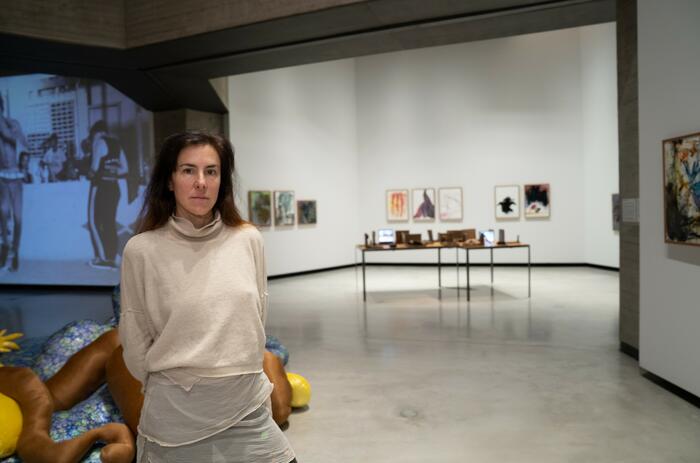
The exhibition brings together works created ad hoc by the artist in the city. Through them, she reinterprets craft and tradition from a contemporary perspective and invites the audience to understand sound as a language that redefines our relationship with the environment.
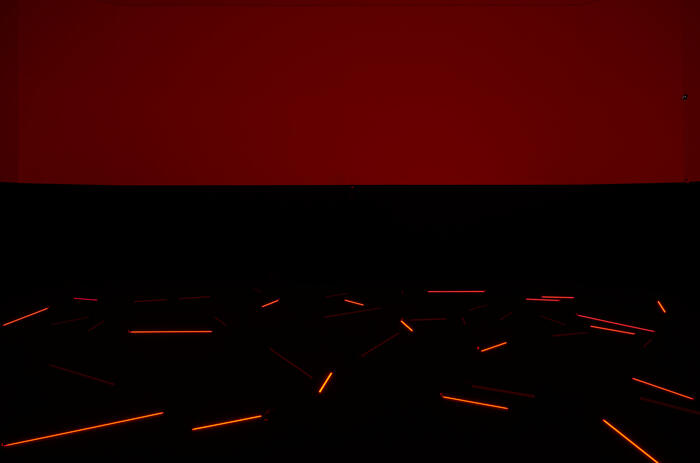
beginning, middle, beginning presents an installation by Brazilian artist Cinthia Marcelle, conceived specifically for the Central Gallery of the Serralves Museum. The work questions the linear conception of time and its relationship to colonial structures.
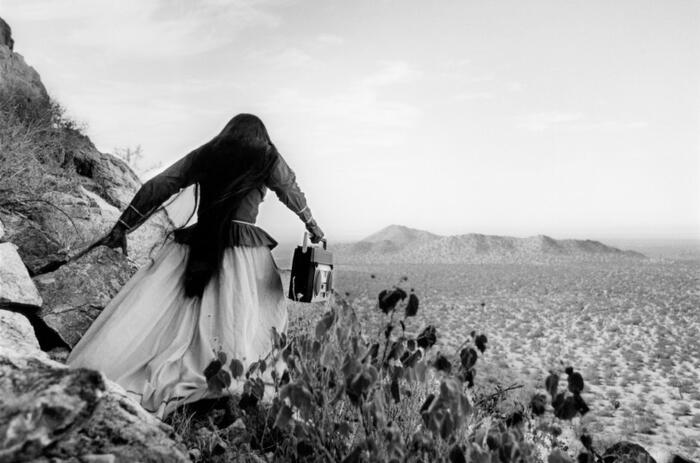
A major exhibition at C/O Berlin traces more than five decades of the Mexican photographer’s career, presenting over 250 works including her most iconic series.
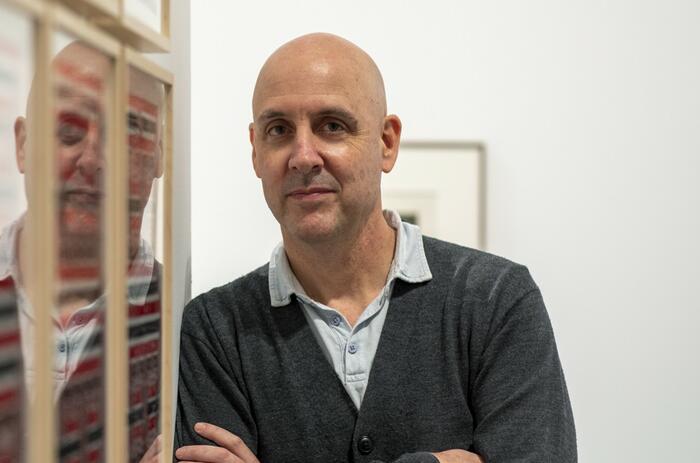
What is a Culturally Specific Institution? Director of El Museo del Barrio for over eight years, Patrick Charpenel reflects on the role of museums in the United States, the visibility of Latinx communities, and the challenges of thinking about art beyond fixed categories and market logics.
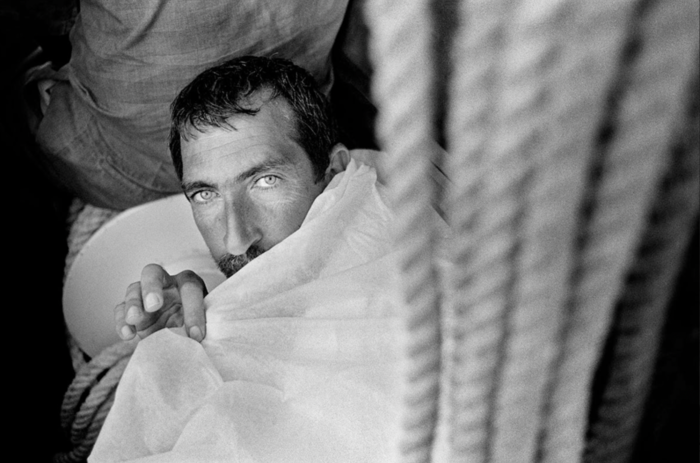
Enrique Ježik and Matías Costa address violence, memory, and exile in Elche, highlighting the connections shaped by displacement.
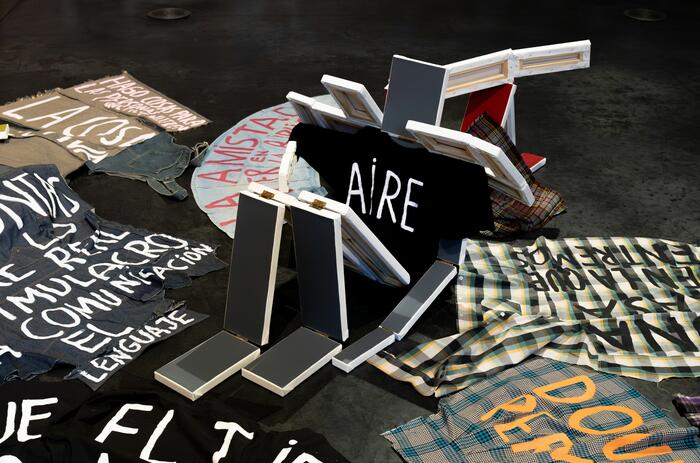
Nombrar el mundo reconsiders painting through a political and affective perspective, expanding the canvas as textile toward sculptural and sonic dimensions as a gesture of resistance.