
FROM THE GLOBAL SOUTH: AMAZONIAN KNOWLEDGES AT MAMM
The Museum of Modern Art of Medellín presents Bubuia and Lleébu, two exhibitions that are part of a larger curatorial cycle showcasing the work of artists from Indigenous peoples, Black and riverine communities in Brazil, Peru, Guyana, French Guiana, Suriname, and Colombia.
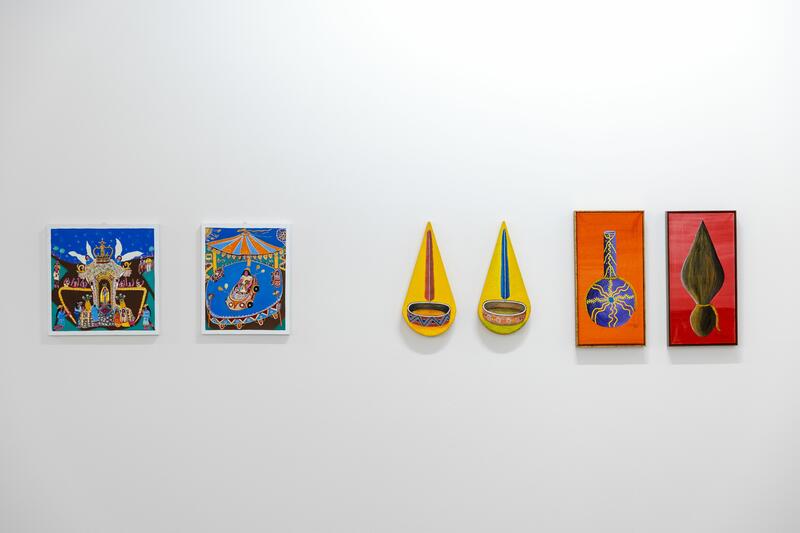
Bubuia and Lleébu open pathways for rethinking art from the Global South, with critical approaches to the protection of ancestral knowledge, the defense of territory, and the creative power of Amazonian communities. These exhibitions reflect MAMM’s commitment to amplifying artistic practices that engage with territory, cultural diversity, and environmental justice.
Bubuia. Waters as Sources of Imaginations and Desires was first presented at the 1st Bienal das Amazônias in Belém, Brazil, and brings together works by artists from Indigenous, Black, and riverine communities in Brazil, Peru, Guyana, French Guiana, Suriname, and Colombia. Curated by Keyna Eleison and Vânia Leal, the exhibition proposes a drift through water as a space of spirituality, desire, affect, and conflict.
As a central concept, Bubuia draws directly from "dibubuísmo," a term coined by João de Jesus Paes Loureiro—a renowned poet, essayist, playwright, and professor at the Federal University of Pará, born in Abaetetuba on the banks of the Tocantins River—whose poetic practice weaves together the real and the imaginary of the Amazon, shaping his vast literary work. To be de bubuia, to float on water, symbolizes a conjunction of movement and stillness in favor of pleasure, reflection, and integration with the natural environment, and speaks to the perseverance and resistance of those who inhabit the region.
In this sense, Bubuia is more than a cultural gesture. It is a calculated openness to becoming and letting-be—an inherited knowledge system rooted in the mixed or caboclo riverine traditions, transmitted orally as a form of resistance and imbued with insights born of deep relationships with nature and shared collectively.
-
Cortesía MAMM
Lleébu. Colombian Amazon: Sounds and Endangered Indigenous Languages is an artistic and research project by sound artist León David Cobo, arising from a fundamental question: What is lost when a language disappears? The answer goes beyond the linguistic; it signals the vanishing of unique ways of inhabiting the world, of collective memory, of ancestral knowledge about territory, and of relationships with nature. Lleébu—which means “to listen” in the Bora language—embodies an ancestral practice of attentiveness, where listening becomes an act of resonance and care.
This sound installation invites the public into a dialogue with endangered Indigenous languages of the Colombian Amazon, through ritual chants, storytelling, and soundscapes that are, in themselves, living archives of cultures resisting silence and erasure.
The recordings that make up Lleébu were created in collaboration with Indigenous communities including the Kamëntša and Inga of Putumayo; the Korebajᵾ of Caquetá; the Bora, Karijona, Yucuna, Cocama, Nonuya, Muinane, and Yagua of Amazonas; the Jiw, Nukak, and Sikuani of Guaviare; and the Kawiyarí, Pinoamahsa, Kakua, and Sikuani of Vaupés. Each sound document is a testimony to the linguistic and cultural diversity of these peoples, as well as to their unique ways of relating to the territory.
Beyond its aesthetic dimension, Lleébu proposes an ethical and political act of listening. In the face of the accelerated destruction of the Amazon and ongoing cultural homogenization, the project positions sound as a tool of memory and resistance. Field recording becomes, above all, an act of situated listening and attentive presence.
Related Topics
May interest you
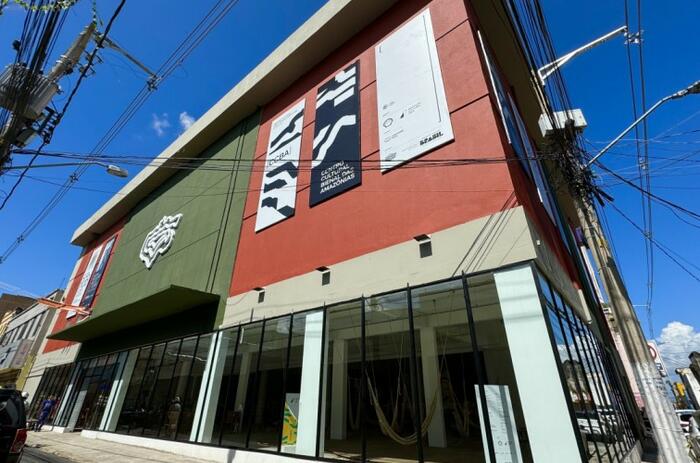
VERDE-DISTÂNCIA: THE 2ND BIENAL DAS AMAZÔNIAS TRACES CONSTELLATIONS THROUGH PAN-AMAZONIAN ART
This edition unfolds in Belém as a poetic and political reflection on Amazonian and Caribbean territories. More than 80 artists explore the notions of dream, memory, and accent as forces that reconfigure geography, time, and resistance.
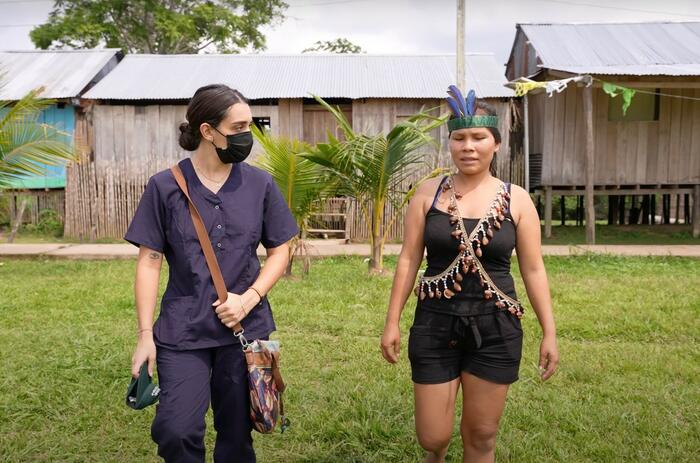
AMAZONIAN MENTAL HEALTH AT THE ICPNA ENGRAVING MUSEUM
Luna Dannon presents an exhibition born from her experience leading a mental health project involving 105 Amazonian communities during the pandemic.
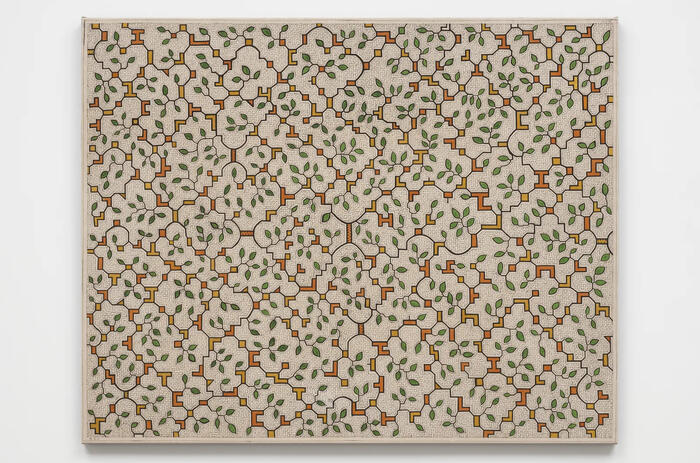
SARA FLORES AT WHITE CUBE: MAPPINGS OF THE AMAZONIAN COSMOS
BRAZIL AT THE 2025 VENICE ARCHITECTURE BIENNALE: (RE)INVENTION FROM THE AMAZON
Until November 23, 2025, the Brazil Pavilion at the 19th International Architecture Exhibition of the Venice Biennale will present (RE)INVENTION, a project curated by Luciana Saboia, Matheus Seco, and Eder Alencar, members of the Plano Coletivo collective.
MANUELA MOSCOSO, BIENAL DAS AMAZÔNIAS’ CURATOR: “ART CAN HOLD CONTRADICTIONS”
The Brazilian city of Belém has the particularity of being located in an estuary: the point where the Amazonian rivers open into the Atlantic. It is there, in a setting traversed by currents of water and of history, that the Bienal das Amazônias takes place, an event that explores the connections between territory, history, and climate, and the ways in which art can become a space to think through those tensions.