
THE BALANCED REPRESENTATION OF LO LATINOAMERICANO IN THE JORGE M. PÉREZ COLLECTION
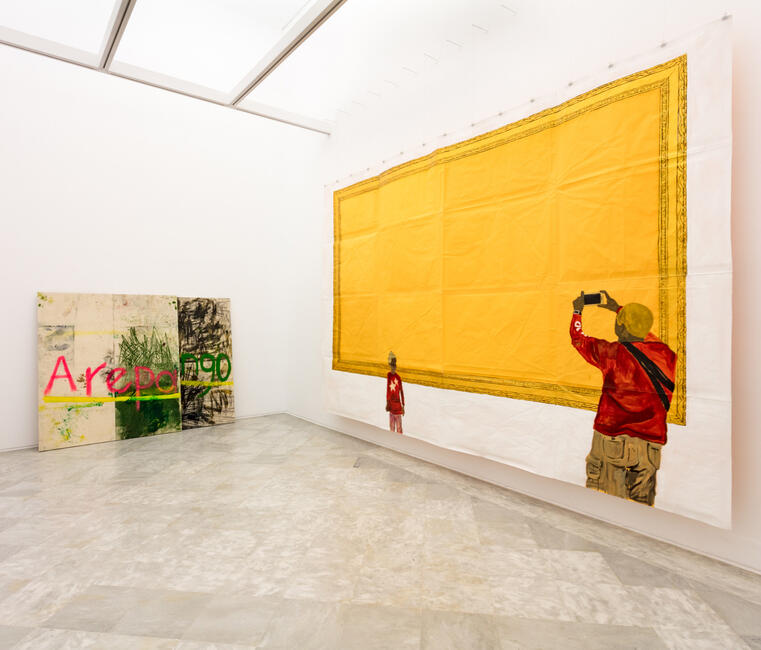
It is not an easy task to contextualize a concept as broad and, sometimes, as hackneyed as the concept of Latin American art or lo latinoamericano in the arts. From the curatorial point of view, one may run the risk of wanting to cover too much and lose the detail of what is precise. On the contrary, if one sticks to one or two lines of argument, the work would be guilty of having to justify at length the decision of having ostracized the other positions and tendencies, with the consequent criticism. Let's start from the premise that the exhibition TERRITORIOS. Contemporary Latin American Art in the Jorge M. Perez Collection achieves the difficult task of maintaining the balance between both circumstances, taking the spectator on an exhibition tour that is representative of contemporary Latin American art, while at the same time sufficiently deep in its analysis both for the selected works and for the curatorial and thematic proposal.
The work and effort made here by the Centro de Arte Contemporáneo de Andalucía (CAAC) stands out —led for the occasion by Jimena Blázquez, recently appointed director of the institution— and due to her eagerness for the exhibition itself to cover all those angles. And the fact is that Jorge M. Perez's collection, in its extension and representative quality, could have been both a blessing and a trap. Nevertheless, the Argentine collector's work has been shaping this almost systematic and museum-like compilation for years. From his entire collection, TERRITORIOS has selected works by more than fifty contemporary Latin American artists, a basic filter of a choral nature that, in view of the result, challenges the impossibility of presenting a complete path.
The exhibition, which never leaves aside its collective essence for the sake of representing a somewhat broad, diffuse and, at the same time, vindicated concept such as Latin America itself —and which takes charge of the Pablo Neruda's verse that starts the tour— makes systemic use of thematic blocks and of those curatorial areas that give current sense to a group whose idiosyncrasy is timeless. The exhibition thus aims to make room also for that aspect, the museum aspect, and to give it a new organization in an institution such as the Sevillian one, suitable for its halls, but also for its complementary spaces, to be used not only as a mere exhibition area, but also to frame interesting dialogues between the different contexts.
It is not surprising that elements widely represented in the evolution of contemporary Latin American art, and historically, since the origins of colonization —such as mestizaje, ethnography, spirituality and raw material— are intermingled with the most contemporary arguments, those that allude to identity and gender, violence and decolonization. All of them maintain in this exhibition that visible criterion of rereading and reinterpretation, while sticking to their essence as elements conceived in a specific environment.
One of the most fashionable discourses in vogue today, the apparently institutional need to decolonize, is represented in TERRITORIOS with an eye more on the contemporary imperialist evolution of the United States, The neighbour to the north, than on the almost ironic synergy of Spanish and Portuguese colonialism, which is what brings together the concept of Latin America. The different aesthetics of Graciela Sacco, the political satire of Marta Minujín, Lester Rodríguez and the horror of Allora & Calzadilla are presented there, which trace, from their positions, the same line of action and reserve against the social, economic, political and cultural influence of the United States.
Perhaps this is the starting point for the need to consider relations with political and physical borders, spaces of creation influenced by certain characteristics —some of them even atavistic— and that propose a critique of that artificiality of geopolitical character and social evolution. Cartografías del espíritu explores that need from the angles of the different languages of the works of Alexander Apóstol and his play with color, Moris, María Nepomuceno, Glenda León, Juan Manuel Echavarría, Nelson Leirner, Priscilla Monge, Elena Damiani, Nohemí Pérez, Alfredo Jaar, Juan Downey, the graphic language of Fernando Bryce or Mateo López.
Continuing with the thematic layout, multiculturalism, that segmented space and the social and economic impact of the policies carried out from that artificiality leads us to Colonialism and the braids of miscegenation, where Jonathas de Andrade, Claudia Andújar, Maxwell Alexandre, Sandra Gamarra, Claudia Coca, Alice Wagner, Tania Candiani, Antonio Henrique Amaral and Oscar Murillo expose their visions on that most innate feeling of belonging in the face of the systemic reality they denounce. This political and social dialogue is also —or especially— highlighted in Memory and Resistance, a space that delves into the need to highlight and point out injustices through the striking works of Teresa Margolles, Doris Salcedo, María Teresa Hincapié and Los Carpinteros, the performances of Ana Mendieta and Tania Bruguera, or the proposals of Óscar Muñoz, Arjan Martins, Felipe Ehrenberg, Teresa Burga y Marcelo Brodsky.
In that critical update, the role of identity shapes Yo, mí, me, me, contigo, an exploration of individual vindication represented by the works of Ana Segovia, Julio Galan, Hernan Bas, Manuel, Solano, Alida Cervantes and Wynnie Mynerva. If, as I said at the beginning, there are those more current curatorial actions, the innate spirituality that represents in Latin American art one of its main engines is once again strongly consolidated in Other forms of knowledge: The Spiritual and the Ritual, an explicit title that confronts, precisely, those sources of the debit and credit in the Latin American plastic materialization of Leonor Fini, Belkis Ayon, Sandra Vasquez de la Horra, Daniel Otero Torres, Jesus “Bubu” Negron, Firelei Baez and Jose Bedia of that incorporeal and innate element.
And although starting from the premise of that balance achieved in the total exhibition, the part dedicated to The Legacy of Abstraction becomes, archetypically, one of the most didactic areas. However, it seems that the influence and radical nature of the elements that make up one of the languages most unanimously ascribed to Latin American art makes it necessary to have its own almost academic space. In that almost imperative eagerness, the exhibition alludes to part of the great movements of chromatic abstraction and kinetic and optical art, vindicating and consecrating once again the role of the Latin American in them through the proposals of Sandú Darié, Ana Sacerdote, Loló Soldevilla, Waldo Balart, Regina Aprijaskis, Rubela Dávila, Beatriz Olano and Jaime Tarazona, as the pinnacle of the exhibition, the spatial preference of the works of Lucia Koch and, especially, those of Carlos Cruz-Díez and Julio Le Parc, which dialogue in the environment of the baroque chapel and which seem to close, in a majestic and spiritual way, an exhibition whose achievement lies in the not easy balance of its composition and story line.
TERRITORIOS. Arte contemporáneo latinoamericano en la Colección Jorge M. Pérez i son display until September 1 at Centro de Arte Contemporáneo de Andalucía (CAAC), paseo de los Descubridores, Seville, Spain.
Related Topics
May interest you

BOSCO SODI AND THE VOLUME OF DARKNESS
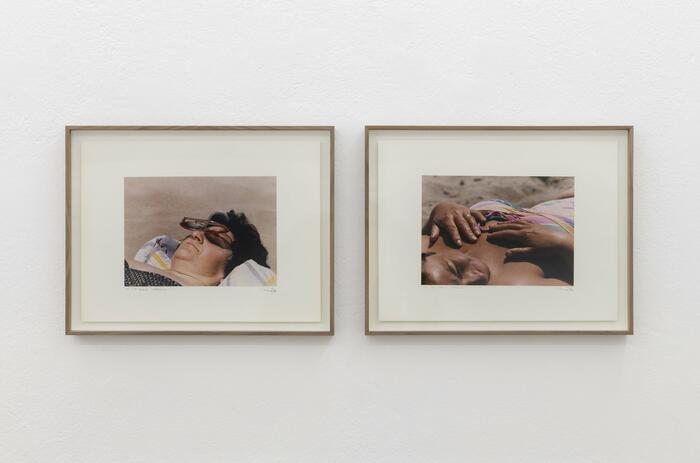
Bosco Sodi (Mexico, 1970) explores deeply in El día que nos volvimos a encontrar a universe quite distant from his recognizable large format and liveliness production to delve into the pleasures of the search for new material expressions and the abandonment of the chromatic in favour of texture, the depth of the absence of colour and concept.
CLAUDIA JOSKOWIZC, SOLO EXHBITION AT VALENCIA
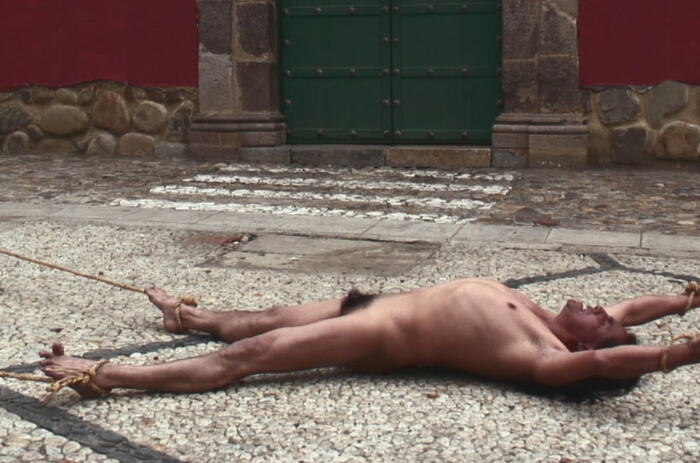
Valencian gallery Jorge Lopez is programming a solo exhibition by artist Claudia Joskowizc (Santa Cruz de la Sierra, Bolivia, 1968) that brings together the audiovisual and performative techniques with which the Bolivian artist builds the narrative and chronology of her native country.
FLAVIO GARCIANDÍA’S SELF-REVISIONISM
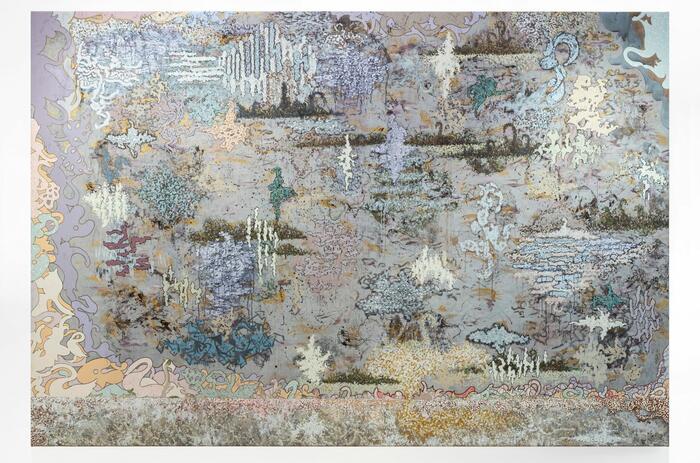
Flavio Garciandía (Caibarién, Cuba, 1954) becomes the active and passive subject of his work in his first solo exhibition in Madrid.
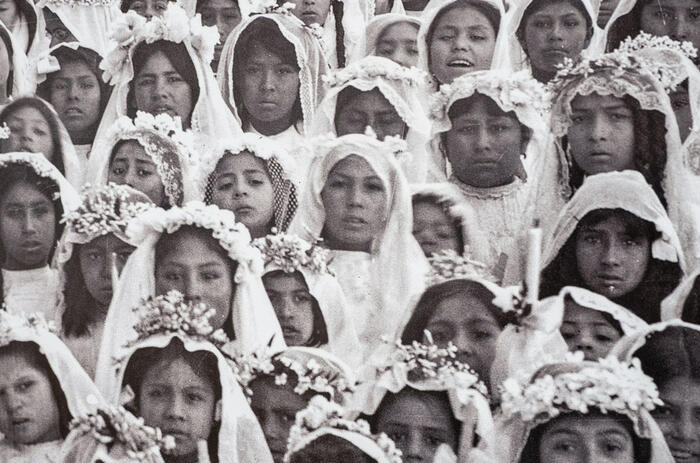
TWO EXHIBITIONS OF PERUVIAN PHOTOGRAPHY AT CASA DE AMERICA
Casa de América inaugurated two exhibitions of Peruvian art: Memoria del Perú. Photographs 1890-1950, with works by various photographers that capture a significant period in the country's history, and Shipibo-Konibo. Portraits of my blood, with photographs by artist David Diaz on the life of the Shipibo-Konibo.
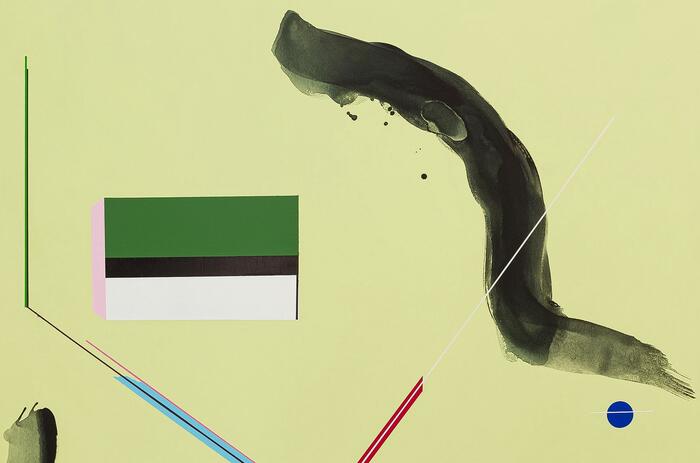
CABIESES’ INTERCEPTED IMAGE
The geometry in Jorge Cabieses' (Lima, Peru, 1971) usual outline is broken with the action of the spontaneity of the curved and almost organic stroke in his second solo exhibition in the Spanish capital. The Lima-born artist thus proposes, in a certain way, a dialogue between the artificial of the synthetic and the atavistic through the incorporation of those more spontaneous brushstrokes over the usual framework of rectitude that the artist usually presents.
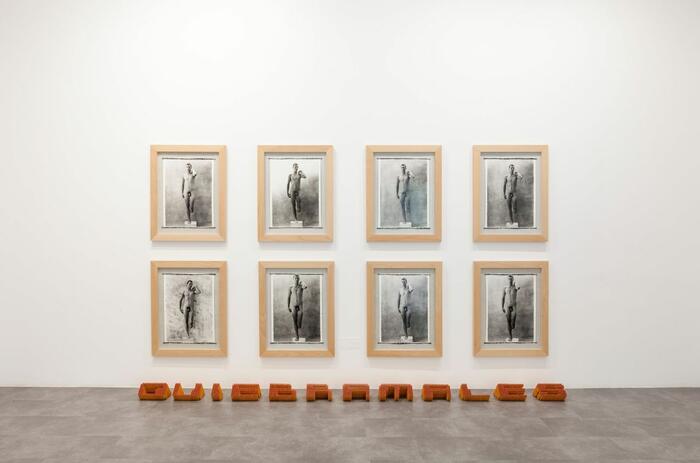
TOWARDS MIGUEL ÁNGEL ROJAS' QUIEBRAMALES
Two decades after Miguel Ángel Rojas (1946, Bogotá, Colombia) conceptualized in his project David Quiebramales his denunciation of violence and the use of education as the most efficient vehicle towards a catharsis for those who suffer it, the Madrid headquarters of La Cometa revisits his most emblematic work and reinterprets it as the framework for a kind of thematic retrospective. This commemoration of that first David Quiebramales reinforces a view that is still difficult to overcome and that, even today, serves to trace those harmful social dynamics that are created between society and war, the institutional and the political systems.
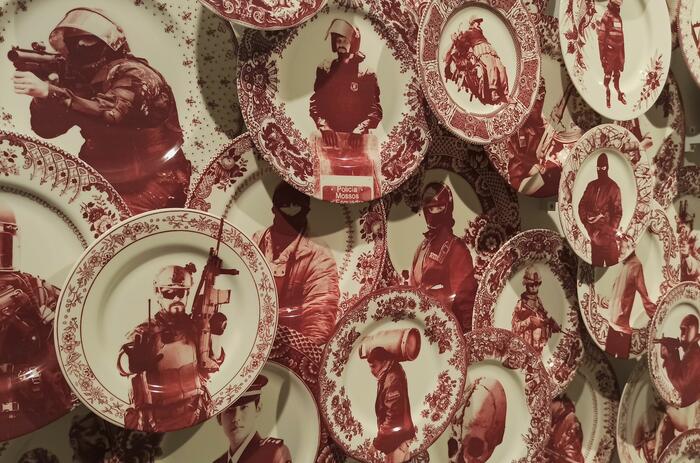
HERENCIA. PROYECTO 360º AND THE RECONSIDERATION OF OUR ACTIONS
The Seville-based Fundación Valentín de Madariaga y Oya raises in its collective exhibition Herencia. Proyecto 360º the need to reconsider actions and return to the essential and almost primary link through the observation and analysis of our environment and its possibilities. The show gathers the work of fifteen international artists who become instrumental through their works for this purpose.
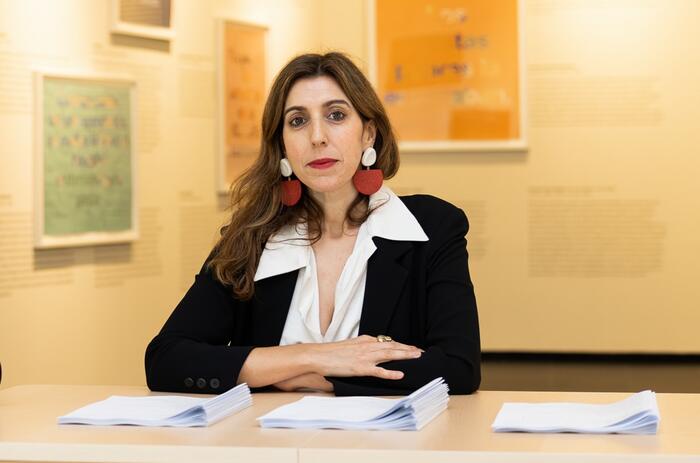
INTERVIEW WITH TANIA PARDO, NEW DIRECTOR OF CA2M MUSEUM
Tania Pardo (Madrid, Spain, 1976) is the new Director of the Museo Centro de Arte Dos de Mayo (CA2M Museum), the museum of contemporary art of the Community of Madrid. Pardo's career until her recent appointment has been built on a detailed work of promotion and visibility of emerging art through the curatorial actions she has developed in numerous Spanish institutions.
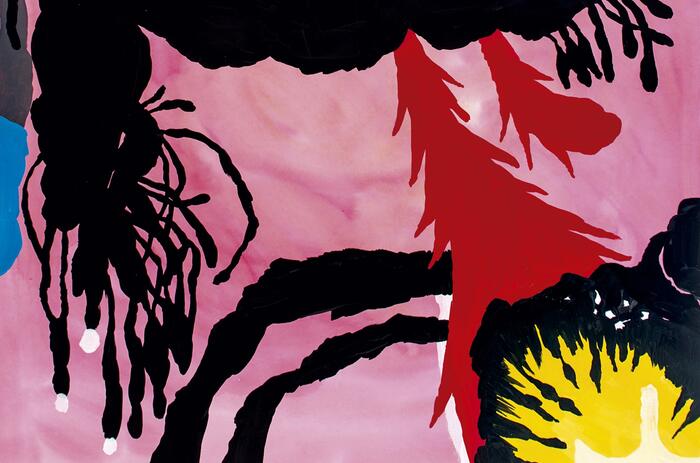
MEIAC PRESENTS MARTÍN LÓPEZ LAM’S PAISAJE TRANSFERIDO
The Museo Extremeño e Iberoamericano de Arte Contemporáneo (MEIAC) in Badajoz is exhibiting, under the title Paisaje Transferido, a wide-ranging show by MartÍn Lopez Lam (Lima, Peru, 1981), one of the main exponents of graphic art in Spain, where he has been living for the last two decades.
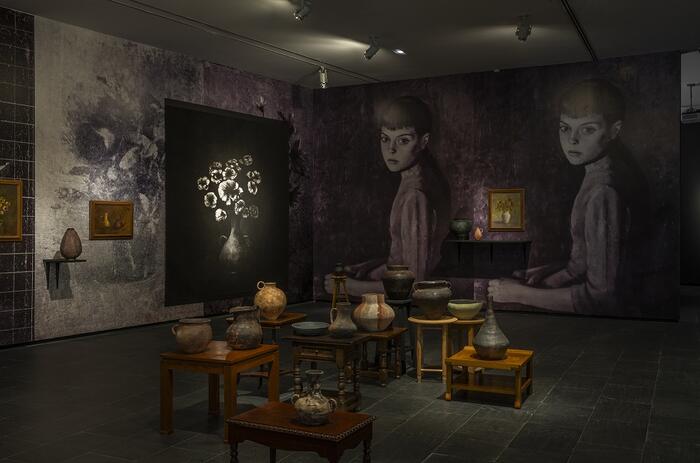
ANA GALLARDO'S RECONSTRUCTION AND “DELIRIUM”
It could have been an ordinary retrospective, but the decision to participate in some way in the creative process is a differential and even declarative point in Tembló acá un delirio, the exhibition that Museo CA2M in Móstoles delves into the figure, and at first hand, of Ana Gallardo (Rosario, Argentina, 1958).

PERFORMANCE AND MYTH IN HECTOR CANONGE
Héctor Canonge began to explore the possibilities of performance almost without being aware of it. With an extensive career in the field of new media and the art surrounding these technologies, and almost by inertia, he incorporates the use of his body in one of his installations, Schema CorpoReal, where his body covered by bar codes was scanned by the public so that, through texts that emerged referring to parts of his body, they ended up constructing a narrative of identity.
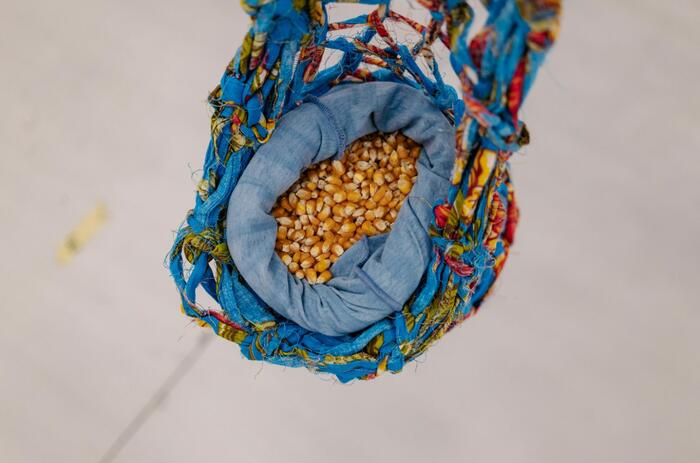
ERNESTO NETO AND HIS CROSSROADS OF CULTURES AT MAAT
Ernesto Neto (Rio de Janeiro, Brazil, 1964) presents Nosso Barco Tambor Terra at Lisbon's Museum of Art, Architecture and Technology (MAAT), an impressive large-scale installation with which he evokes and stages the crossing of different cultures and the relationships between individuals from different continents.