
RURAL INSTALLATIONS - GUILLERMO SRODEK HART IN UNGALLERY
In his first exhibition since 2019, the photographer returns to deep Buenos Aires in search of reflections of our present through a documentary and poetic reading of the past.
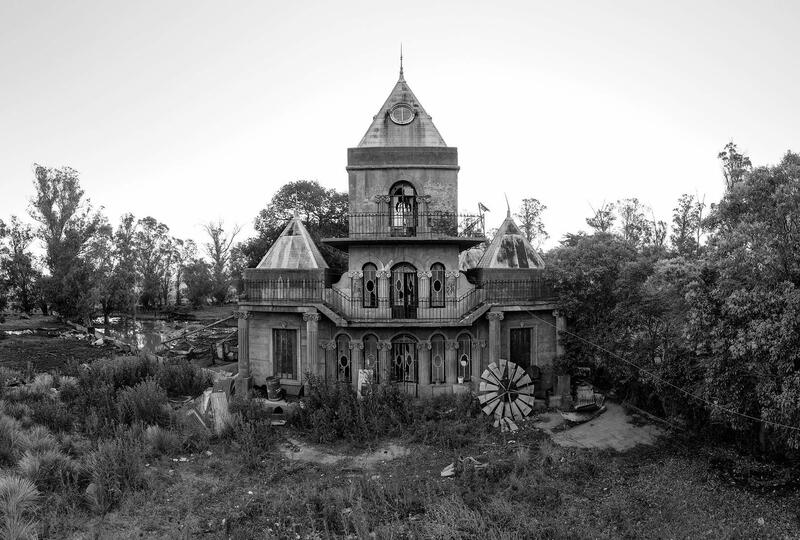
Guillermo Srodek Hart always returns to the countryside. The photographer, born in Buenos Aires, with a history of exhibitions that include the Venice Biennial, Paris Photo and ARCOmadrid, among others, recreates in his work his vision of the countryside towards the province inland. In his work we find an appreciation of rural life, not through its people, but the elements that make it up, building a kind of identity through the exploration of the territories and spaces they inhabit: we do not see the people, but we never fail to see their traces.
The process that results in the Rural Installations series began in 2017, when the artist began to take advantage of every weekend and every available moment to get in the car, and, making base in the town of Tres Arroyos, drive along the routes of the province in search of rural architectures in various states of abandonment. This process was accompanied by a deep investigation, taking advantage not only of satellite images and access to maps of the areas, but also the interaction with the members of the communities that still inhabit these spaces, or at least surround or know of them, and could point the way beyond the maps.
"I don't think of myself as a photographer who exhibits, I think of myself as a photographer obsessed with collecting the fragments of the world that he likes," says Srodek Hart, and in that eagerness to collect fragments, he knows his task is to find the best way to capture them. Although his traditional training leads him to self-identify as "old school", he’s the first to appreciate the need to adapt and evolve in the development of his way of working.
-
De la serie “Instalaciones Rurales”. Cortesía del artista.
-
Vista de sala de Instalaciones Rurales de Guillermo Srodek-Hart en Ungallery. Imagen cortesía del artista
-
De la serie “Instalaciones Rurales”. Cortesía del artista.
-
Vista de sala de Instalaciones Rurales de Guillermo Srodek-Hart en Ungallery. Imagen cortesía del artista
With this challenge in mind, for Rural Installations the photographer combined, for the first time, capturing images with his traditional plate camera and a drone as a tool for the digital recording of his work. Although this is a technological leap that may sound extreme at first glance, the results show the wisdom of that decision: the drone not only allowed him greater access to places he could not previously have reached on his own, but also the pieces born from this work reveal, due to its format, new contrasts and perspectives.
As a result, the Rural Installations series walks the liminal space between the most rigorous documentary record and the most expressive artistic photography. The combination of image formats reflects the need to tell a story that goes beyond what we see, entering into their how and why. "It a sort of B side, another way of approaching the imaginary of what we think Buenos Aires is, of what the countryside is," says Jen Zapata, the exhibit’s curator, who pushed the artist to experiment with the curatorial design, going beyond the exhibition and entering into the need to generate a journey and a reaction in the public that enters the gallery.
On the other hand, the latent expressiveness of the pieces comes into existence through the meticulous process by which the artist captured the images, who seeks not only to account for the spaces as he finds them, but creates expansive compositions loaded with information that support both an emotional and historical reading; this is perhaps the only way to approach them, if we think about the difficulty of accessing reliable historical records, or family stories not loaded with the subjectivity provided by the passage of time and the inevitable word of mouth.
-
De la serie “Instalaciones Rurales”. Cortesía del artista.
-
Vista de sala de Instalaciones Rurales de Guillermo Srodek-Hart en Ungallery. Imagen cortesía del artista
-
De la serie “Instalaciones Rurales”. Cortesía del artista.
-
Vista de sala de Instalaciones Rurales de Guillermo Srodek-Hart en Ungallery. Imagen cortesía del artista
-
De la serie “Instalaciones Rurales”. Cortesía del artista.
Some of the buildings photographed no longer exist, some of the spaces are inaccessible, but Srodek Hart's work generates a sense of urgency from what we see, not as an absolute past, but as part of the constant progression of time, in which our attempts to build are no more - or less - than installations, artistic and ephemeral experiments on the spaces we inhabit.
…..
Rural Installations can be visited until September 16th at Ungallery, Arroyo 932.
Related Topics
May interest you
“GRACIELA ITURBIDE: HELIOTROPO 37” AT FONDATION CARTIER POUR L’ART CONTEMPORAIN
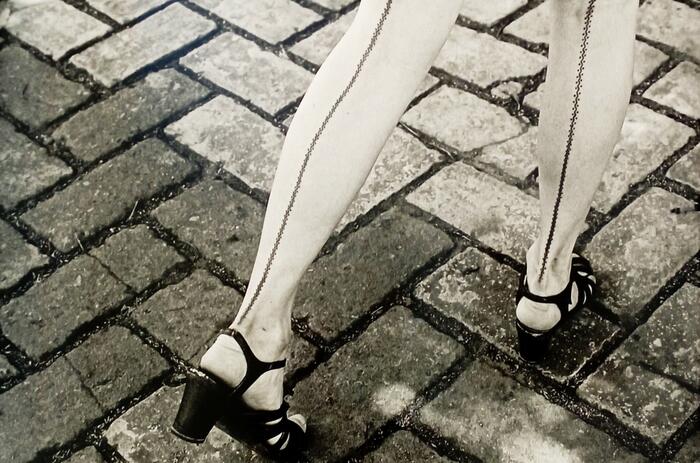
The Cartier Foundation presents "Heliotropo 37", the first major exhibition in France dedicated to the work of Mexican photographer Graciela Iturbide. It brings together more than 200 images from the 1970s to today. Photographs from the most iconic to the most recent, as well as a color series specially produced for the exhibition. If today she is famous for her portraits of the Indians of the Sonoran Desert, the women of Juchitán, or for her photographic essays on the ancestral communities and traditions of Mexico, Graciela Iturbide also draws an almost spiritual focus to landscapes and objects. Showing for the first time these two facets, these two points of view of the artist's work, the exhibition thus offers a renewed vision and reveals her great contribution to photographic art.
3 WORKS, 3 REFLECTIONS - COMMENTS ON CONTEMPORANEITY BASED ON THE WORK OF VIVIAN GALBAN
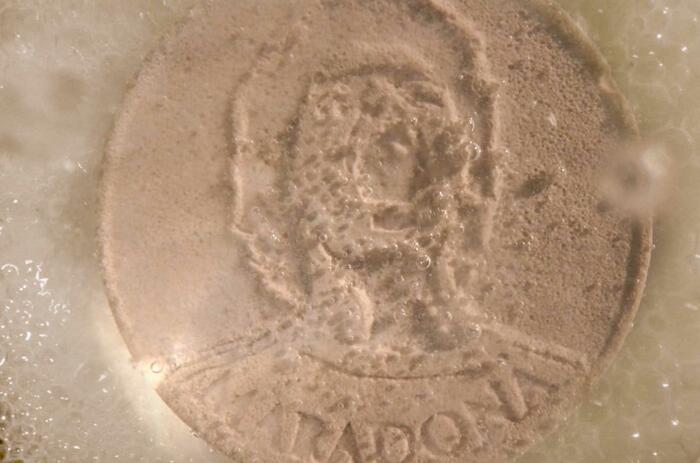
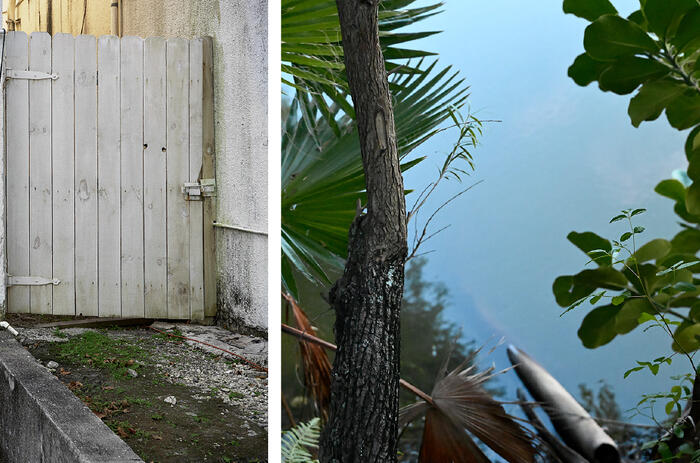
In the 15th edition of Pinta Miami, from December 1 to 5, 2021, Vivian Galban will participate with her installation, Exhibition in Real Time, which consists of a human-scale camera obscura where the visitor will first be portrayed and then invited to participate in the development process. Three works by the Argentine artist and photographer are briefly analyzed below as an introduction to her work.
The experimentation of the process, the disappearance of the portrayed and the invisible moment.
SARA FACIO: IMAGES TO LISTEN. THE TRIBUTE ARTIST OF PINTA BAphoto 2022.
Pinta BAPhoto opens its 2022 edition with a tribute to the outstanding photographer Sara Facio. The exhibition is dedicated to her intimate life and proposes a shift in the photographer's camera: she leaves aside her work as a portraitist to look at herself. It is curated by Francisco Medail and with the collaboration of Rolf Art.
PINTA BAphoto 2022 OPENS ITS DOORS AT THE SPECTACULAR CASA BASAVILBASO
Pinta BAphoto, the Latin American photography fair with the longest history can be visited from September 21 to 25. The artistic meeting, dedicated to the promotion, dissemination and marketing of photographs, as of this year is presented as part of the Pinta Art universe accompanied by EFG Wealth Management as Main Sponsor. Tickets available for Friday 23, Saturday 24 and Sunday 25 September can be purchased at Ticketek.
CURIOSITIES, HISTORY AND URBAN LIFE IN PINTA BAphoto
Pinta BAphoto 2022 celebrates its eighteenth edition and presents not only an outstanding selection of galleries but also a program that offers renowned sectors and spaces that make room for more alternative work. Among them, Pinta BAphoto prides itself with Wunderkammer, dedicated to heritage photography, and Proyecto CALLE, whose photographers and protagonists are people without housing.