
By
Álvaro De Benito
La lechuza de Minerva reflects on the power of cultural institutions in the contemporary context and creates a space where proposals by Dagoberto Rodríguez, Regina Silveira, and Los Carpinteros, among others, coexist in order to re-read the trajectory of the institution itself.
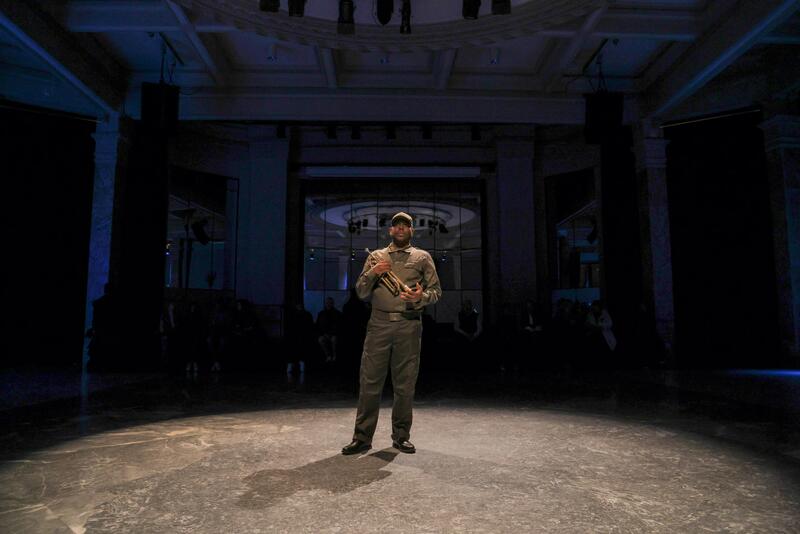
Within the framework of its centenary celebration, the Círculo de Bellas Artes in Madrid presents an initiative of an exhibitionary and critical-reflective nature with La lechuza de Minerva (The Owl of Minerva). Curated by Isabella Lenzi, the exhibition invites viewers to question the role of cultural institutions, focusing on their structures of power and their dynamics, through an analysis that departs from the “intrahistory” of the institution itself.
As a point of departure, the proposal emerges from a revisitation of the exhibitions Madrid: Space of Interferences, curated by Javier Maderuelo, and The Imperative Dream, curated by Mar Villaespesa and held in 1991, which transformed the building into a space of political and poetic friction. From that spirit, the current exhibition aims to recover that sensibility within a contemporary framework, adapting and reactivating part of its essence under present-day conditions and contexts.
The current proposal seeks to situate itself within this dystopian present, which it addresses through reflection, institutional critique, and even dissidence exercised from within. The breadth of initiatives that took part in those seminal exhibitions underpins the range of possibilities of artistic languages and allows for a distanced understanding of how the collectives and artists involved positioned their critique from the margins within an institutional context. Isabella Lenzi thus advocates using this project as a means to open the space to other voices, bodies, and forms of thought within the institution itself.
One of the main issues addressed by the curatorial work is precisely that of dissolving boundaries and asserting the overflow of the environment as a key point. To this end, it engages with sensitive areas, bordering on the taboo, which may have provoked suspicion and resistance. What is presented here involves a revisitation of the initial exhibition principles, supplemented by a critical layer that assesses the consequences of structural rigidity and of all the architectural elements that, both subtly and physically, shape a vision grounded in tension.
To access this framework, the exhibition is constructed through the mapping of, and interventions within, different areas of the building, where the proposals function as interferences of an unsettling presence. Nevertheless, regular visitors may be surprised by the relocation of certain works since the exhibition’s opening and by the extent of the remnants of already performed performances.
The façade of the building features a poetic proposal by María Salgado, intended to initiate a gradual attunement to the listening and perception of elements and ideas. Regarding the vertical axis, two works from the series Twisted Nails by the collective Los Carpinteros—founded in Havana in 1992 by Marco Antonio Castillo, Dagoberto Rodríguez, and Alexandre Arrechea—demonstrate this disruption as a way of addressing the institutional power narrative through the reinforcement of the physical. Meanwhile, on the rooftop, a form of urban archaeology is undertaken to locate possible hidden remnants of the action Minerva, Sky Goddess, carried out by Nancy Spero in 1991 in that same space.
Within this spatial and conceptual delimitation unfold various actions of interaction with both the public and the building. Elo Vega and Rogelio López Cuenca reinterpret, with Danĝero, a warning signal emitted from the staircases, mirrors, and sculptures present, while the recording by Itziar Okariz in Irrintzi sensorially activates that latent emergency. More explicit in conceptual terms is The Saint’s Paradox, a plastic transliteration of an anachronism through which Regina Silveira underscores the ongoing relationship between power and religion in Iberoamerican history.
The program of performative activities that occupy the building throughout the exhibition is also essential, engaging with the immateriality of perception, corporeality as a light element, and sound. Guards Kissing, by Tino Sehgal, addresses affectivity and the impact it generates when replicated in transit spaces, while the actions by Pedro G. Romero alongside Rocío Márquez and Perrate reinterpret previous works in which imaginaries have changed and, consequently, so too has the perception of power within that ideological framework.
Dagoberto Rodríguez emphasizes the tension between celebration and memory in A palo limpio, while that subtlety may be more explicitly echoed in the sound action of Silbatriz Pons or in Itziar Okariz’s Dream Diary. With a more literary dimension, yet deeply rooted in conceptual practice, María Salgado’s performative reading complements her works installed throughout the building, forming a constellation that reconfigures the building through sensory perception—an element upon which this intention of activation and renewal, somewhat cathartic in nature, is also articulated.
La lechuza de Minerva can be visited until May 10, 2026, at the Círculo de Bellas Artes, Alcalá 42, Madrid (Spain).
The exhibition brings together works created ad hoc by the artist in the city. Through them, she reinterprets craft and tradition from a contemporary perspective and invites the audience to understand sound as a language that redefines our relationship with the environment.
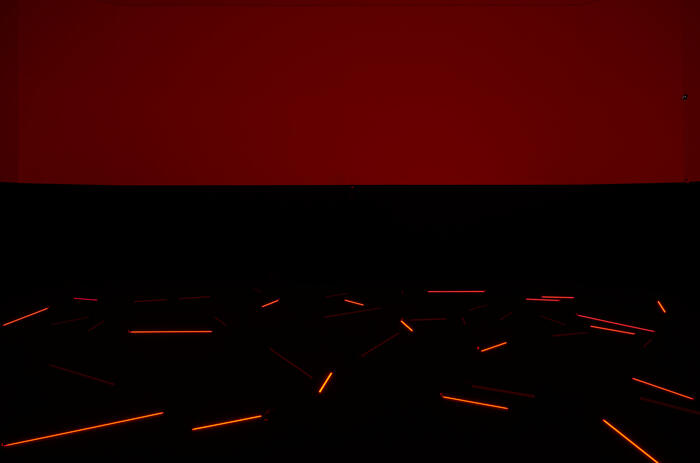
beginning, middle, beginning presents an installation by Brazilian artist Cinthia Marcelle, conceived specifically for the Central Gallery of the Serralves Museum. The work questions the linear conception of time and its relationship to colonial structures.
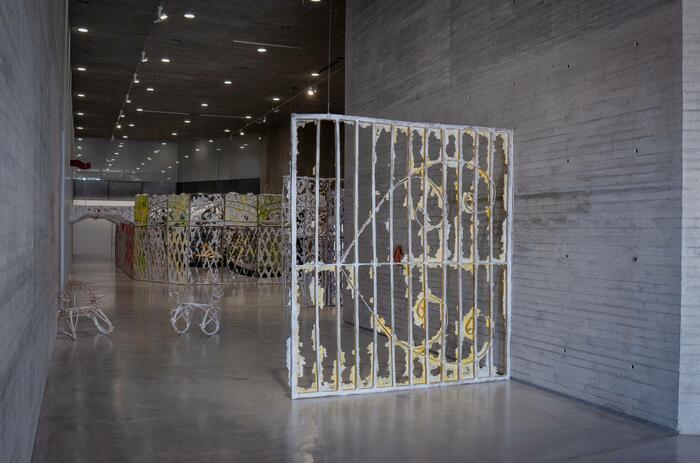
The exhibition by the Ecuadorian artist, featuring works created specifically for the Córdoba space, proposes a journey in which the viewer is invited to explore concepts such as migration, memory, and colonialism by moving through a space that brings together history and displacement.
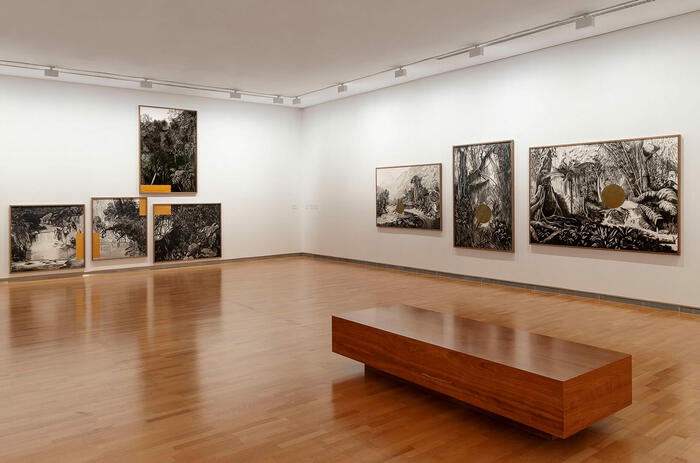
The first retrospective in Spain of Gabriela Bettini reflects on absence and the politics of forgetting through images that challenge official history.
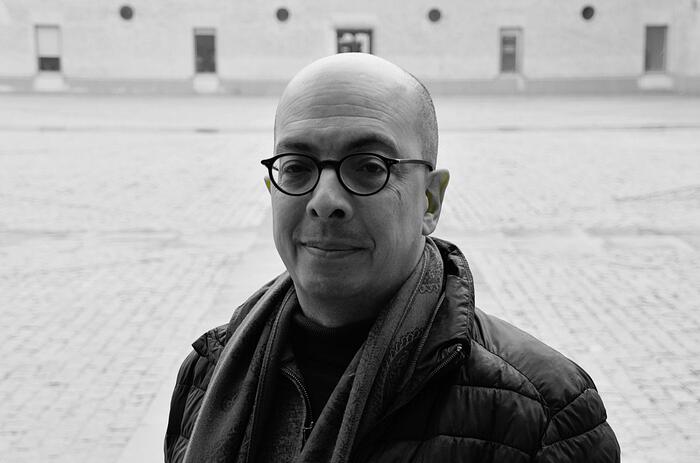
Jorge Volpi, after one year as Artistic Director of Contemporánea Condeduque, reflects on programming through a multidisciplinary narrative and how it fosters dialogue while giving Latin American art a central role in Madrid’s cultural scene.